◇ Tag
Posts tagged “latvia”

2026-07-17
Latvia, one of Europe's leading drone hubs: what it means for an A1/A3 pilot
A new study calls Latvia one of Europe's fastest-growing drone industries — but most of that growth is defence and testing activity, not the civilian job market an A1/A3 certificate opens.
- latvia
- industry
- commercial
2026-07-17
GNSS jamming in eastern Latvia: what NAVAI's vision-based navigation actually solves
GPS lock loss near the border is a documented, recurring event. UAVOS's NAVAI module offers camera-based navigation without satellites — but it's built for fixed-wing drones, not your A1/A3 multirotor.
- gnss
- gps-jamming
- navigation

2026-07-17
Sadales tīkls is inspecting power lines with drones — what it means for an A1/A3 pilot
Sadales tīkls plans to survey 10,000 km of its power grid with drones this year — a real Latvian industrial-inspection example that shows where the line sits between the Open and Specific categories.
- industrial-inspection
- latvia
- specific-category

2026-07-17
Latvia's critical-infrastructure no-fly list 2026 — what it means for an A1/A3 pilot
Latvia has published a list of enterprises where drone flights are now prohibited — the criteria, how it relates to BGKIS and geographical zones, and how to check it before you launch.
- no-fly-zones
- latvia
- regulation
2026-07-14
Drones on Everest: how DJI's cargo flights rewrote the deadliest climb
A ladder falls from the sky over the Khumbu Icefall, and a small Nepali company's DJI drones are quietly taking the deadliest job in mountaineering out of human hands. The real story behind the eight-minute headline — the people, the physics, the economics, and what it teaches anyone who flies.
- drones
- latvia
- safety
2026-07-14
How Drones Fly: Why Your Quadcopter Is Really a Flying Computer
A quadcopter has no business staying in the air on its own — a flight controller holds it up by recalculating every motor's speed hundreds of times a second. Here's how drones fly: the sensors, the sensor fusion, and why a palm-sized board today outguns the Apollo Guidance Computer.
- drones
- technology
- flight-controller

2026-07-14
The history of drones: from balloons over Venice to EU rules
In 1849 a swarm of unmanned balloons bombed Venice by accident of wind. Nearly two centuries and five turning points later — a radio-controlled aircraft, a battlefield surrender, a drone video over a cathedral tower, and a €350 fine — that same idea became a regulated EU-wide skill anyone can learn.
- drones
- history
- regulations
2026-07-11
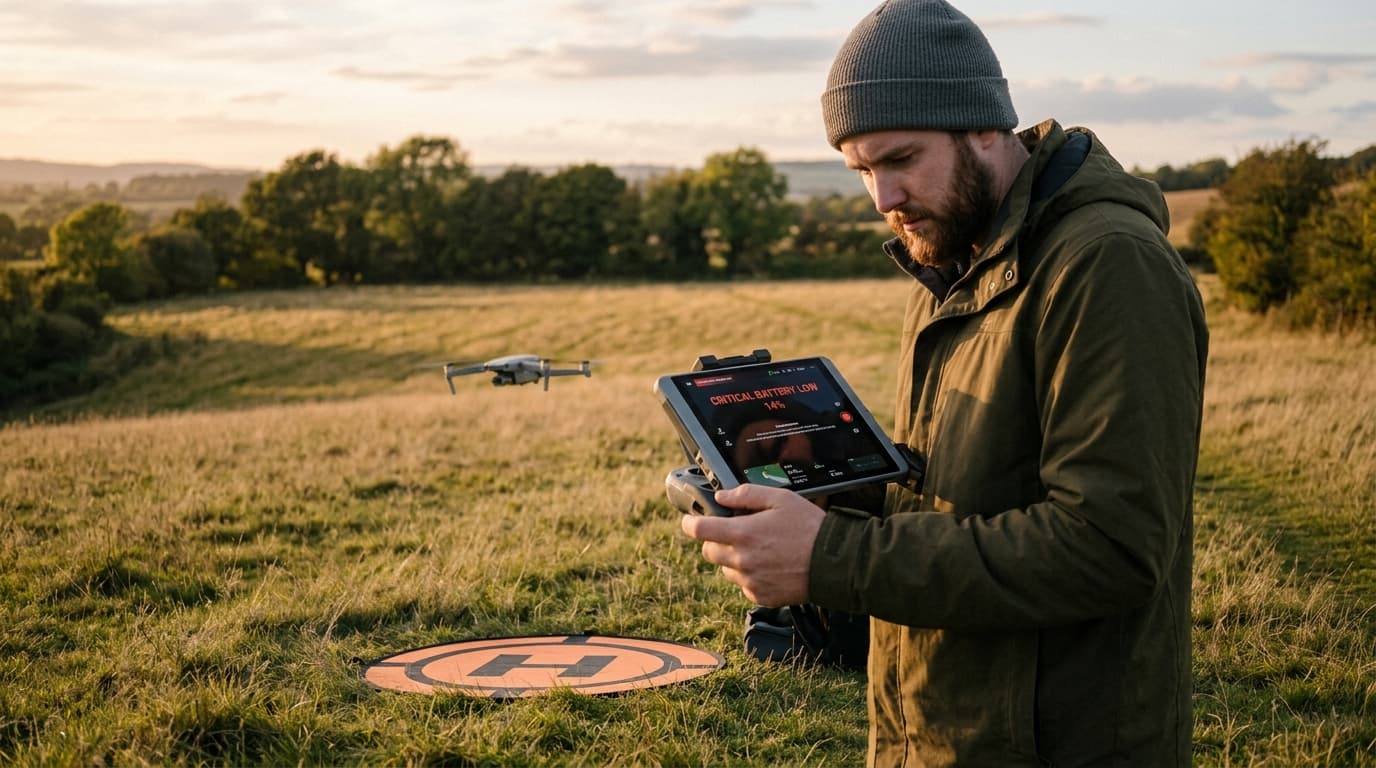
Drone critical battery warning and forced auto-landing: what it means and how to avoid it
The critical-battery threshold is not a fixed percentage — the controller estimates it from distance home, altitude and wind. We explain how the threshold works, why it catches pilots out, and how to plan a reserve so a forced landing is never a surprise.
- safety
- troubleshooting
- getting-started
2026-07-11
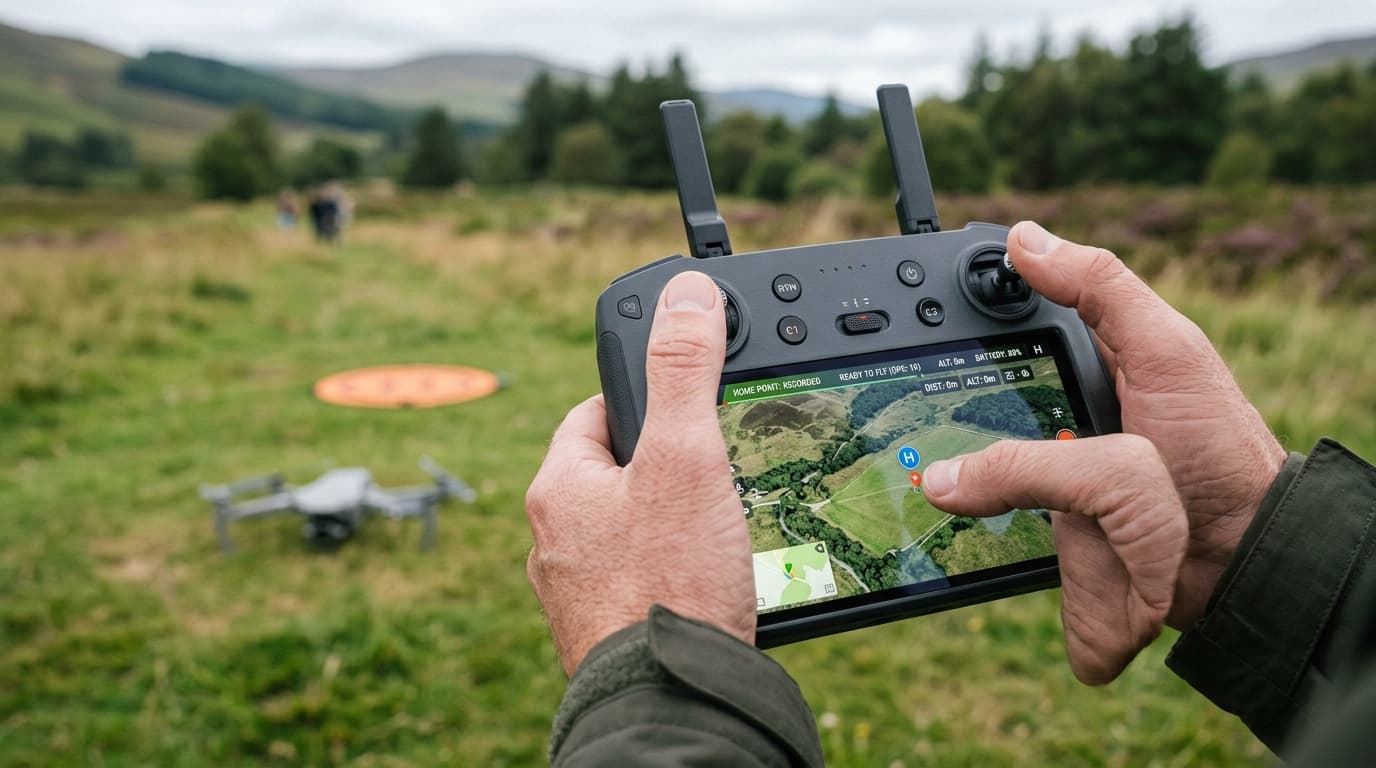
Drone home point not updating: how to set it and why it matters
The home point is not where you are standing — it is where the drone recorded it. If it stays stale or never gets confirmed, RTH will send the aircraft to the wrong place exactly when you need it most. Here is when the home point gets captured, why it goes wrong, and how to confirm it on every takeoff.
- safety
- troubleshooting
- getting-started
2026-07-11
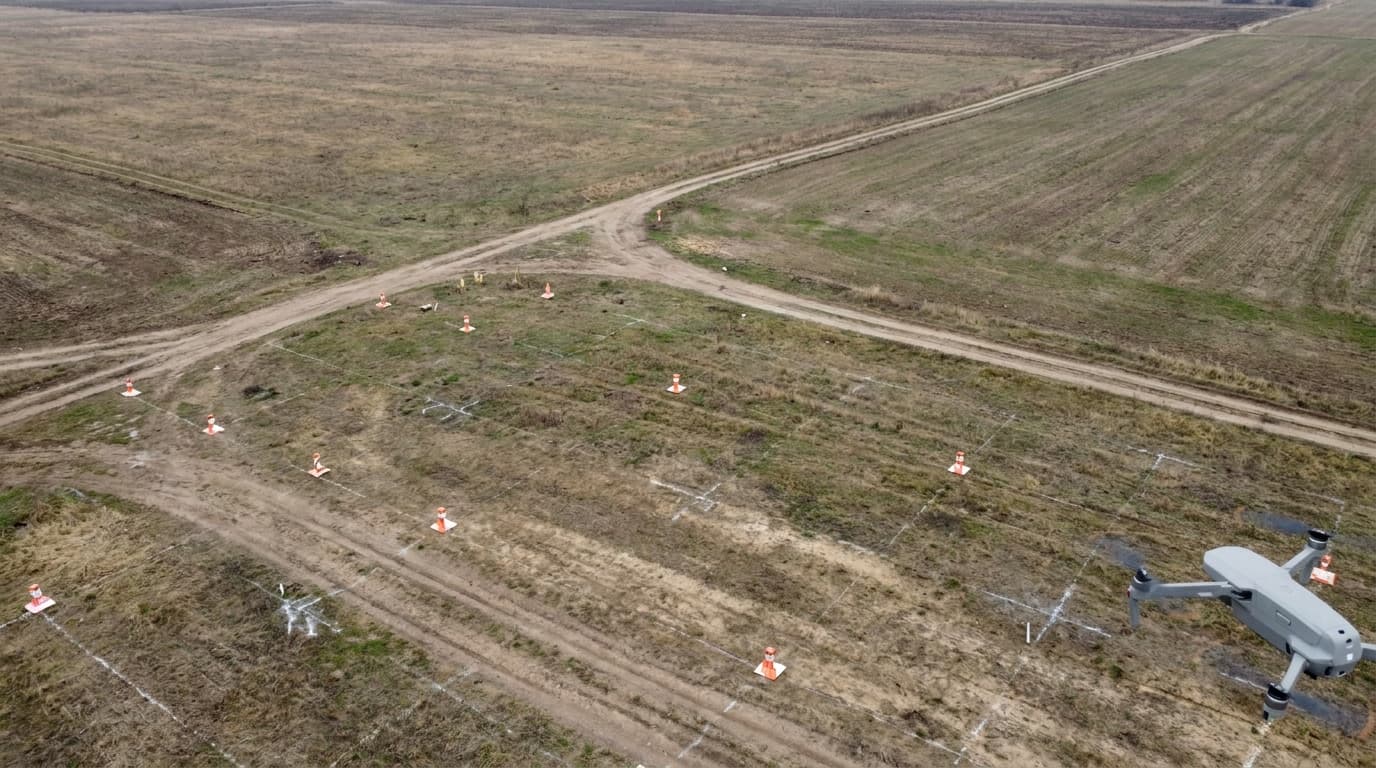
Drone Mapping and Surveying: Orthomosaics, 3D Models and Where the Accuracy Comes From
A mapping flight doesn't photograph a site — it measures it. The orthomosaic and 3D surface model are only as accurate as the overlap, ground control points and RTK/PPK behind them — and large sites hit the visual-line-of-sight ceiling before they hit the sensor's.
- commercial
- open-category
- specific-category

2026-07-11
How Much Do Drone Pilots Earn? What Actually Drives the Pay
There is no single figure — certification level, niche, region, and employed-vs-freelance all shift the pay. What actually drives a drone pilot's income, and how a certificate turns into paid work.
- commercial
- licence
- latvia
2026-07-11
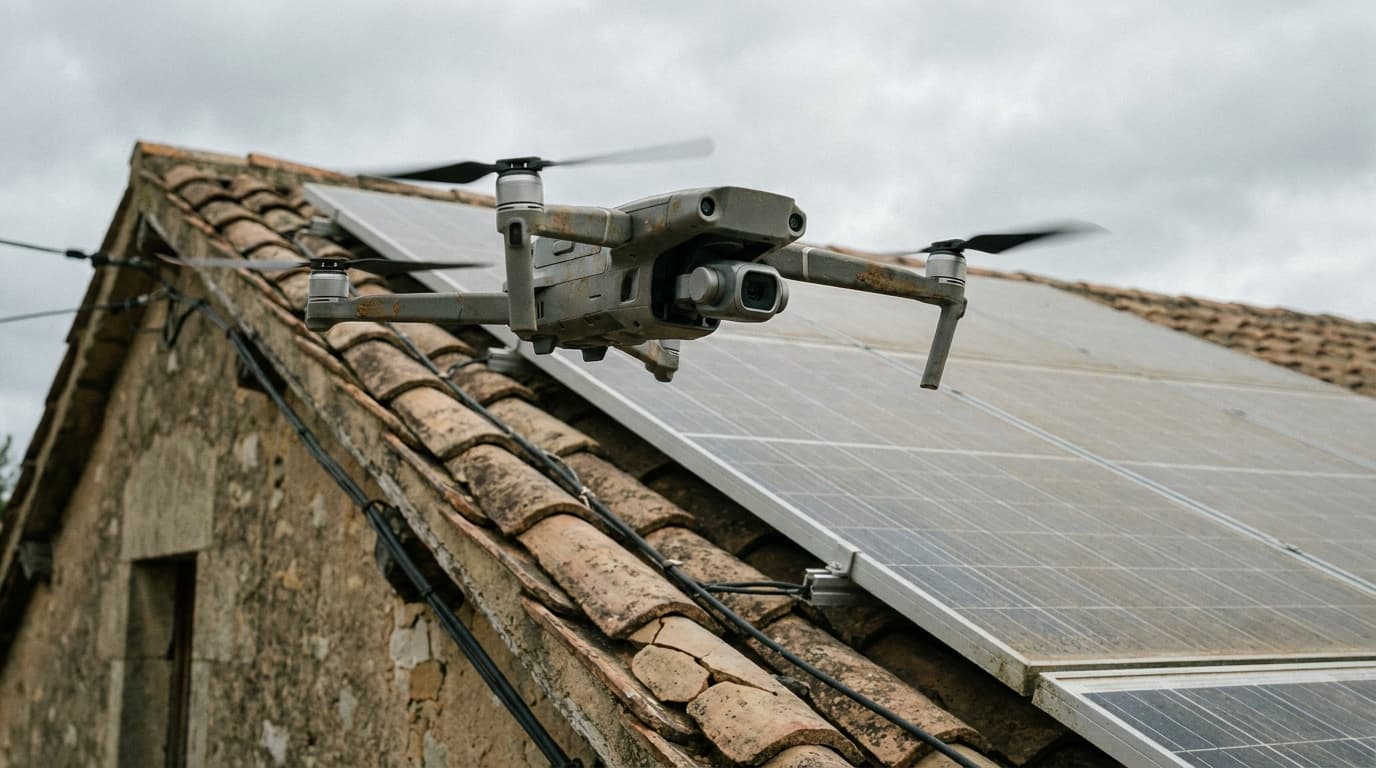
Drone roof and infrastructure inspection: safer, faster surveys of hard-to-reach structures
A drone replaces scaffolding and rope access for roof, facade, chimney and solar-array surveys — faster and without fall risk. But the work happens right next to structures and often above the people living or working under them — which is where the A1/A2 choice and, sometimes, Specific category come in.
- commercial
- open-category
- a2
2026-07-11
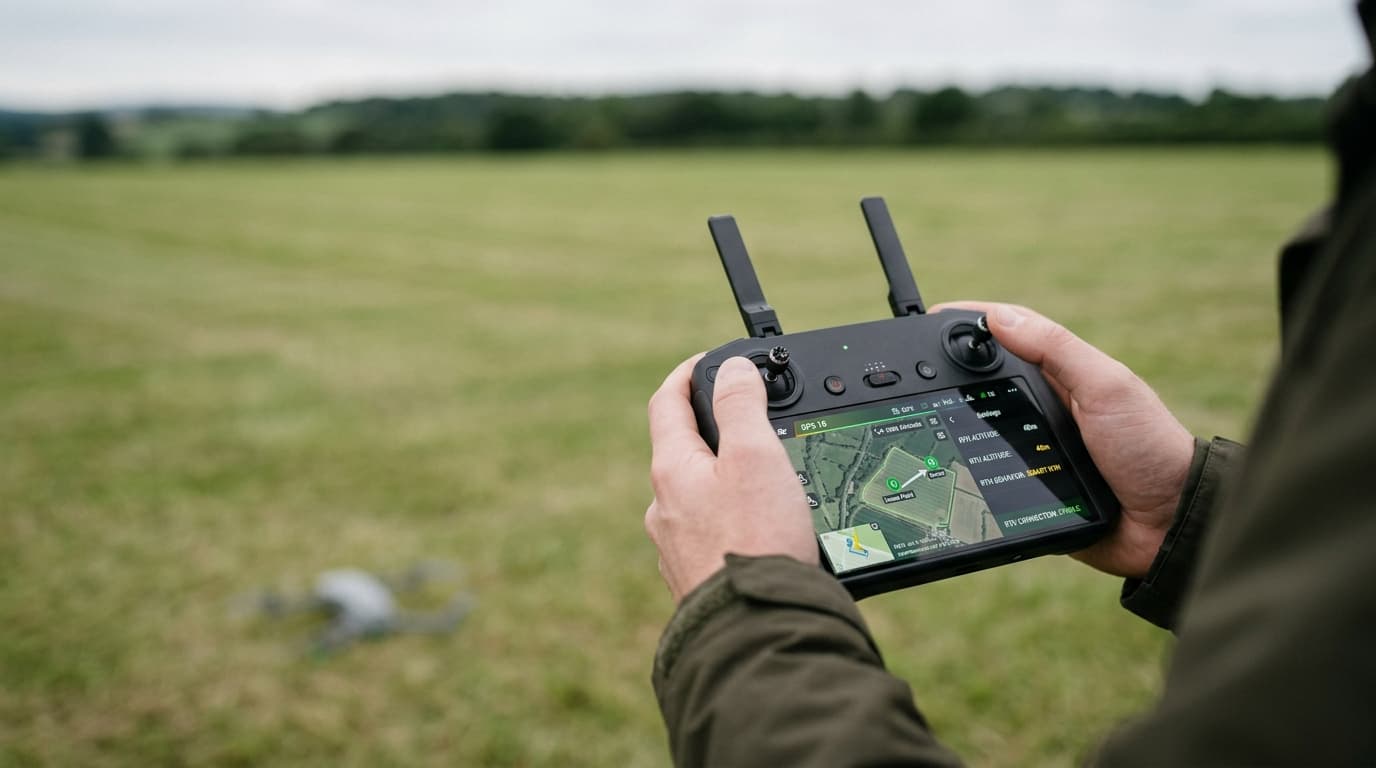
Drone RTH not working: how return-to-home works and why it fails to trigger
RTH did not kick in exactly when it was needed — and that is almost always traceable, not random: a home point that was never recorded, no GPS lock at takeoff, a failsafe set to hover or land instead of return, or the function switched off outright. Here is how RTH actually works and how to check it before it matters.
- safety
- troubleshooting
- getting-started
2026-07-11
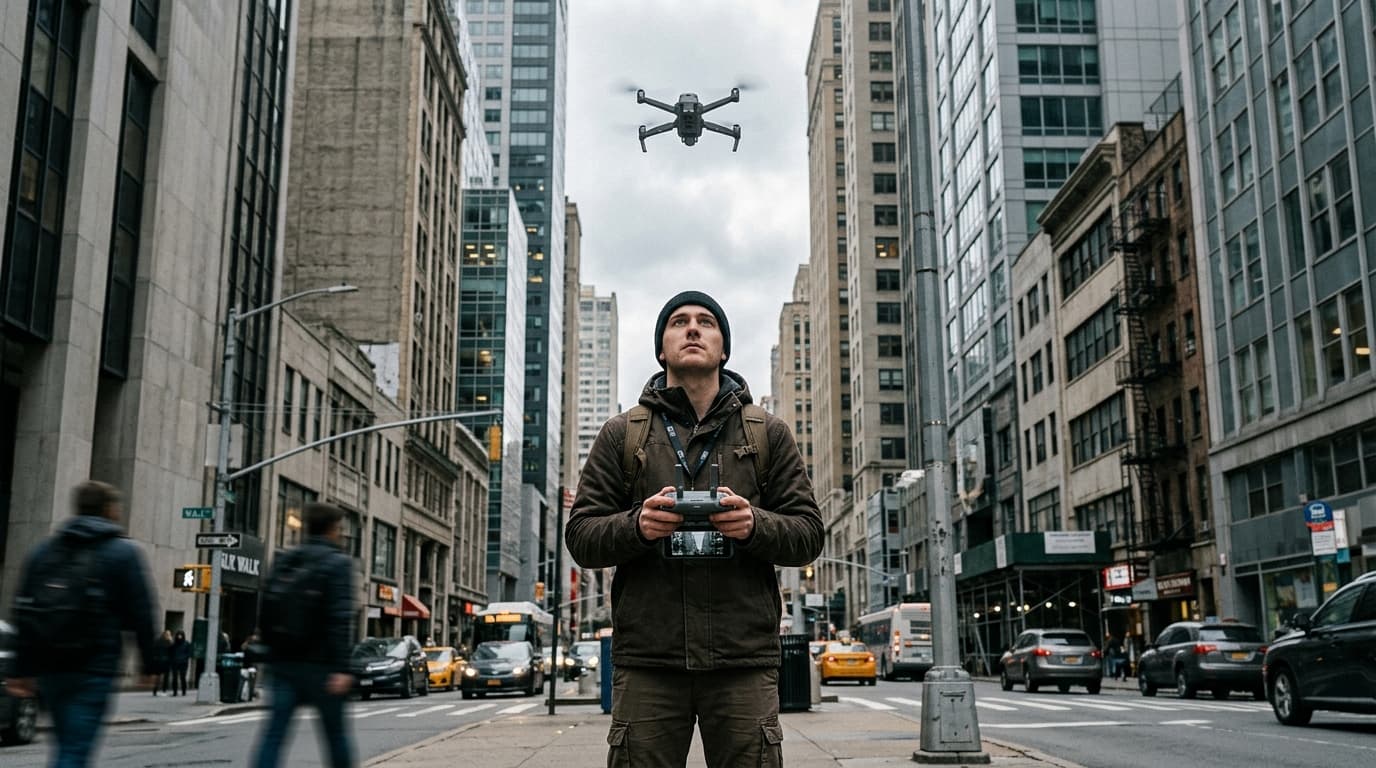
Drone Signal Problems in the City: Video Dropouts, Disconnects and Fixes
The video feed stutters, a weak-signal warning appears, then the link drops entirely — this happens far more often in the city than in open countryside. The cause is rarely a broken drone; it is the urban radio environment: crowded frequency bands, reflections and shadowing from buildings. Here is how to match the symptom to the cause and what to do about it.
- safety
- troubleshooting
- getting-started
2026-07-11
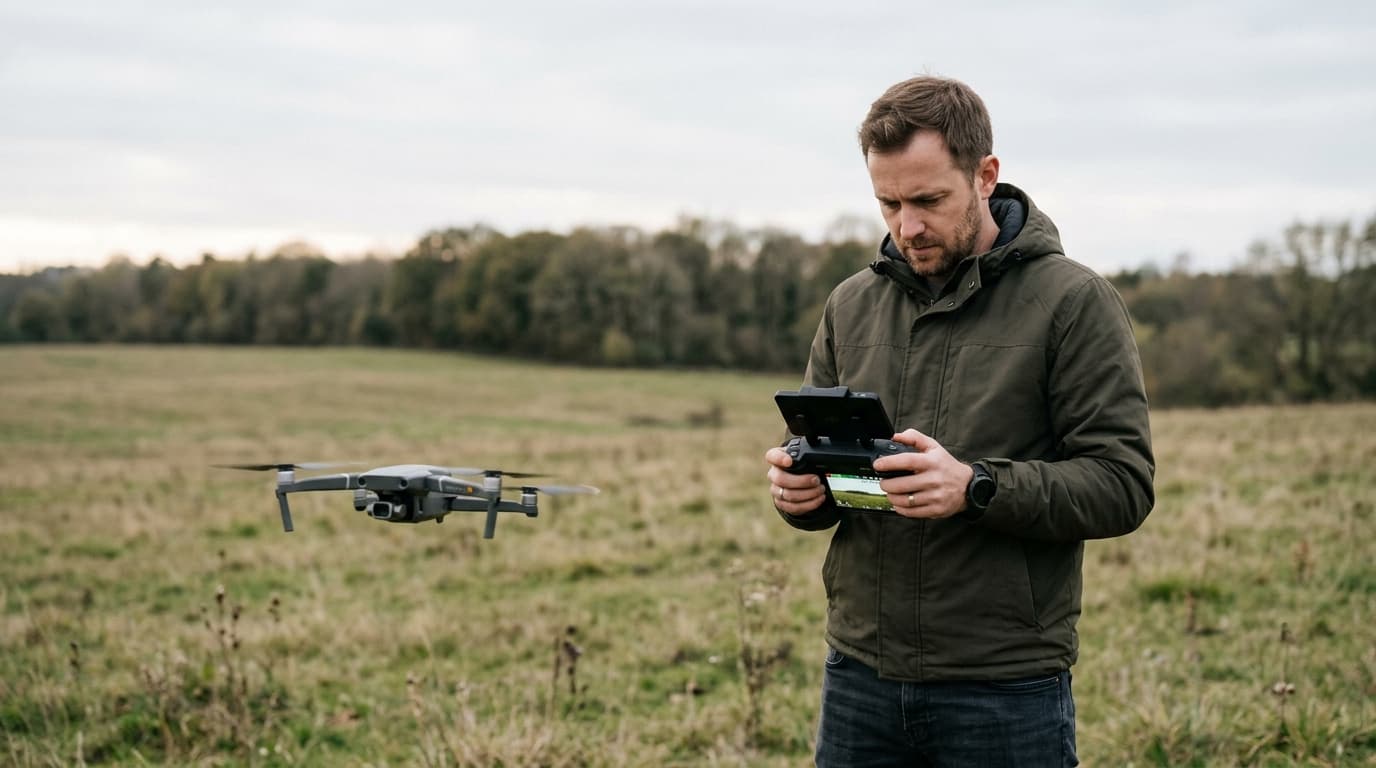
Weak or lost GPS signal on a drone: causes, ATTI mode and the fix
A drone shows too few satellites, drifts on its own, or suddenly drops into attitude (ATTI) mode — in most cases the receiver is not broken, the launch site and conditions are the problem. Here is what ATTI mode means for control, why the GPS signal weakens, and how to fix it before your next flight.
- safety
- troubleshooting
- getting-started
2026-07-11
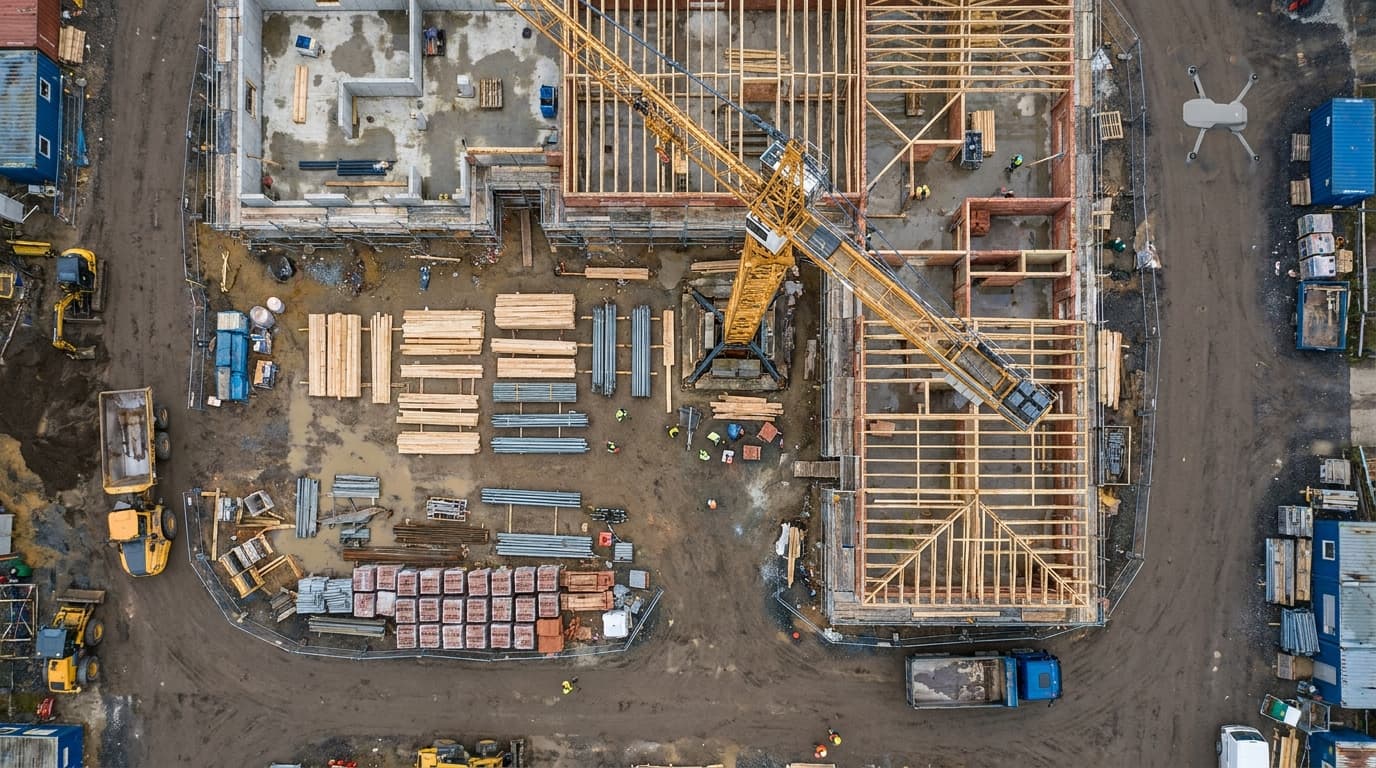
Drones for construction: progress monitoring, surveying and site documentation
A construction site is one of the few places a drone earns its keep every week — progress photos, stockpile volumes, orthomosaics. But a live site is also one of the harder places to fly legally: cranes, scaffolding, close neighbours, and a large site often pushes the job out of Open into Specific.
- commercial
- specific-category
- open-category
2026-07-11
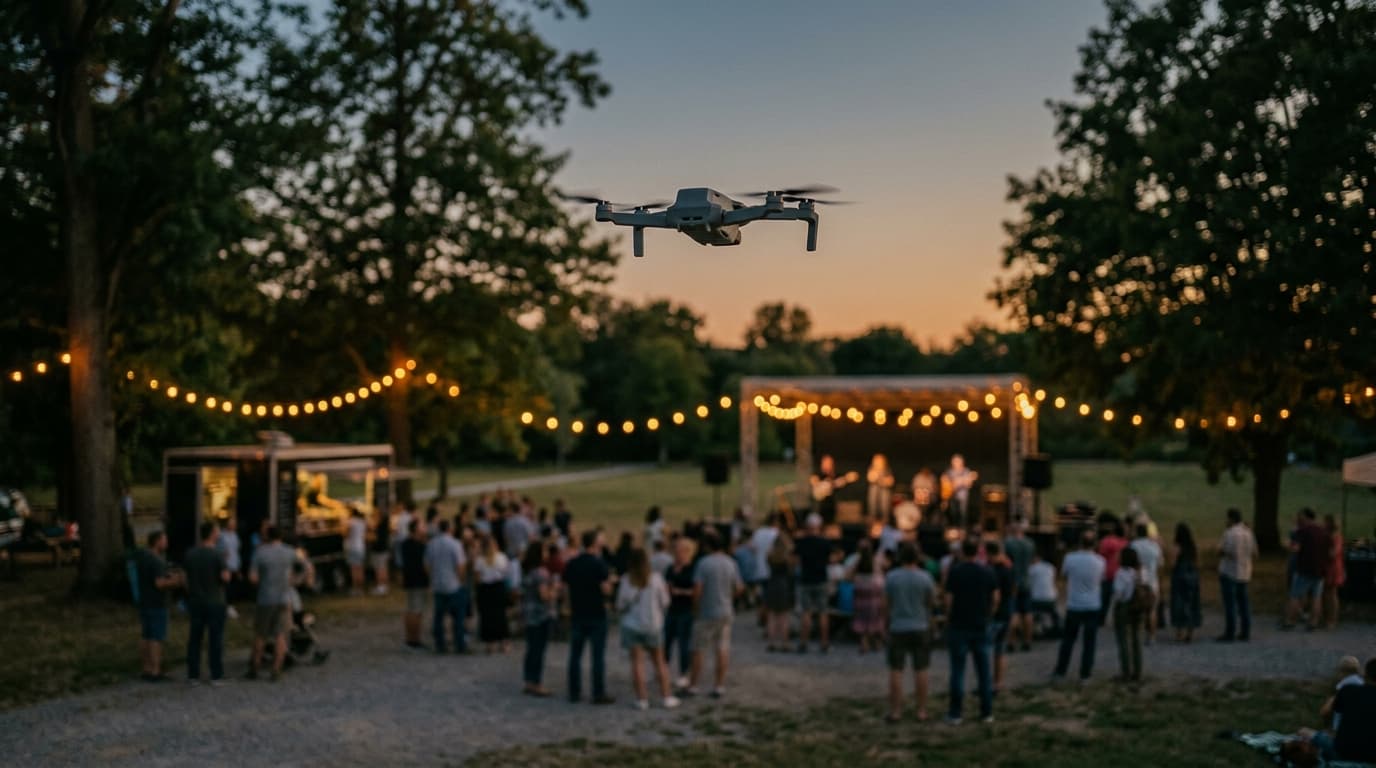
Drones for events: the aerial shots everyone wants — and the crowd problem
Weddings, festivals, races — commercially attractive, legally one of the hardest niches, because the Open category bans flying over assemblies of people in every subcategory. Pros work around it with standoff framing, timing and, rarely, a Specific-category authorisation.
- commercial
- open-category
- specific-category
2026-07-11
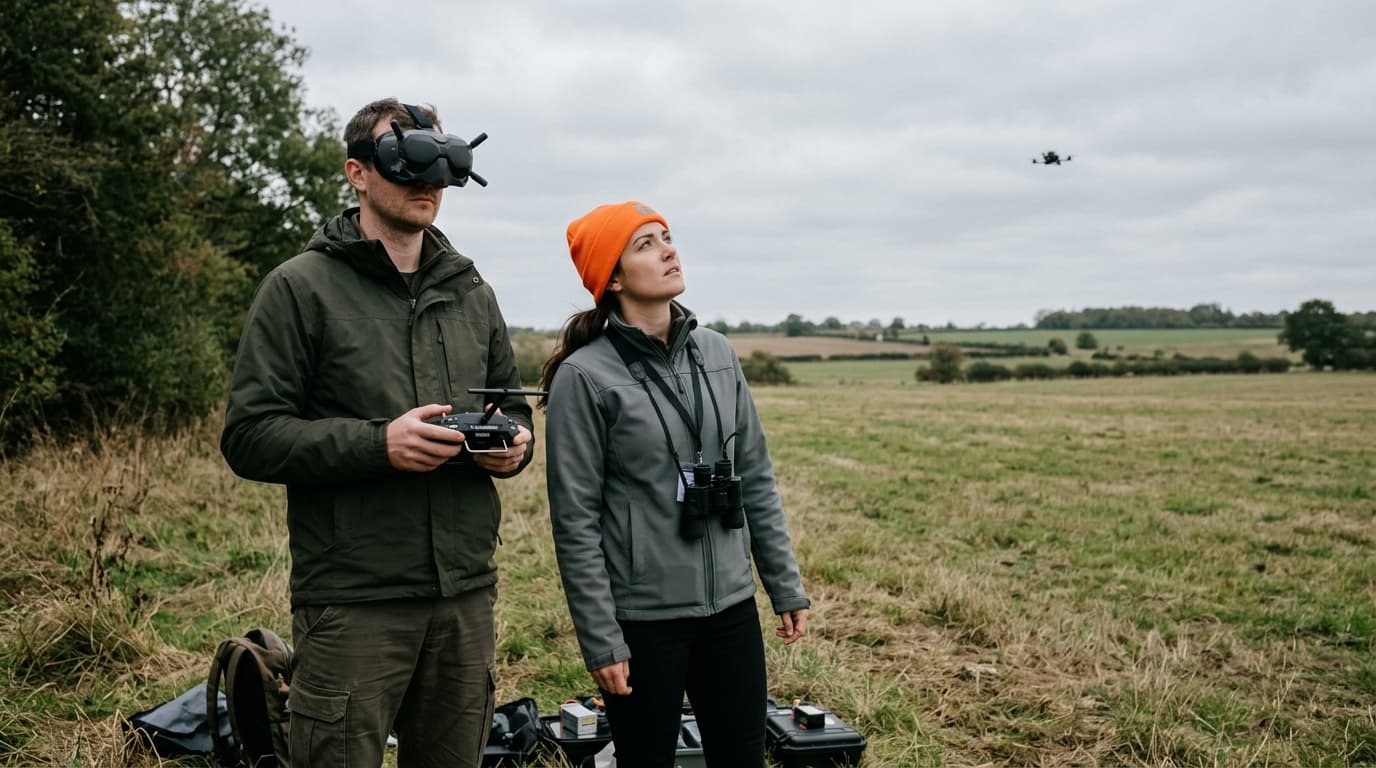
FPV drone rules under EASA: the Open category still applies
FPV is not a legal loophole — the EASA regulation covers it exactly like any other drone. Registration, the A1/A3 exam, and the observer rule for goggles are mandatory, not optional.
- fpv
- getting-started
- open-category
2026-07-11
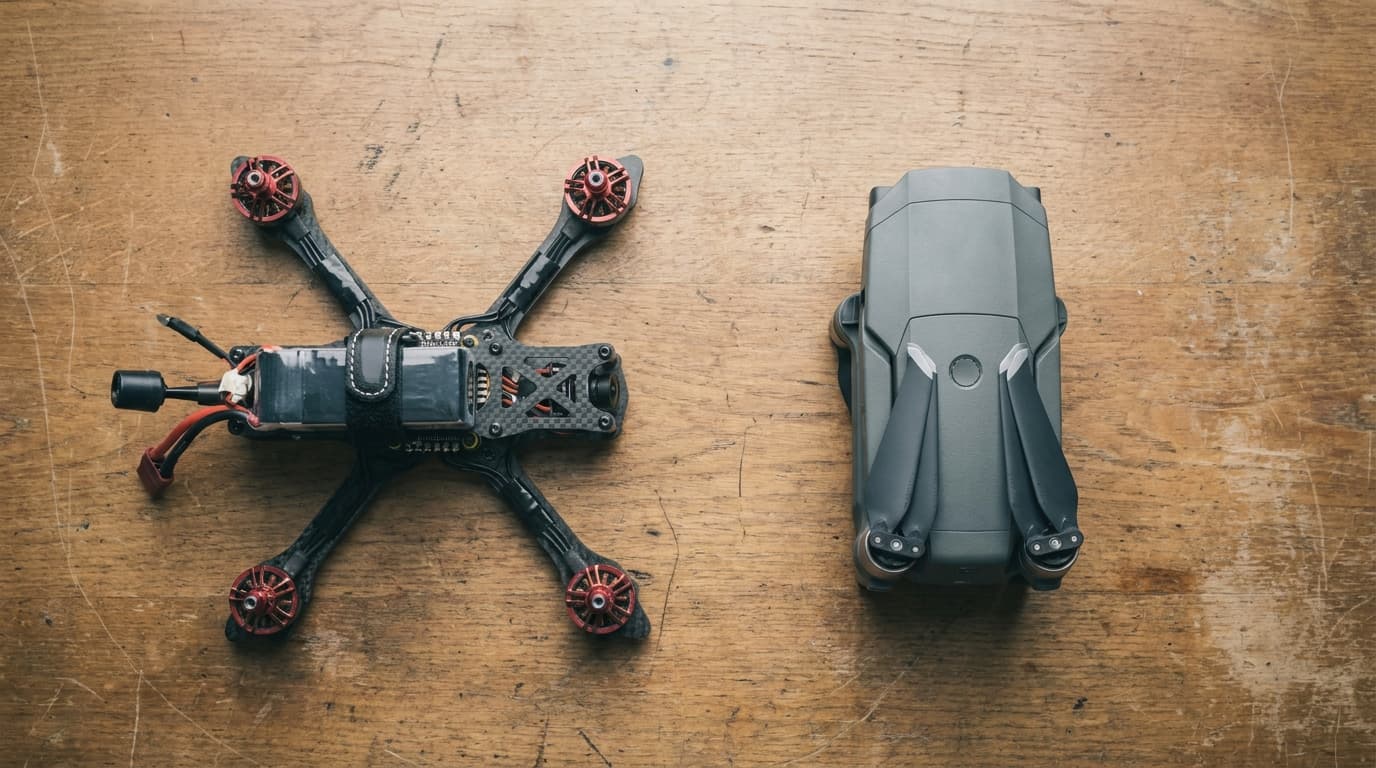
FPV vs DJI: which one to fly, and how the rules and skills differ
A GPS camera drone flies itself — FPV flies exactly as you fly it. We compare the learning curve, cost and repairs, and explain what stays the same either way: registration, the A1/A3 exam and, for FPV, an observer.
- fpv
- getting-started
- open-category
2026-07-11
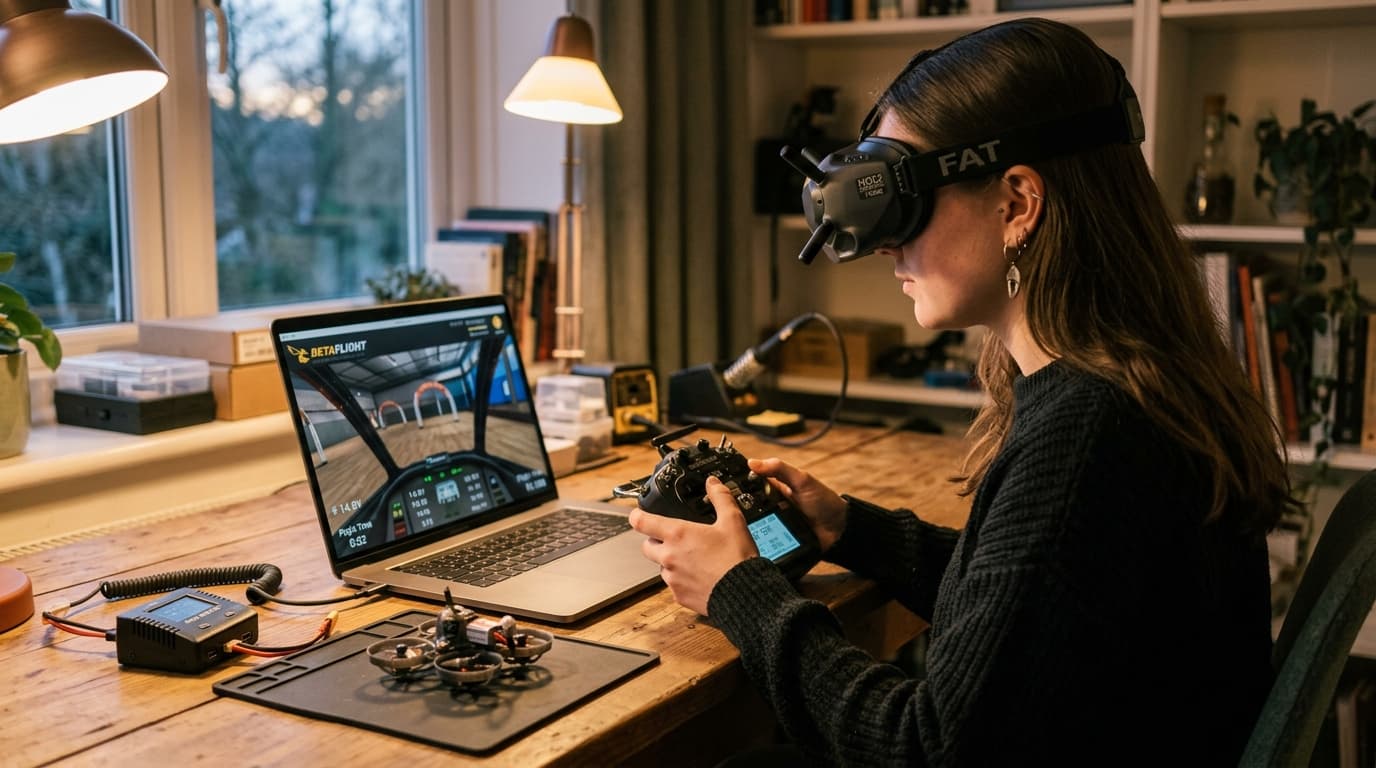
How to Learn to Fly FPV: From Simulator to Acro, the Legal Way
FPV learning starts in a simulator, not in the air — and the legal requirements (observer, registration, A1/A3) apply from the first outdoor flight, not later. Here is the ladder from angle mode to freestyle, and what to sort out before flying solo.
- fpv
- getting-started
- open-category
2026-07-10
A2 vs the Specific category: when does the Open category stop being enough?
A2 lets you work a C2 drone 30 m from people — 5 m in low-speed mode. The Specific category is not a "better A2": it is a different regime with a declaration or authorisation, an operations manual and a higher exam bar. Here is an honest framework for the choice.
- a2
- specific-category
- open-category
2026-07-10
DJI Care Refresh vs drone insurance: why one does not replace the other
DJI Care Refresh replaces your damaged drone; Latvia's mandatory insurance covers harm to other people. They are two different protections, and the law only asks for the second. Here is what pays when something breaks.
- insurance
- dji
- latvia
2026-07-10
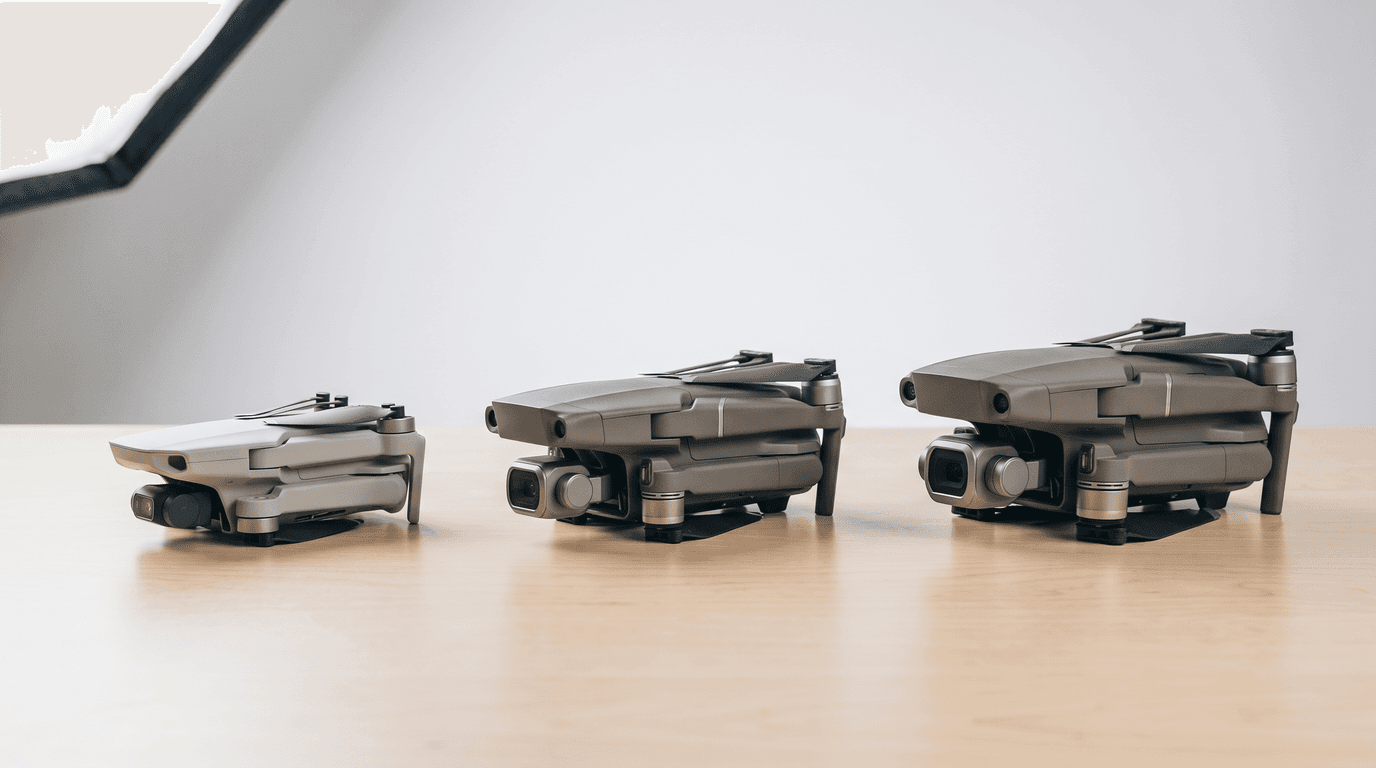
DJI Mini vs Air vs Mavic: which line fits your flying — and your certificate
Three DJI lines mean three weight bands, three C-classes and three certificate paths. The Mini 5 Pro (249.9 g, C0) flies in A1 with no exam, the Air 3S (724 g, C1) needs A1/A3, and the Mavic 4 Pro (C2) needs A2 on top for work near people.
- drones
- open-category
- licence
2026-07-10
Drone flew away: what to do in the first minutes and after
Most "flyaways" are not mysteries — they follow a few recognisable causes: a wrong home point, compass interference, wind or signal loss. Here is what to do in the first minutes, how to search using the last telemetry coordinates, and when the event must be reported to the CAA.
- safety
- troubleshooting
- getting-started

2026-07-10
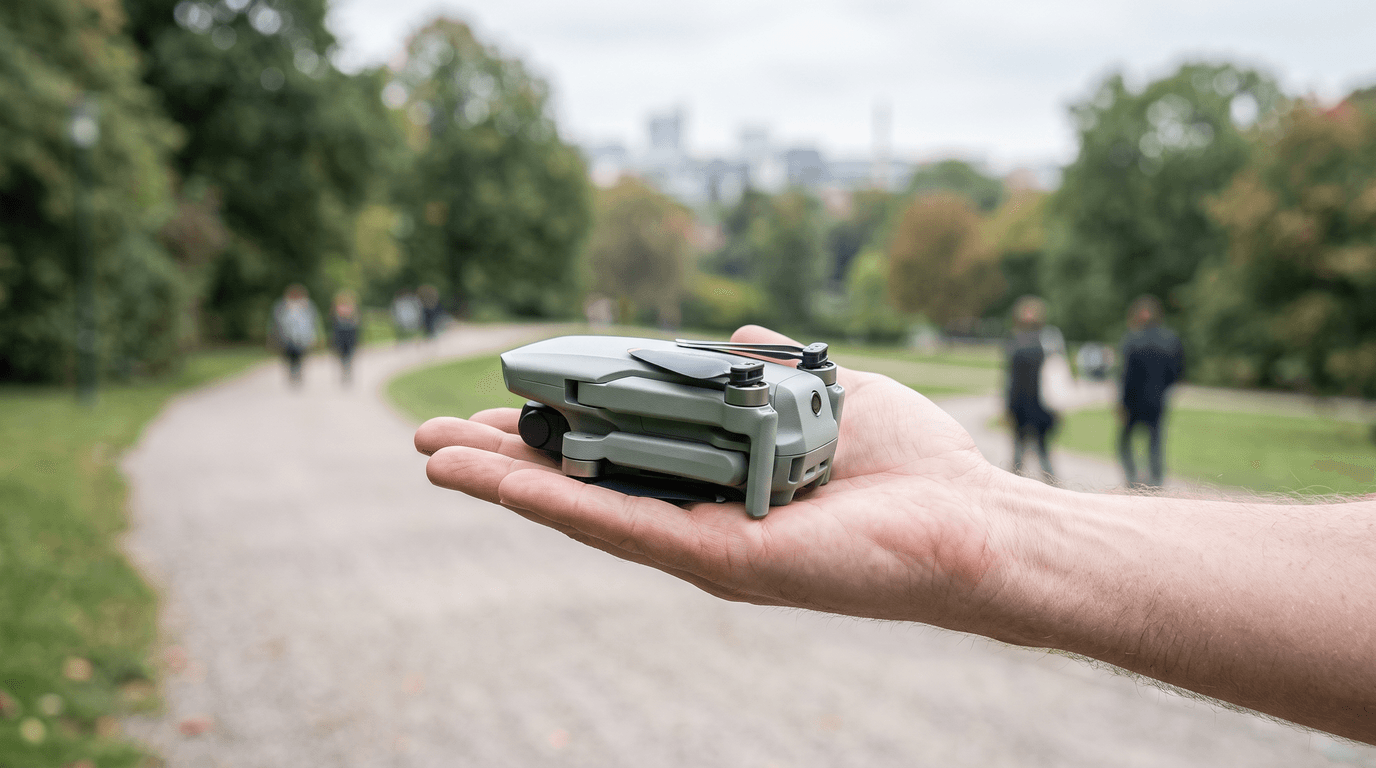
Drones for real estate: what aerial shots add — and the rule most guides skip
An aerial shot shows the plot, the roof and the surroundings like no other frame. But listings usually sit in built-up areas — which means a sub-250 g / C0–C1 drone in A1 or a C2 drone with an A2 certificate, plus a zone check and BGKIS.
- commercial
- open-category
- a2
2026-07-10
Drones under 250 g — the rules that still apply
Under 250 g does not mean "no rules". The exam really isn't needed for A1 flights, but operator registration with a camera, the 120 m ceiling, VLOS and geographical zones remain. A precise list of what applies and what doesn't.
- sub-250g
- open-category
- registration
2026-07-10
The first mistakes that destroy beginner drones — and how to avoid them
Most first drones die to predictable pilot mistakes, not hardware: RTH set too low, a drained battery, an ATTI-mode drift. Nine mistakes — flying and legal — each with a concrete fix.
- getting-started
- safety
- latvia
2026-07-10
How to become a commercial drone pilot in the EU and Latvia
The EU has no separate "commercial drone licence" — the same A1/A3 and A2 certificates cover paid work. The realistic path: A1/A3, A2, operator registration, insurance, then skills and a portfolio.
- commercial
- licence
- latvia
2026-07-10
How to learn to fly a drone: from simulator to a confident first flight
You don't learn to fly a drone from cinematic videos — you learn it from a sequence of drills: simulator, empty field, a steady hover, the box pattern, nose-in flight. Here is a practical path from zero to a confident first flight.
- getting-started
- safety
- latvia
2026-07-10
How to start a drone business in Latvia: the legal floor, the niche, the real costs
Drone businesses fail on paperwork and demand far more often than on flying skill. The sequence that works: certificates, operator registration, insurance, a registered activity — and only then equipment and clients.
- business
- commercial
- latvia
2026-07-10
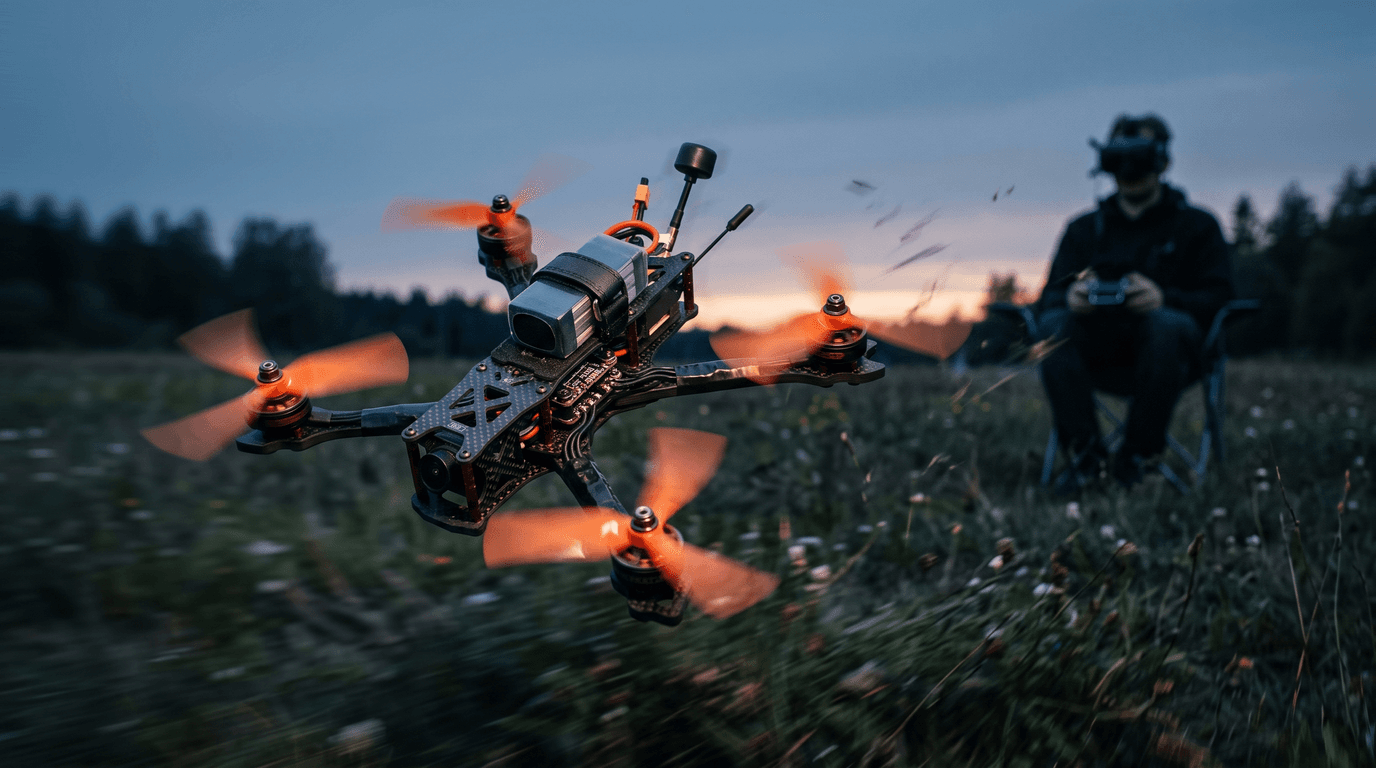
What is FPV? Goggles, disciplines, and the rules that still apply
FPV means flying through goggles with the drone's own view — racing, freestyle, cinewhoop or long-range. But EASA rules apply to FPV exactly like to any other drone: observer, registration, exam. Here is what to know before the first flight.
- fpv
- getting-started
- open-category
2026-07-10
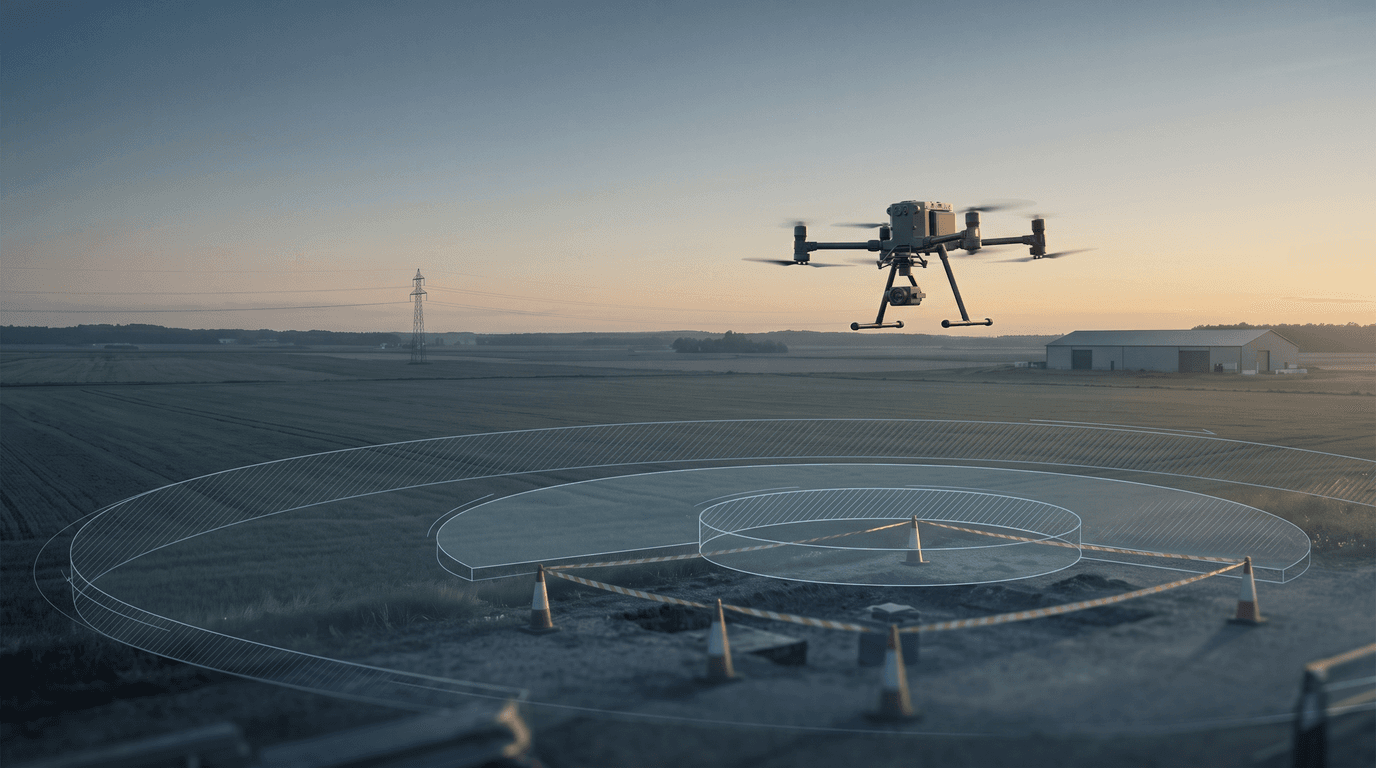
What are STS, PDRA and SORA? The Specific category, explained
When a flight no longer fits the Open category — BVLOS, above 120 m, over 25 kg — it lands in the Specific category. Three routes in: an STS declaration, a PDRA, or a full SORA risk assessment. Here is how they differ and how it works in Latvia.
- specific-category
- sts
- sora
2026-07-10
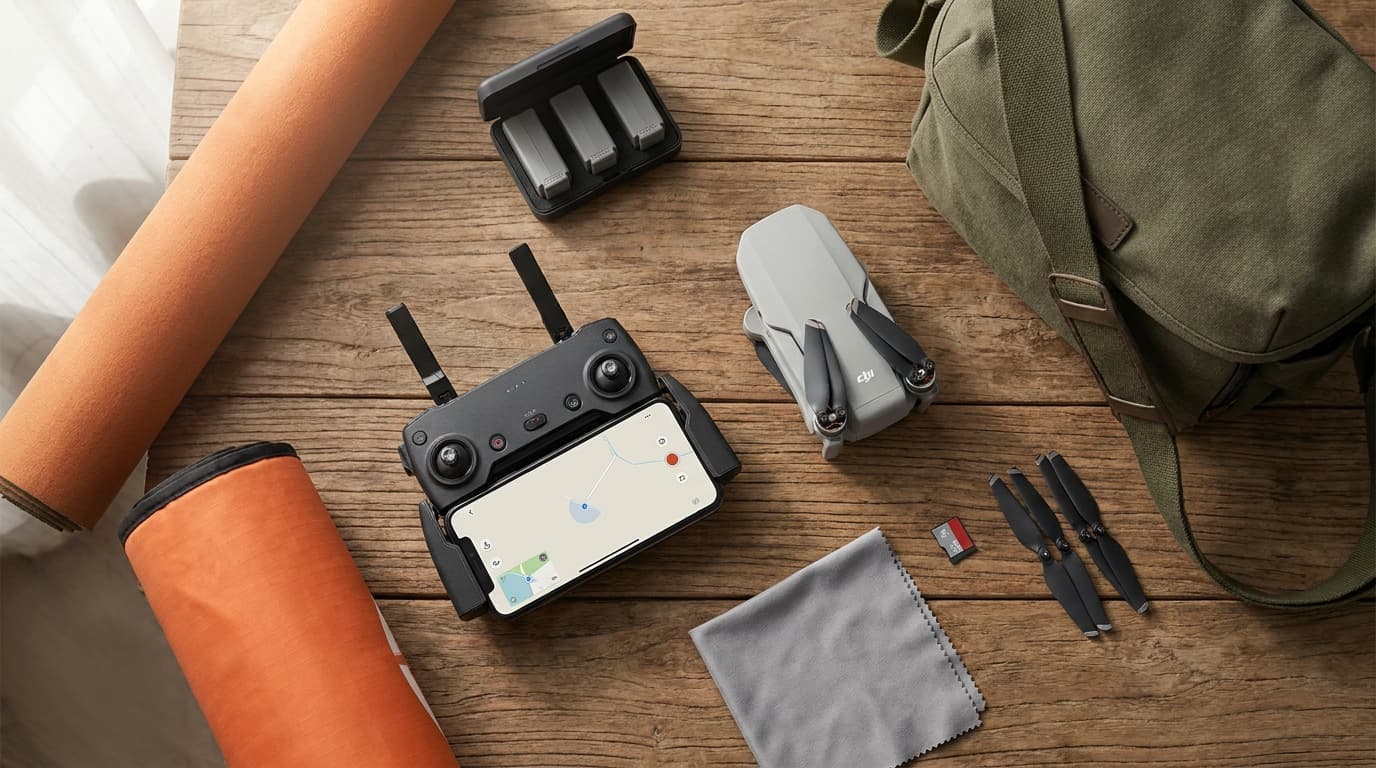
What to bring to a drone flight: the kit and bag that don't end the session
Most aborted flights are lost at the car, not in the air — a dead spare battery, a forgotten cable, papers left at home. Here is a practical kit and bag to pack once and reuse every time, legal minimum for Latvia included.
- getting-started
- safety
- latvia
2026-07-10
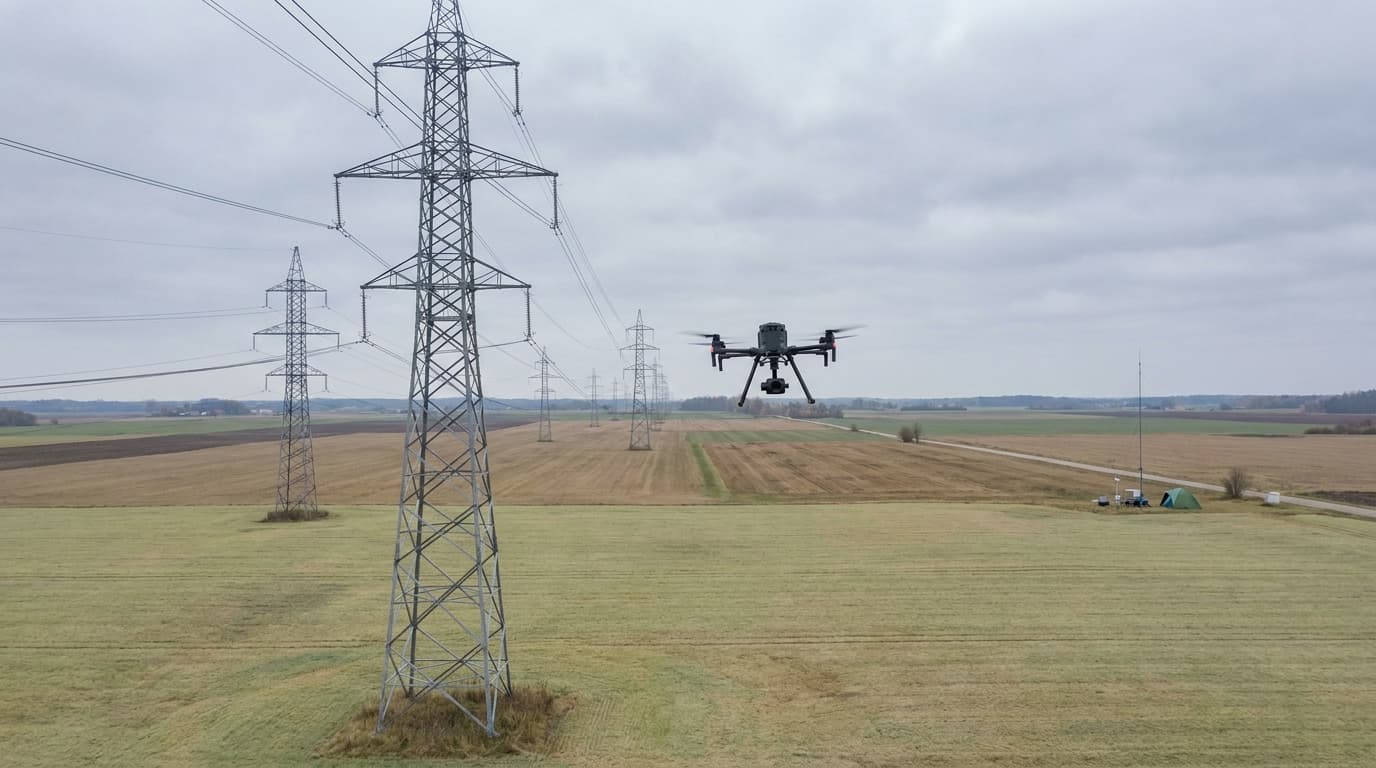
When do you need the Specific category for a drone — and when Open is enough
The Specific category is not the next licence tier — it starts the moment your plan crosses any single Open-category boundary: above 120 m, BVLOS, over 25 kg, dropping material or spraying. Here is the full trigger list and the three routes in.
- specific-category
- regulation
- sts
2026-07-09
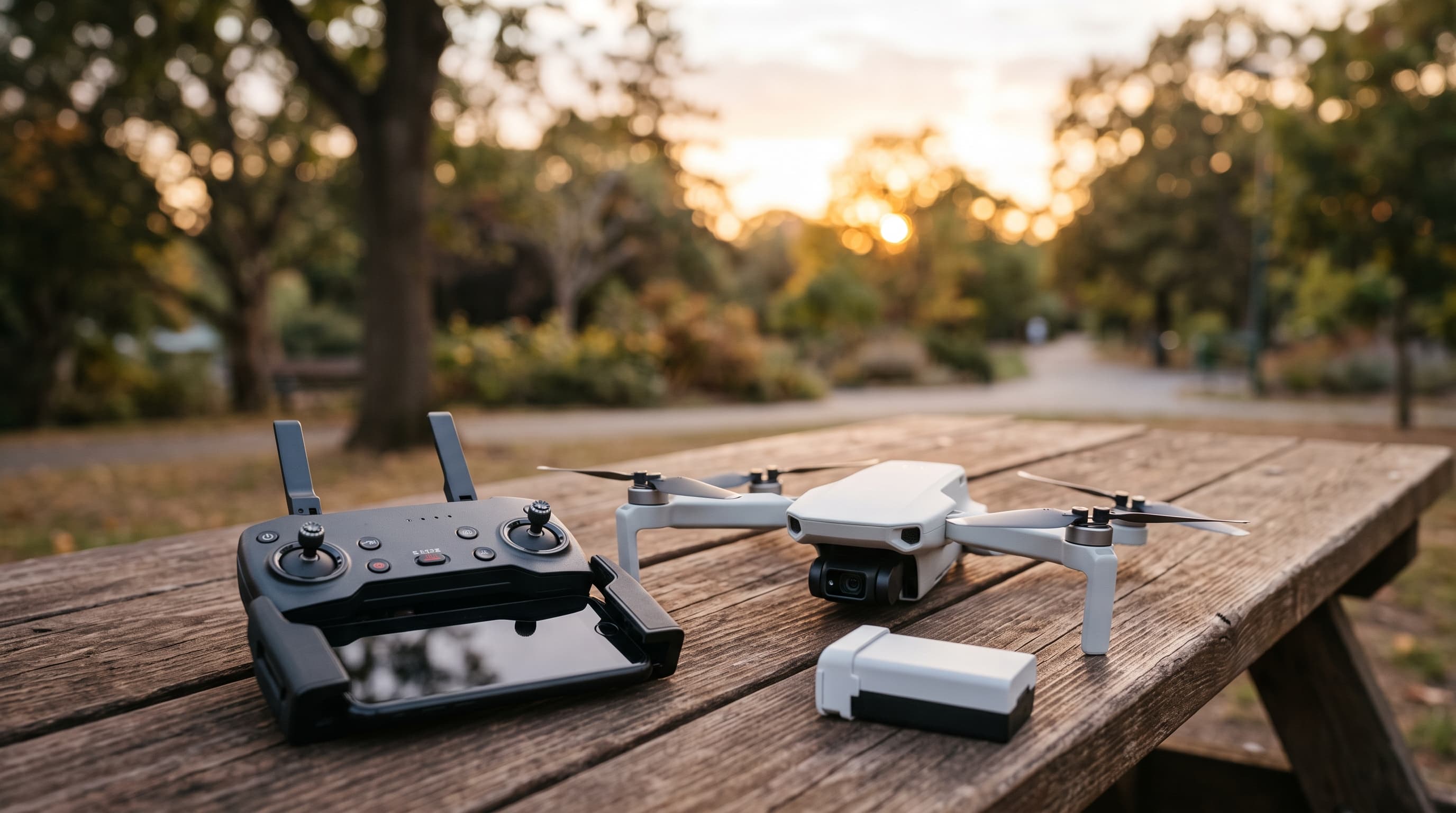
Do I need a licence for a DJI Lito X1 in Latvia? Same drone, two different legal classes
The DJI Lito X1 ships in two legal classes depending on the battery and accessories in the box — C0 (no exam) in the base and Fly More Combo, C1 (exam mandatory) in the Fly More Combo Plus. Here's how to tell which one you're buying.
- licence
- latvia
- sub-250g
2026-07-08
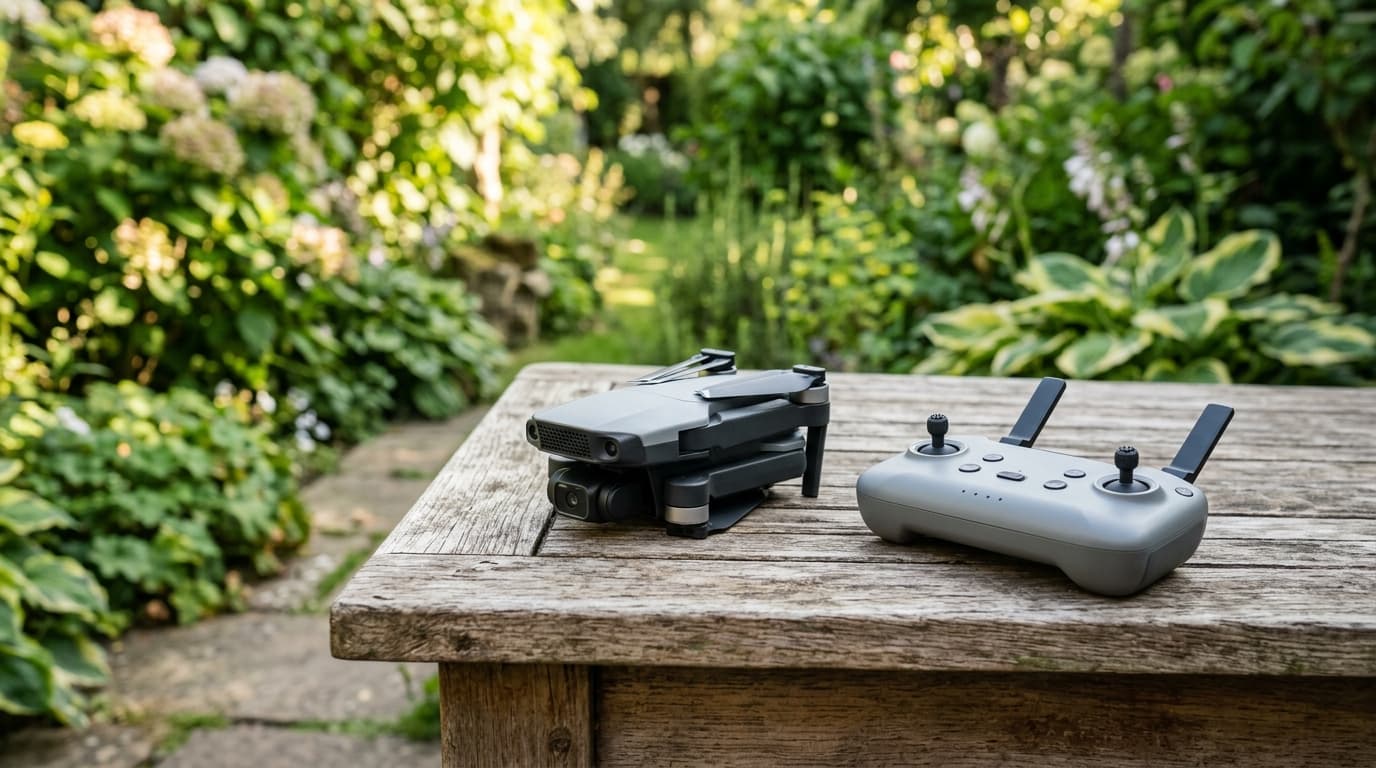
Do I need a licence for a DJI Mini in Latvia? No exam under 250 g — but yes to registration
A DJI Mini weighs under 250 g, so you don't need the pilot exam to fly it in A1. But its camera means operator registration is mandatory. Here's exactly what to do.
- licence
- latvia
- sub-250g
2026-07-08
Drones in Latvia's protected nature areas — the extra rule layer
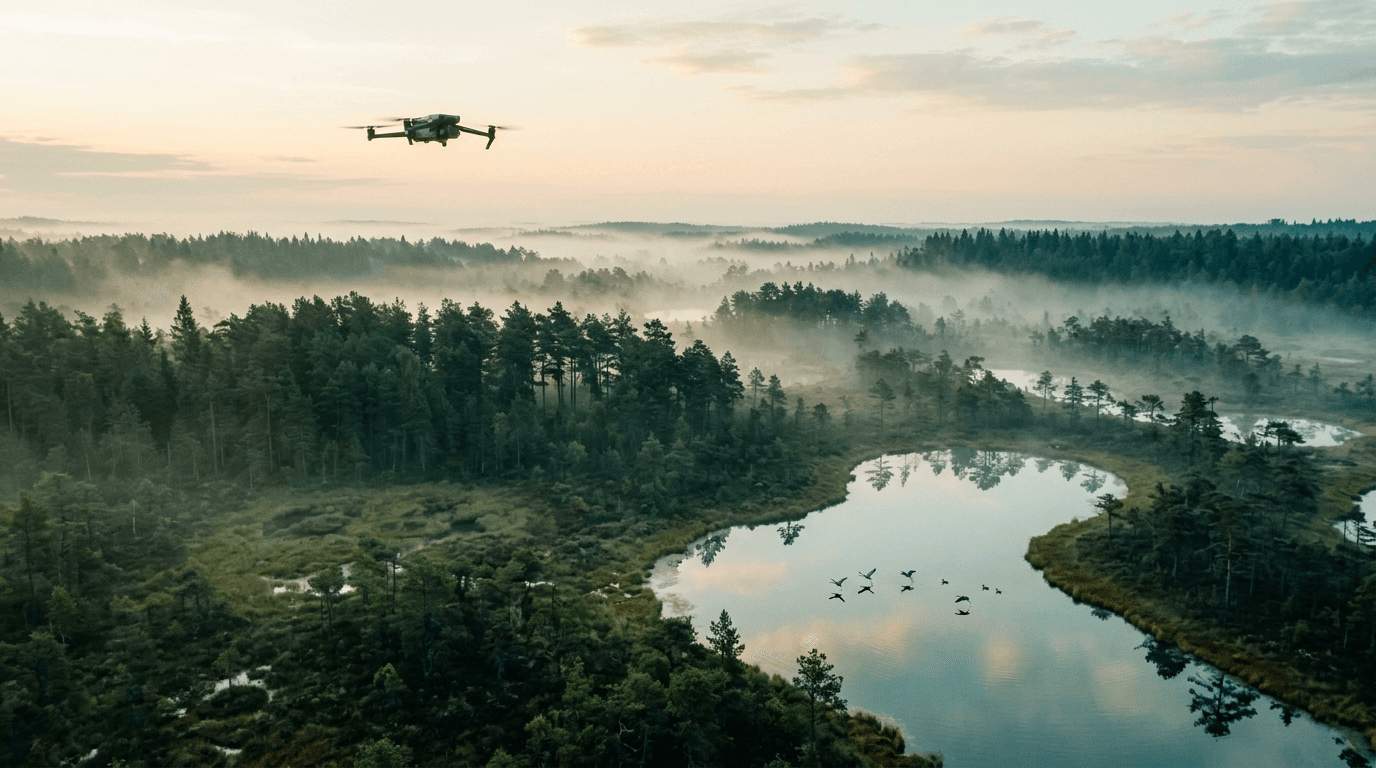
The airspace map does not show the whole nature-protection permission layer. A practical reading of the extra rules enforced by the Nature Conservation Agency: height floors in Gauja and Ķemeri, a seasonal window at Pape, and when you need a permit.
- latvia
- airspace
- rules
2026-07-07
A1/A3 or A2: which drone certificate do you need in Latvia?
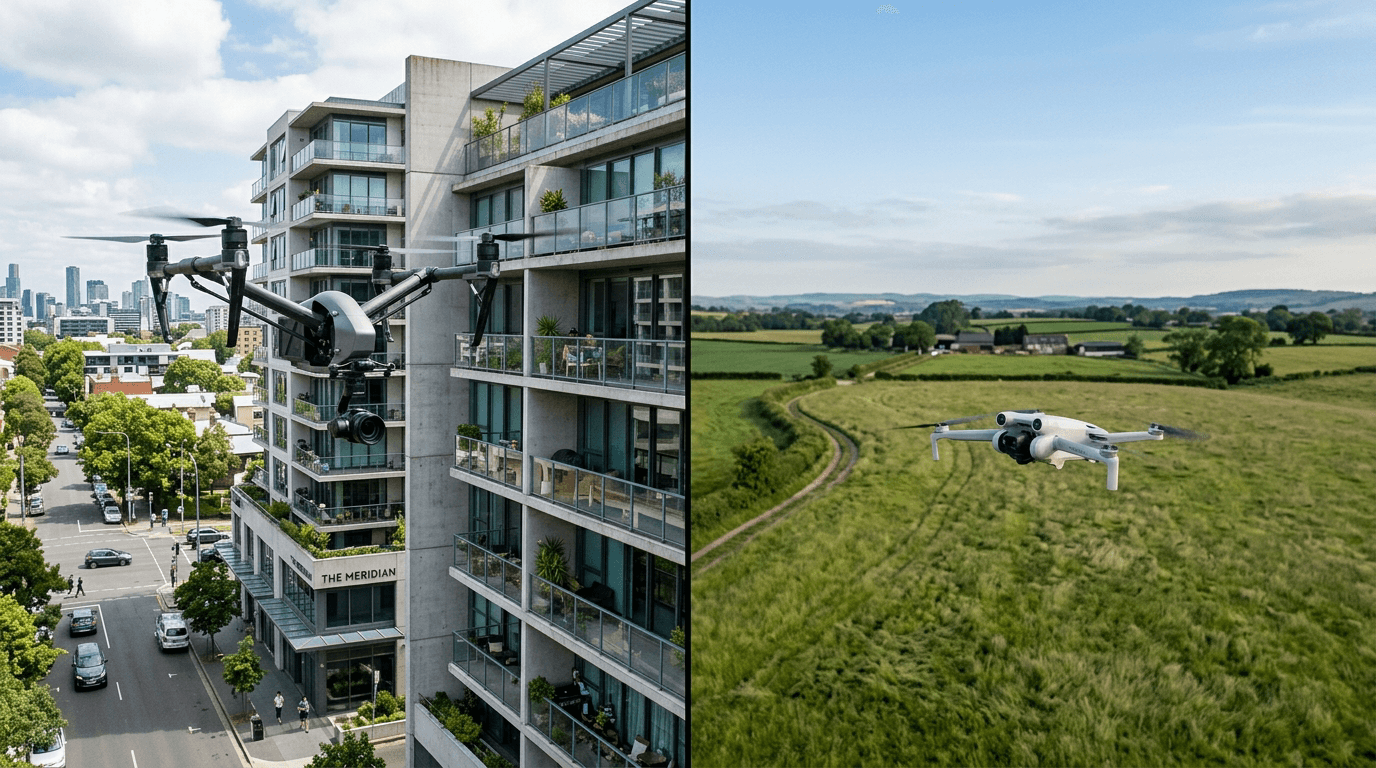
The certificate you need is decided by your drone's class mark and how close to people or built-up areas you fly — not by ambition. Here's how to choose between the free A1/A3 and the in-person A2.
- licence
- a2
- open-category

2026-07-07
How to become a drone pilot in Latvia: from box to first flight
The legal path in Latvia has a fixed order — operator registration, the free A1/A3 exam, the airspace rules — and beginners keep doing it backwards. Here is the whole route, and how to tell if you even need it.
- getting-started
- licence
- latvia

2026-07-07
How to prepare for the A1/A3 drone exam and pass first try
The A1/A3 exam is 40 questions in 40 minutes at 75% — not hard, but people fail by skimming the basics. A three-evening plan, the topics that actually cost points, and how to use practice.
- exam
- a1-a3
- latvia

2026-07-07
Where can I fly a drone in Latvia — how to get a reliable answer every time
A practical hub that connects the official map, zone types, BGKIS, and the Open-category limits in one place — so you can answer “can I fly here?” fast and correctly.
- no-fly-zones
- latvia
- airspace
2026-07-07
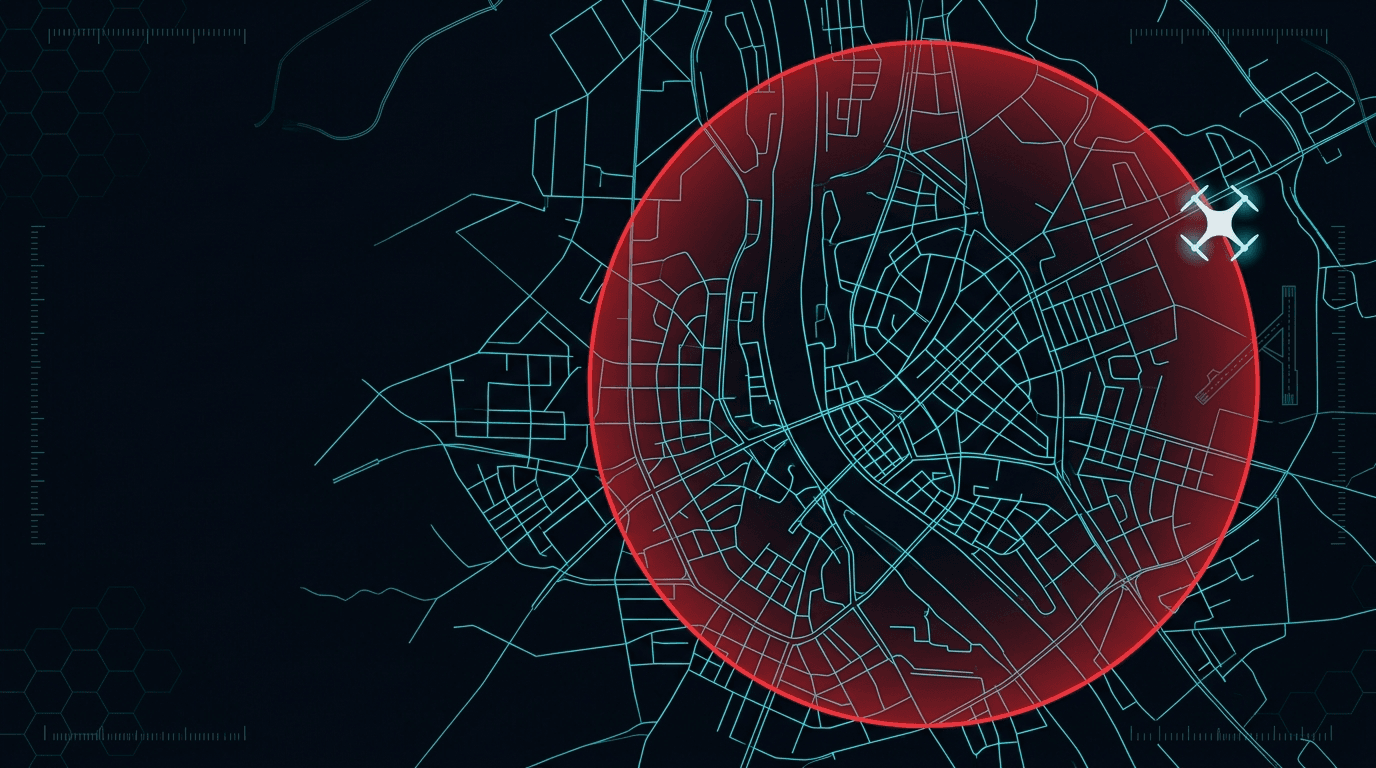
Where can I fly a drone in Riga — controlled airspace and city rules
In Riga, "can I fly here?" is the hardest question — the airport's controlled airspace and crowds. How to check it and where to find a legal spot.
- no-fly-zones
- latvia
- airspace
2026-07-05
Drone weather briefing: how to read METAR and TAF and make the go/no-go call
Gusts decide the flight, not the average wind; at 100 m it blows harder than at the surface; the TAF tells you what happens in your window. A five-minute weather briefing with METAR/TAF, the 10 km Cb rule, icing, and a six-question go/no-go call.
- meteorology
- weather
- metar-taf
2026-07-05
Drones over Latgale: how to tell a lawful flight from a violation, and where to report one
From 4 to 12 July, planned military drone flights are running over the Latgale border area, and the Air Force is asking people not to worry. But how does an ordinary resident tell whether a drone overhead is allowed — and what do you do if it looks wrong? A short, practical guide: what makes a flight lawful, which signs are worth watching, and which number to call.
- latvia
- latgale
- airspace
2026-07-02
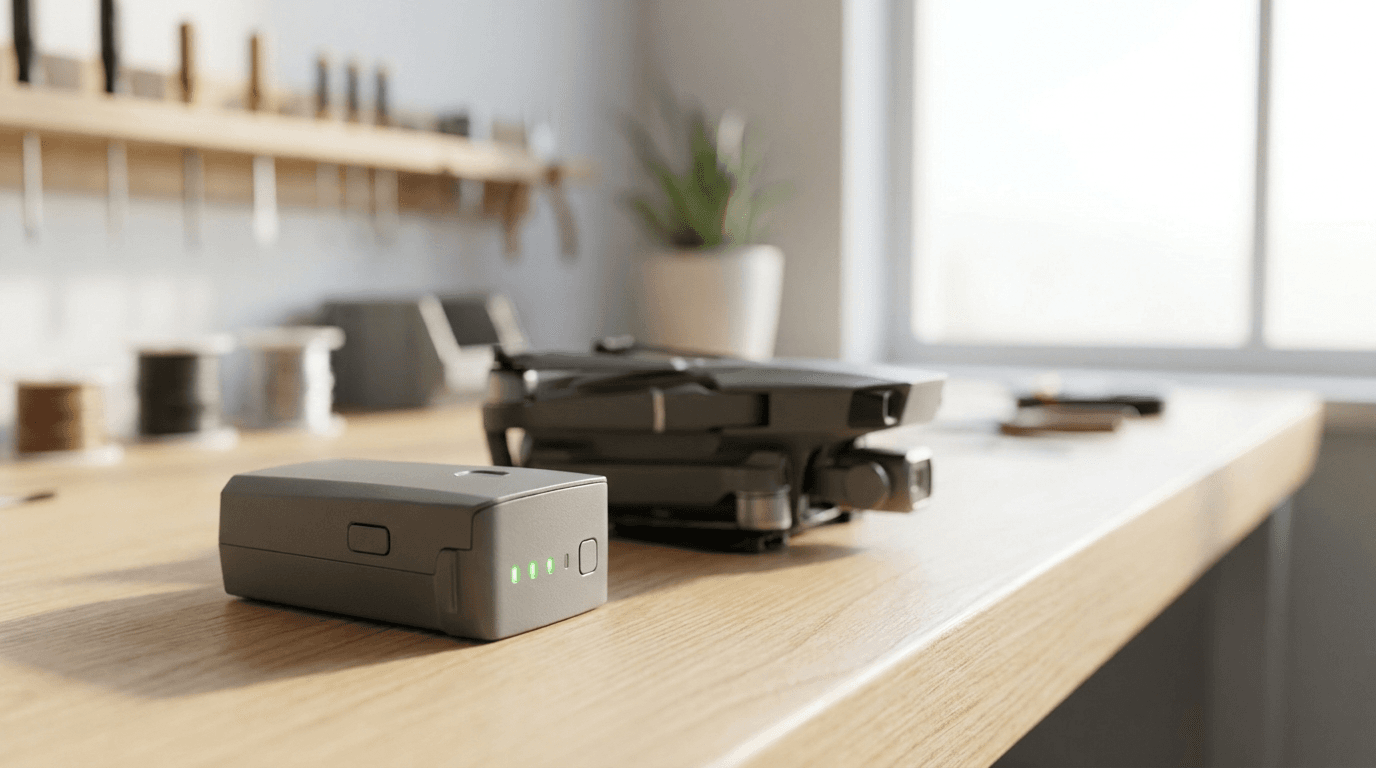
Drone battery safety: how to store, charge and fly Li-Po packs without wrecking them
The battery is the part of your drone that needs the most careful handling. Store it at ~50–60 %, not full and not flat; let it cool before charging; carry spares in the cabin only; retire swollen packs. And why all of it is on the A1/A3 exam.
- general-knowledge
- batteries
- li-po

2026-07-01
Assemblies of people: the one line the open category never lets you cross
Every open-category subcategory treats closeness to people differently — but none of them may fly over an assembly of people, not even a sub-250 g drone. And an "assembly" is not a headcount: it is a question of whether people can move away. Here is the precise definition and the trap it sets on the exam.
- regulations
- open-category
- assemblies-of-people

2026-07-01
Human performance: are you fit to fly the drone right now?
The one A1/A3 subject that is about you, not the drone — and it is a legal duty on every flight. What UAS.OPEN.060(2)(a) says, why the open category has no alcohol limit, the IMSAFE self-check, and perception traps like empty-field myopia.
- regulations
- open-category
- human-performance
2026-06-30
The 120-metre height limit for drones: what it's actually measured from
Everyone memorises the number 120 but gets wrong what it's measured from: the closest point of the surface below the drone, not your take-off point. Here is what UAS.OPEN.010 says, the one exception, and why a BGKIS approval buys no altitude.
- regulations
- open-category
- height-limit
2026-06-29
How old do you have to be to fly a drone? The minimum age in Latvia and the EU
In the open category the minimum age is 16 — but there are three exceptions where no age floor applies at all. And "under 250 g" is not a free pass: it removes the test, not the age. Here is exactly what Article 9 says and what Latvia chose.
- regulations
- open-category
- minimum-age
2026-06-28
Visual line of sight and the FPV observer rule: what 'keep it in sight' actually means
VLOS means unaided contact with the drone — binoculars don't count. And FPV in the open category is only legal with an observer standing beside you. Here is the precise definition, the two exceptions, and why it shows up on the A1/A3 exam.
- regulations
- vlos
- fpv
2026-06-27
The 72-hour rule: when you are legally required to report a drone incident
Most pilots don't know they are legally required to file an incident report within 72 hours after a serious event. Article 57 of Regulation (EU) 2018/1139 sets out when reporting is mandatory, when it is voluntary, and why doing it won't get you in trouble.
- regulations
- incident-reporting
- safety
2026-06-25
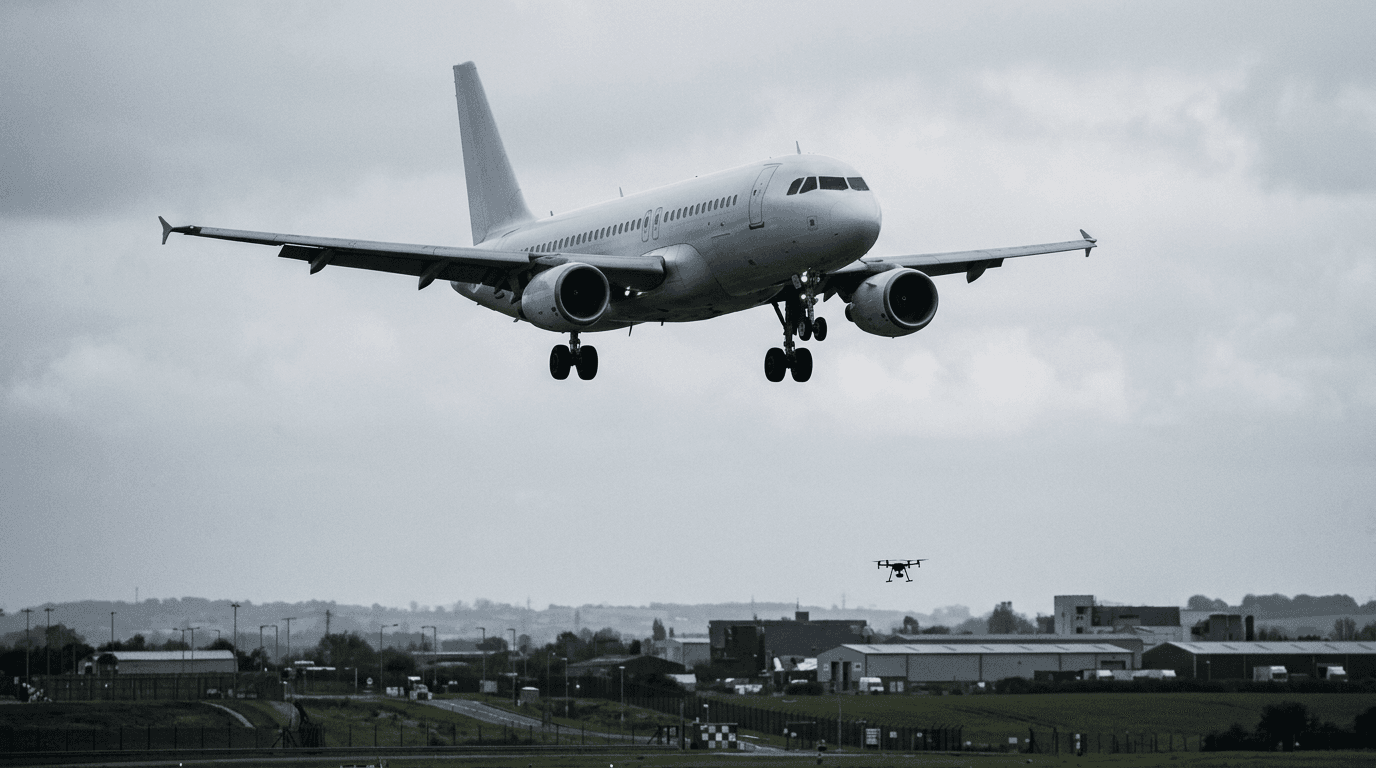
An airliner, a drone, and 3,000 feet: why the altitude limit is the line that matters
A United Boeing 737 pilot near San Diego reported a possible drone strike at 3,000 feet — seven times higher than any recreational drone may fly. The incident is a reason to revisit why the 120 m height limit and airport zones are hard limits, not suggestions.
- drone-safety
- airspace
- altitude-limit
2026-06-25
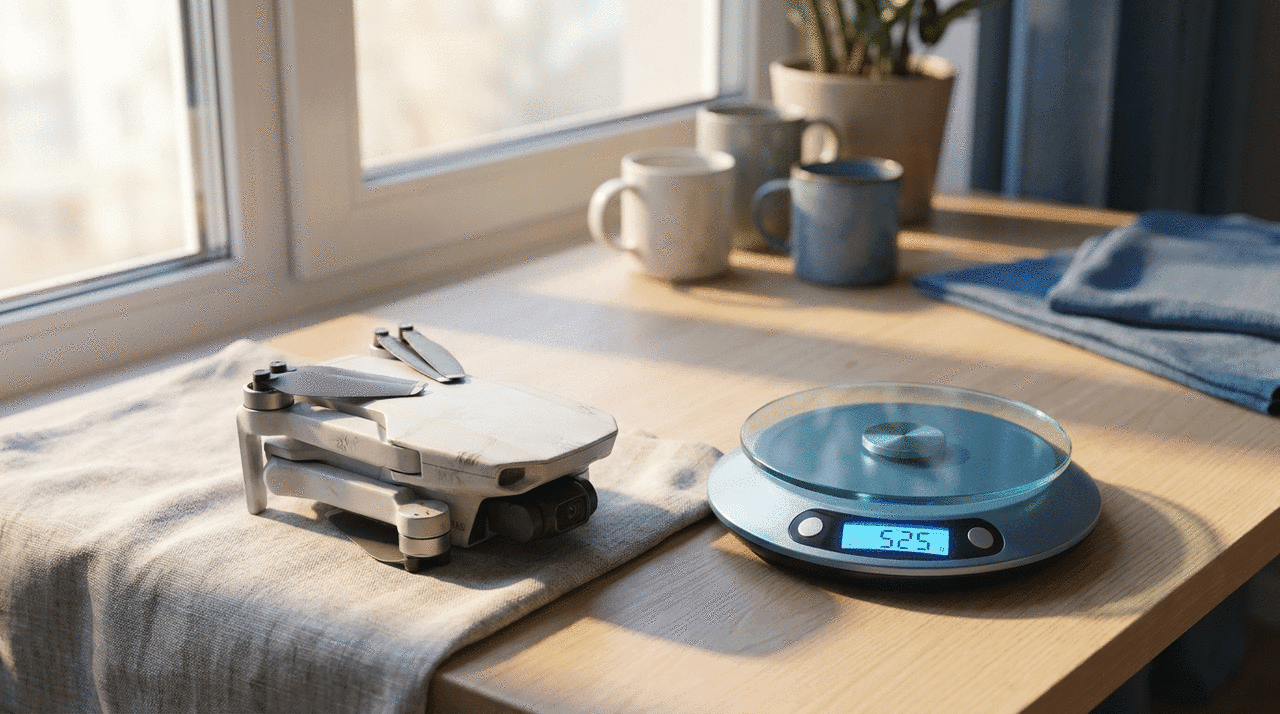
A drone with no C-class label: which subcategory can you actually fly in?
The transitional period closed on 31 December 2023. Since then a drone with no manufacturer C-class label flies in just two ways — and mass is the only thing that decides. How to tell whether yours is A1 or A3-only.
- open-category
- c-classes
- regulations
2026-06-25
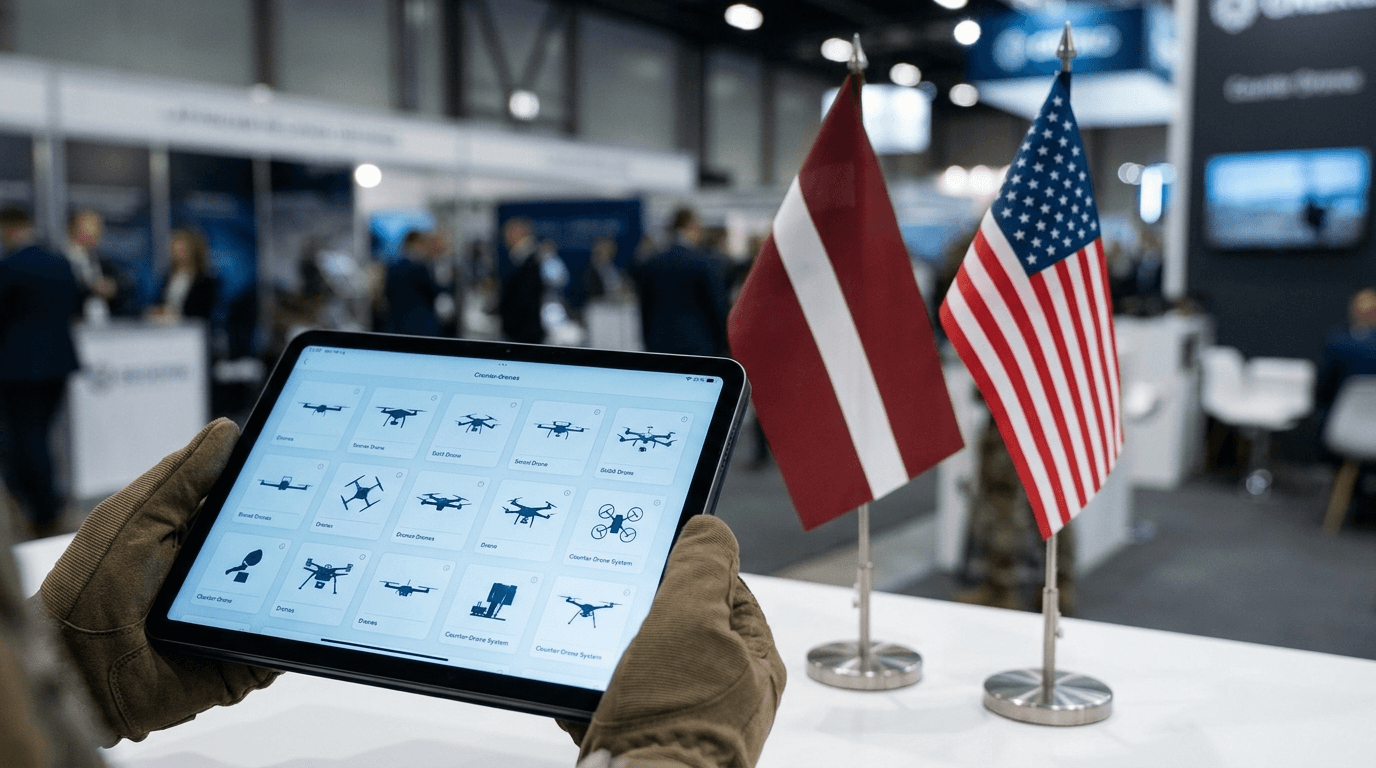
Latvia plugs into a US drone marketplace: what the Eurosatory letter of intent actually does
At Eurosatory 2026 Latvia and the US signed a letter of intent for a joint digital drone and counter-drone procurement platform. The story isn't a drone — it's procurement speed, and Latvia getting to be a supplier, not just a buyer, inside a US marketplace.
- latvia
- drones
- counter-drone
2026-06-25
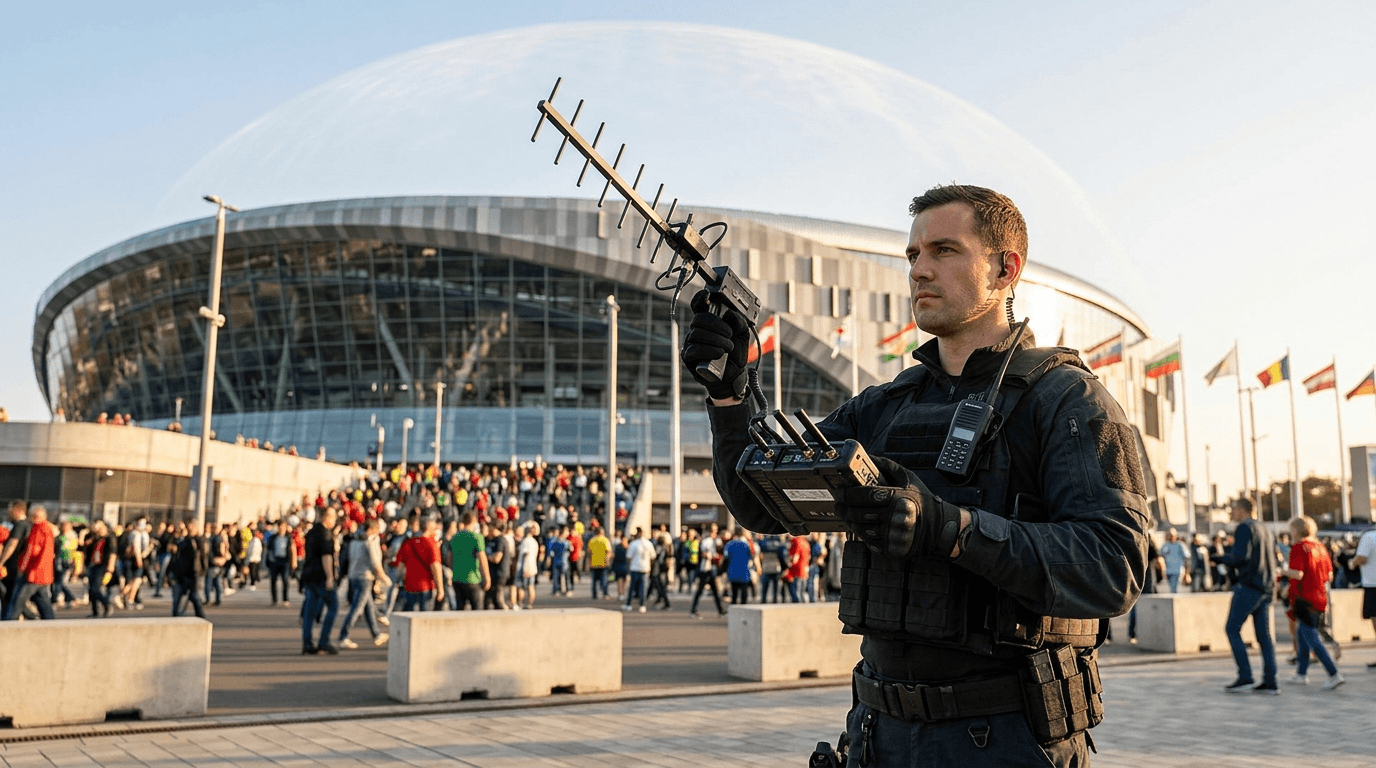
Fifty drones seized at the World Cup: what large-scale counter-drone actually looks like
US authorities seized around 50 drones near World Cup venues and logged 145 incursions into restricted airspace. It's a rare look at a counter-drone system in action — and a direct lesson for pilots: almost all those flights weren't attacks, just pilots who flew into a temporary restriction.
- counter-drone
- drone-safety
- airspace
2026-06-24
Filming with a drone in Latvia: when the GDPR actually applies
Privacy is one of the nine A1/A3 exam subjects and the one pilots skim. When drone footage becomes data processing, when the personal-use exemption holds, and what to do before you publish.
- privacy
- gdpr
- data-protection
2026-06-23
Flying your drone in another EU country: what your Latvian registration and A1/A3 carry across the border
Your Latvian operator number and A1/A3 are recognised across the whole EASA area. What that means in practice, what does NOT travel with you — geographical zones and insurance — and what to check before you fly abroad.
- open-category
- registration
- a1-a3
2026-06-22
From test range to exporter: Latvia's drone industry after Eurosatory 2026
In two days at Eurosatory 2026, Latvia signed a bilateral drone-acquisition deal with the US and sold its homegrown BLAZE interceptor to France. What it signals.
- latvia
- origin-robotics
- blaze
2026-06-21
The A2 certificate of competency: when you need it and how to get it in Latvia
A2 is for flying a C2 drone closer to people than A3 allows. When it applies, the three steps to the certificate, and what the exam looks like: 30 questions, 75%, €15.
- a2
- certificate
- latvia
2026-06-20
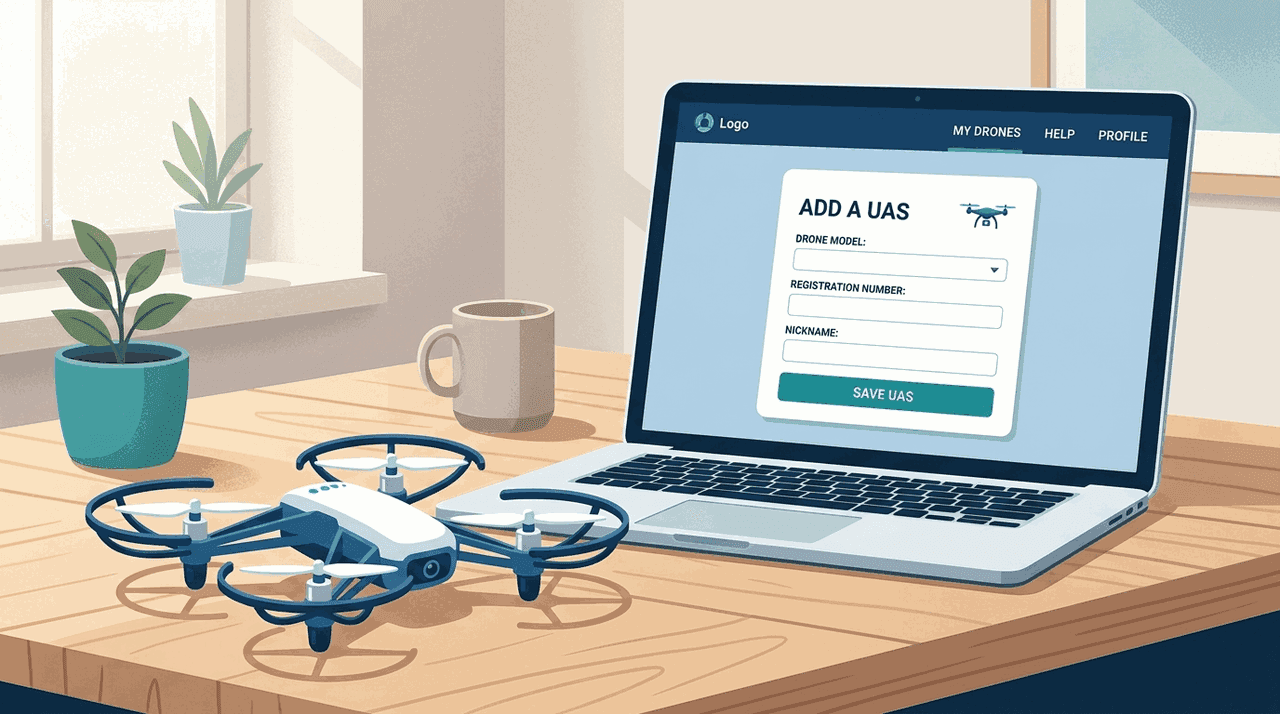
How to add a drone in BGKIS before your first flight request
Before a flight request, the drone must be in BGKIS so it can be picked from the list. How to add it, what to do if the model is missing, and C-class drones.
- bgkis
- uas
- getting-started

2026-06-20
BGKIS for companies — representatives, pilots and drones
How a company adds representatives, links remote pilots and adds drones in BGKIS so flight requests in UAS geographical zones can be filed on the company's behalf.
- bgkis
- uas
- companies

2026-06-20
BGKIS or airspace.lv — where to submit and where to check
Two tools, two jobs. airspace.lv/drones shows what applies; BGKIS is for submitting and coordinating. Why the BGKIS map is not the airspace map.
- bgkis
- uas
- geographical-zones
2026-06-20
Your request is approved — what to check before takeoff
A BGKIS approval is not a licence to ignore the rest of the rules. What to check before takeoff — status, zone conditions, airspace.lv, and the 120 m and VLOS baseline.
- bgkis
- uas
- latvia

2026-06-20
Foreign UAS operator in Latvia — how to start with BGKIS
Registered as a UAS operator in another EEA state or Switzerland? How to create a BGKIS profile, declare your registration, and file requests in UAS zones in Latvia.
- bgkis
- uas
- latvia
2026-06-20
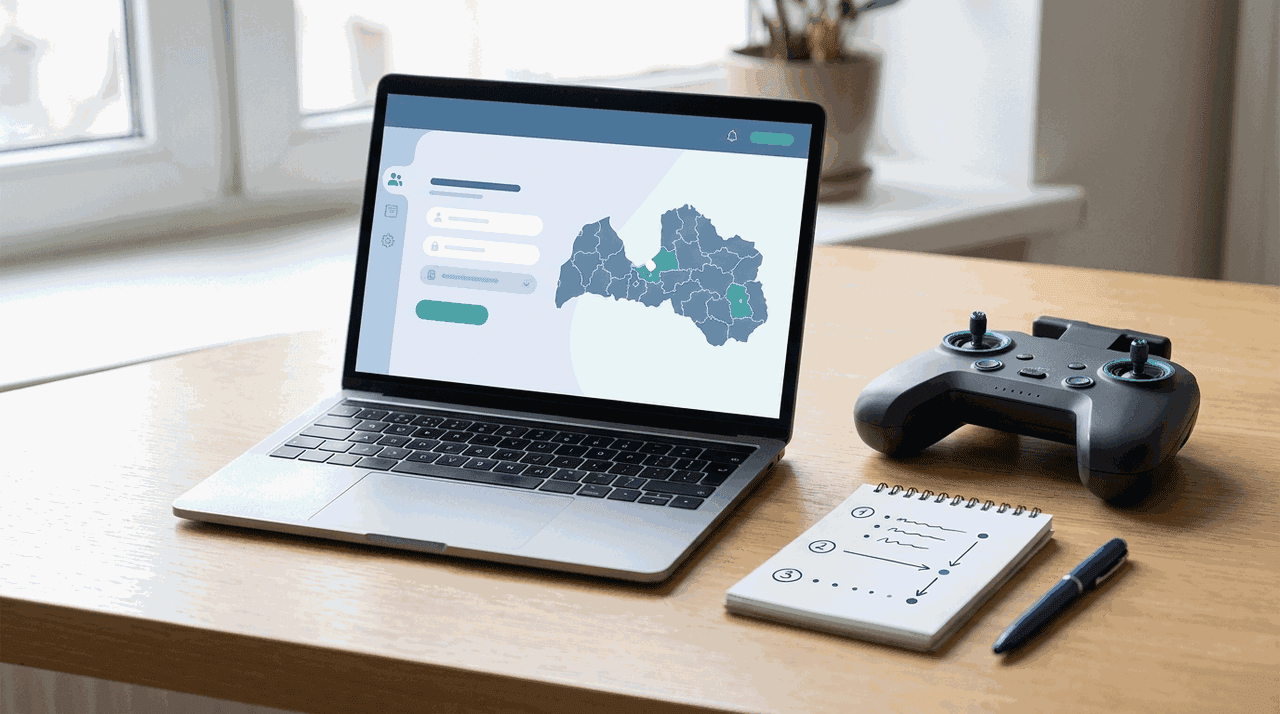
How to submit a UAS flight request in BGKIS — step by step
A practical walkthrough of filing a flight request in a UAS geographical zone through BGKIS — from valid registration and adding a drone to submitting and tracking status.
- bgkis
- uas
- getting-started
2026-06-20
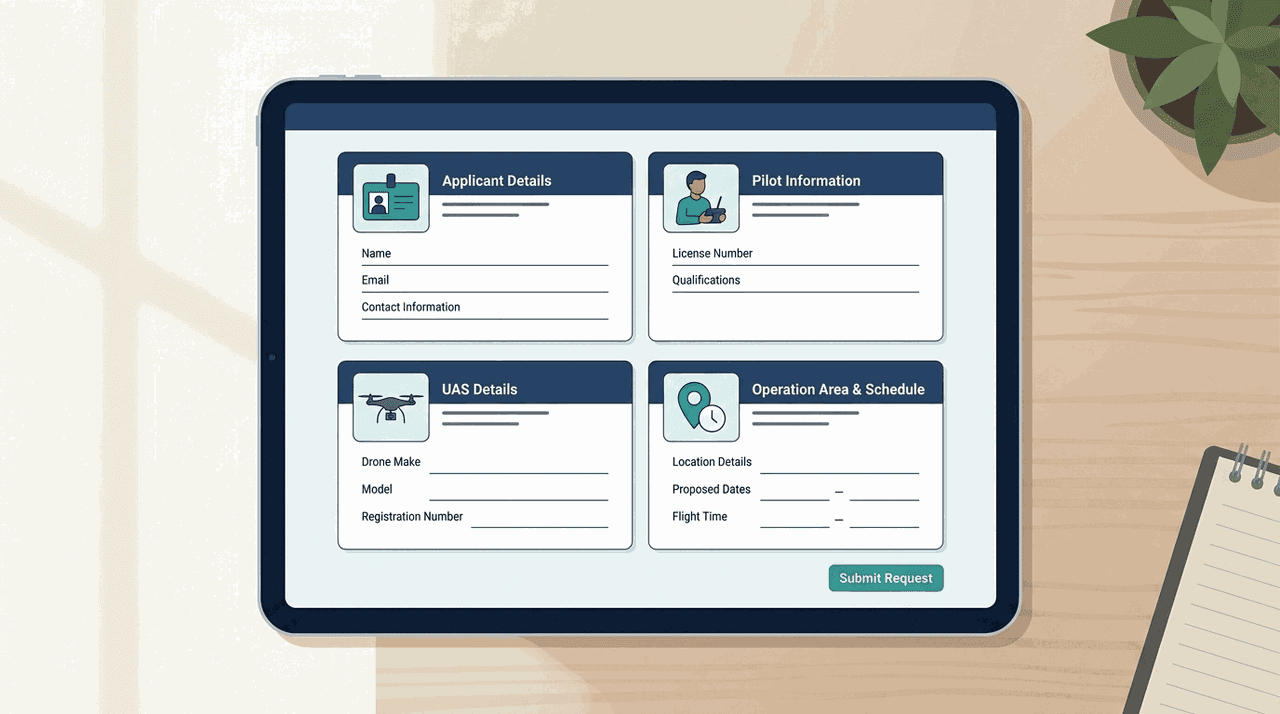
What data the CAA requires in a UAS flight request
Field by field: what a BGKIS request asks about the operator, the remote pilot, the drone, and the planned flight — under Cabinet Regulation No. 248, point 54.
- bgkis
- uas
- latvia
2026-06-20
UAS operator vs remote pilot — two roles not to confuse
A BGKIS flight request names both the UAS operator and the remote pilot. Why they are different roles, which number goes where, and how it changes for companies.
- bgkis
- uas
- operator

2026-06-08
Latvia Ties Drone Fines to Turnover — 2026 Aviation Law Impact
Amendments to Latvia's Aviation Law in force from 18 February 2026 tie the heaviest legal-entity drone fines to company net turnover — up to 2 % or 7 %. What changed, the exact figures, and what commercial operators should do now.
- regulation
- latvia
- business

2026-06-08
Flying Near Latvia's 50 km Border Belt — How to Stay Legal in Daytime
Latvia enforced a night-time closure across a 50 km eastern border belt in September 2025. The restriction remains in force with changing hours and end-dates. Here is our practical reading of how to check the status, coordinate through BGKIS, and fly legally in daytime.
- airspace
- latvia
- regulations
2026-06-06
Remote ID in 2026: What's Already Mandatory and Why the Threshold May Drop to 100 g
Remote ID has been mandatory for class-marked drones since 2024. In 2026 the European Commission is pushing to drop the threshold from 250 g to 100 g — which would pull in nearly every camera drone. Here is what already applies and what to do.
- regulations
- remote-id
- eu

2026-05-28
Latvia's Counter-Drone Cluster: Origin Robotics, Eraser, and What It Changes
Latvian manufacturers Origin Robotics and Eraser are equipping mobile intercept teams on the Russian border. What is the kill chain, what Latvia is learning from Ukrainian battlefield experience, and what it means for the civilian drone training market.
- counter-drone
- latvia
- defense

2026-05-28
Latvia's Yellow and Orange Drone Alerts — What Pilots Need to Do
NBS has been sending cell-broadcast alerts in two tiers since 23 May 2026. Yellow informs about a possible threat; Orange means act immediately. Here is what each level means and our reading of it for drone pilots.
- operations
- safety
- latvia

2026-05-28
Rezekne, May 2026 — What Changed for Civilian Drone Pilots in Latgale
The Latgale operating picture shifted materially in May 2026. Errant military drones, temporary altitude caps, and mobile intercept teams on the ground — here is what changed and what it means for civilian pilots.
- operations
- safety
- latvia
2026-05-14
How to get the A1/A3 drone licence in Latvia in 2026
A factual guide to who actually needs A1/A3 in Latvia, what the official format is, and how it differs from simple operator registration.
- licence
- latvia
- getting-started
2026-05-14
CAA Latvia for drones — contacts, fees, and processes
A practical map to the official CAA contacts, clearly published fees, and the right channels for registration, exams, and incident reporting.
- caa
- latvia
- fees
2026-05-14
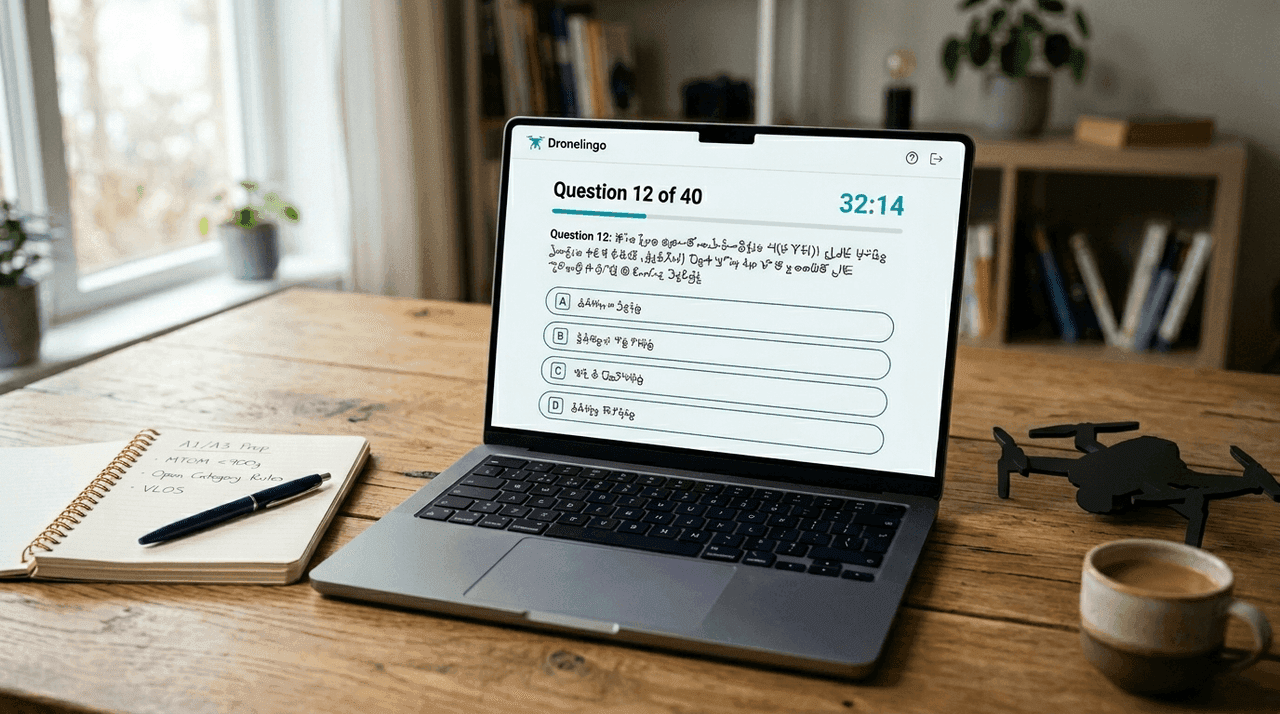
The A1/A3 drone exam in Latvia — what to expect
Verifiable facts about the Latvian A1/A3 exam — the format, the published syllabus, the prerequisites, and a realistic way to prepare.
- exam
- latvia
- preparation

2026-05-14
Drone registration in Latvia — step-by-step for 2026
How operator registration works in Latvia, how it differs from remote-pilot registration, what it costs, and what number actually goes on the drone.
- registration
- latvia
- getting-started
2026-05-14
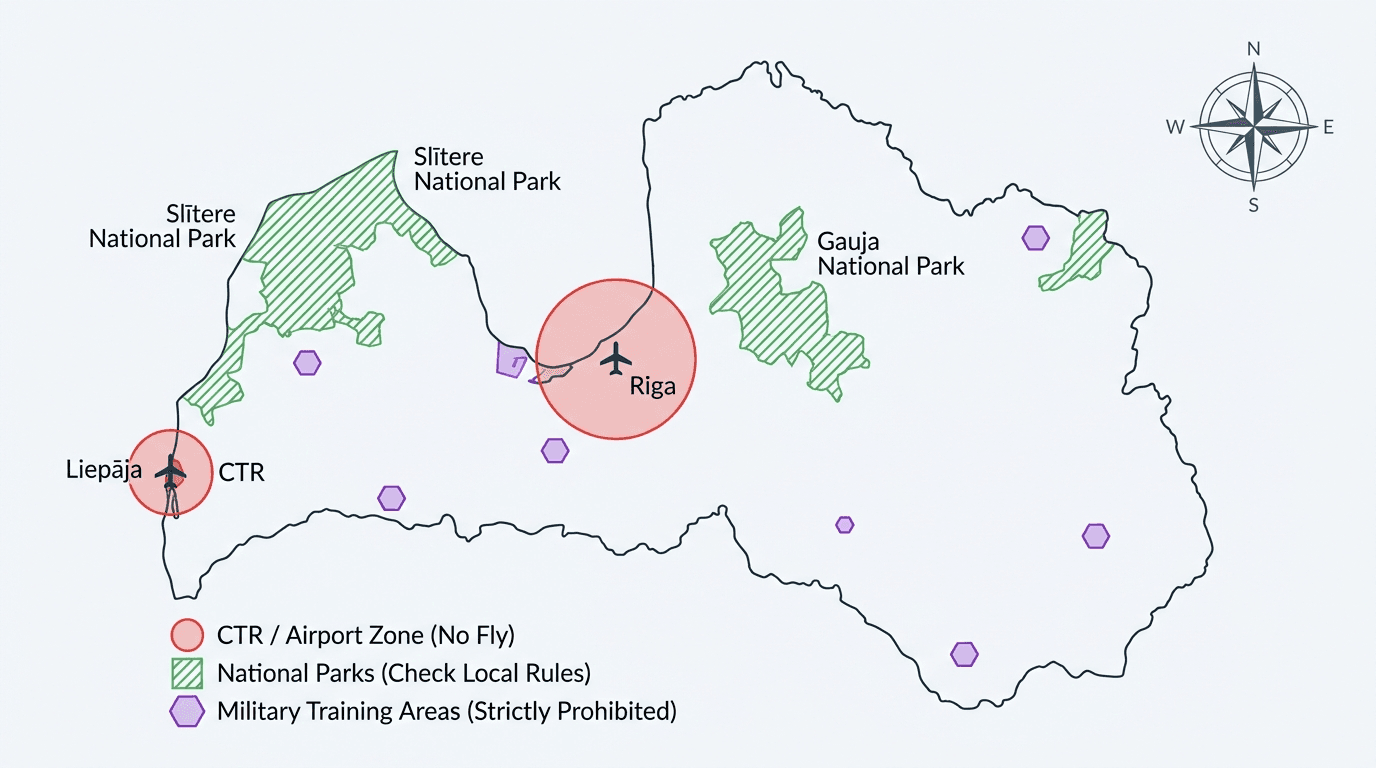
Drone restrictions in Latvia — the official map, UAS zones, and protected areas
A factual guide to checking the official Latvian source, understanding UAS geographical-zone types, and not missing local restrictions in protected areas.
- no-fly-zones
- latvia
- airspace