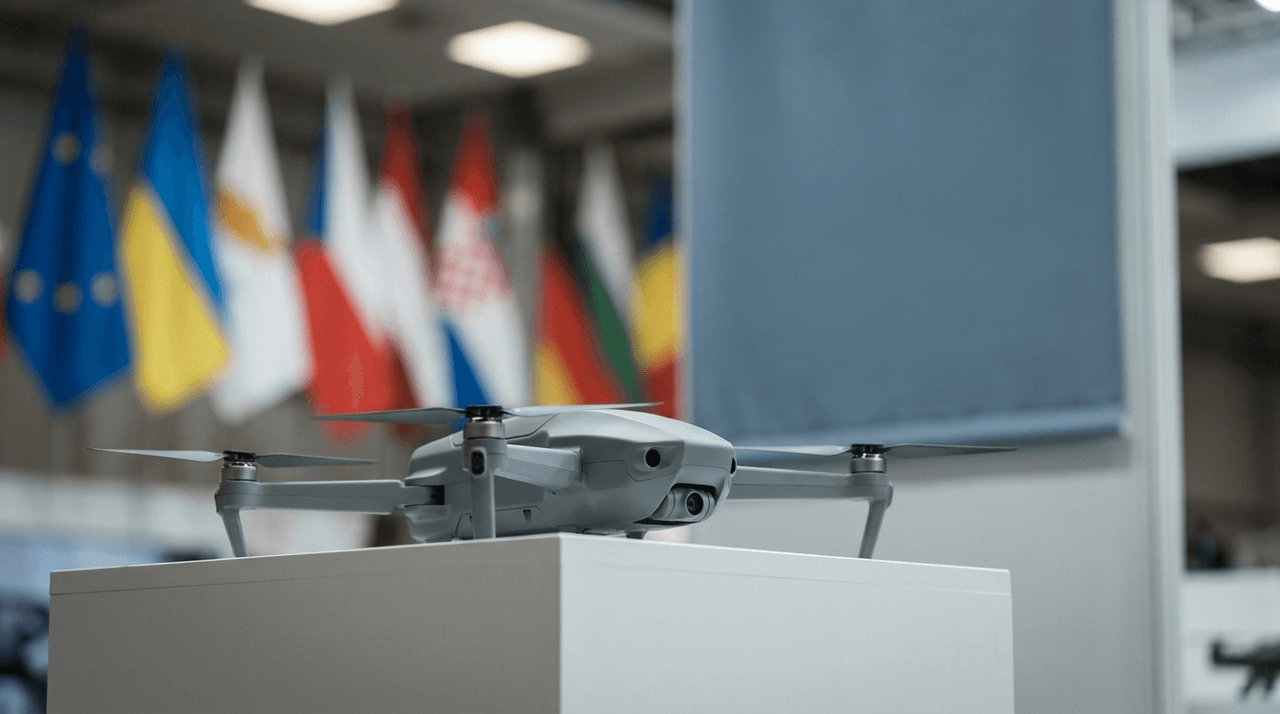
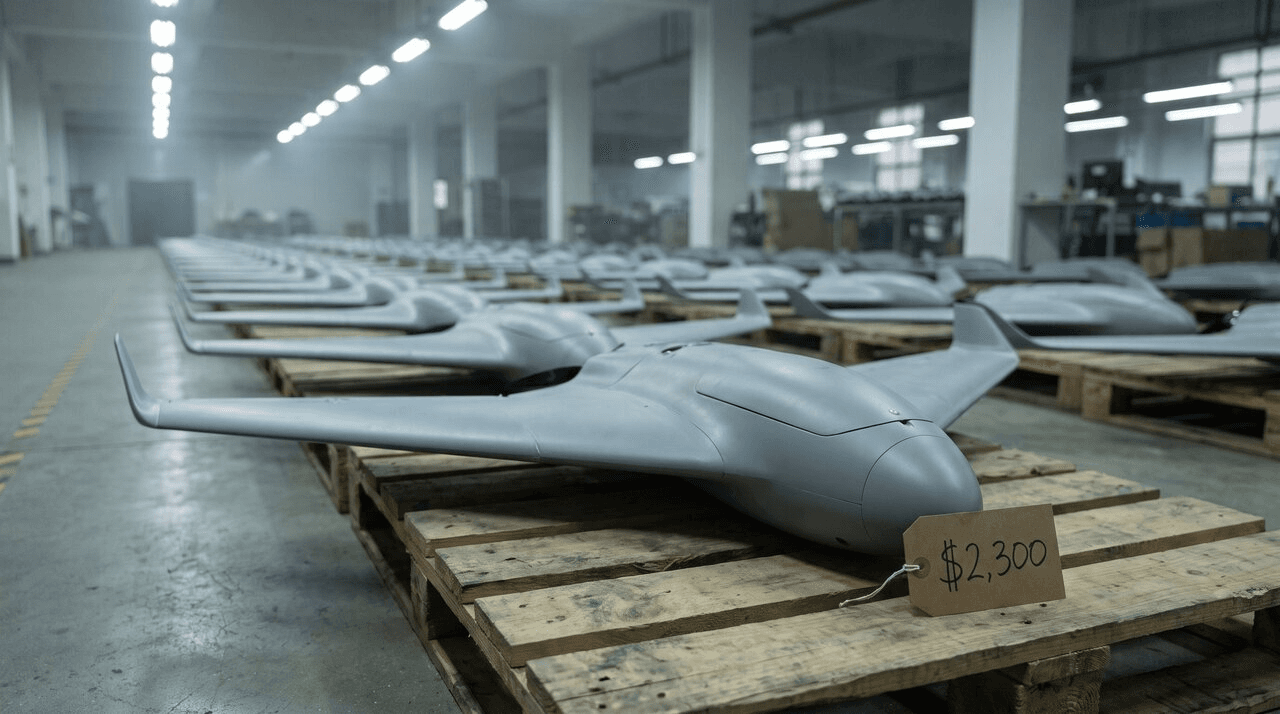
Latvia is not buying German or American hardware to deal with the drone problem on its eastern border. It is fielding its own — interceptor drones from Latvian makers Origin Robotics and Eraser, mounted on mobile teams in 4x4 vehicles, with up to four soldiers per unit. The target for operational readiness: early June 2026.
That is a clear industrial signal, not just a security measure. It means Latvia has makers that can field working counter-drone systems. And it means the local drone scene — from hardware development to operator training — is being shaped by pressures that did not exist two years ago.
The deployment and its context
On May 26, 2026, Maj. Modris Kairišs, head of Latvia's Autonomous Systems Competence Center, briefed reporters in Riga on the plan. Mobile intercept teams equipped with Origin Robotics and Eraser drones will deploy to the border with Russia within days. Kairišs said the number of teams is classified, but the goal is to have a first capability in place by the start of next month.
The backdrop is direct. The independent Russian outlet Novaya Gazeta Europe counted at least 24 drone incidents in the three Baltic countries since early 2025. On May 7, 2026, two drones crashed on Latvian territory — one hit an empty fuel depot. Latvia's government collapsed in the aftermath.
Latvia's eastern border with Russia and Belarus runs nearly 400 kilometers. Kairišs said that matching Ukrainian-style drone coverage would take "a huge number" of personnel and put serious strain on the armed forces. The first mobile teams are a step toward a capability, not the finished picture.
What the kill chain means here
The kill chain is a way to describe the sequence from spotting a threat to neutralizing it: detect, identify, decide, act. In counter-drone work, the sequence only works if every step happens fast enough to matter.
Detection is the hardest part. Shahed-type drones fly at 50 to 100 meters and are built from cheap composite materials that radar mostly sees through. Latvia has been rolling out a network of acoustic sensors for several months, which Kairišs said is "quite effective" when combined with radar and optical sensors. But tactical radars for spotting low-flying drones are needed every 10 to 20 kilometers — with all the infrastructure that implies along a 400-kilometer line.
Command and control is a separate, structural problem. Kairišs called it a "legacy way of thinking" built into NATO's C2 architecture: sensor data gets fused and classified at higher levels before it can reach a mobile team at the tactical edge. That classification overhead breaks the time-sensitive steps of the kill chain. His conclusion: drone interception needs to work at "a very low classification level" — and NATO countries building their own C2 systems will need to make them work together.
What Ukraine passes to Latvia
Ukraine has run mobile anti-drone fire teams since 2022, and it has shifted more and more from small-arms fire to interceptor drones as the main way to bring threats down. Latvia is drawing on Ukrainian expertise — not hardware, but tactical know-how: kill chain procedures, where to place sensors, and how to make fast decisions in a fast-changing field.
That is a rare kind of knowledge. Most European countries learn counter-UAS from simulations, published doctrine, or short range tests. Ukraine generates it from real operations — dozens of intercepts a week, under fire. That experience is now reaching Latvia through structured cooperation.
Kairišs also described the next step beyond mobile teams: fully automatic interceptor drones pre-positioned in launch canisters along the border, run from a command center with no operator needed at each launch point. Latvia is already testing what he called "launch-box technologies." "This is where Western countries need to move," he said, "because our human resource is very expensive."
What this means for Latvia's drone industry
Origin Robotics and Eraser are not prototype suppliers. Their systems are going into the field — which means production capacity, field support, and steady development driven by operational feedback.
Latvia also hosts NATO's innovation range for counter-UAS at the Sēlija training area. Kairišs pointed out that testing C-UAS systems against realistic threats is "almost impossible" in many European countries — red tape, dense population, and busy airspace all get in the way. At Sēlija, Latvia can run electronic warfare tests and high-altitude exercises under special government exemptions. That testing environment is a real, concrete advantage for local developers.
The Autonomous Systems Competence Center has special government authority to fast-track procurement — squeezing a cycle that normally takes years down to months. That changes the development feedback loop for makers like Origin Robotics and Eraser. It also makes Latvia an unusually practical test environment for the wider NATO C-UAS community.
Which roles are in demand
The counter-drone cluster creates demand for people with specific skills. Some of those roles are clearly military. Others are not.
Drone operators. The core need. Flying an interceptor drone demands precise low-altitude control, fast reading of sensor data, and decisions under pressure. The skill floor is higher than recreational flying.
Systems integrators. Sensor networks, command interfaces, drone avionics — none of it works in isolation. Integration is one of the highest-value roles in any C-UAS setup, and it needs people who can work across hardware, software, and protocol layers.
Maintenance and field technicians. Autonomous systems used in the field break down. Someone has to repair them, reconfigure them, push software updates. This work happens on the range today, and along border support points tomorrow.
RF and electronic warfare specialists. Detecting and suppressing drones is a contest in the electromagnetic spectrum. Interception often includes an EW element — jamming, navigation disruption, or frequency scanning. Demand for this skill is not going away.
Procurement and project managers. A fast-tracked procurement cycle means more frequent tenders, more technical specifications to write, more test protocols to manage. Someone has to run that work.
Some of these roles will turn up at makers, at the range, and at systems integration companies — not only inside the military.
What it means for civilian drone training
Dronelingo is a platform for EASA A1/A3 certification prep. Our audience is civilian operators — recreational, commercial, or anyone working toward the formal qualification Latvia requires under European drone rules. That scope does not change.
What changes is the market around it.
An operator who understands drone aerodynamics, can read sensor data, and can reason through flight parameters in tough conditions is worth more than one who passed a test and stopped there. More employers are noticing that gap — in infrastructure inspection, monitoring, and increasingly in roles next to the C-UAS sector, where formal certification and knowledge of the rules are requirements, not nice-to-haves.
Latvia as a NATO C-UAS innovation hub also draws in more researchers, partner organizations, and international programs. That raises the number of professional settings where a recognized civilian qualification matters. The certification guide for Latvia and the practice section are built for exactly this — to grow the kind of grounded skill that holds up in real conditions, not just on a test.
The near-term picture
Within a few weeks Latvia went from border drone incidents to fielded intercept teams using domestically made systems, a NATO testing range, fast-track procurement authority, and structured access to Ukrainian battlefield expertise. The counter-drone cluster is not a roadmap. It is already running.
Demand for people who understand drones is rising in a market that was already growing before the security angle arrived. Not every role will need a military contract. But every serious role in this space — civilian or not — will need the kind of technical fluency that formal certification starts to build.