The certificate you need is not a matter of ambition. In Latvia it is decided by two things: your drone's class mark and how close to people you intend to fly. Work those out and the A1/A3-versus-A2 question answers itself.
Start with your drone's class mark
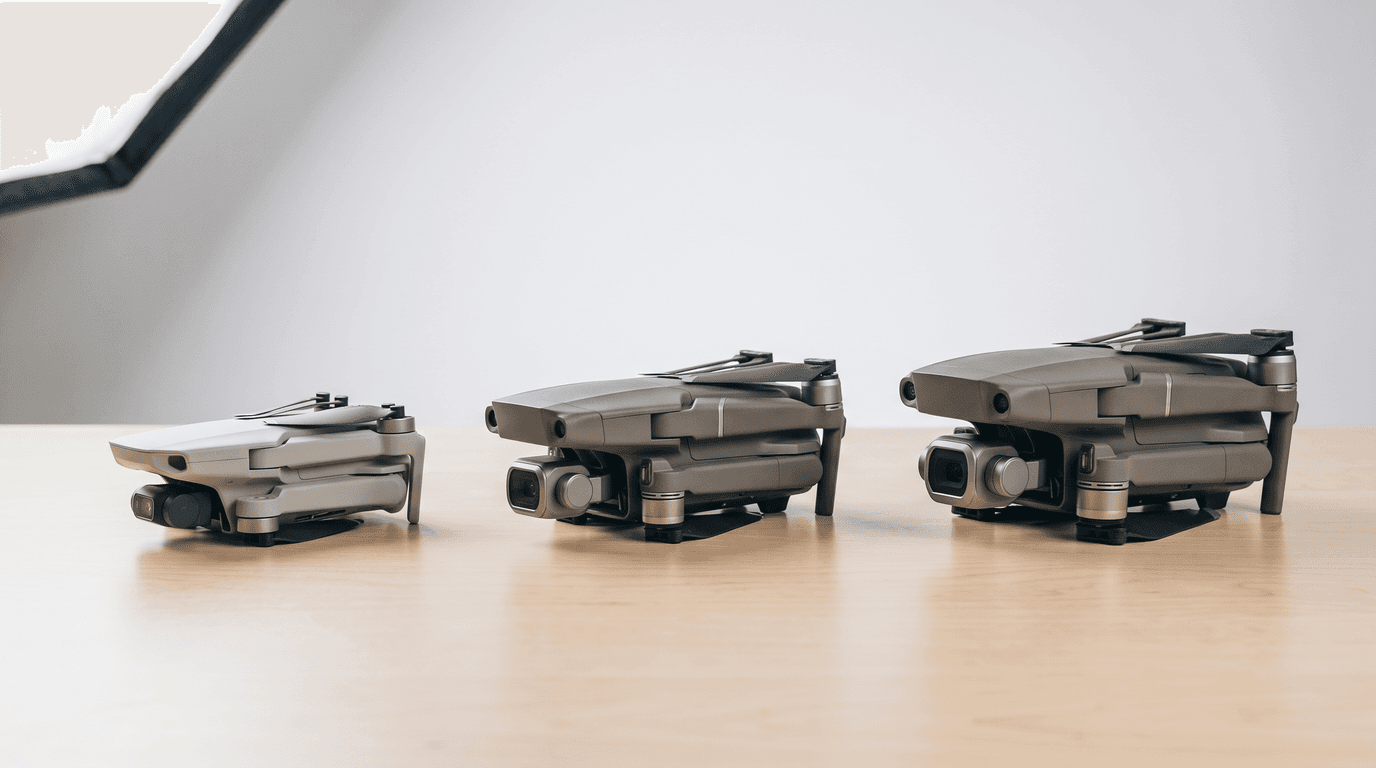
Since 2024 the Open category runs on C-class marks, applied by the manufacturer:
- under 250 g, or C0 / C1 → A2 is not available; A1/A3 is enough if a qualification is required
- C2 → you may need A2, depending on where you fly
- no class mark → you are limited to A1 (under 250 g) or A3 (under 25 kg, far from people)
A CE mark is not a C mark. Check the label, not the box art.
A1/A3 — the free baseline
A1/A3 is the entry qualification, and the CAA course and exam are free: 40 questions, 40 minutes, 75% to pass, valid 5 years across the EU. It clears you for:
- A1 — light drones, near but never over crowds of people
- A3 — flights at least 150 m from residential, commercial, industrial or recreational areas
For most hobby flying, this is all you will ever need.
A2 — only for a C2 drone close to people
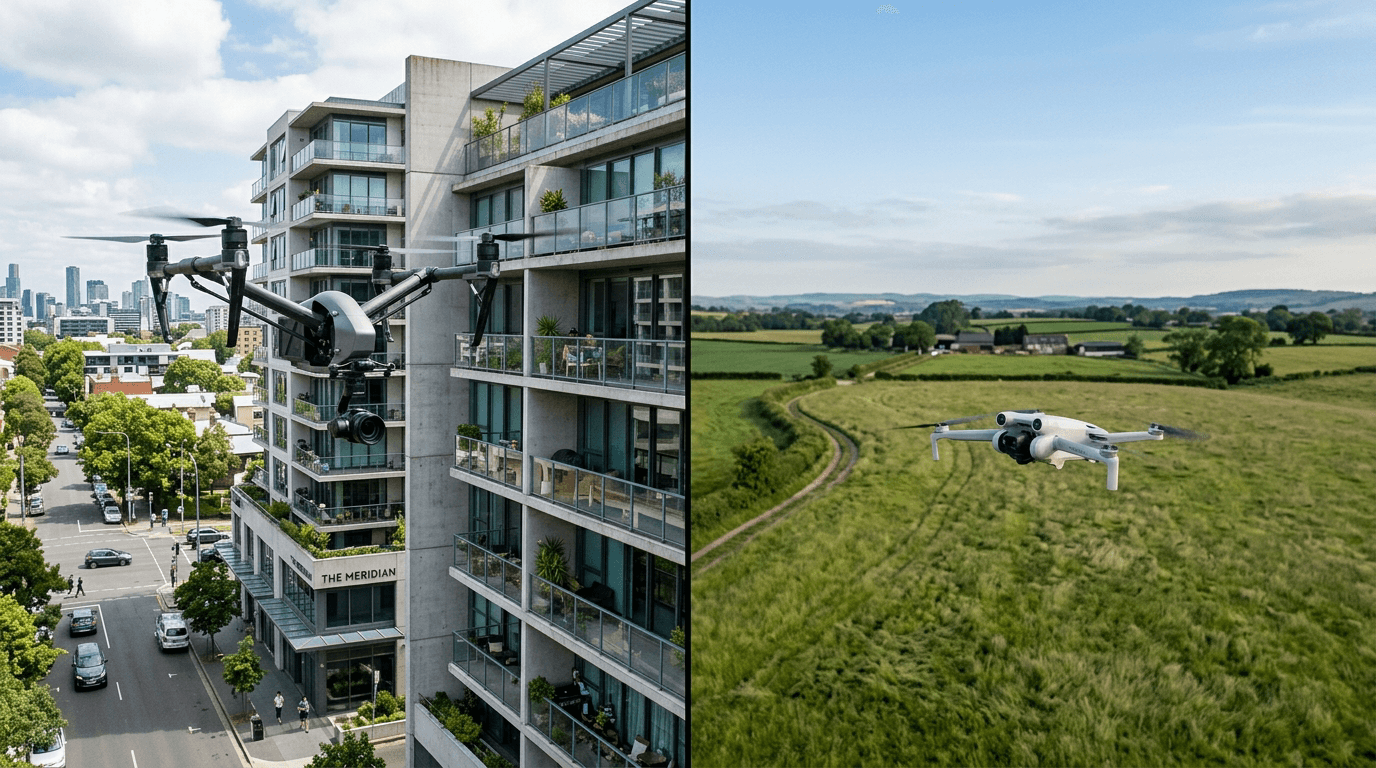
A2 exists for one situation: a C2 drone flown closer than 150 m to built-up areas — the case for a lot of urban photo and inspection work. It is a separate, in-person exam that stacks on top of A1/A3:
- pass A1/A3 first
- do practical self-training (you sign it off yourself)
- sit the A2 exam — 30 questions, 30 minutes, 75%, 15 EUR first attempt, 10 EUR to retake
Its subjects go deeper: meteorology, UAS flight performance, and ground-risk mitigation such as the low-speed mode and the 1:1 distance rule.
The self-training step is not a formality
Step 2 of the A2 route — practical self-training — is the part people skim, because nobody watches you do it. The CAA does not require a course: you may learn at a recognised organisation or on your own, from the manufacturer's manual, literature, video and experience. And it does not ask you to demonstrate anything in person; your signature is what confirms the skills were acquired.
What it does define is where and what. The self-training happens in a safe environment — at least 150 m from residential, commercial, industrial or recreational areas — with a drone whose type, controls and mass resemble the one you intend to fly in A2. Both manual control and the automatic functions have to be covered.
The skills you sign off on run in five blocks:
- flight planning — payload, site, zone compliance, obstacles, weather;
- preparation — aircraft condition, firmware version, sensor calibration, batteries, height limits;
- normal flight — take-off, stable flight, coordinated turns, changes of heading and altitude, return-to-home, landing, obstacle clearance;
- emergencies — GNSS loss, uninvolved people appearing, leaving the operating area, a manned aircraft approaching, manual control, C2 link loss;
- briefings — pre- and post-flight, including occurrence reporting.
Read that list as a syllabus for the exam as much as for the flying: the in-person questions come from the same world.
One deadline and one date to remember
Two administrative details decide more A2 cases than the theory does.
The first is a deadline that has already passed: since 1 January 2024,
flights in A2 with drones that carry a CE mark but no matching C-class mark
are not permitted. An older drone without a class mark does not get into A2
however well you prepare.
The second is renewal. The A2 certificate is valid five years, and the refresher course may be started no earlier than 90 days and no later than 5 days before it expires, with 5 EUR for the new certificate. Miss that window and the route is the in-person exam again — at the CAA, or at one of its recognised organisations, which set their own prices.
The honest decision
- Hobby flyer with a mini or a C0/C1 drone: A1/A3, done.
- Urban or commercial work with a C2 drone near people or buildings: A1/A3 then A2.
- Bigger drone, always far from people: A3 under A1/A3 — no A2 needed.
You can't skip to A2
A2 is not an alternative to A1/A3 — it requires it. So whatever your goal, the free A1/A3 exam is step one.
Not sure yet? Start with do I need a drone licence at all, then prepare with the course.