Remote ID is the part of EU drone law most hobby pilots still ignore — right up until it stops being optional. It is already mandatory for a large share of drones, and in 2026 the European Commission is pushing to widen it to nearly every camera drone in the sky.
Here is what Remote ID is, what it already requires, and the one proposal worth watching this year.
What Remote ID actually is
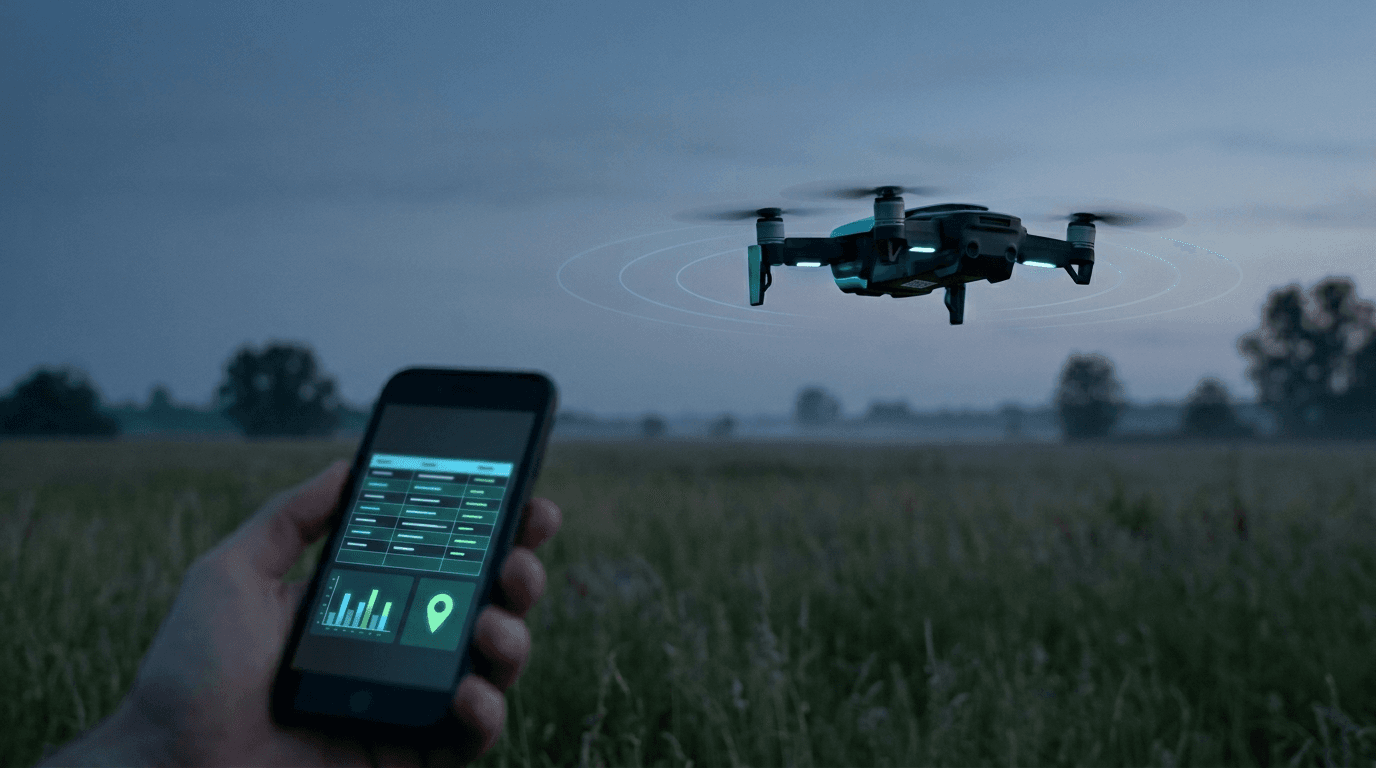
Remote ID is a digital licence plate for your drone. While you fly, the aircraft broadcasts a short packet of data over a direct radio signal — Bluetooth or Wi-Fi, no internet needed — that any authority, and anyone nearby with the right app, can read:
- the drone's serial number
- your operator registration number
- the drone's position and altitude
- your position, or the take-off point
- a timestamp
The point is accountability: authorities can tell who is flying what, and where, in near real time.
What is already mandatory (since 1 January 2024)
This is the part people miss. Remote ID is not a future rule. Under Regulation (EU) 2019/947 it has applied since 1 January 2024 to:
- every drone in the Specific category, and
- every class-marked drone — C1, C2, C3, C5, C6 — in the Open category.
Only C0 drones (under 250 g) are exempt from Remote ID today. That is why a sub-250 g drone like a DJI Mini has been able to skip it.
Registration is a separate, stricter matter: you must register as an operator with your national authority — in Latvia, the CAA — the moment your drone carries a camera, whatever it weighs. You get one operator number, valid across the whole EU. It goes on a sticker on the airframe and into the drone's Remote ID settings.
The 2026 change worth watching: the 100 g proposal
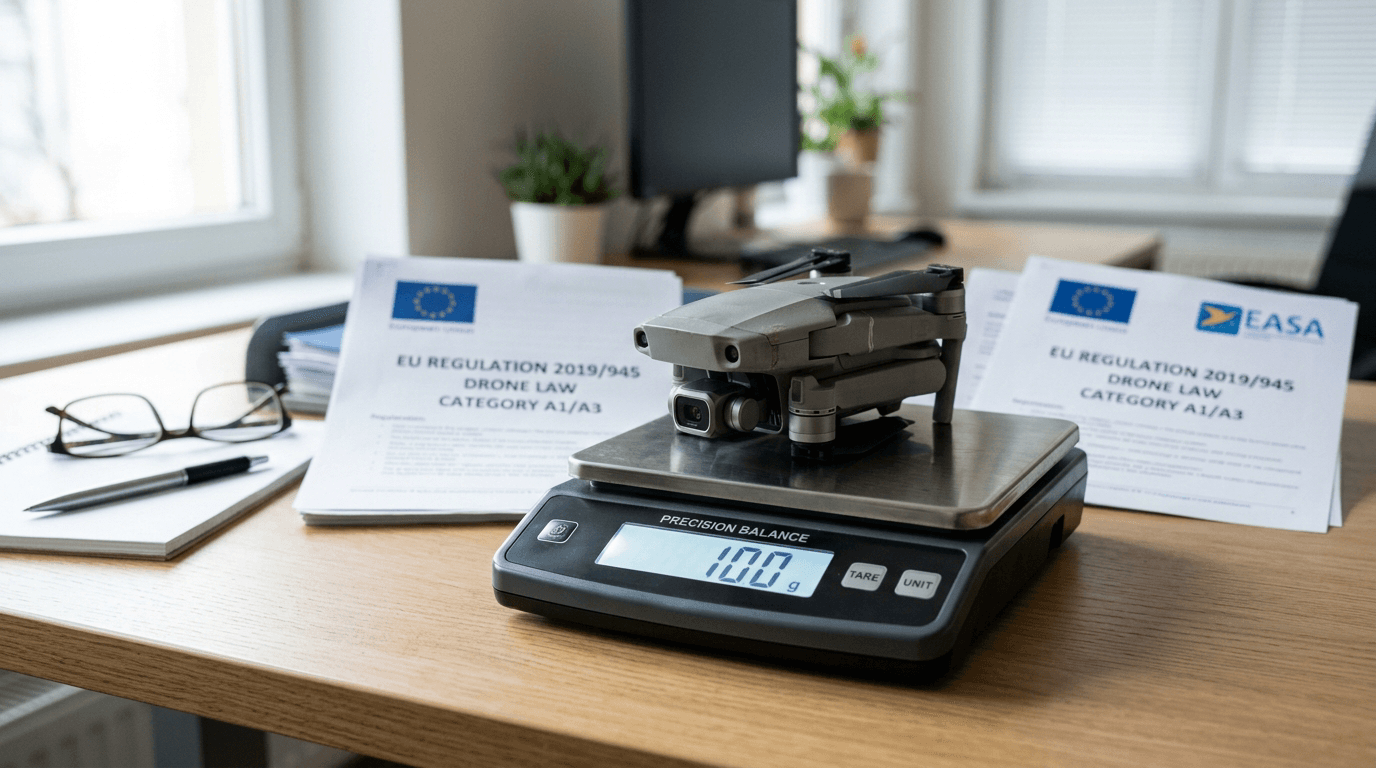
Here is the shift. The European Commission's drone and counter-drone action plan proposes making Remote ID mandatory for every drone above 100 grams — down from today's 250 g. EASA is preparing the initial proposal for industry review, and the Commission wants its Drone Security Package approved by Q3 2026.
It is a proposal, not law yet. But the direction is set, and the UK has already moved its own registration threshold to 100 g as of 1 January 2026.
If the 100 g threshold is adopted, the practical effect is large: most of the small camera drones that are exempt today would be pulled into Remote ID. The popular "under 250 g" loophole would mostly close.
What it means for you
The good news: most current drones already handle this. Class-marked models ship with Remote ID built in, and many sub-250 g drones from major makers already broadcast it, or can after a firmware update. If yours cannot, an EASA-approved Remote ID module is the retrofit path.
So the work is mostly administrative:
- Register as an operator with Latvia's CAA if you have not, and put your operator number on the drone and into its Remote ID settings.
- Confirm your drone actually broadcasts Remote ID — a free scanner app on a second phone will show you.
- Keep firmware current. Remote ID support often arrives in updates.
- Watch the Q3 2026 package. If the 100 g threshold lands, check whether your sub-250 g drone needs a module.
The takeaway
Remote ID has been mandatory for class-marked drones since 2024 — that is today's rule, not tomorrow's. The 2026 story is the proposed drop to 100 g, which would bring in nearly every camera drone. Sort out your operator registration and broadcasting now, and the threshold change becomes a non-event for you.
Remote ID and geo-awareness are covered in the UAS general knowledge lesson. You can also test yourself on the UAS general knowledge practice set.