◇ Blog
Drone certification guides
Long-form guides on flying drones legally in Latvia and the EU — registration, the A1/A3 exam, regulations, and practical tips. Updated as the rules evolve.
2026-07-11
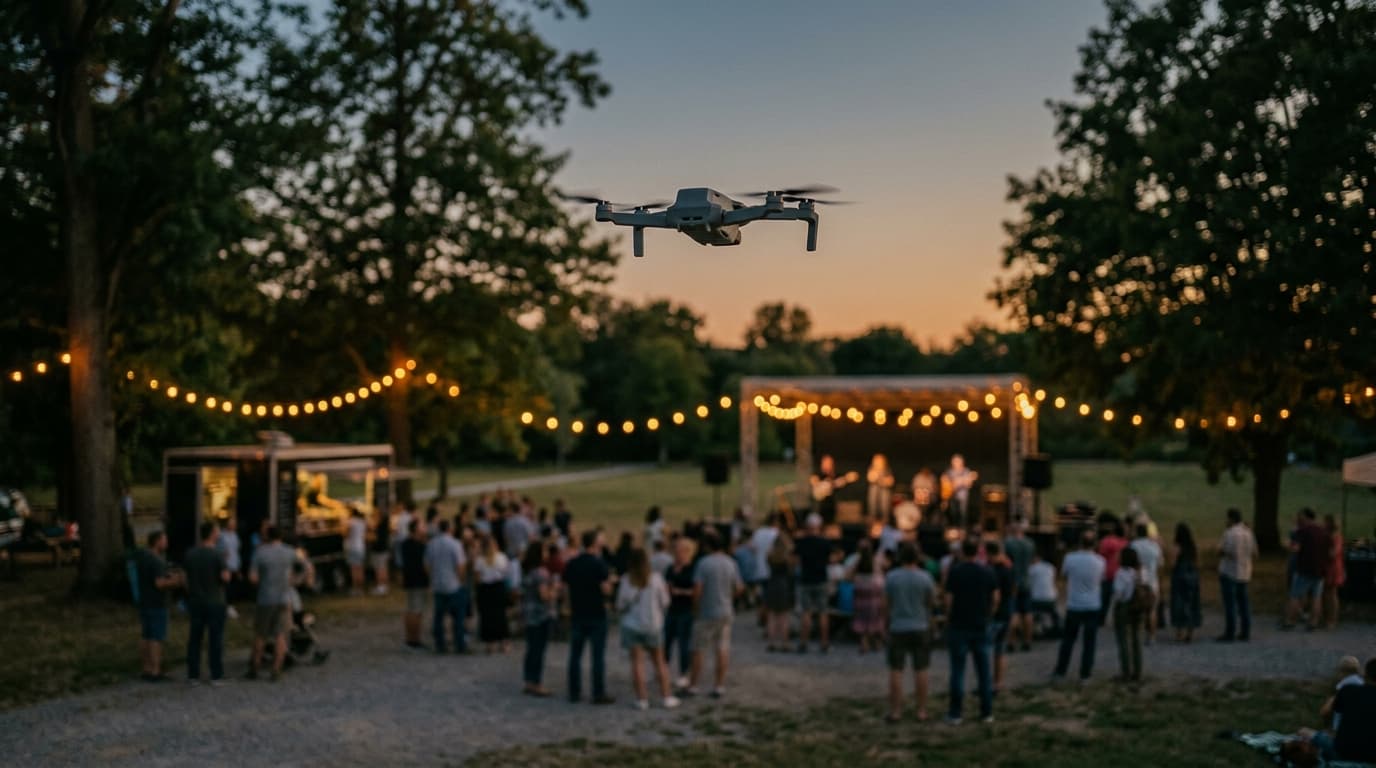
Drones for events: the aerial shots everyone wants — and the crowd problem
Weddings, festivals, races — commercially attractive, legally one of the hardest niches, because the Open category bans flying over assemblies of people in every subcategory. Pros work around it with standoff framing, timing and, rarely, a Specific-category authorisation.
- commercial
- open-category
- specific-category
2026-07-11
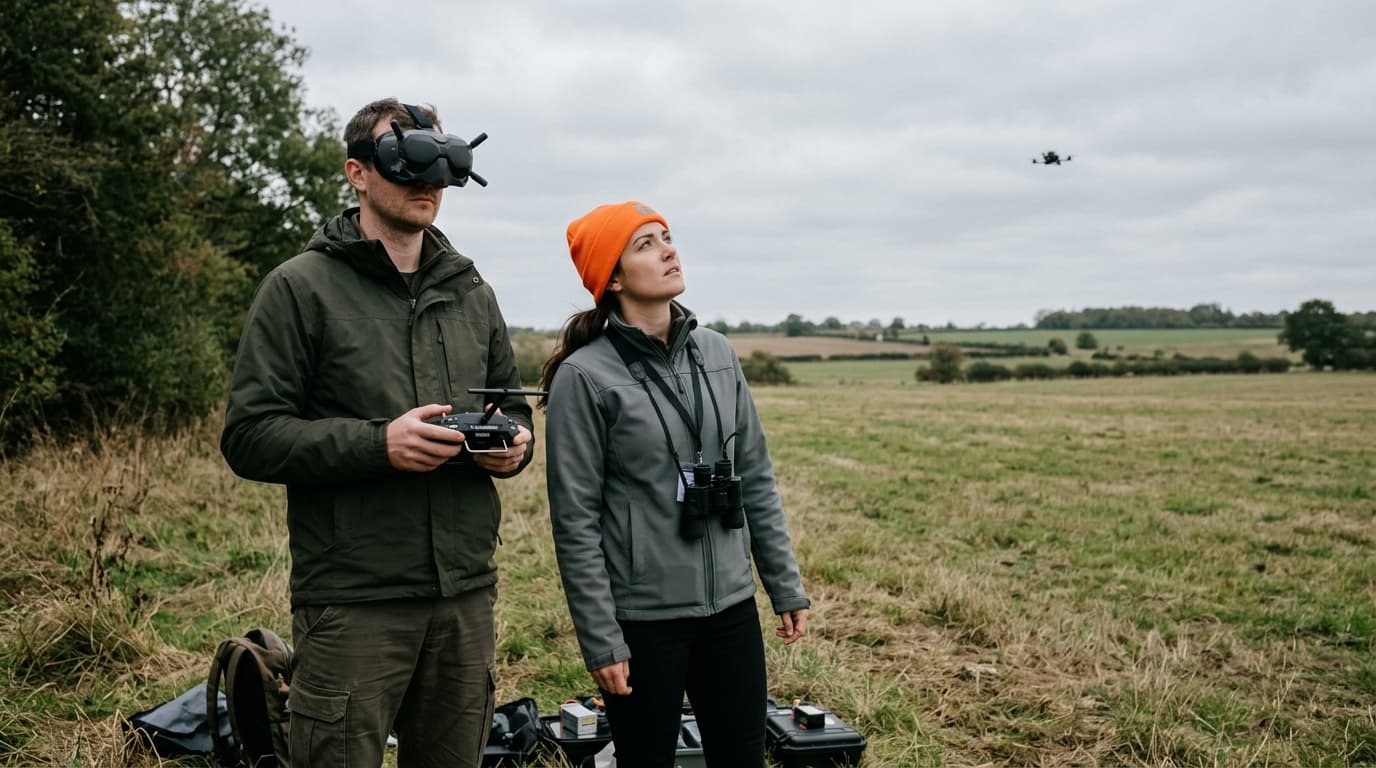
FPV drone rules under EASA: the Open category still applies
FPV is not a legal loophole — the EASA regulation covers it exactly like any other drone. Registration, the A1/A3 exam, and the observer rule for goggles are mandatory, not optional.
- fpv
- getting-started
- open-category
2026-07-11
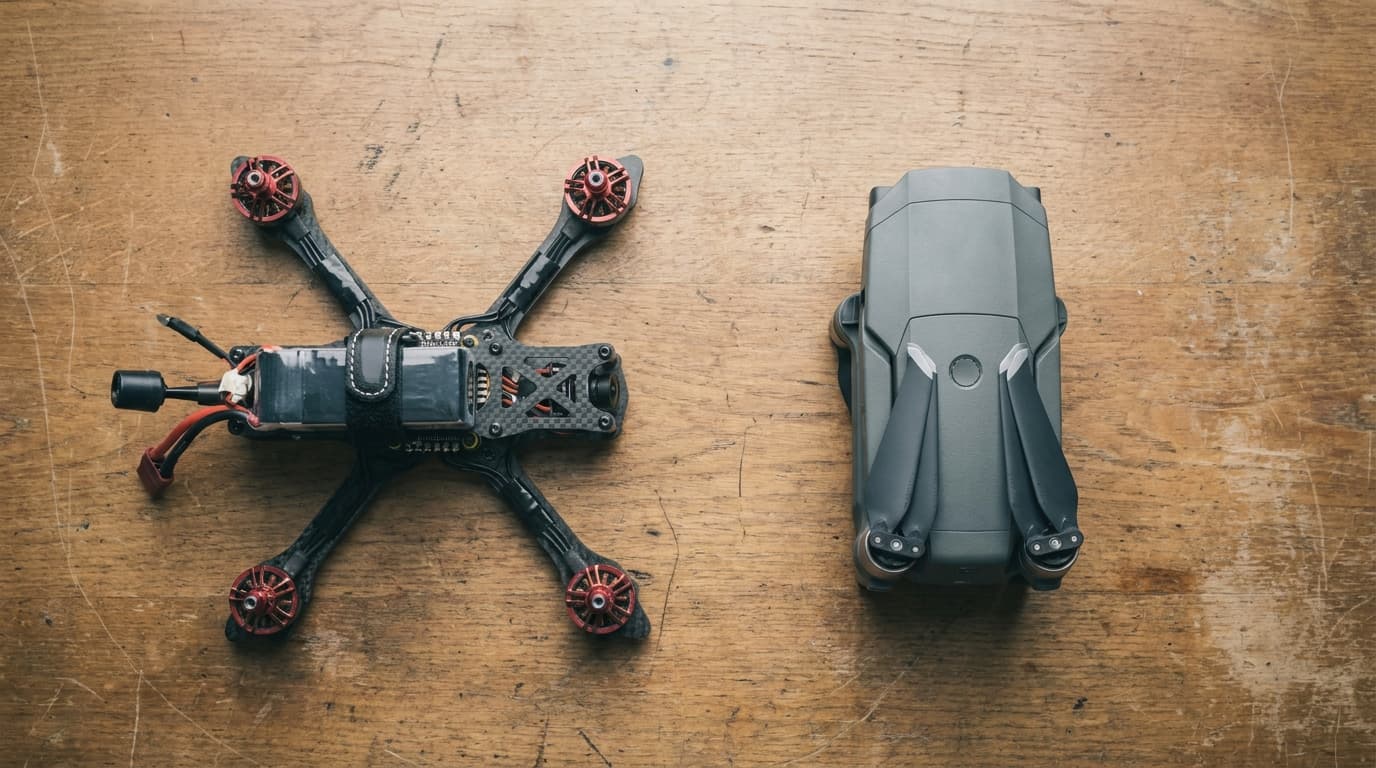
FPV vs DJI: which one to fly, and how the rules and skills differ
A GPS camera drone flies itself — FPV flies exactly as you fly it. We compare the learning curve, cost and repairs, and explain what stays the same either way: registration, the A1/A3 exam and, for FPV, an observer.
- fpv
- getting-started
- open-category
2026-07-11
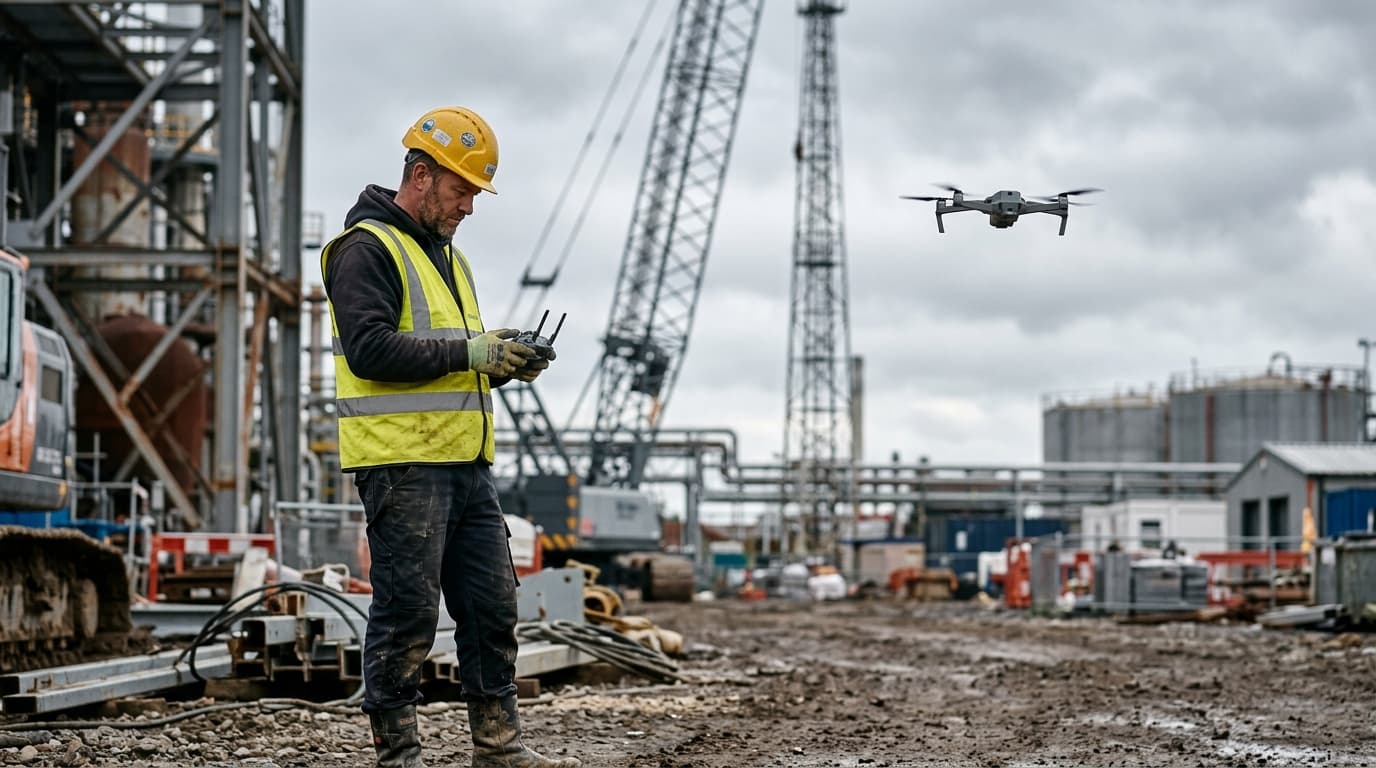
Jobs that use drones: industries and roles where drone skills pay
Drones are already a standard tool in surveying, construction, agriculture and inspection, alongside the media use everyone knows. A survey of the roles, the certificate and category each needs, and how to position yourself.
- commercial
- career
- open-category
2026-07-11
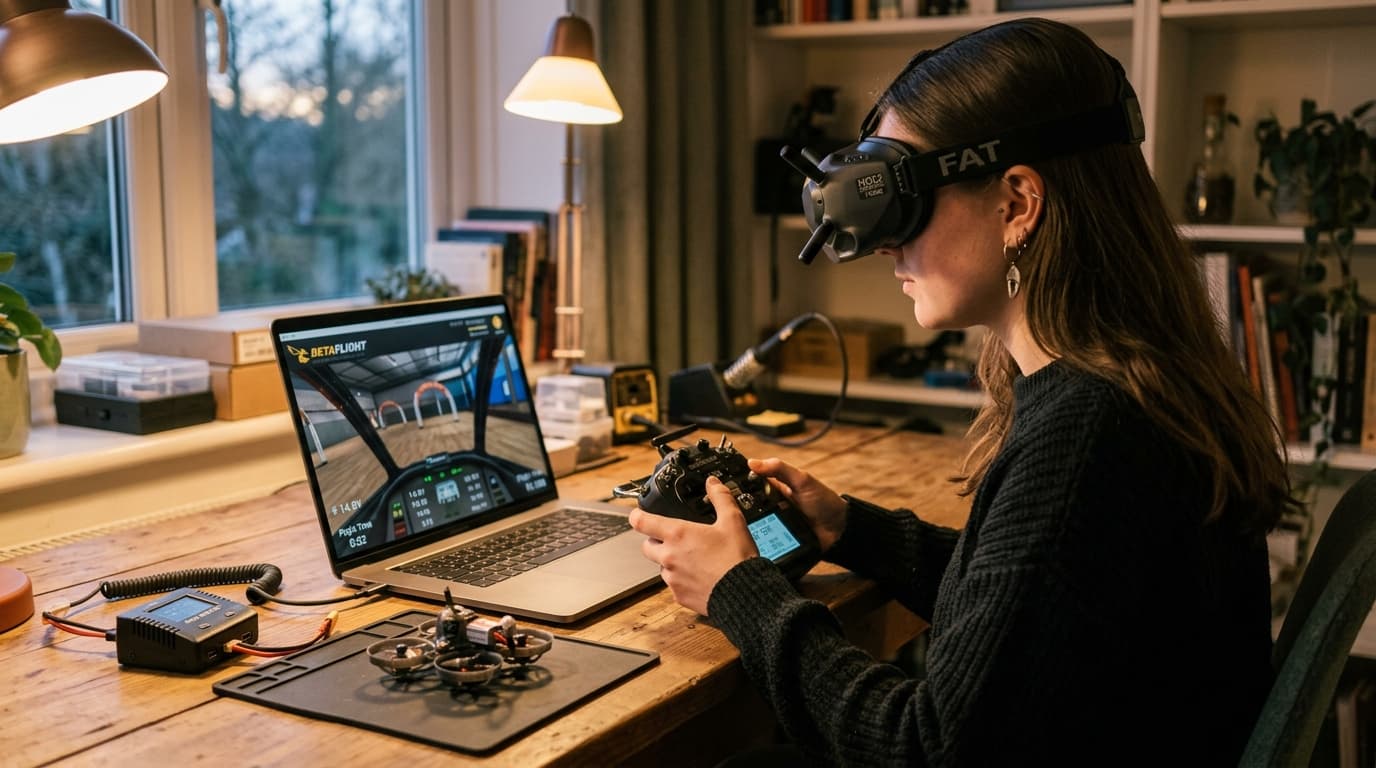
How to Learn to Fly FPV: From Simulator to Acro, the Legal Way
FPV learning starts in a simulator, not in the air — and the legal requirements (observer, registration, A1/A3) apply from the first outdoor flight, not later. Here is the ladder from angle mode to freestyle, and what to sort out before flying solo.
- fpv
- getting-started
- open-category
2026-07-11
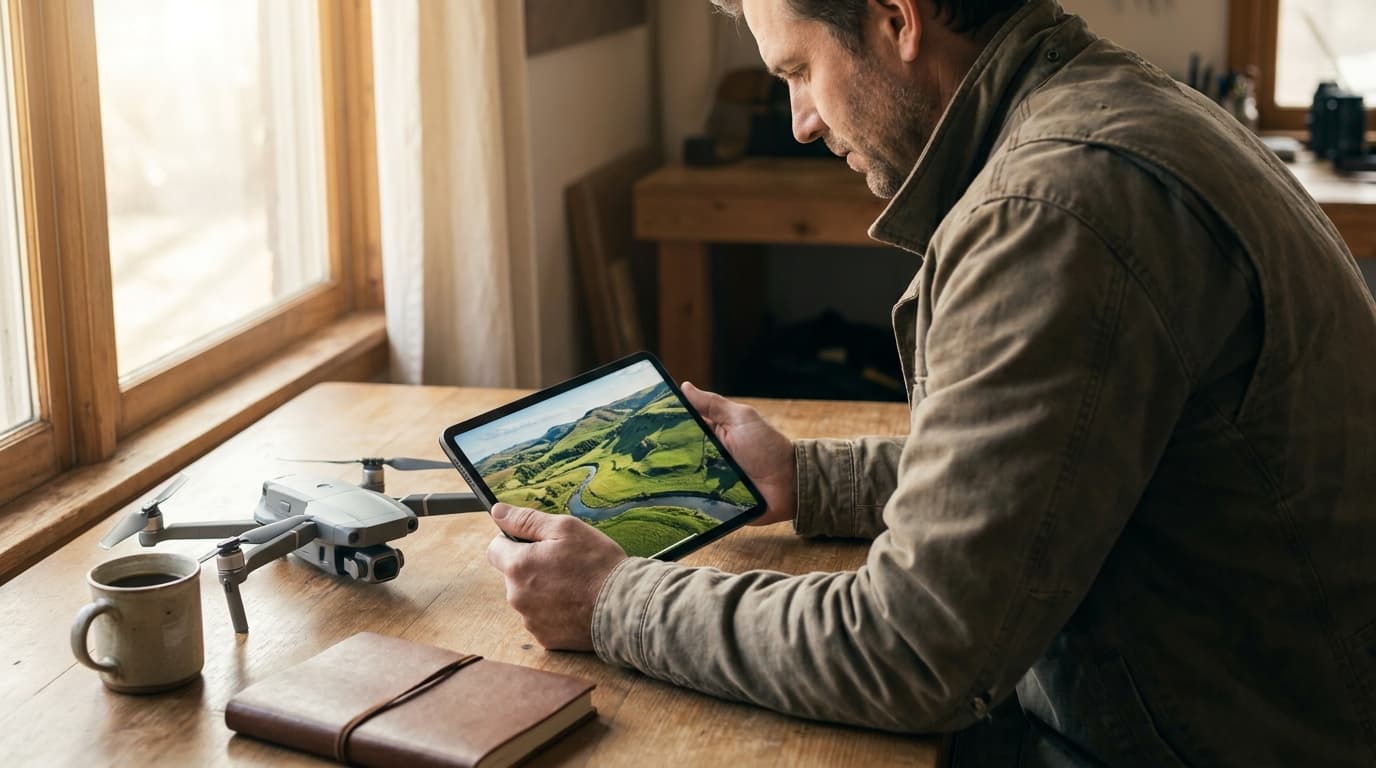
Making money with drone photography: from hobby flights to paid work
A drone and a good camera are not a business. Where drone photo and video work actually has recurring demand — real estate, events, tourism, inspection, stock — and what has to be in place before the first invoice.
- commercial
- photography
- portfolio
2026-07-10
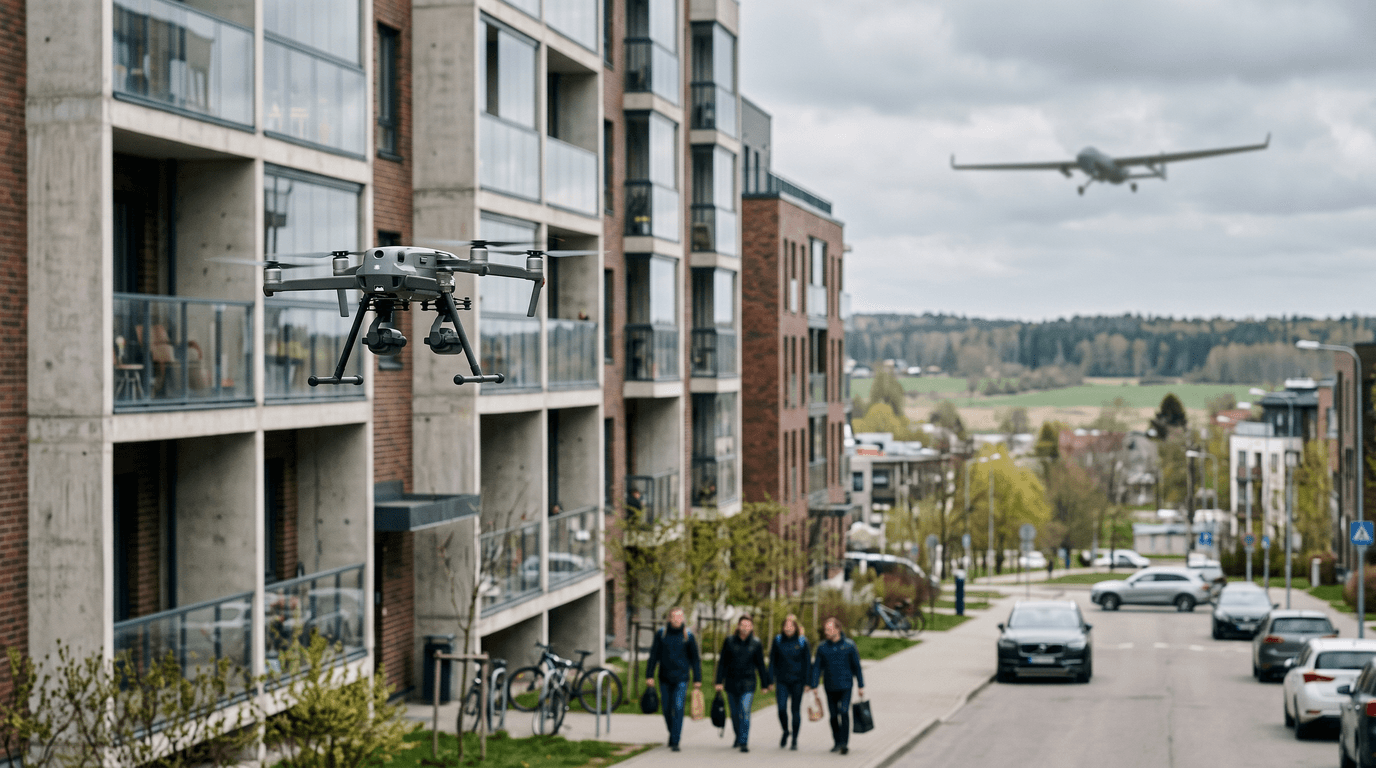
A2 vs the Specific category: when does the Open category stop being enough?
A2 lets you work a C2 drone 30 m from people — 5 m in low-speed mode. The Specific category is not a "better A2": it is a different regime with a declaration or authorisation, an operations manual and a higher exam bar. Here is an honest framework for the choice.
- a2
- specific-category
- open-category
2026-07-10
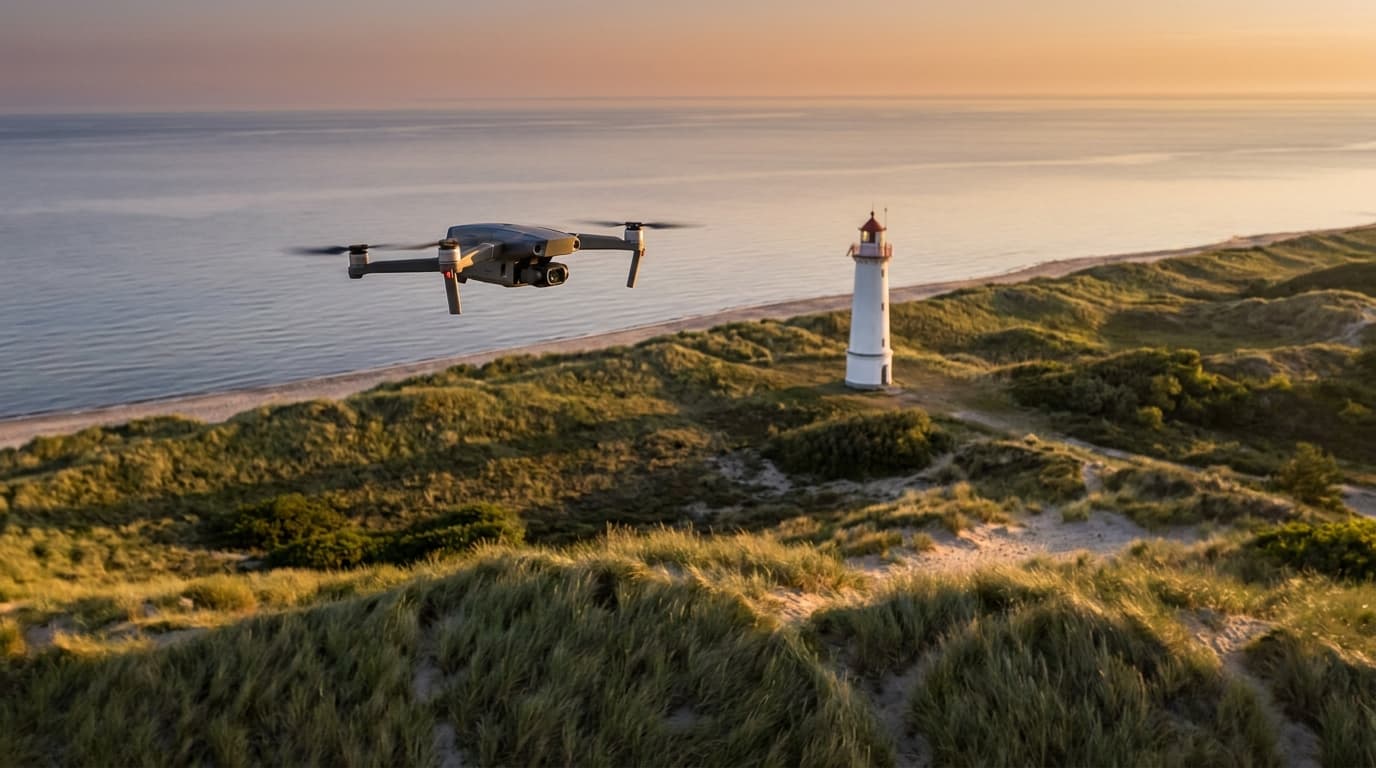
Cinematic drone shots: the core moves and the mistakes that ruin them
Cinematic drone footage comes from a small repertoire of moves — the reveal, the push-in, the orbit, the tracking shot — flown slowly and planned before takeoff. Here is what each move communicates, where beginners ruin it, and where the Open category draws the line.
- photo-video
- filming
- getting-started
2026-07-10
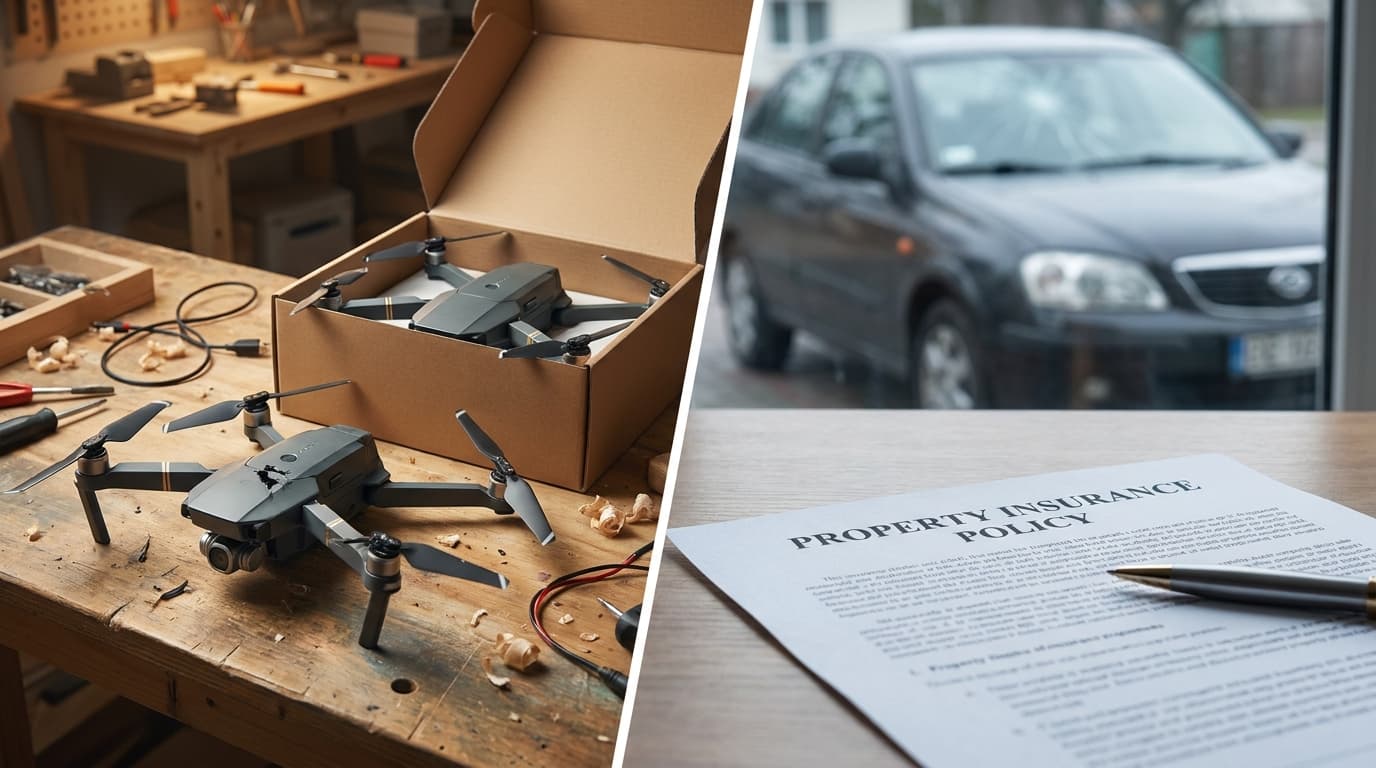
DJI Care Refresh vs drone insurance: why one does not replace the other
DJI Care Refresh replaces your damaged drone; Latvia's mandatory insurance covers harm to other people. They are two different protections, and the law only asks for the second. Here is what pays when something breaks.
- insurance
- dji
- latvia
2026-07-10
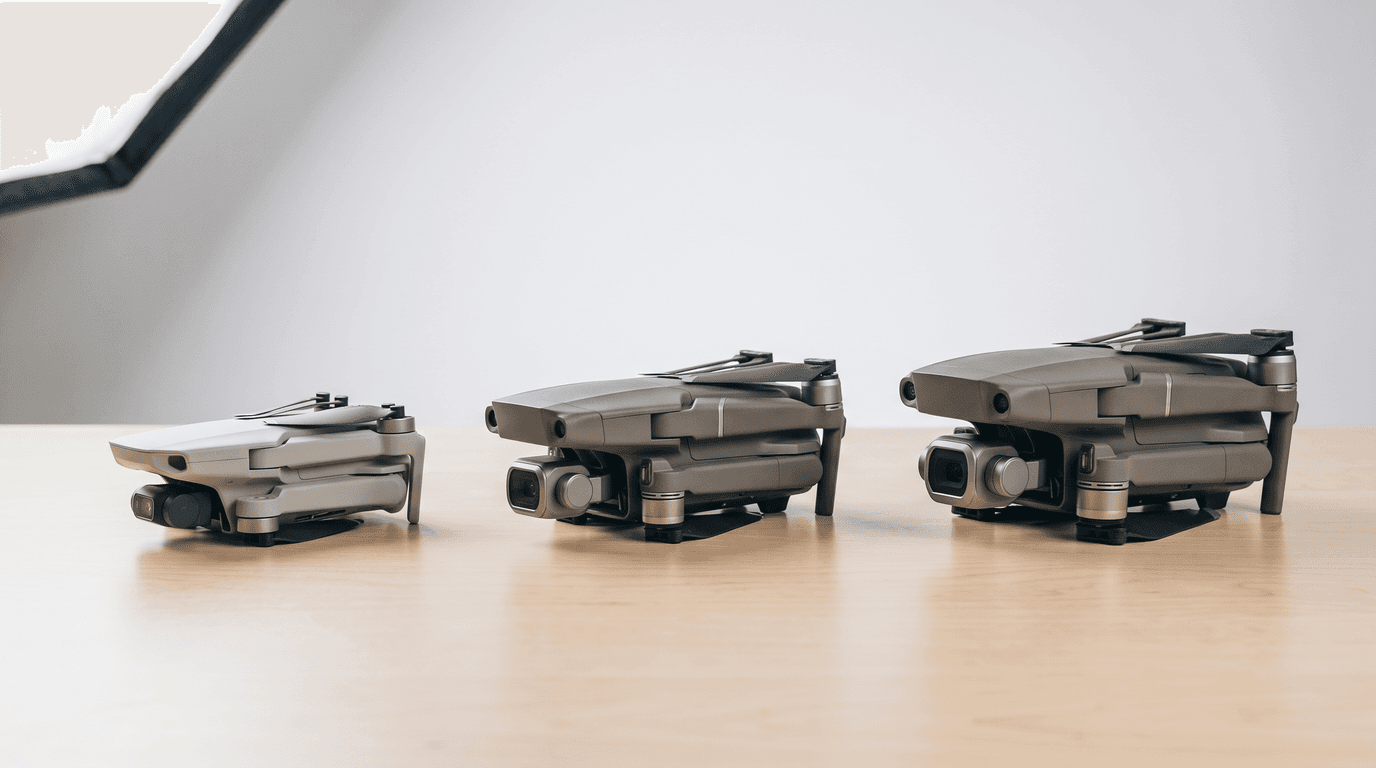
DJI Mini vs Air vs Mavic: which line fits your flying — and your certificate
Three DJI lines mean three weight bands, three C-classes and three certificate paths. The Mini 5 Pro (249.9 g, C0) flies in A1 with no exam, the Air 3S (724 g, C1) needs A1/A3, and the Mavic 4 Pro (C2) needs A2 on top for work near people.
- drones
- open-category
- licence
2026-07-10
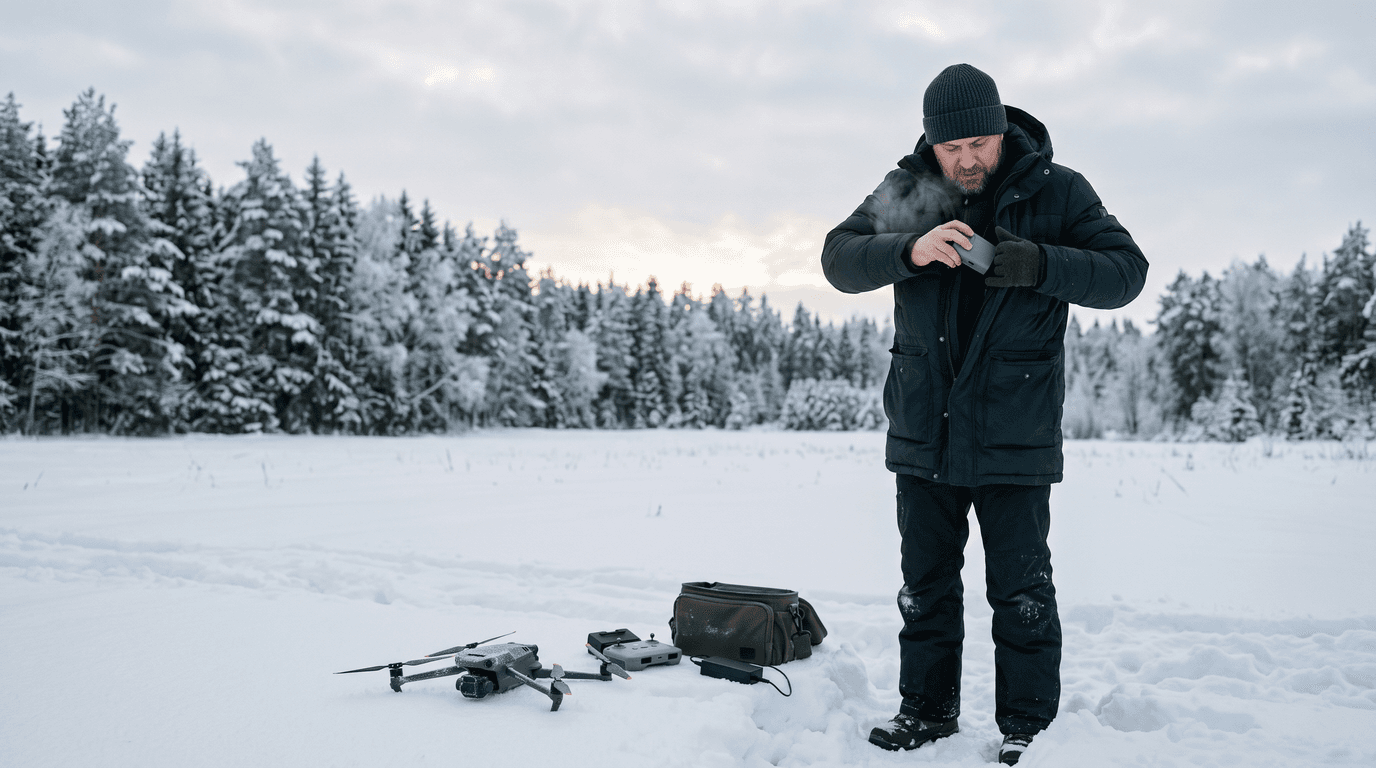
Drone batteries in cold weather: why winter flights are shorter
Cold slows a lithium battery's chemistry, raises internal resistance and makes voltage sag under load — which is why a drone throws critical-battery warnings in winter even at a high indicated charge. Here is what happens in the cells and how to fly safely.
- batteries
- li-po
- safety
2026-07-10
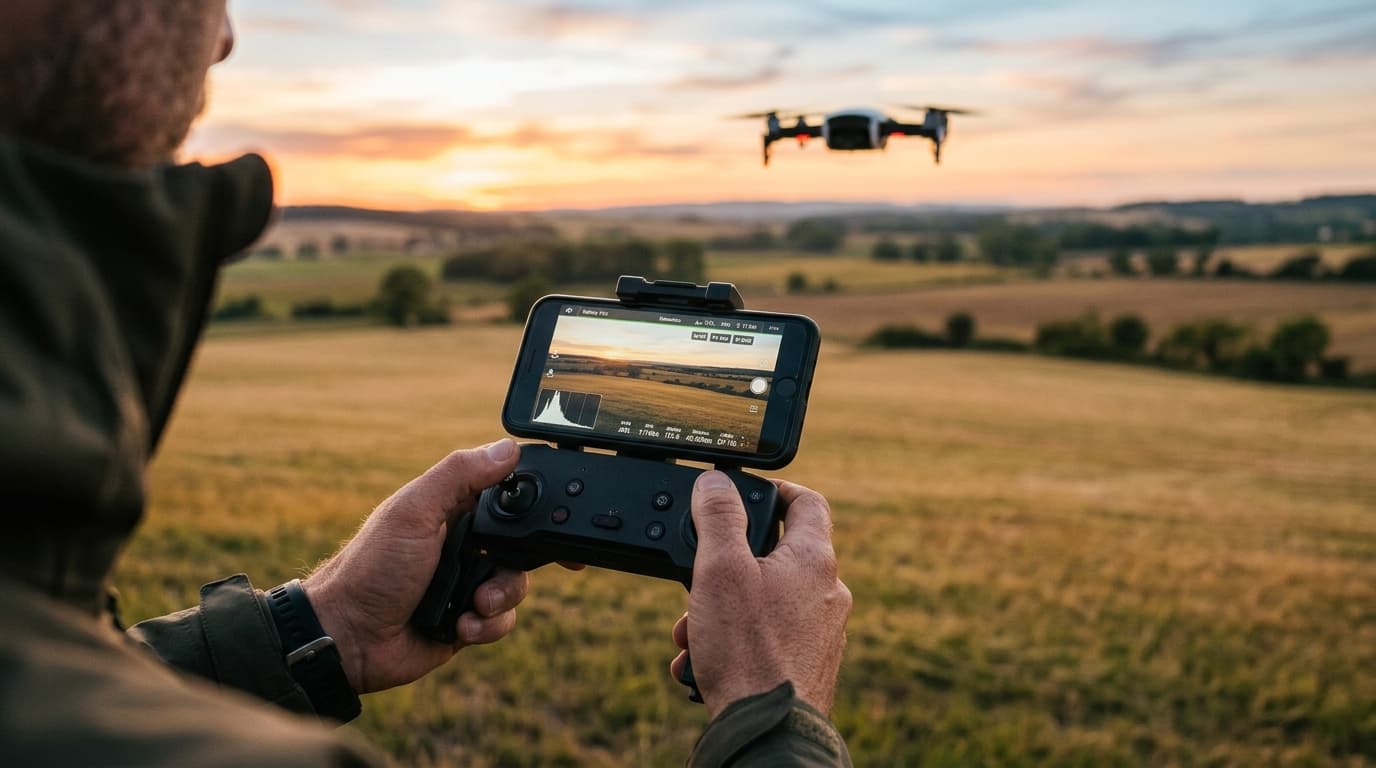
Drone camera settings: RAW, the 180-degree shutter rule and base ISO
A drone's small sensor forgives few mistakes, so settings matter more than on the ground: RAW for photos, a flat profile for video, shutter by the 180-degree rule, ISO at base and manual white balance. Here is the sequence that works on any drone.
- photography
- video
- equipment
2026-07-10
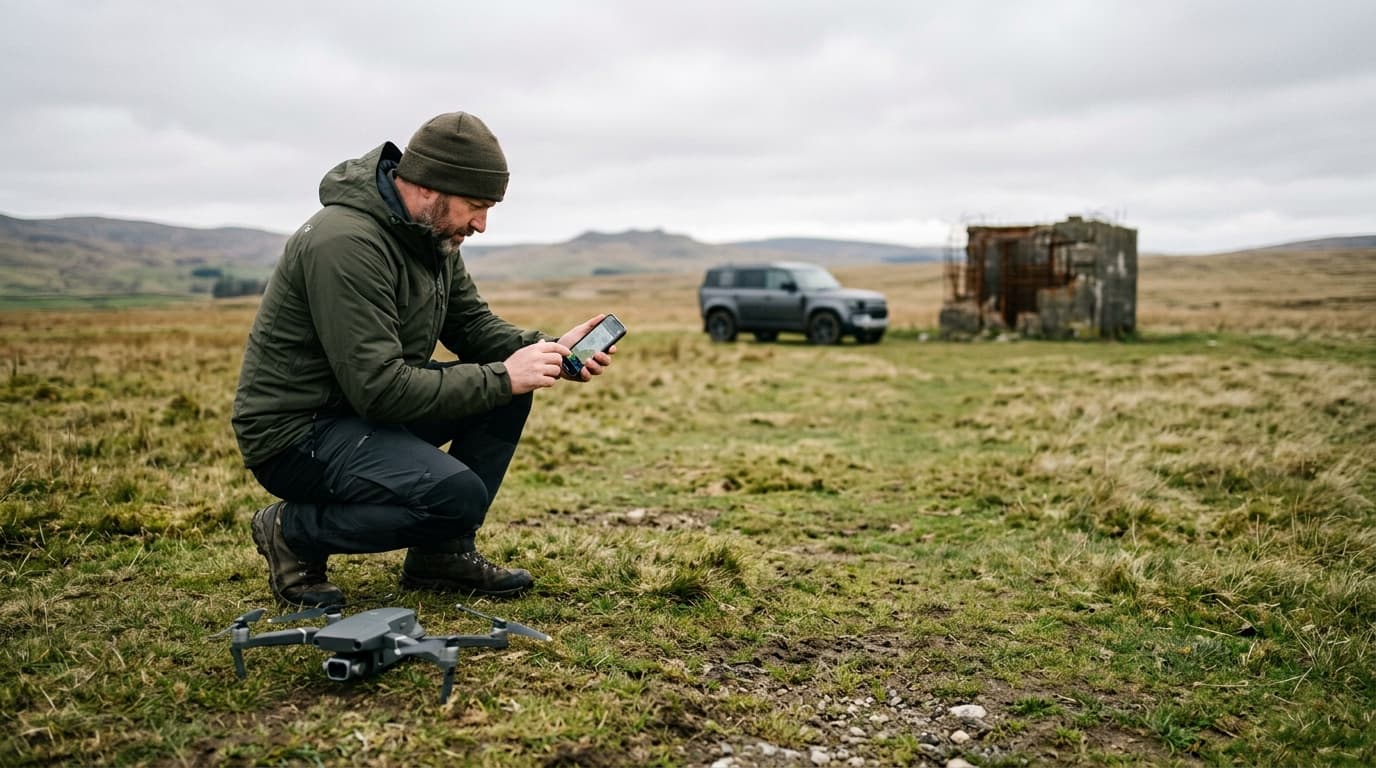
Drone compass and IMU errors: symptoms, causes, and fixes
Most compass warnings come from the environment — rebar, cars, metal roofs — not from a broken drone. How to tell a compass error from an IMU error, when to calibrate, and when calibrating makes things worse.
- troubleshooting
- safety
- equipment
2026-07-10
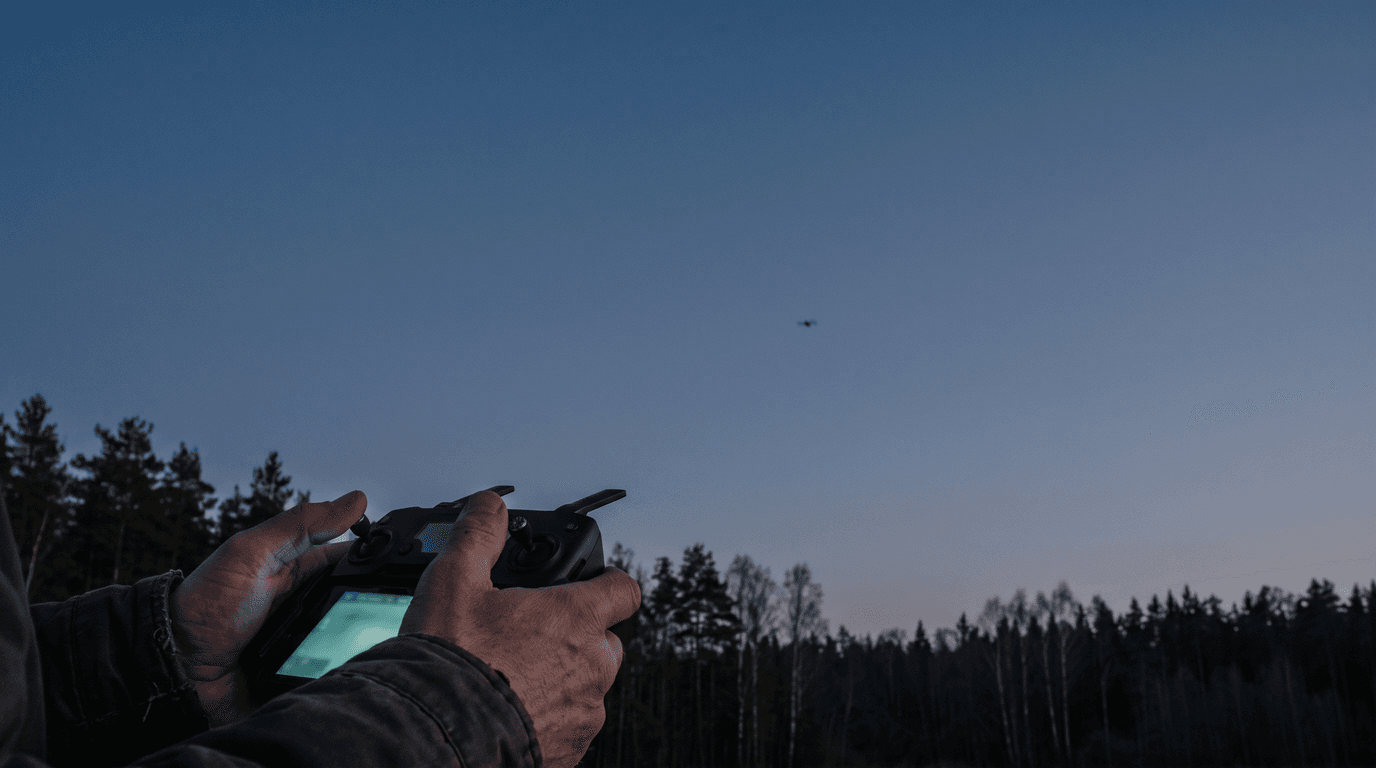
Drone flew away: what to do in the first minutes and after
Most "flyaways" are not mysteries — they follow a few recognisable causes: a wrong home point, compass interference, wind or signal loss. Here is what to do in the first minutes, how to search using the last telemetry coordinates, and when the event must be reported to the CAA.
- safety
- troubleshooting
- getting-started

2026-07-10
Drone photo and video editing: the post-processing basics that lift your footage
A drone shot straight out of the camera almost always looks flat — haze, a wide lens, a small sensor. Here are the post-processing basics that fix it: RAW workflow, dehaze, horizon and color discipline for photos; correct-then-grade, stabilization and pacing for video.
- photography
- video
- camera
2026-07-10
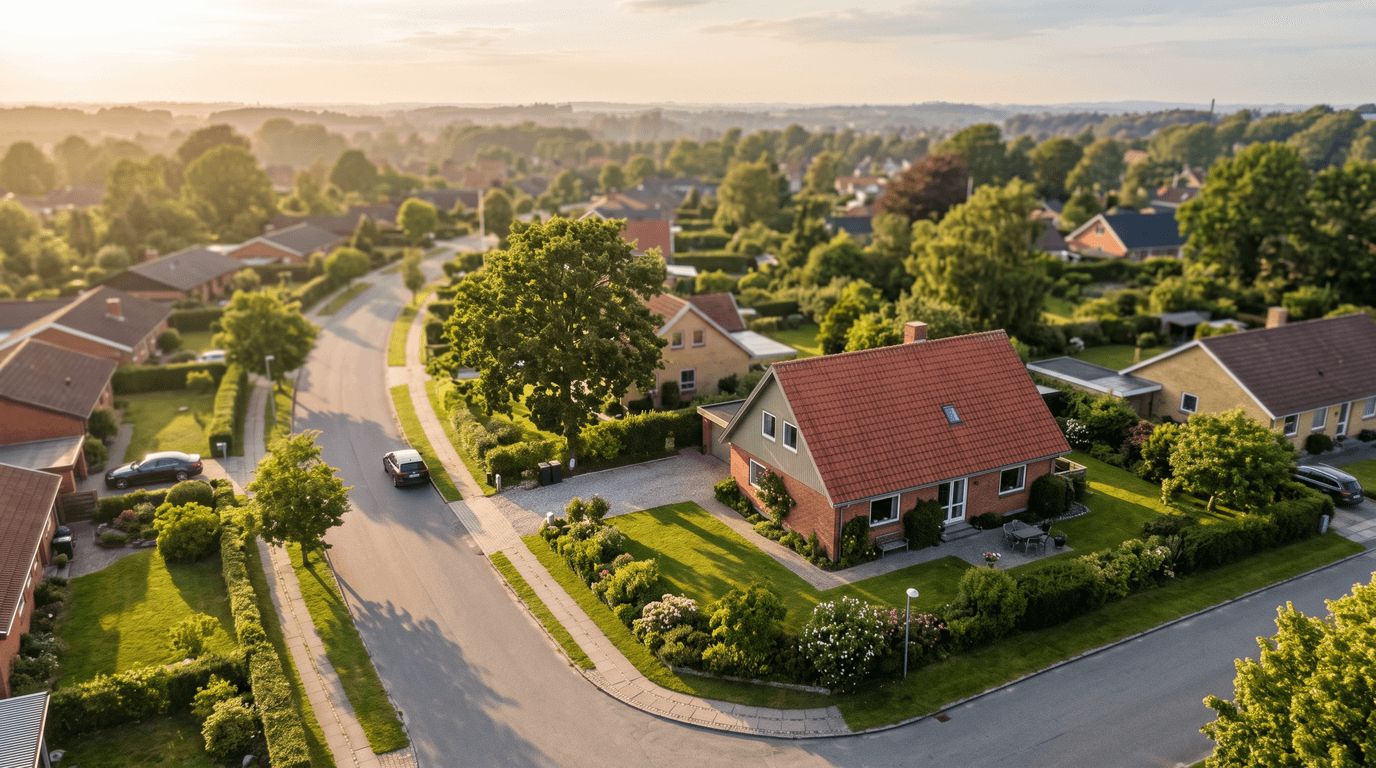
Drones for real estate: what aerial shots add — and the rule most guides skip
An aerial shot shows the plot, the roof and the surroundings like no other frame. But listings usually sit in built-up areas — which means a sub-250 g / C0–C1 drone in A1 or a C2 drone with an A2 certificate, plus a zone check and BGKIS.
- commercial
- open-category
- a2
2026-07-10
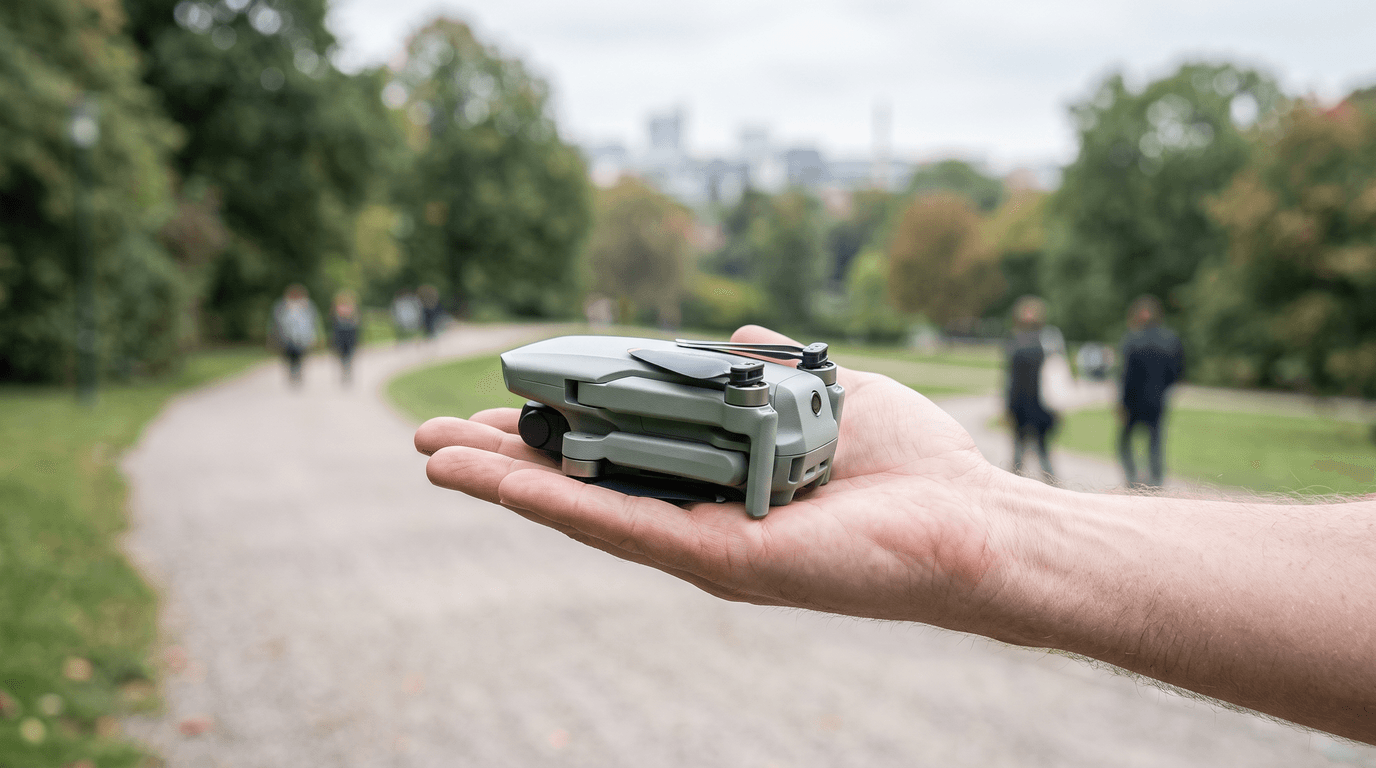
Drones under 250 g — the rules that still apply
Under 250 g does not mean "no rules". The exam really isn't needed for A1 flights, but operator registration with a camera, the 120 m ceiling, VLOS and geographical zones remain. A precise list of what applies and what doesn't.
- sub-250g
- open-category
- registration
2026-07-10
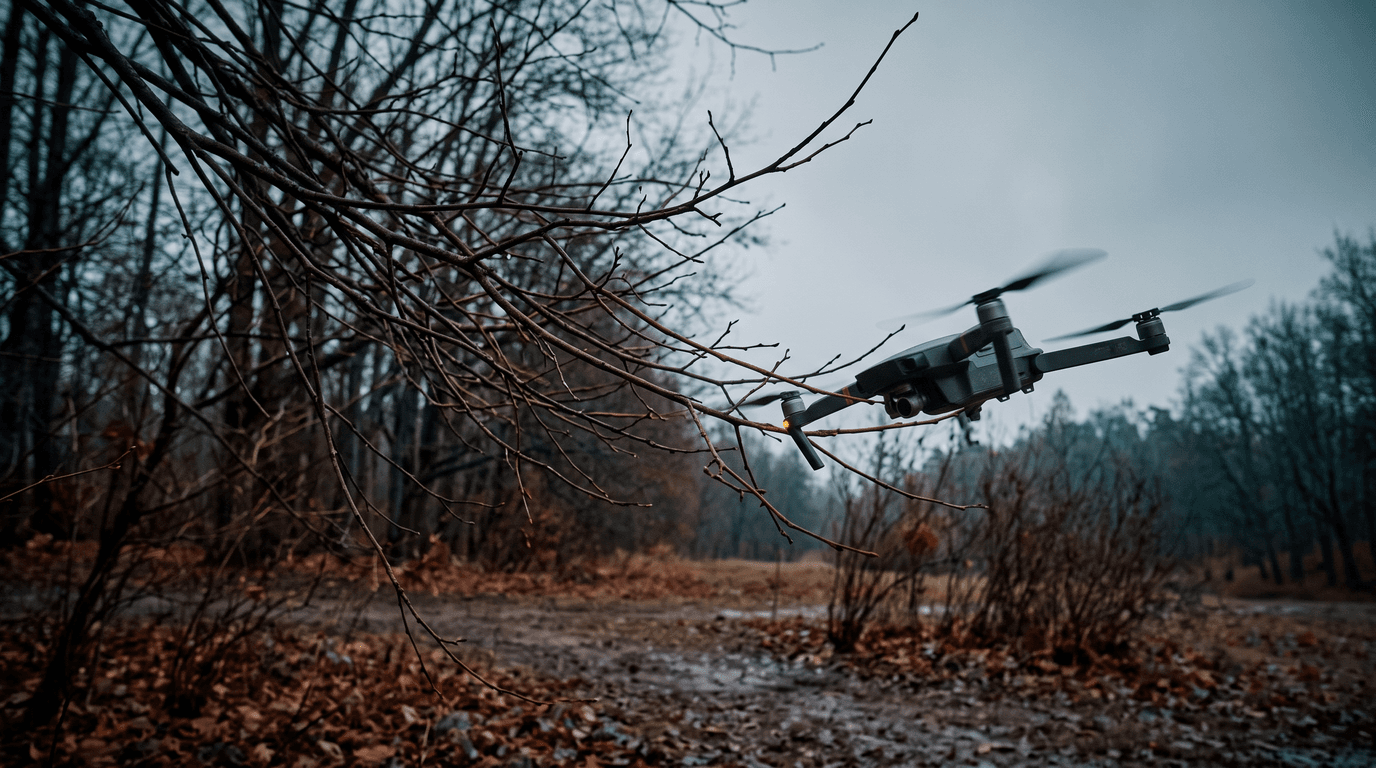
The first mistakes that destroy beginner drones — and how to avoid them
Most first drones die to predictable pilot mistakes, not hardware: RTH set too low, a drained battery, an ATTI-mode drift. Nine mistakes — flying and legal — each with a concrete fix.
- getting-started
- safety
- latvia
2026-07-10
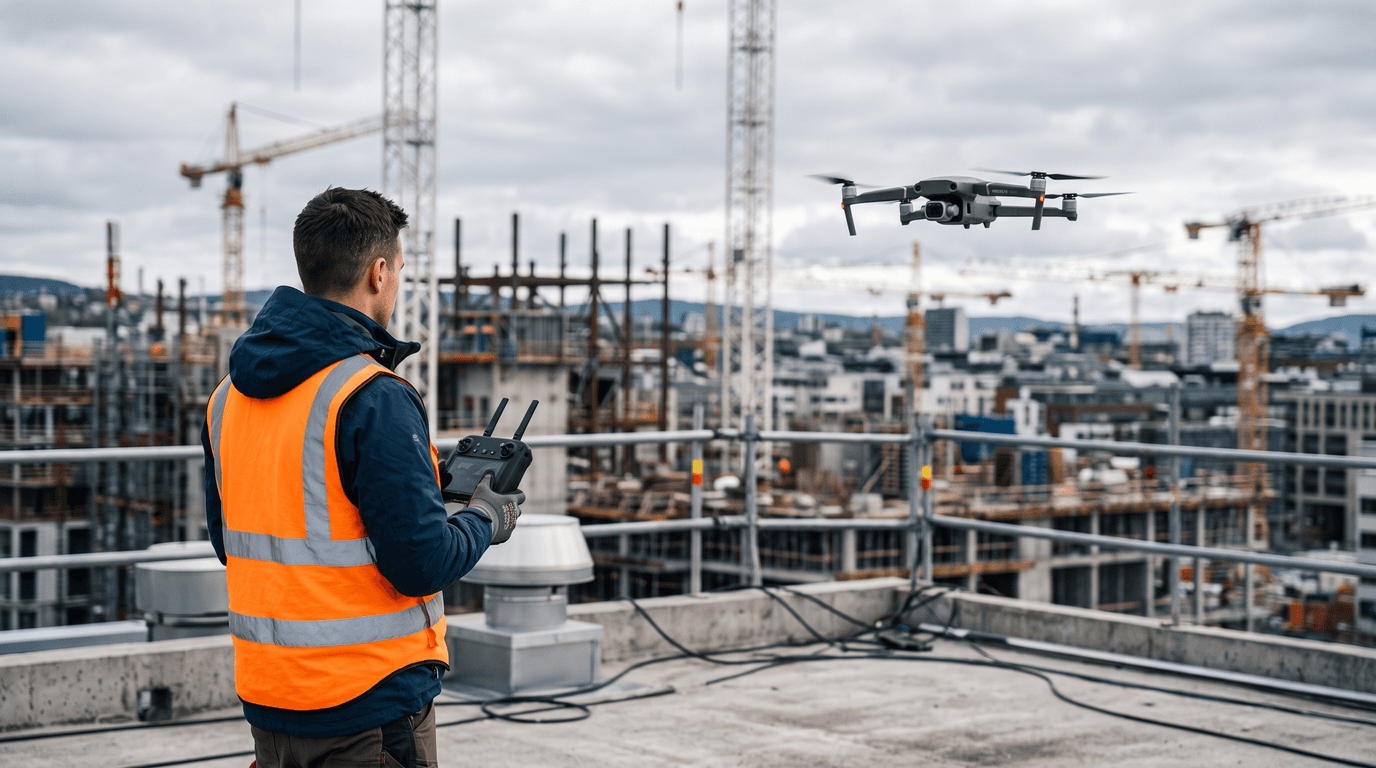
How to become a commercial drone pilot in the EU and Latvia
The EU has no separate "commercial drone licence" — the same A1/A3 and A2 certificates cover paid work. The realistic path: A1/A3, A2, operator registration, insurance, then skills and a portfolio.
- commercial
- licence
- latvia
2026-07-10
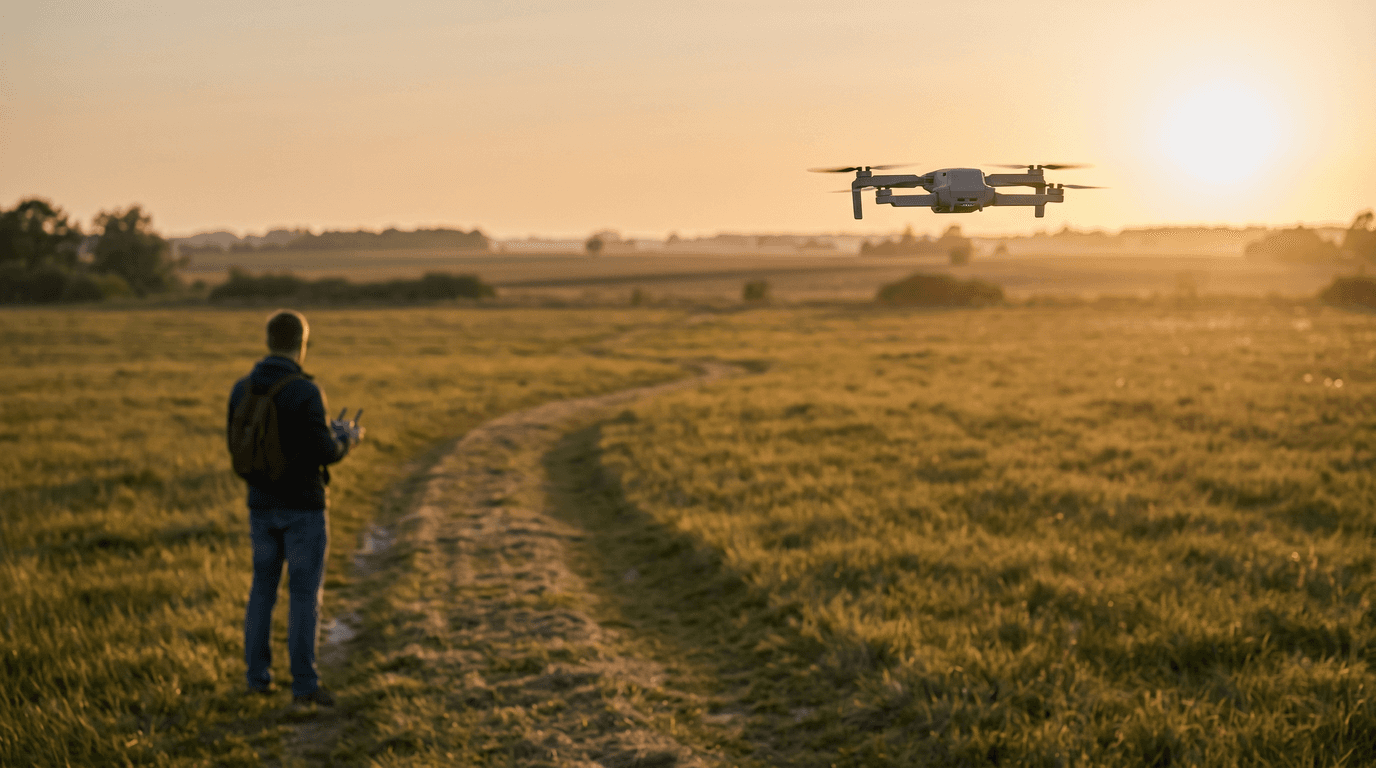
How to learn to fly a drone: from simulator to a confident first flight
You don't learn to fly a drone from cinematic videos — you learn it from a sequence of drills: simulator, empty field, a steady hover, the box pattern, nose-in flight. Here is a practical path from zero to a confident first flight.
- getting-started
- safety
- latvia
2026-07-10
How to start a drone business in Latvia: the legal floor, the niche, the real costs
Drone businesses fail on paperwork and demand far more often than on flying skill. The sequence that works: certificates, operator registration, insurance, a registered activity — and only then equipment and clients.
- business
- commercial
- latvia

2026-07-10
ND filters for drones: when you need them and how to pick a strength
Most consumer drones have a fixed aperture, so on a sunny day the video shutter gets driven too high and motion turns jittery. An ND filter gives back the missing exposure lever. How the ND8/16/32/64 ladder works, when to skip the filter, and why you only swap it on the ground.
- photo-video
- equipment
- beginner
2026-07-10
STS-01 vs STS-02: the two EU standard scenarios compared
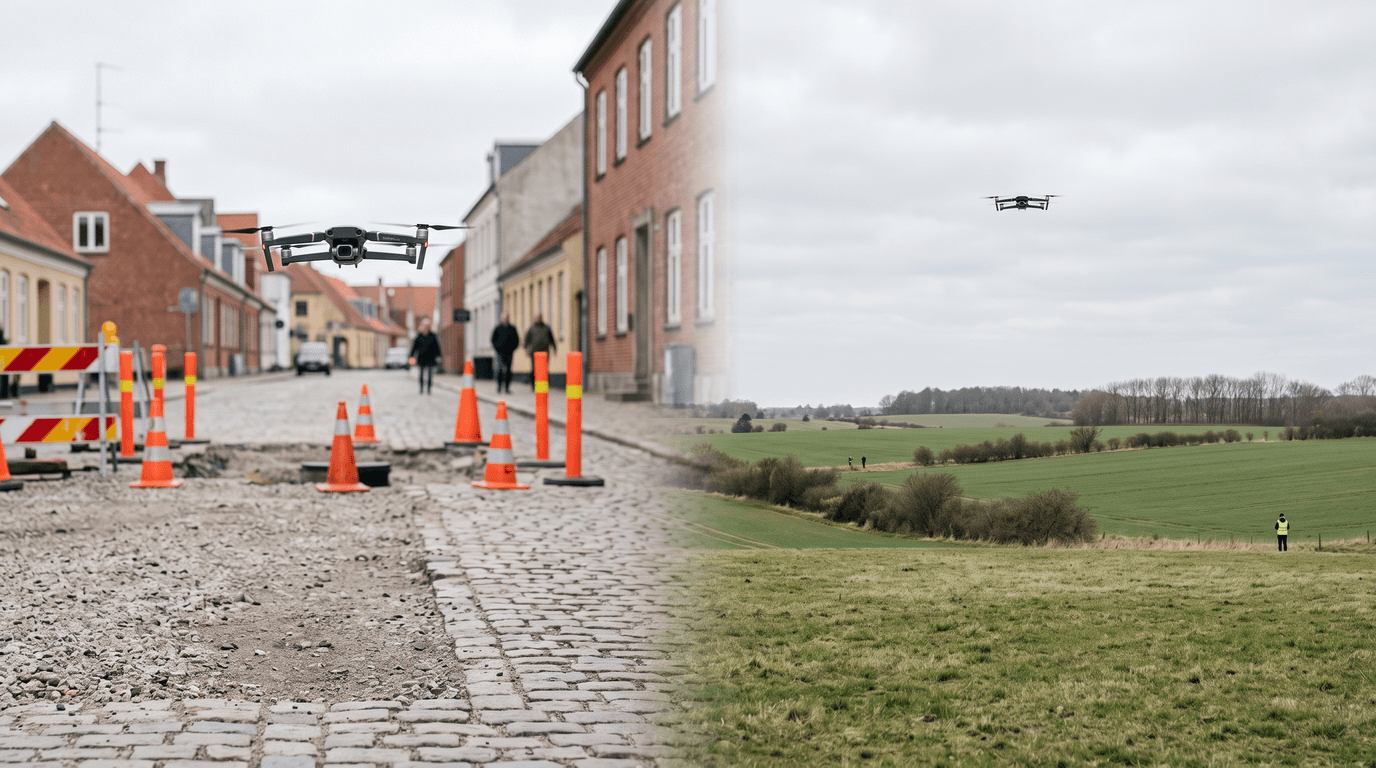
STS-01 is VLOS with a C5 drone over a controlled ground area that may sit in a populated environment; STS-02 is BVLOS with a C6 drone and airspace observers in a sparsely populated one. The exact parameters — heights, distances, buffers and the pilot certificate — from Appendix 1 to Regulation (EU) 2019/947.
- sts
- specific-category
- bvlos
2026-07-10
What is FPV? Goggles, disciplines, and the rules that still apply
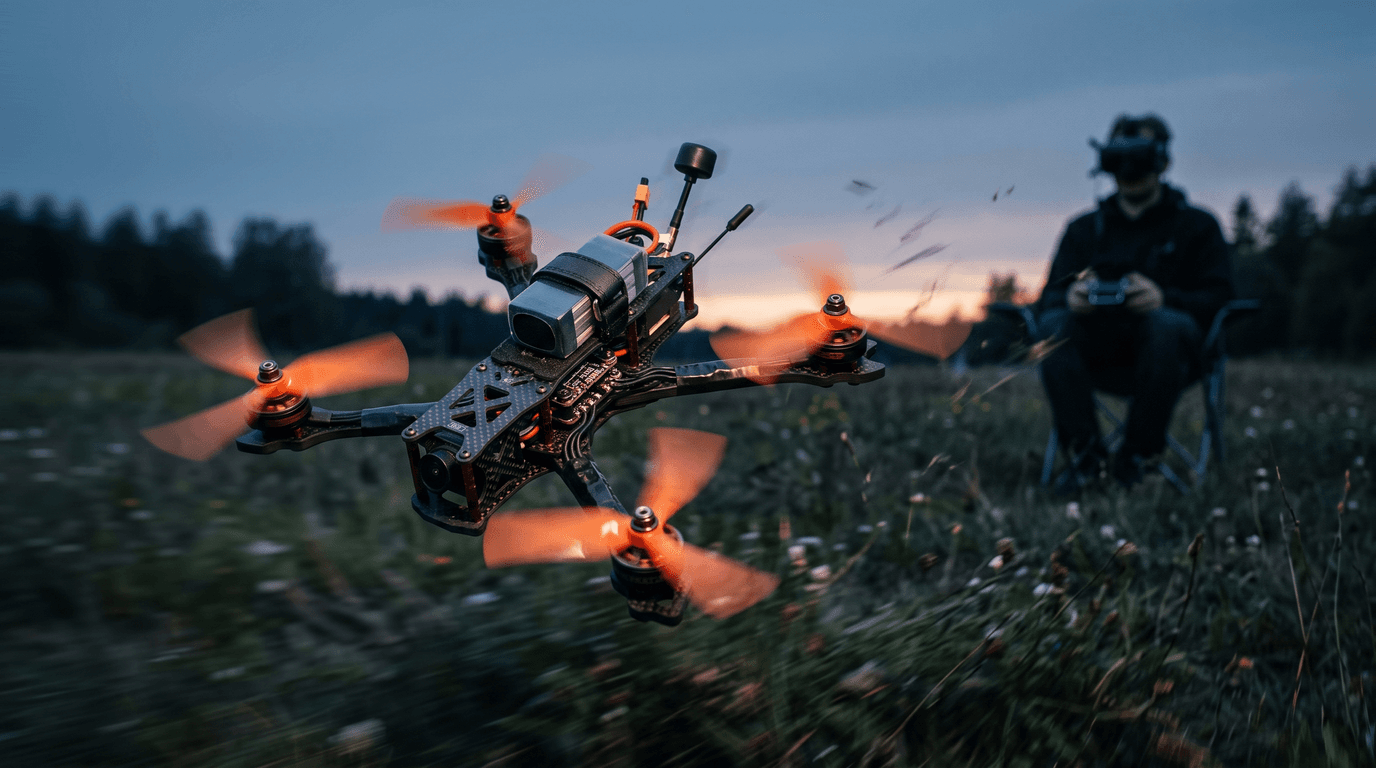
FPV means flying through goggles with the drone's own view — racing, freestyle, cinewhoop or long-range. But EASA rules apply to FPV exactly like to any other drone: observer, registration, exam. Here is what to know before the first flight.
- fpv
- getting-started
- open-category