Most drone footage looks like drone footage: high, fast and aimless. Cinematic drone shots come from somewhere else — a small repertoire of camera moves, each of which says something specific, flown slowly enough for the viewer to read it. The drone matters far less than the discipline. This article covers the core moves, what each one communicates, the beginner error that ruins it, and the part filmmaking tutorials skip: where the Open category draws the line on your ambition.
Four principles that beat any move
Before the repertoire, the habits that decide whether any of it works:
- Slow, smooth stick inputs beat fancy moves. Half of what reads as "production value" is nothing more than speed control. A plain forward pass flown at a constant crawl looks better than a three-axis spiral flown twitchy.
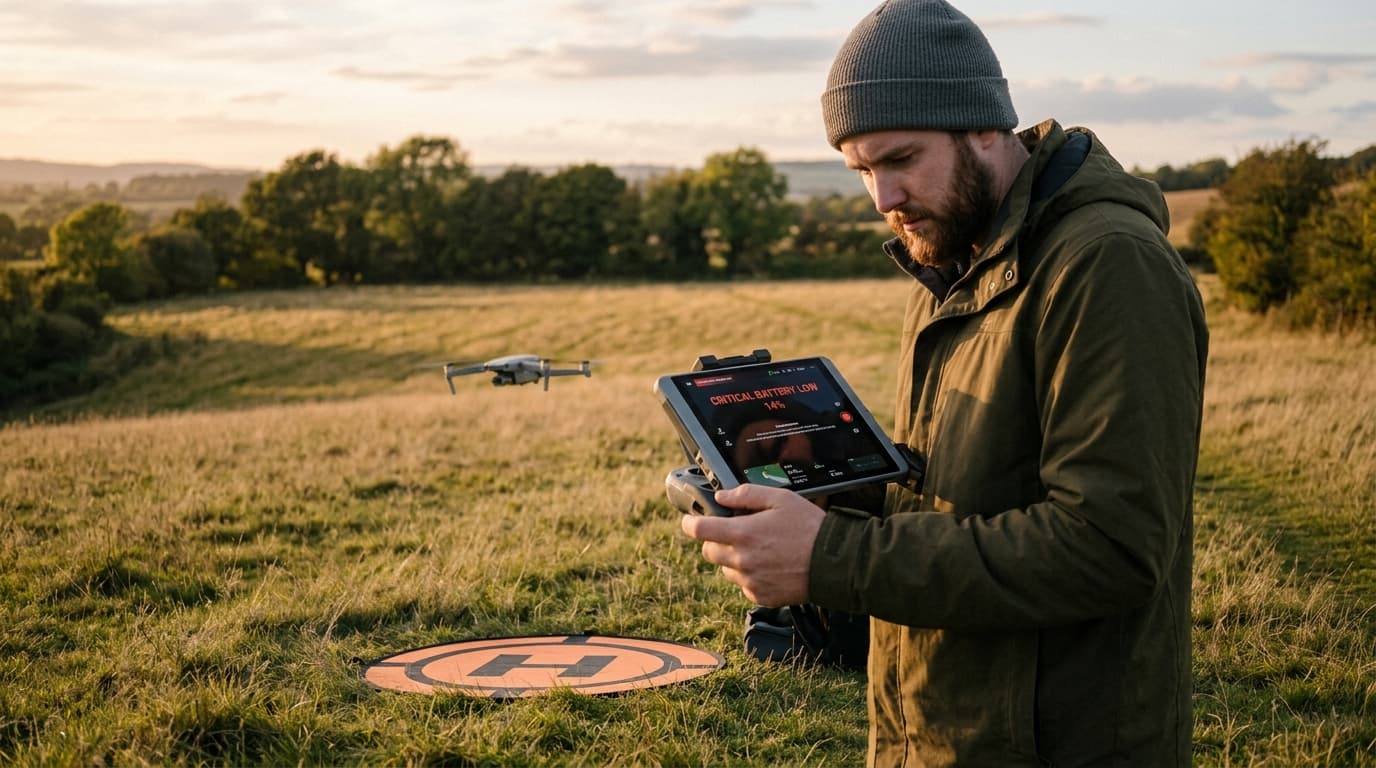
- Plan the shot before takeoff. Subject, start frame, end frame, flight path. If you are deciding what the shot is while airborne, you are burning battery and attention on indecision.
- Shoot 30–50% longer than you need. Edits need handles on both ends, and the start and end of a move are always the roughest parts. Long takes also leave room for speed ramps.
- Combine two axes at most. Forward plus gimbal tilt, or rise plus yaw. Three-axis moves look bad until the two-axis versions are muscle memory.
The moves are one half of the craft; exposure and motion blur are the other. That side is covered in drone camera settings.
The core repertoire
The reveal
Rise or pull back over an obstacle — a treeline, a ridge, a roof edge — so the frame opens onto the subject behind it. The reveal communicates scale and context: the world is bigger than the opening frame suggested. It is the strongest establishing shot a drone can produce.
The beginner error: revealing too fast. The payoff of a reveal is the moment of transition, and at speed that moment lasts half a second. Climb at a crawl and let the landscape arrive.
The push-in
A straight, constant-speed approach toward the subject. The push-in communicates focus and intent — the same grammar as a dolly-in on a film set. It is also the most honest test of stick discipline in the repertoire.
The beginner error: correcting mid-move. Accelerating, then easing off, then yawing to fix the framing turns intent into wobble. Pick the line on the ground; fly it once, without touching anything else.
The orbit
A circle around a point of interest with the camera locked on it. The orbit communicates importance — it makes a subject monumental and shows it in three dimensions. Most consumer drones offer an automated point-of-interest mode for exactly this.
The beginner error: flying the full 360°. In an edit, 90–180° of orbit is what survives; a full lap reads as showing off. Manually, the classic failure is an egg-shaped path from mismatched roll and yaw rates — which is why this move comes third, not first.
The tracking shot
Following a moving subject — alongside, behind, or leading it. Tracking communicates journey and momentum, and it is where drones genuinely outperform any ground rig.
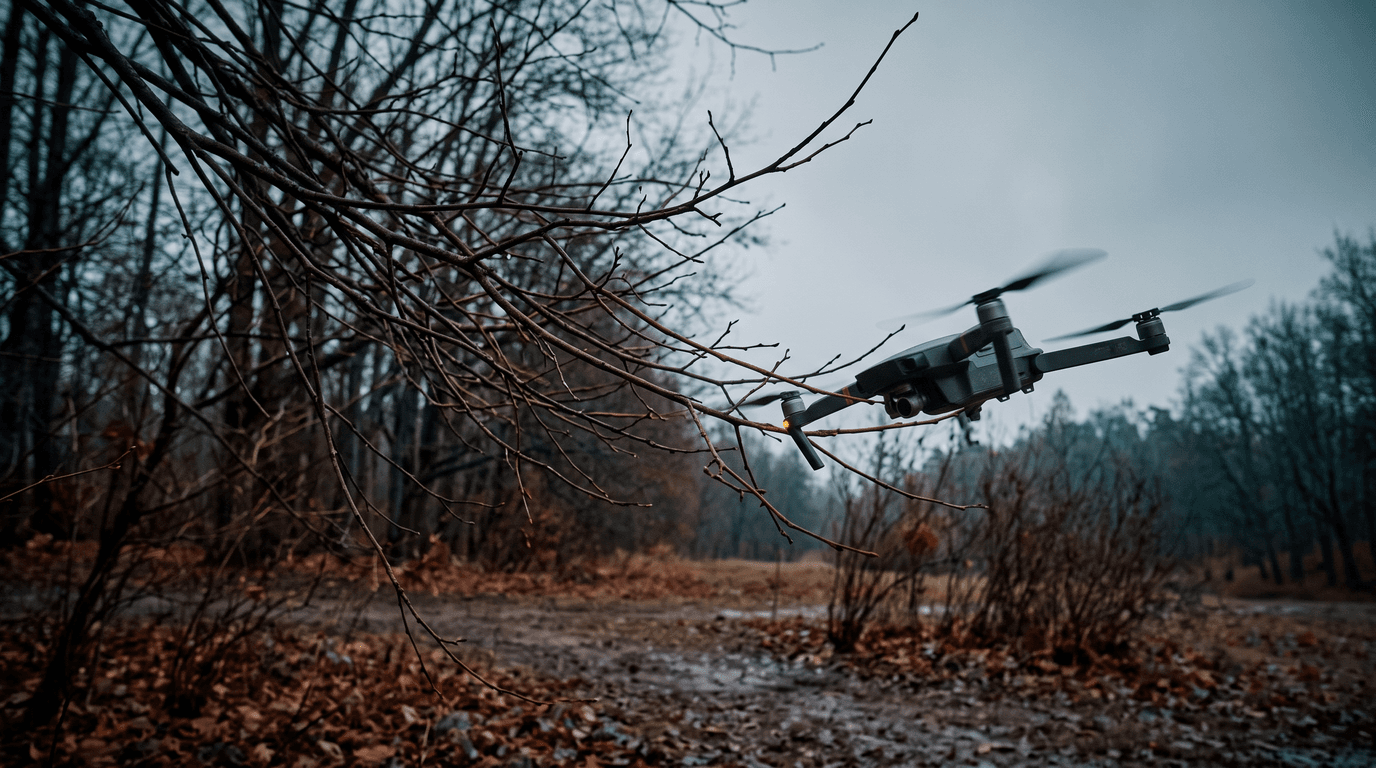
The beginner error: chasing. Abrupt corrections to keep the subject framed destroy the shot, and staring at the screen to frame it destroys situational awareness — a tracking shot is the easiest way to fly into a tree you never saw. Match speed first, frame second.
The top-down
Camera pointed straight down, subject turned into graphic composition: patterns, symmetry, geometry. The top-down communicates order and abstraction — it is the one perspective no other camera platform gets.
The beginner error: the dead hover. A static top-down is a photograph with wasted battery. Add one slow input — a lateral slide or a gentle rise — and the geometry starts to move.
The dronie
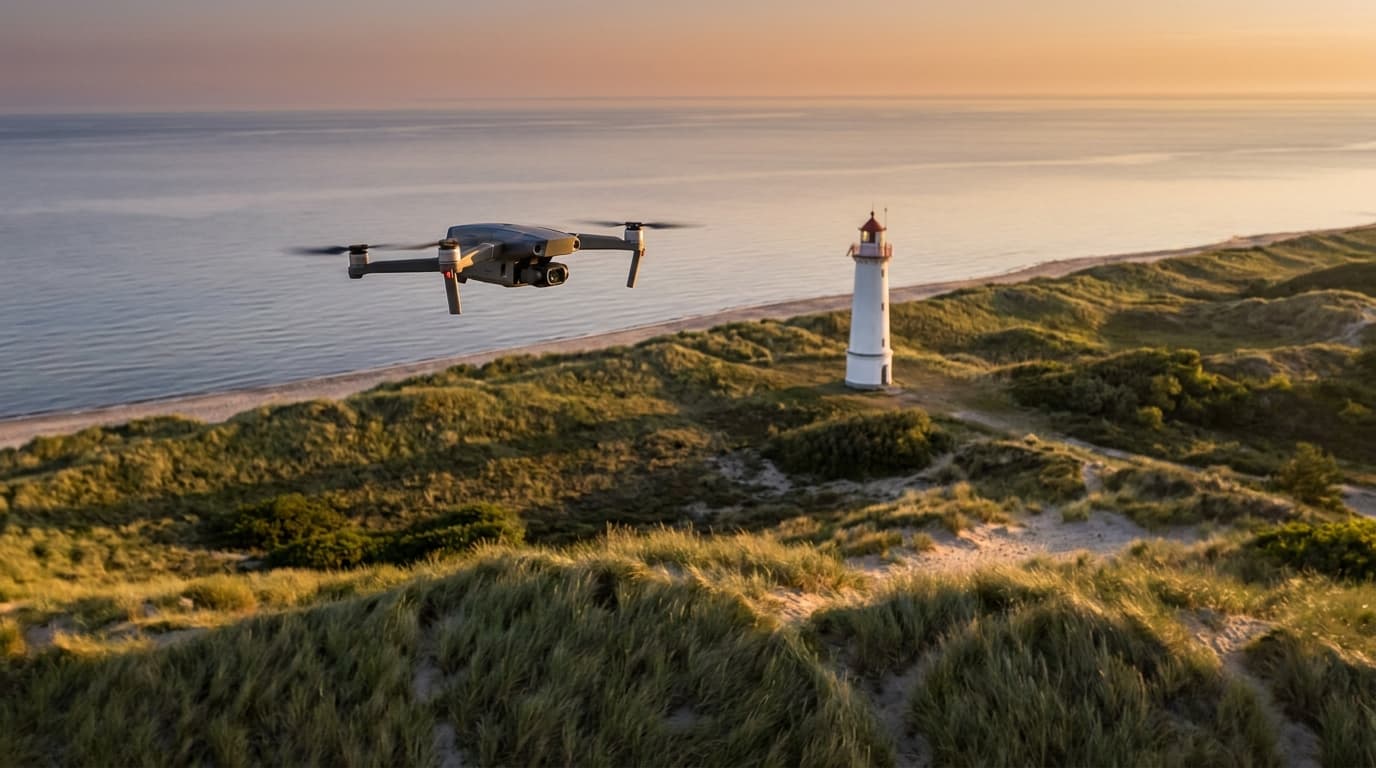
Start close to the subject, then pull up and away until it shrinks into the landscape. The dronie has selfie DNA, but flown slowly it is a legitimate closing shot: it communicates departure, an ending.
The beginner error: speed and twist. A fast, corkscrewing dronie is a social-media cliché; a slow, straight one is an epilogue.
The parallax slide
A lateral move with something in the foreground — trees, a fence, a structure — between the camera and the subject. The foreground sweeps past faster than the background, and that parallax is what creates the feeling of depth.
The beginner error: flying it with no foreground. Without an object in the near field there is no parallax, just a sideways drift. The second error is flying too close to the foreground obstacle that makes the shot work.
The fly-through
Through a window, an arch, a gap in the trees. Flagging this clearly: the fly-through is an advanced, high-risk move, not a beginner target. GPS can degrade in tight spaces, obstacle sensors are often disabled or actively counterproductive in narrow gaps, and the error margin is zero. If you fly it at all, fly it where nothing and no one can be hurt — and accept that most days, the answer is to skip it.
Automated modes versus manual sticks
Most consumer drones ship with orbit and subject-tracking modes, and they are good at what software is good at: constant-rate geometry. A mode will hold an orbit radius better than most humans. Use the modes to learn what a correct movement rate feels like, then graduate to manual for the shots that matter — modes produce mechanically clean but characterless motion, and they fail exactly where judgment is needed: thin branches, wires, and people entering the frame.
One thing no mode does: check where you are allowed to fly. Tracking mode will happily follow a subject into a geographical zone or over a crowd. That call is never delegated.
The shot that is not worth it
Cinematic ambition is precisely where pilots break rules. The reveal over a festival crowd. The fly-through in a residential courtyard. The tracking shot of a stranger who never agreed to be in the film. The moves themselves are legal; the places people fly them often are not.
The Open-category basics that survive contact with creativity: you never fly over assemblies of people, you keep the horizontal distances your subcategory requires from uninvolved people, you keep the aircraft in visual line of sight for the whole flight — a tracking shot that follows a subject behind a treeline has already broken that — and you check geographical zones before takeoff, not after the neighbours call. Tracking a person also has a privacy dimension: a recognisable stranger in your footage did not consent to it, and GDPR applies to drone cameras like any other.
The groundwork is covered in the first mistakes beginner pilots make and in what counts as an assembly of people; before any new location, run it through the can-I-fly-here tool.
What matters now
Learn three moves first — the reveal, the push-in, the orbit — slowly, over an empty field, one or two axes at a time. Plan on the ground, fly at a crawl, shoot long. That covers most of what "cinematic" means; the rest is repetition.
The moves are craft; the rules are the exam. Get the legal side solid with the A1/A3 course — then every location you scout starts from "may I", not "can I".