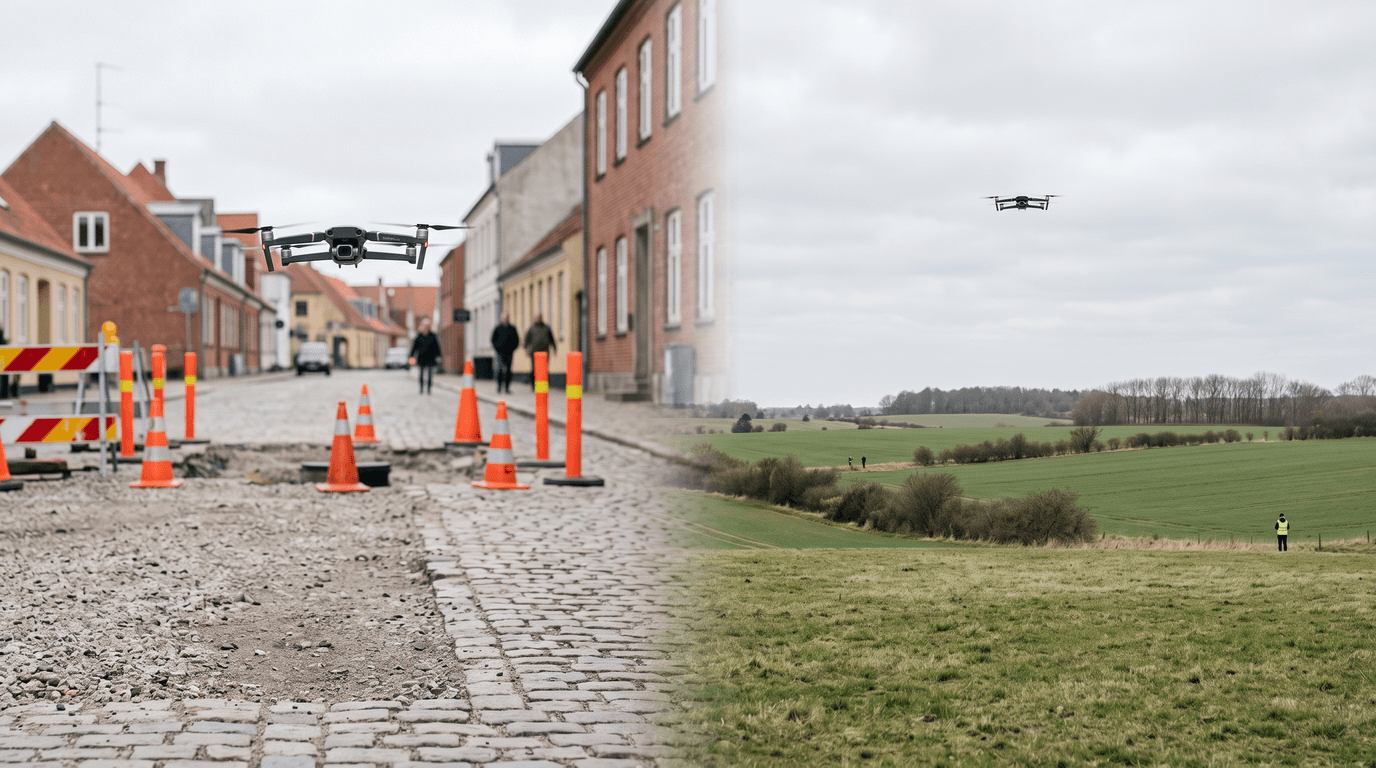
The two European standard scenarios exist for one reason: to let a UAS operator fly a Specific-category mission on a declaration instead of a full operational authorisation. STS-01 covers VLOS work over a controlled ground area that may sit in a populated environment; STS-02 covers BVLOS over a controlled ground area in a sparsely populated one. Every parameter is fixed in Appendix 1 to Regulation (EU) 2019/947 — match the scenario exactly and the paperwork shrinks to a declaration; miss a single condition and you are back to when the Specific category needs a full authorisation.
What the two scenarios share
Before the differences, the common frame. Under both STS:
- The aircraft stays within 120 m of the closest point of the surface. Near an artificial obstacle taller than 105 m, the height may be raised up to 15 m above the obstacle within 50 m of it, at the request of the entity responsible for the obstacle. The operational volume may extend at most 30 m above those limits.
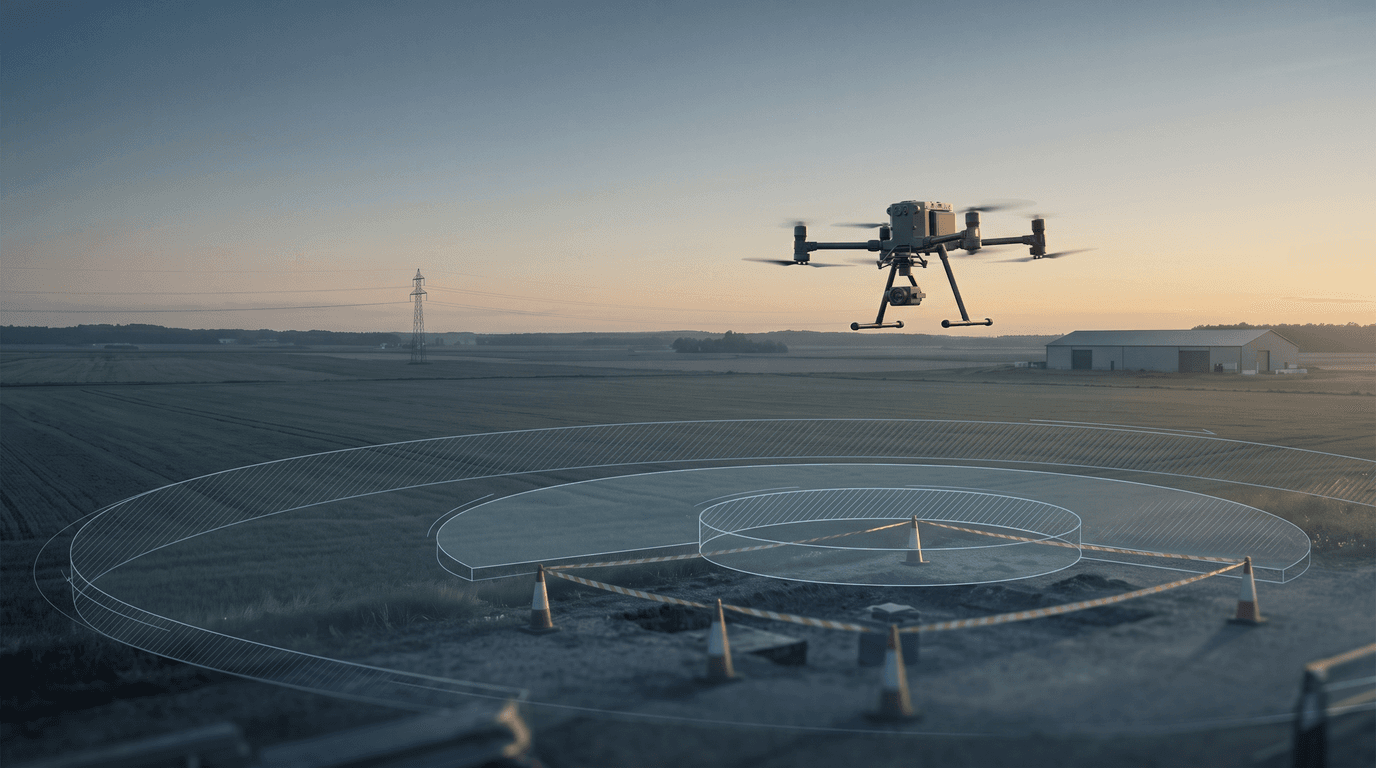
- The flight happens over a controlled ground area — ground where the operator can ensure that only involved persons are present. It is built from three layers: the flight geography, a contingency area extending at least 10 m beyond it, and a ground risk buffer beyond that.
- No dangerous goods on board, and an active, updated direct remote identification system.
- The aircraft carries a class mark under Delegated Regulation (EU) 2019/945 — with a maximum characteristic dimension up to 3 m and MTOM up to 25 kg in both classes.
- The remote pilot holds the same STS certificate of theoretical knowledge, valid five years.
The controlled ground area is the load-bearing concept. Neither scenario allows flight over uninvolved people; STS-01 earns its "populated environment" label only because the ground below is cordoned and controlled.
STS-01: VLOS close to people, on a C5 drone
STS-01 (UAS.STS-01.010–.040) is the urban-capable scenario. Its defining conditions:
- VLOS at all times.
- Ground speed below 5 m/s for an untethered aircraft.
- A C5 class mark (Part 16 of the Annex to Regulation (EU) 2019/945).
- A ground risk buffer sized from a fixed table: from 10 m (flight at 30 m height, MTOM up to 10 kg) to 60 m (flight at 120 m, MTOM above 10 kg). EASA's guidance treats these as minimum values — wind, aircraft behaviour and pilot reaction time can justify more.
- A tethered aircraft instead uses a radius equal to the tether length plus 5 m.
- The remote pilot holds an accreditation of completed STS-01 practical skill training, issued by a recognised entity or by an operator that has declared compliance.
The low speed cap and the C5 requirements are what make a controlled ground area inside a town defensible: if the aircraft fails, it fails slowly and inside a pre-cleared box.
STS-02: BVLOS behind observers, on a C6 drone
STS-02 (UAS.STS-02.010–.050) trades proximity to people for distance from the pilot. Its conditions:
- The controlled ground area lies entirely in a sparsely populated environment.
- Flight visibility above 5 km, so the crew can spot incoming manned traffic early.
- The aircraft is in the pilot's sight during launch and recovery (unless recovery is an emergency flight termination).
- Without airspace observers: the aircraft flies no further than 1 km from the remote pilot and follows a pre-programmed trajectory whenever it is out of VLOS.
- With airspace observers: up to 2 km from the remote pilot, no further than 1 km from the nearest observer, no more than 1 km between any observer and the pilot, and robust communication between all of them.
- A C6 class mark (Part 17 of Regulation (EU) 2019/945) plus an active system that prevents the aircraft from breaching the flight geography.
- The ground risk buffer covers at least the distance the aircraft would most likely travel after flight termination, per the manufacturer's instructions.
An airspace observer is a defined role: a person who scans the surrounding airspace with the naked eye for hazards and alerts the pilot — not someone watching the drone itself. UAS.STS-02.050 makes them responsible for maintaining that scan, tracking the aircraft's position and calling out conflicts.
STS-01 vs STS-02 side by side
| Parameter | STS-01 | STS-02 |
|---|---|---|
| Flight rule | VLOS at all times | BVLOS (launch/recovery in sight) |
| Environment | Populated allowed, over controlled ground area | Sparsely populated only, over controlled ground area |
| Class mark | C5 | C6 |
| Max height | 120 m (both) | 120 m (both) |
| Range from pilot | Limited by VLOS | 1 km without observers; 2 km with them |
| Ground speed | Below 5 m/s (untethered) | Per C6 class limits |
| Airspace observers | Not required | Required beyond 1 km |
| Containment | Controlled ground area + buffer table | Flight-geography protection system + termination-distance buffer |
One theory certificate, two practical accreditations
The theory certificate is shared: first pass the A1/A3 online exam, then an additional exam of at least 40 multiple-choice questions across eight subjects — from regulation and human performance to meteorology and air-risk mitigation — with 75% to pass. Holders of the A2 certificate of competency sit a shorter version: at least 30 questions over five subjects. In Latvia the CAA runs it for 20 EUR on the first attempt and 15 EUR on a retake.
The practical accreditation is per scenario: STS-01 and STS-02 training cover different skills, and each accreditation is issued separately by a recognised entity or a declared operator.
The declaration replaces the permit — but it is not a formality
Under UAS.SPEC.020 the operator submits an operational declaration of compliance with the scenario to the authority of the state of registration. The authority checks it is complete and sends back a confirmation of receipt and completeness — only then may operations start. The operator commits to the operations manual, mitigations and personnel competence it declared, and must report any change without delay.
Who actually flies which
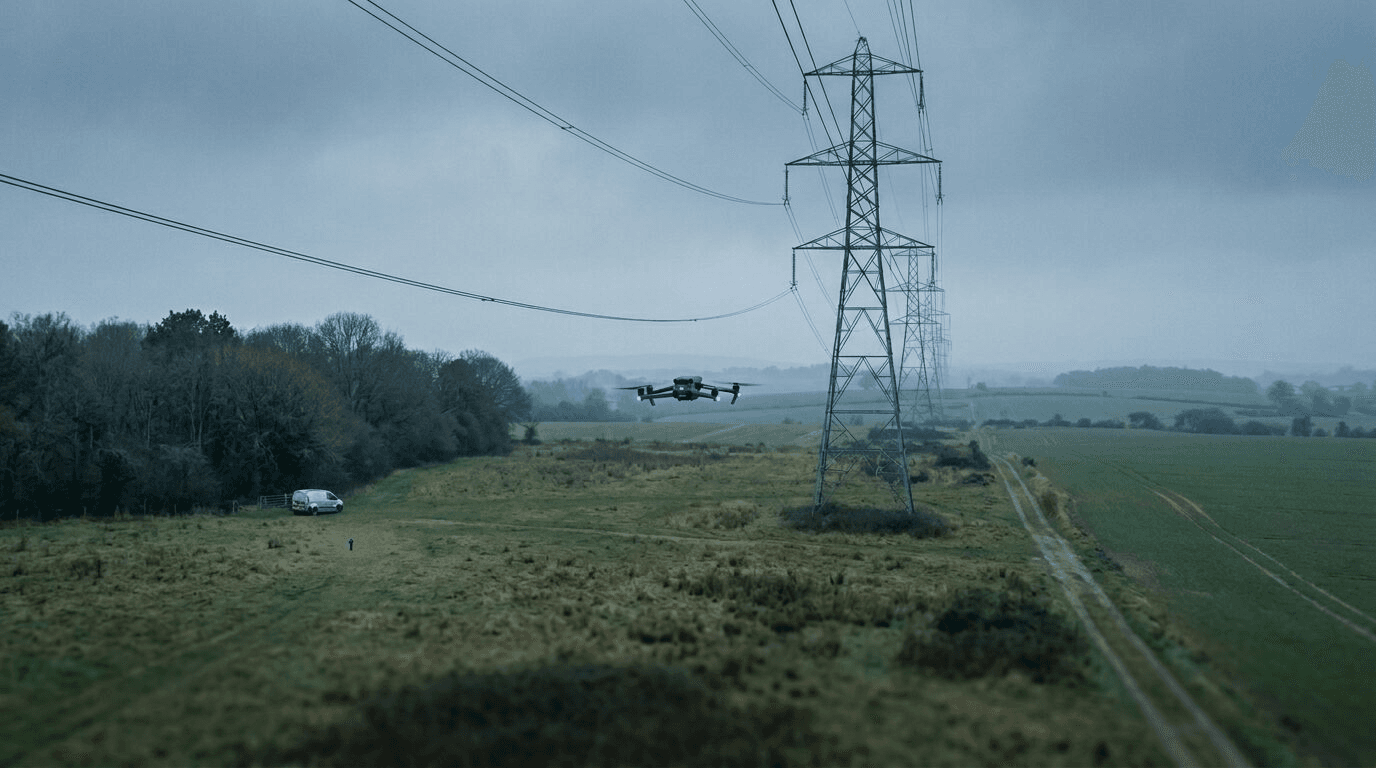
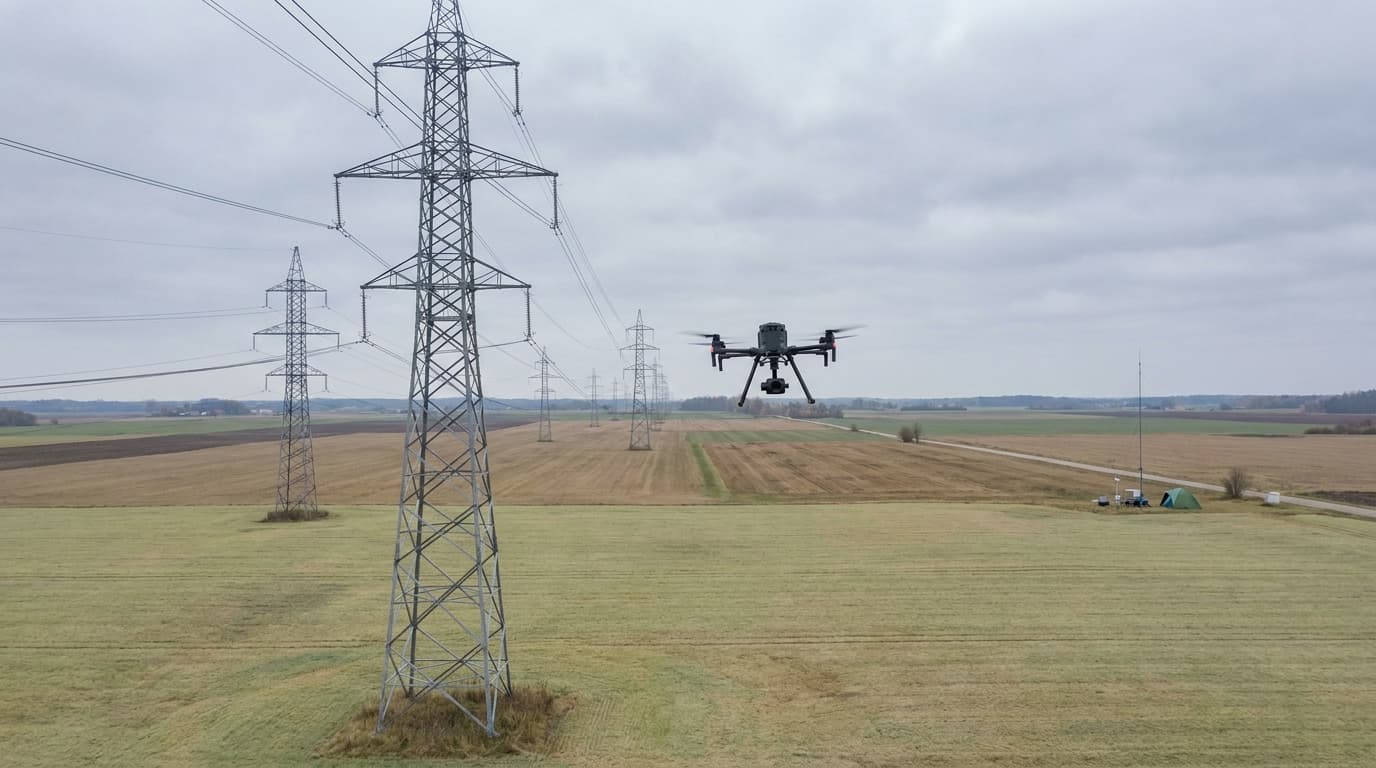
STS-01 is shaped for short-range work near people: building and structure inspection over a cordoned site, filming on a closed set, survey work inside a secured perimeter. STS-02 fits linear and area work far from people: power lines, pipelines, railways, farmland — routes where 1–2 km legs between crew positions beat repositioning a VLOS pilot every few hundred metres.
One reality check: both scenarios only work with class-marked aircraft, and the choice of C5- and C6-marked machines is still limited. Many operators therefore fly the equivalent pre-defined risk assessments — PDRA-S01 and PDRA-S02, which address the same operations without the class-mark requirement — under an operational authorisation instead. How the routes relate is a topic of its own: what is STS, PDRA and SORA.
The takeaway
Pick by environment and flight rule: close to people and within sight — STS-01 and a C5 aircraft; beyond sight over empty ground — STS-02, a C6 aircraft and observers. Both stand on the same controlled ground area, 120 m ceiling and theory certificate.
Planning a Specific-category operation and unsure which route fits? Write to us via support — and build the theory base, from the A1/A3 foundation up, with the course.