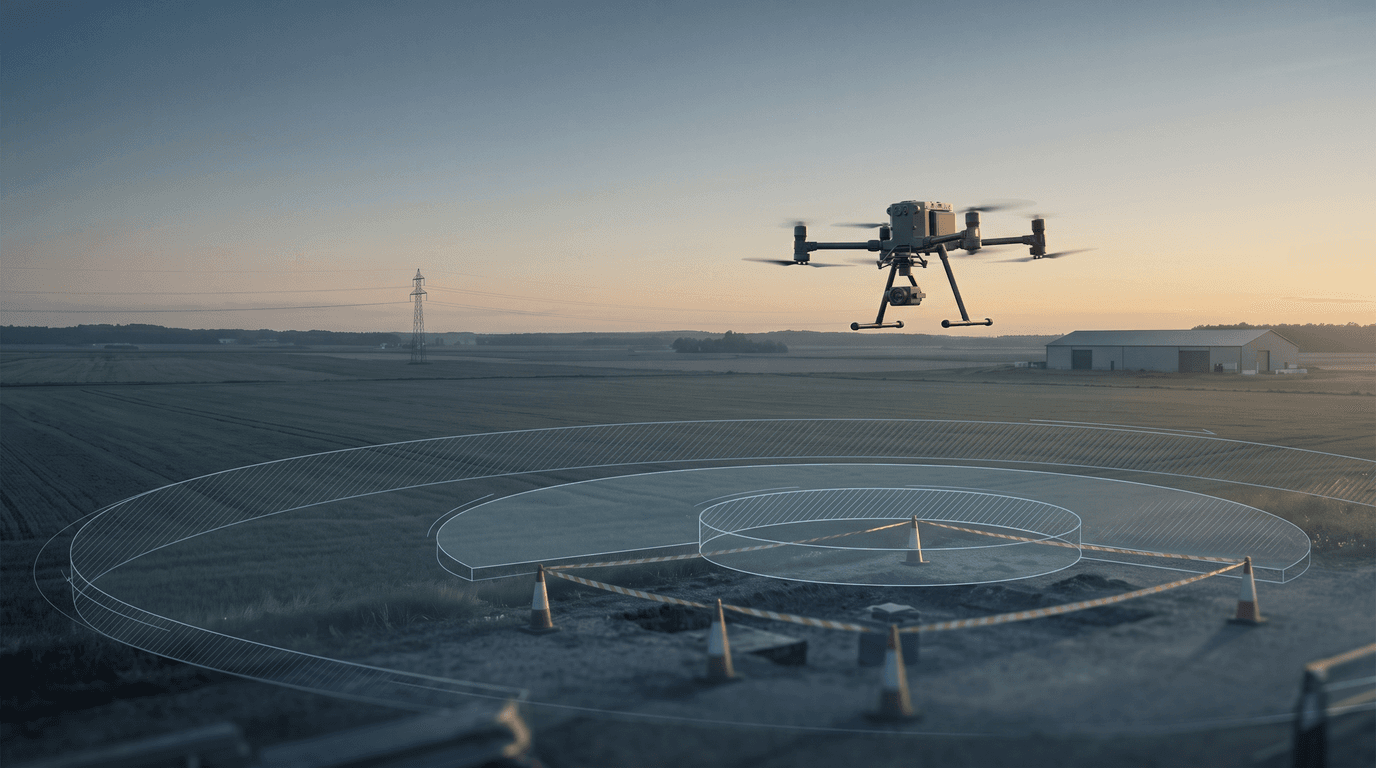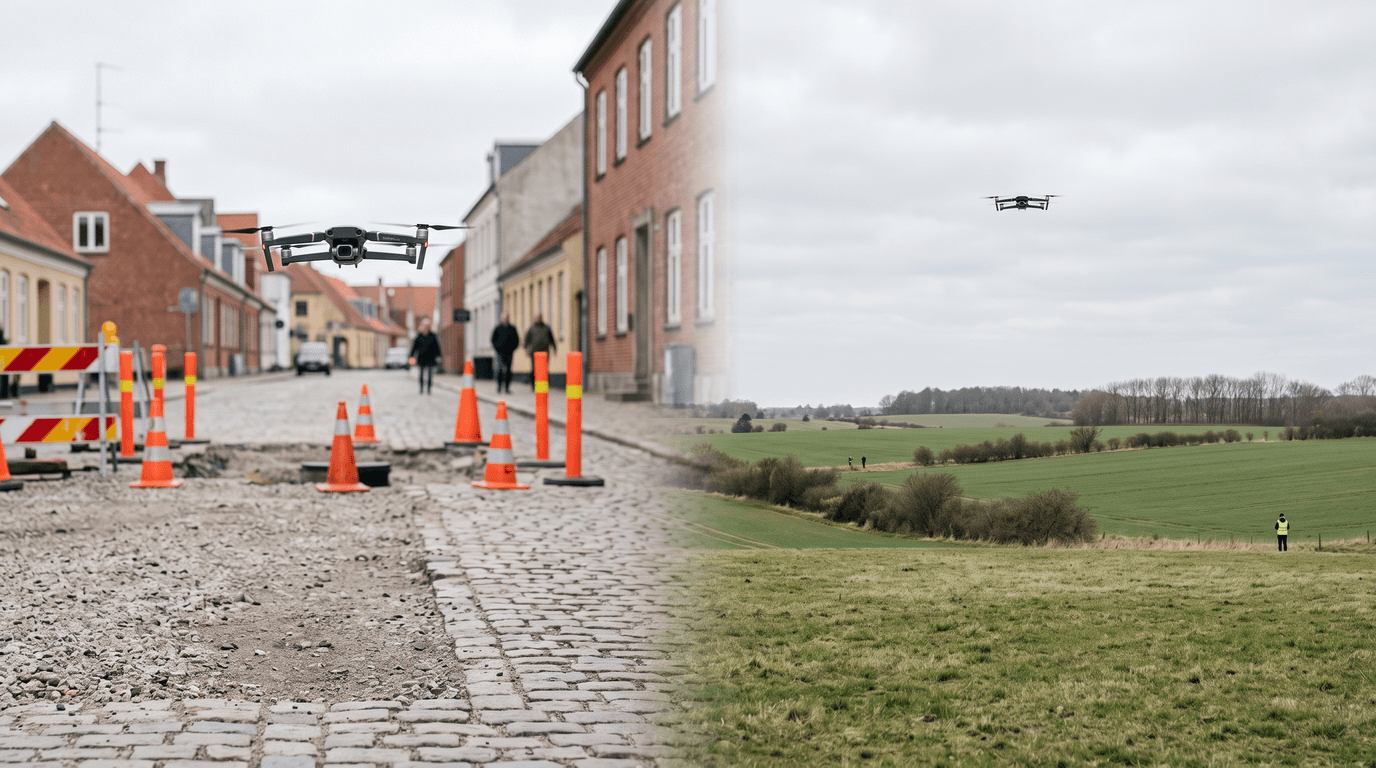
When do you need the Specific category? The moment your flight plan crosses any single boundary of the Open category. That is the whole rule. Specific is not a "professional licence tier" you grow into — it is where an operation lands automatically once it no longer fits inside Open's limits, and it changes who applies, what you file, and how much paperwork stands between you and take-off.
The practical question is therefore not "am I serious enough for Specific?" but "does my plan break any Open limit?" Here is the trigger list, the scenarios that hit it in real life, and what the entry actually looks like in Latvia.
The trigger list: one breach is enough
Under Regulation (EU) 2019/947, the Open category is bounded by a short set of hard limits. CAA Latvia lists the departures that push a flight into the Specific category:
- beyond visual line of sight (BVLOS) — in Open the drone must stay within your unaided sight at all times
- above 120 m over the ground or water surface
- MTOM over 25 kg
- closer than 150 m to residential, commercial, industrial or recreational areas with a drone over 250 g that carries no C0, C1 or C2 class mark
- dropping material or spraying — Open also rules out carrying dangerous goods
- operating several drones simultaneously with one pilot
- any other departure from Open-category conditions — including flights over assemblies of people, which Open never permits
The logic is binary. Meet every Open condition and you fly under Open rules, whatever your purpose. Breach one — a single one — and the operation belongs to Specific, with an authorisation or declaration required before the first flight.
Note what is not on the list: money. The EU framework is risk-based, not purpose-based. A paid roof survey at 80 m within sight of the pilot is an Open flight; a hobbyist's long-range cruise over the forest is not.
If you plan X, you need Specific
The abstract list becomes clearer through the operations that actually trip it:
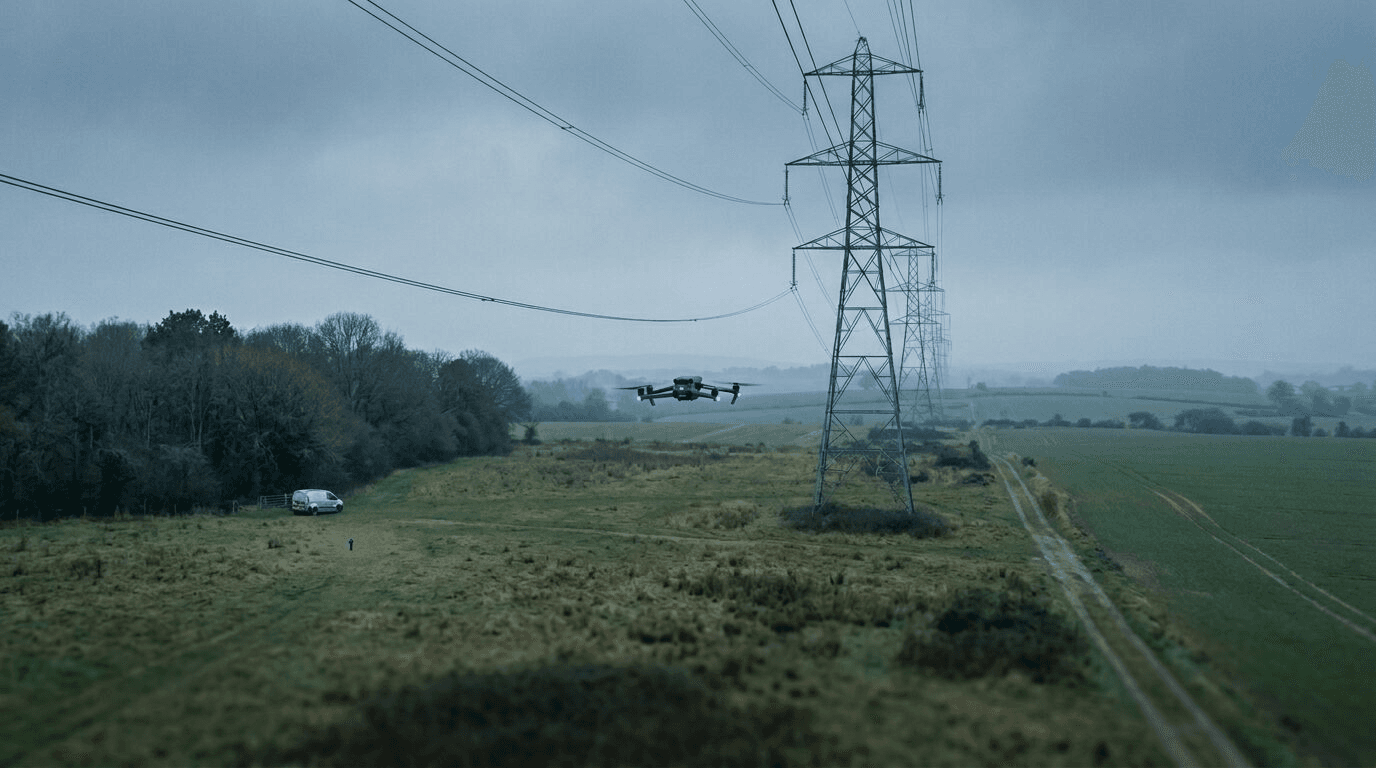
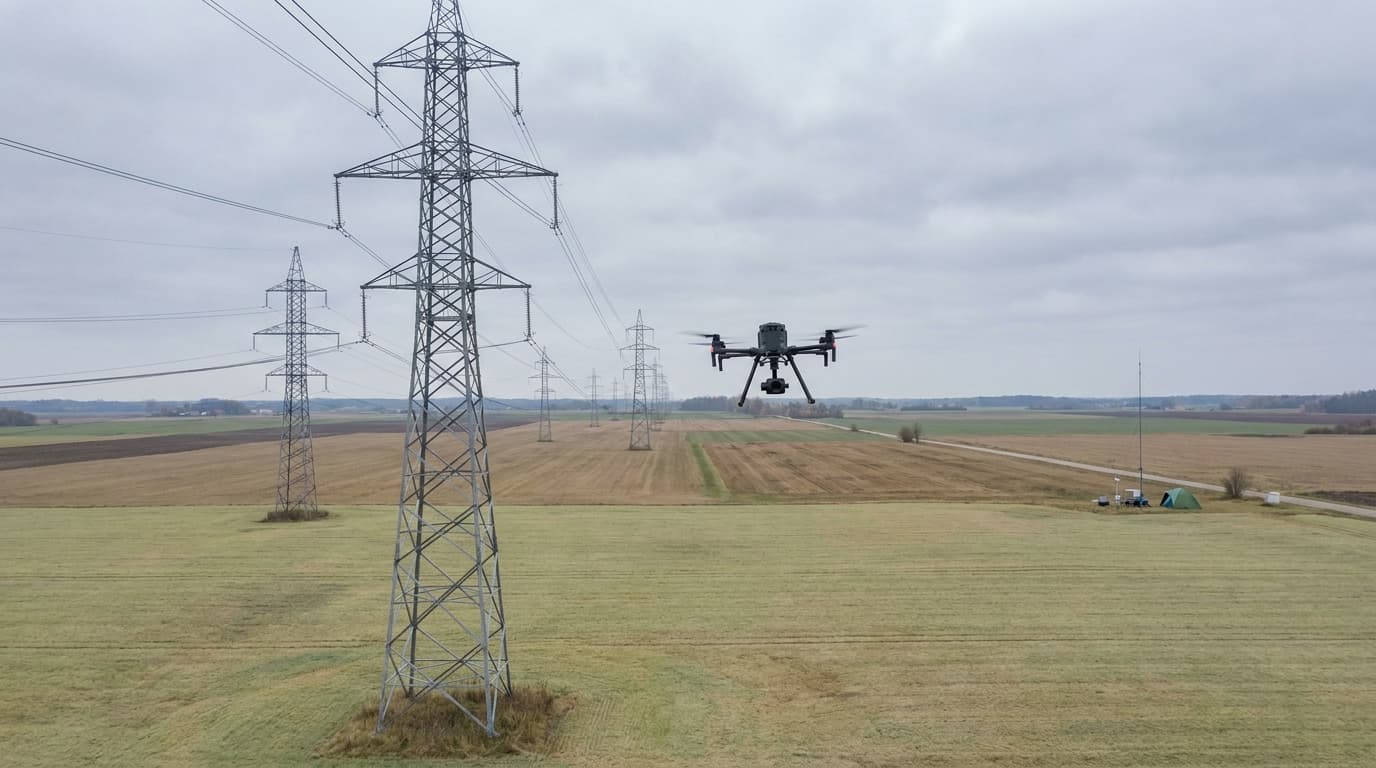
- Power-line or pipeline inspection beyond sight. Linear infrastructure runs for tens of kilometres; keeping the aircraft in view means leapfrogging the crew every few hundred metres. The efficient version — one crew, one long BVLOS leg — is a Specific operation by definition.
- Drone delivery. Delivery fails on two triggers at once: routes are BVLOS, and the mission is carrying and releasing cargo. Every parcel-delivery pilot project in the EU flies under a Specific-category authorisation.
- Agricultural spraying. Spraying is an explicit trigger on its own, even at 3 m of altitude within full view of the operator.
- Mapping large areas. Photogrammetry over thousands of hectares only pays off when the aircraft flies grid lines far beyond visual range. Small sites can stay VLOS and remain Open; big ones cross into Specific.
- Heavy lift. Anything above 25 kg MTOM — spraying rigs and cargo platforms usually are — is out of Open regardless of where and how it flies.
What does not push you into Specific
Two common misreadings are worth clearing up.
First, flying a C2 drone close to people in a city is not a Specific operation — it is the A2 subcategory inside Open, with its own exam. If that is your case, see A1/A3 or A2: which certificate you need.
Second, the 120 m ceiling has one narrow exception for tall obstacles that does not require leaving Open — the details, and what the limit is actually measured from, are in the 120-metre height limit explained.
Three routes in: declaration, PDRA, SORA
Entry into Specific runs through the UAS operator, not just the pilot, and there are three paths. The vocabulary — what STS, PDRA and SORA actually mean — has its own explainer; here is only the decision:
- STS declaration. If the operation matches a published standard scenario exactly — STS-01 (VLOS over a controlled ground area in a populated environment, C5-class drone) or STS-02 (BVLOS with airspace observers over sparsely populated areas, C6-class drone) — the operator files a declaration instead of seeking a permit. Fastest route, narrowest fit.
- Authorisation via PDRA. Pre-defined risk assessments cover common profiles — including STS-like operations without the C5/C6 class mark, and BVLOS outside populated areas in uncontrolled airspace — with the risk work already templated.
- Authorisation via full SORA. Everything else needs an operator-specific risk assessment. In Latvia the application goes through e.caa.gov.lv with the risk assessment, mitigation list, an operations manual and proof of insurance attached; the assessment fee is 175 EUR for SAIL I/II or 325 EUR for SAIL III and above, and the authorisation is issued for up to 2 years.
The pilot side is separate: for STS operations the remote pilot needs the STS theoretical certificate — at CAA Latvia a 40-question, 40-minute in-person exam, 75% to pass, 20 EUR first attempt — plus practical accreditation for the scenario. A valid A1/A3 certificate is a prerequisite, so the free online exam remains step one even on this track.
One detail that surprises hobbyists: the rules apply to recreational flying too. A private individual who wants to depart from Open conditions for fun needs the same operational authorisation as a company.
The honest note: most pilots never get here
For most hobby and small commercial flying, Specific is a category you should know exists — and never enter. Up to 120 m, within sight, under 25 kg, at the distances your subcategory allows, the Open category covers photography, inspection of single structures, small-site mapping and everyday commercial work without a single application form. That is by design: Open absorbs the low-risk bulk so authorities can spend their attention on the genuinely complex operations.
So before planning around permits, check whether your mission actually breaches a limit — the category checker walks you through it in a minute.
Planning BVLOS, spraying or heavy-lift work and unsure which route fits? Write to us — we answer advanced-ops questions. And if Open covers you, the paid work starts with the same free exam as everyone else's: prepare for A1/A3 with the course.