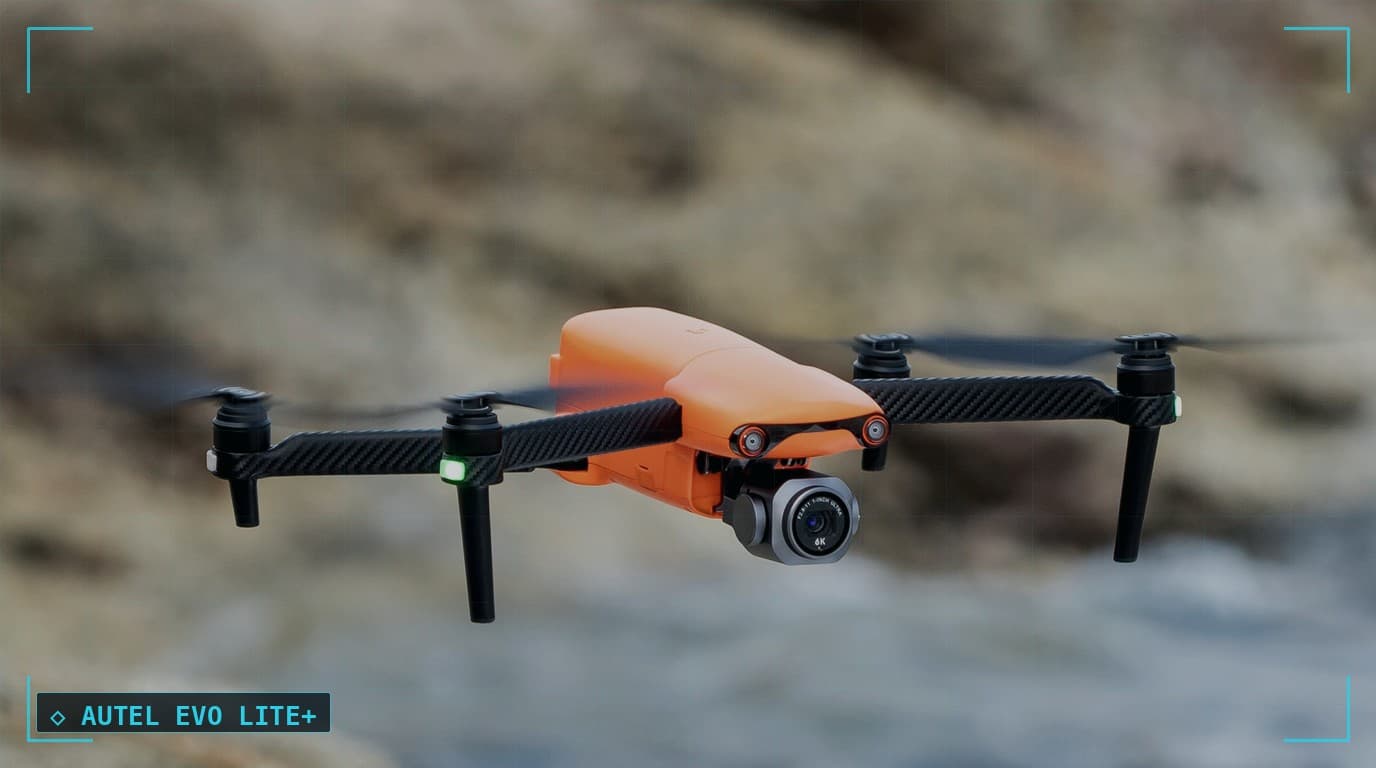
The Autel EVO Lite+ answers a question DJI would rather nobody asked: what does a serious camera drone look like when it comes from someone else? The answer is a 1-inch 20 MP sensor, a variable f/2.8–f/11 aperture that even DJI reserves for pricier models, 6K video and up to 40 minutes in the air. On the spec sheet it is a genuine alternative.
The weight, though, is where the story turns for European pilots. Despite the "Lite" name, the EVO Lite+ takes off at 835 g — well over both the 250 g and 500 g lines. And unlike DJI's current line-up, Autel placed it on the EU market without a C-class mark, which the manufacturer alone can assign. After the transition period ended, an unmarked drone this heavy may fly only in subcategory A3: at least 150 m from residential, commercial, industrial and recreational areas. The A1/A3 certificate is mandatory, and the camera means operator registration at e.caa.gov.lv on top.
Who is it for? Pilots who want that big sensor and variable aperture but would rather not buy DJI, and flyers who value the things Autel is known for — no account, no geofencing lockouts, and privacy. Reviewers consistently praise the low-light footage and the long flight time.
The honest caveats are just as consistent. The video is 8-bit only, with no 10-bit log, where the cheaper DJI Air 2S records 10-bit. Obstacle avoidance stops the drone rather than flying around the obstacle. And independent testers report gimbal shake, "self-checking" delays before takeoff and software that still feels like a beta.
So the EVO Lite+ competes on hardware and loses on polish — and in the EU it also competes with the calendar, restricted to A3 while a light or C-marked drone flies far closer to people. If you shoot mostly away from crowds and want a camera drone that isn't a DJI, it earns its place.
Just remember that flying in A3 is not a loophole. The 150 m distance, the airspace zones and the registration are the rules that keep the drone — and your budget — intact.
What owners report
Independent reviews and long-term owners agree on the strengths: the 1-inch sensor with its variable aperture delivers sharp, vibrant footage, the low-light performance is a highlight, and the 40-minute flight time genuinely beats most rivals in the class. Many buyers specifically choose Autel for the freedom — no account to create and no geofencing that grounds the drone. The gripes are equally consistent: 8-bit video instead of 10-bit, obstacle avoidance that only stops rather than bypasses, a bare-bones remote without a screen, and firmware that reviewers describe as underbaked, with gimbal glitches and slow self-checks. The verdict across sources lands in the same place — a feature-packed, honest DJI alternative that still falls short of the polish DJI sets as the standard.