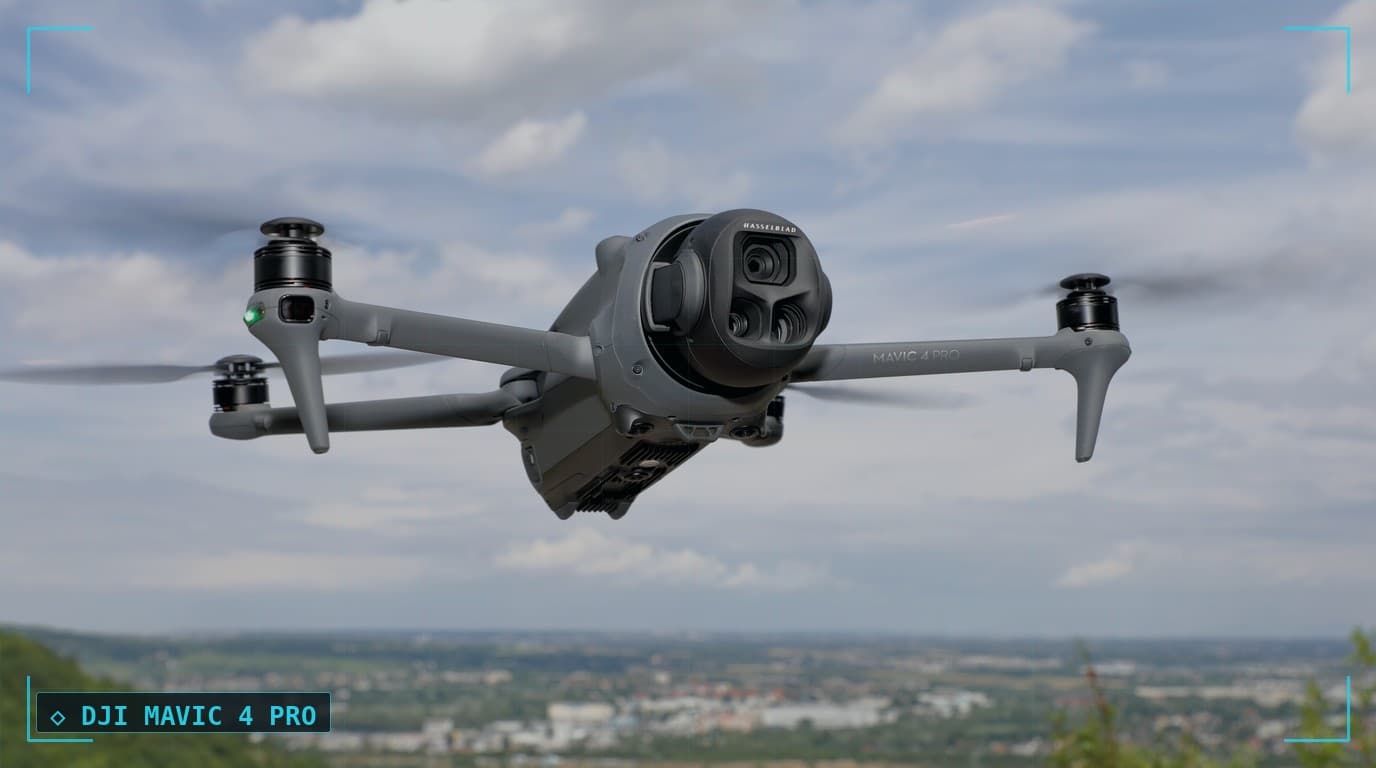
The Mavic 4 Pro is DJI's flagship folding drone, and it makes no apologies for what that means: about 1063 g of takeoff weight, a triple-camera gimbal built around a 4/3 Hasselblad main sensor, and a price that puts it firmly in working-tool territory.
Regulation follows the weight. As a C2-class drone it demands the A1/A3 certificate as a baseline, and with A1/A3 alone it may only fly in subcategory A3 — far from people and at least 150 m from residential, commercial or industrial areas. That kills most urban and event work. The realistic path for a Mavic 4 Pro owner is the additional A2 competence certificate, which unlocks flying 5–30 m from uninvolved people. In Latvia that means a separate in-person exam on top of the online A1/A3 one. Operator registration is mandatory either way — the camera settles that question.
Who is it for? People who earn with the drone or genuinely work at that level: real-estate and inspection shooters, filmmakers, photographers who need the dynamic range and the telephoto reach. The image quality is the best DJI ships in a folding airframe, and the flight time is class-leading.
The honest caveats: this is the wrong first drone. The certification path costs time and money, a mistake costs real money, and a beginner will not use half the camera. Learn on something in class C0, pass A1/A3 while you are at it, and come back when the Mavic's capabilities are the bottleneck — not your logbook.
What owners report
Owners and long-term reviewers converge on the image quality, the roughly 51-minute flight time and the fast, rock-solid OcuSync 4 link as the standout wins, with the redesigned controller drawing near-universal praise. The consistent gripes are the size and weight jump over the Mavic 3, file sizes that eat storage fast, and low ground clearance that makes hand-launching risky for the bottom sensors. Several photographers also flag the limited vertical-mode gimbal tilt and an occasional failure to hold the horizon level on windy take-offs.