EASA has updated its list of drones with a valid class-mark declaration of conformity — the register now holds 66 models. This is not a "recommended drones" list and not a safety ranking. It answers one narrow question: which C0–C6 class applies to a given drone model, and therefore which Open-category subcategory (A1, A2, or A3) it can legally fly under.
What the list is, and what it isn't
The register records a single fact per model: the manufacturer has met the technical requirements of Delegated Regulation (EU) 2019/945 and issued a declaration of conformity for a specific Cx class. It says nothing about flight quality, camera resolution, or how a drone stacks up against a competitor. Two drones in the same price bracket can sit in entirely different classes — and it's the class, not the price tag or the size, that decides where and how each one is allowed to fly.
What each class means in practice:
| Class | Open-category subcategory |
|---|---|
C0, C1 | A1 — overflight of people generally excluded, but close proximity is permitted |
C2 | A2 — closer flight to people, with extra requirements on the remote pilot |
C3, C4 | A3 — flight kept well away from people and built-up areas |
C5, C6 | specific category, standard scenarios with a structured risk assessment |
For how these classes and weight limits map to your own certificate, see choosing your first drone by weight class.
Why the class mark outranks your pilot certificate
It's a common assumption that an A1/A3 certificate is itself a green light to fly wherever that subcategory allows. It isn't. The certificate governs what the pilot is permitted to do; the drone's class mark governs which subcategory a particular model can be flown under at all. A drone with no Cx mark — bought before the transition period ended, or sourced outside the EU market — automatically drops to the stricter A3 limits, regardless of its weight or capabilities. That exact scenario is covered in drones without a class mark under A1/A3 in Latvia.
The question worth asking before a purchase isn't "is this drone good" — it's "which Cx class does it carry, and does that match what I actually plan to fly." The list exists for exactly that check, done before the money changes hands, not after.
DJI holds 26 of 66 spots — a market-structure fact, not a recommendation
DJI currently occupies 26 of the 66 slots on the list — nearly 40%. That doesn't mean DJI drones are safer or better than the competition; it means DJI has pushed more of its models through the conformity process, earlier and more broadly than other manufacturers. The remaining spots are spread across the rest of the field, and the count keeps growing as more companies complete Cx certification. For how the popular DJI lines compare and what each one permits, see DJI Mini vs. Air vs. Mavic.
The C-class system is under review — but nothing has changed yet
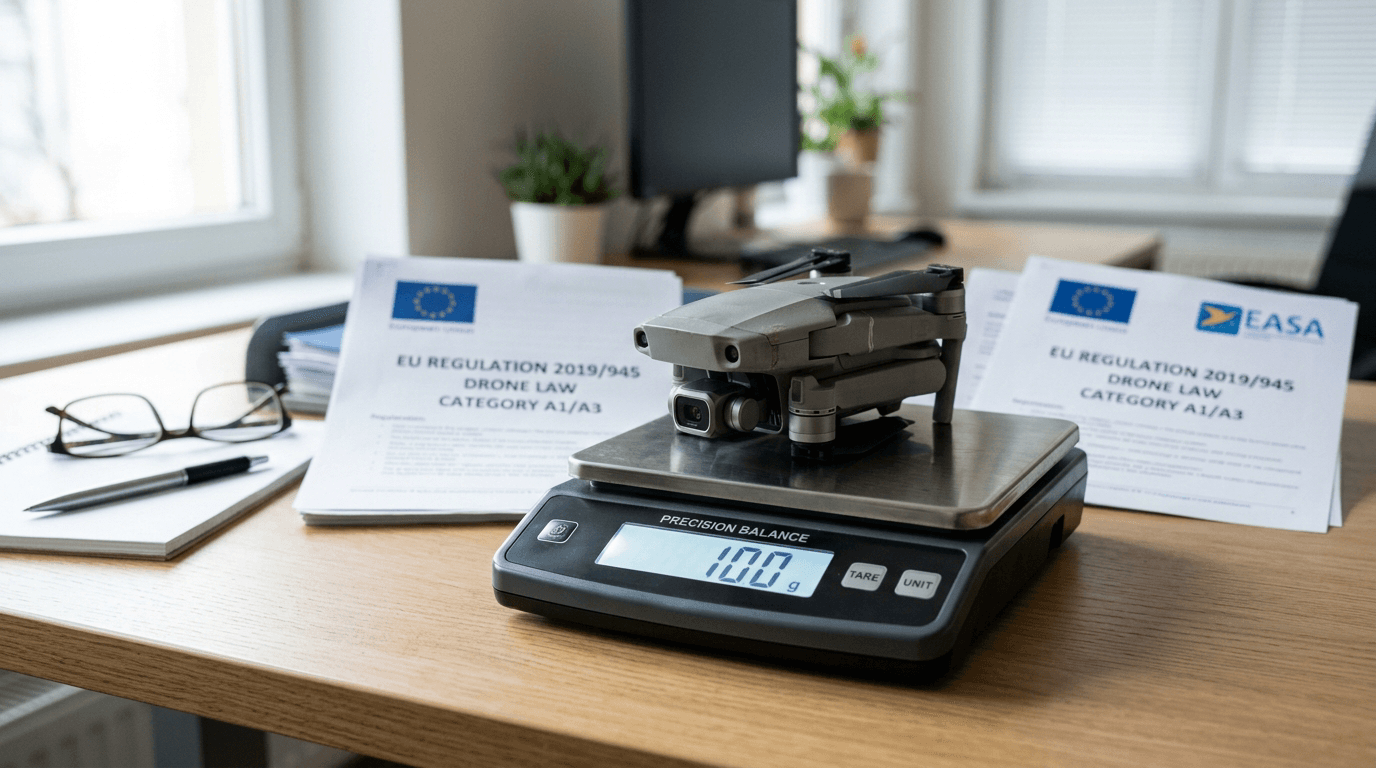
EASA is currently working on changes to the Cx classification framework, driven by the European Commission's action plan on drone and counter-drone security, which would require Remote ID on all drones above 100 g — the threshold today sits at 250 g. Say this plainly: this is an announced initiative still in development, not an adopted rule. Industry is expected to see a proposal before summer, and even then it would only be a proposal — full legal entry into force isn't expected before the end of 2027. The current 66-model list is accurate and legally valid today; that doesn't guarantee a Cx mark on the box will mean the same thing in three years.
How to check a drone's class in practice
Rather than trying to remember this article six months from now, use a repeatable method:
- Find the
Cxmark on the drone's packaging or the manufacturer's declaration of conformity. - Check the model against EASA's official list, "Drones for EU Operations" — it's updated regularly, so a static article will always be less current than the list itself.
- Match the class you find to the subcategory table above, to confirm whether the flight you're planning (say, flying close to people) is even allowed with that specific model.
If you're weighing a drone under 250 g, the extra nuances of what changes with weight are in rules for drones under 250 g. If you're still unsure which subcategory applies to your situation, run it through the which-category tool.
What matters now
The 66-model list isn't a top chart and isn't a safety stamp — it's a tool that answers one specific question: does this particular drone carry a valid Cx mark, and which subcategory can it fly under. The number 66 isn't what's worth remembering — the two-step method is: check the mark on the drone, then check it against the current EASA list at the moment you buy.
Still not sure if your chosen model needs a licence? See our guide, do you need a licence for a DJI Mini.