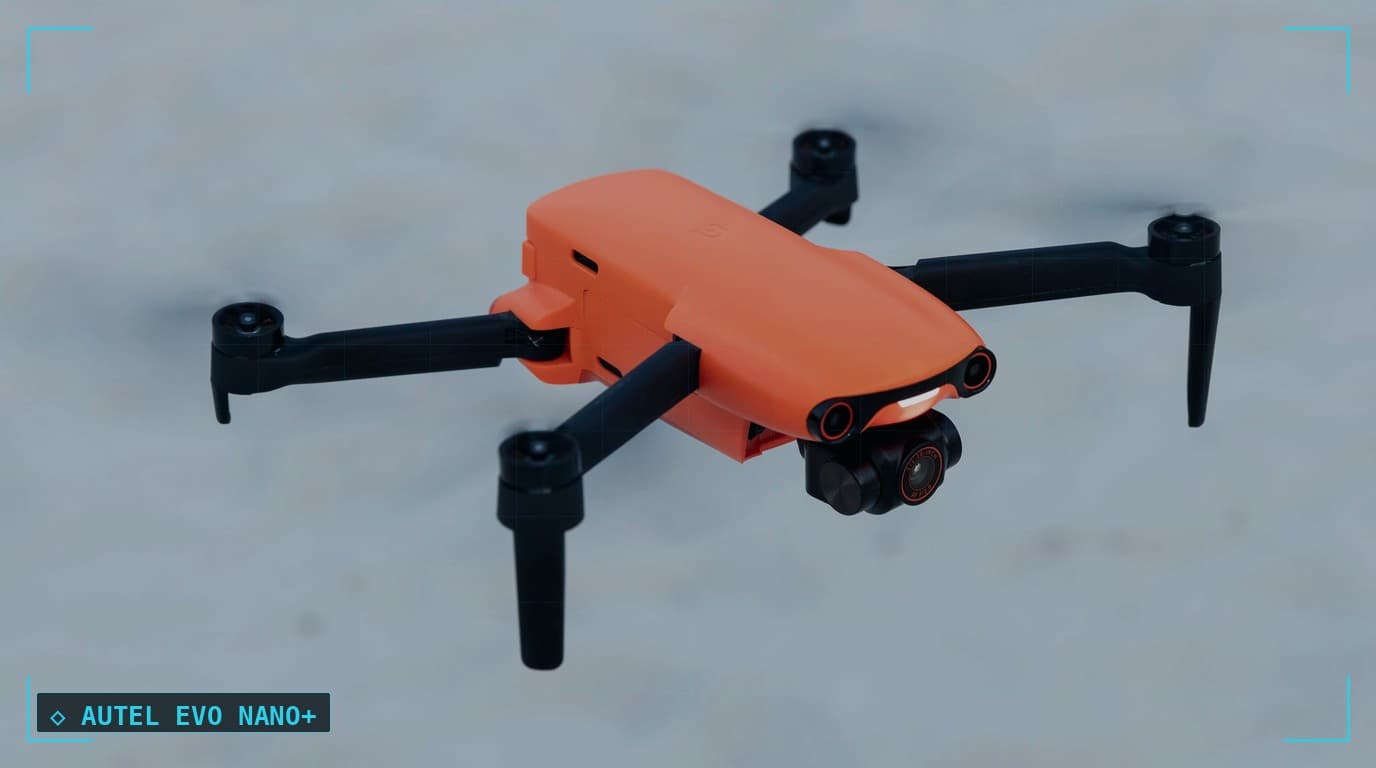
The Autel EVO Nano+ was the drone that first made a non-DJI sub-250 g camera platform feel serious. At 249 g folded it fits in a palm, yet it carries a 1/1.28-inch 50 MP RYYB sensor with a fast f/1.9 lens and three-way obstacle avoidance — a combination the DJI Mini 2 of its day simply did not offer. It is best understood as a compact travel camera that happens to fly.
Regulation is the easy part. The Nano+ carries no EU class mark, so in the open category it is judged purely by weight — and at 249 g it sits under the 250 g line, which means no A1/A3 exam is mandatory and it flies in subcategory A1. The one obligation people miss: it has a camera and is not a toy, so operator registration at e.caa.gov.lv is still required in Latvia, and the operator number goes on the airframe. It is the single most common beginner oversight.
Who is it for? Travellers who want a big-sensor drone that packs down small, photographers happy to shoot Raw and finish their files, and new pilots who value obstacle avoidance and a no-exam entry. Autel's privacy stance is a genuine draw too: no account is required to fly, and there is no hard geofencing that locks you out of the sky.
The honest caveats are real. The price sits near the top of the sub-250 g class, well above a basic Mini. Auto white balance runs cold and flat, so the images only shine after Raw editing, and stills show visible vignetting and edge softness. Video tops out at 4K/30p with no 10-bit, real flight time is closer to 20 minutes than the rated 28, and gusts over roughly 30 km/h push it around. As a travel camera for people who edit, it earns its place — but it asks for effort and money in return.
What owners report
Independent reviewers land on the same split verdict: the Nano+ is capable hardware that lacks the last layer of polish. The praise is consistent — a larger sensor than its sub-250 g rivals, a fast lens that holds up in low light, class-leading obstacle avoidance for its size, and Autel's account-free, no-hard-geofence approach. The recurring complaints are just as consistent: it is expensive for the category, auto colours look cold and need Raw work, photos show vignetting and softer edges, 4K is limited to 30 fps, and real-world battery life falls short of the rated figure. Reviewers who scored it highly still framed it as a drone for people willing to edit, not a point-and-shoot.