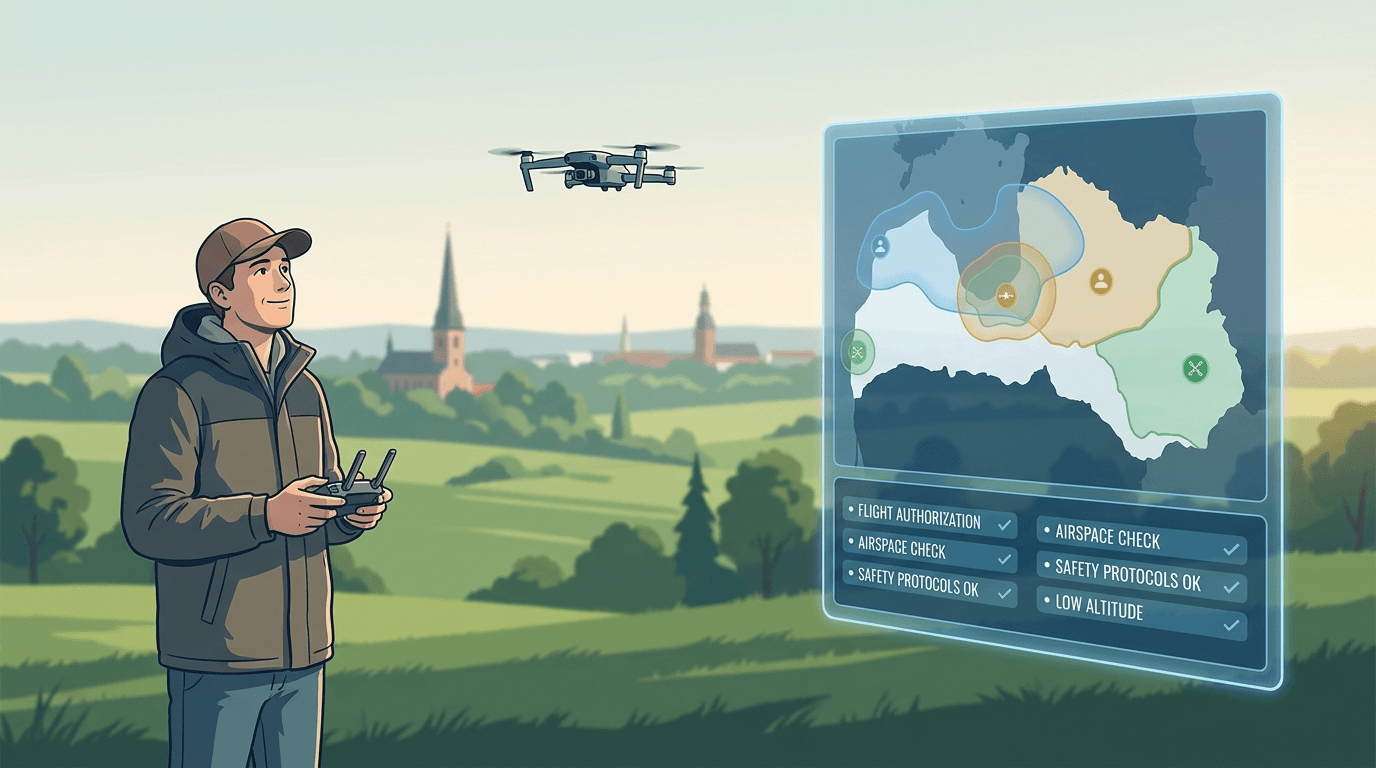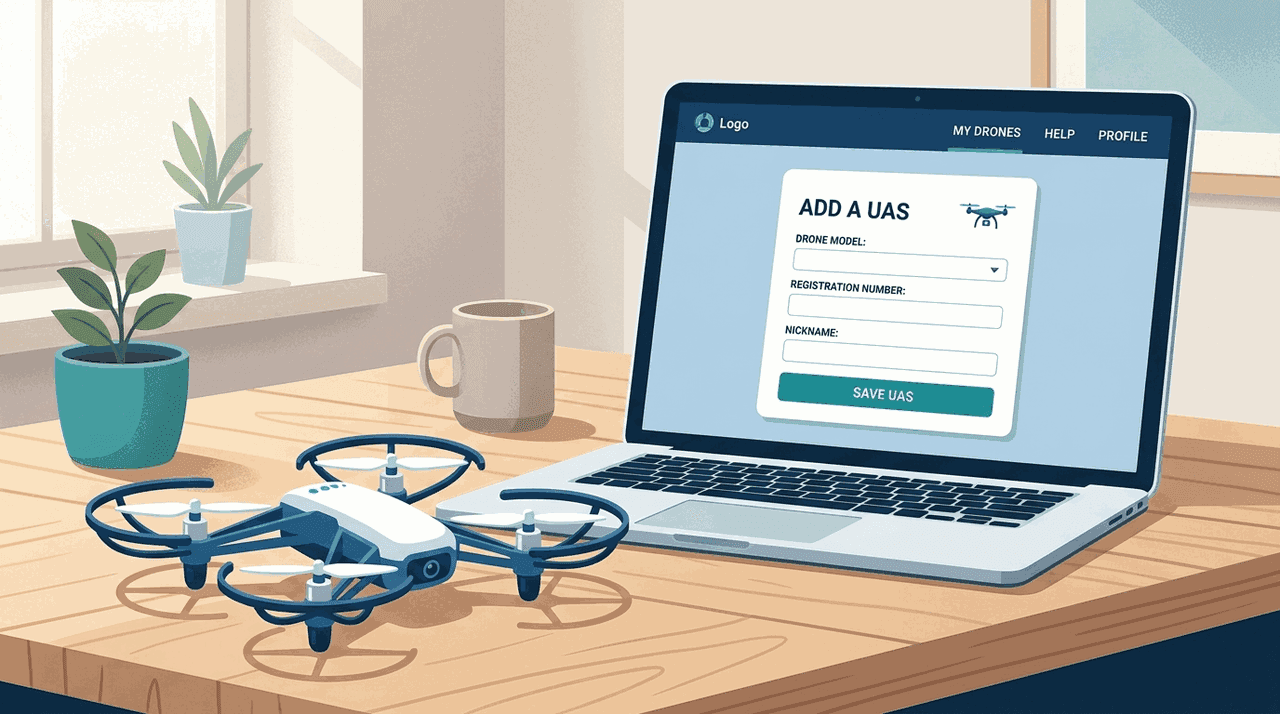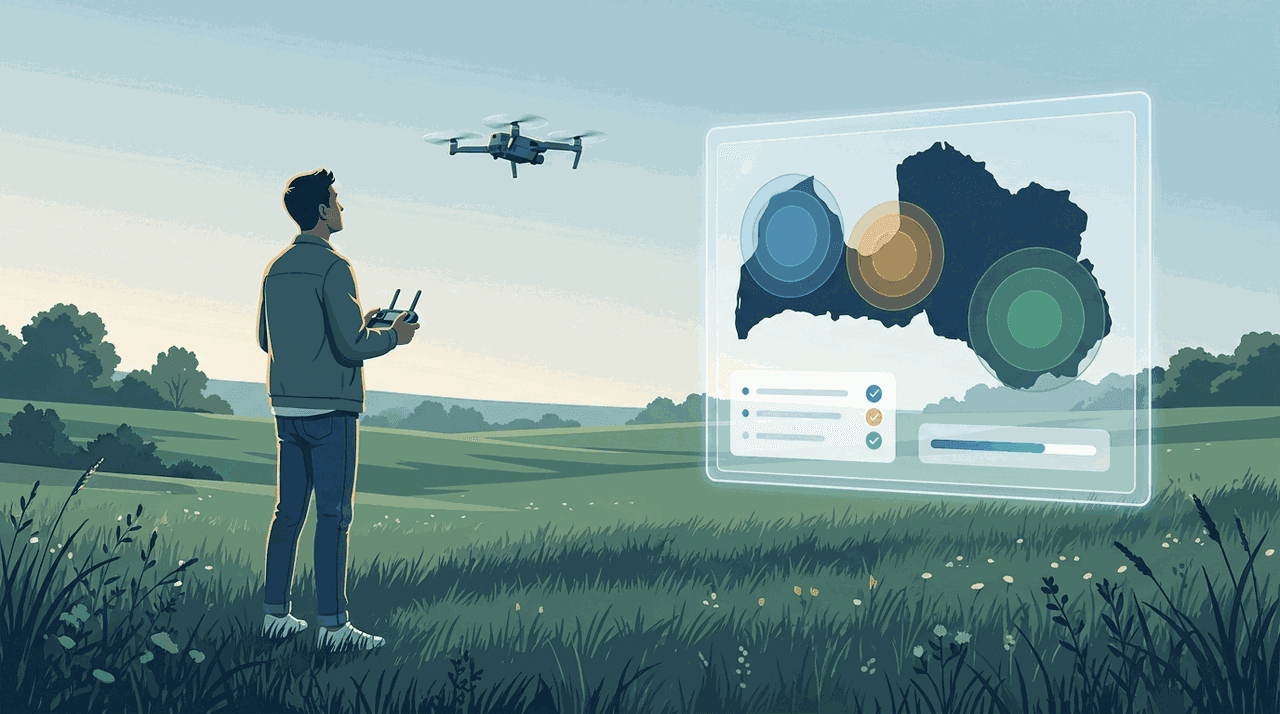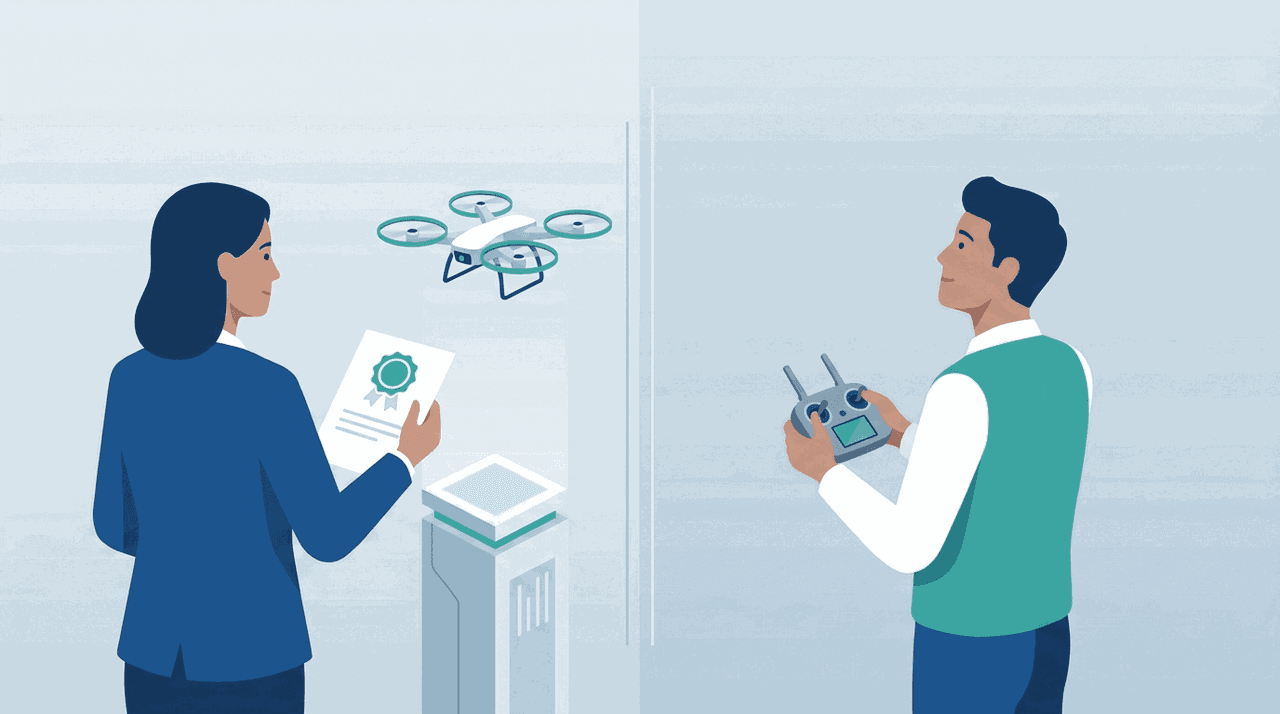
A BGKIS flight request asks for two different identities: the UAS operator and the remote pilot. For a private pilot flying alone, both are the same person, so the distinction can feel like paperwork. For a company, they are usually different people, and mixing up the roles or numbers is one of the easiest ways to file an invalid request.
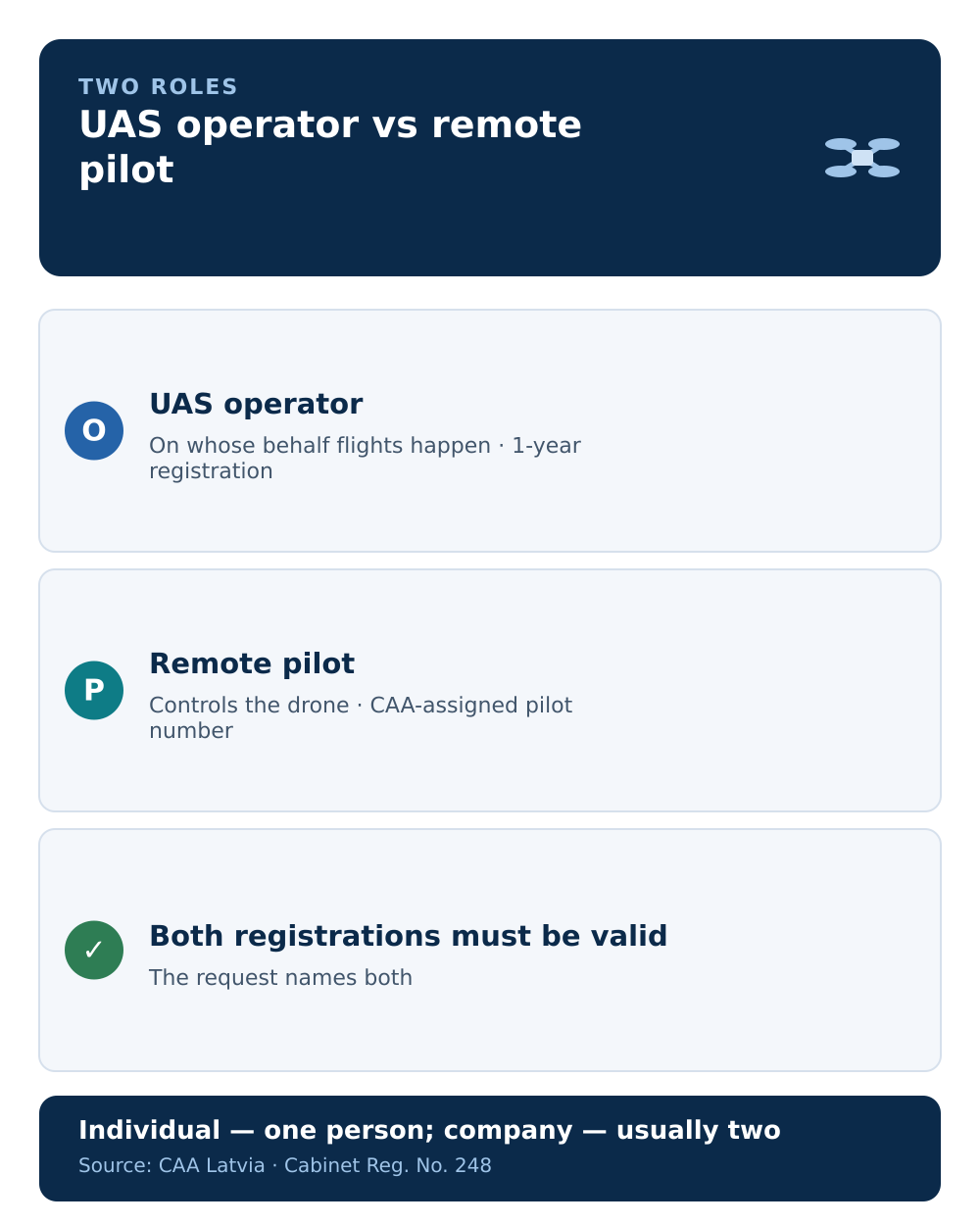
The two roles come straight from the EU framework, and they answer two different questions: on whose behalf is the flight carried out, and who actually controls the drone.
The operator: who is responsible
The UAS operator is the person or company in whose name the flight happens. The operator holds the operator registration, which is valid for one year, and an operator number in the LVA... format. In a zone flight request, the operator is the accountable party — the registration number, name, and contact details that identify who answers for the operation.
A key consequence: one operator registration covers operations carried out in that operator's name, across the drones registered to it. You do not register per flight or per drone.
The remote pilot: who flies
The remote pilot is the person who actually controls the drone or supervises its automatic flight. The remote pilot holds a CAA-assigned remote pilot number and the qualification the operation requires — most often A1/A3 in the open category. In the request, the remote pilot is identified separately: the remote pilot number, name, and contact details.
So the two numbers are not interchangeable:
LVA...— the operator number, used to mark the drone and identify the responsible party.- the remote pilot number — used for qualification and named as the person flying.
Our operator registration guide covers how each number is issued and where it goes on the aircraft.
Why the request names both
Under Cabinet Regulation No. 248, point 54, a flight request in a UAS geographical zone includes both identities on purpose. The operator answers for the operation; the remote pilot is the person the zone manager can expect at the controls. Keeping them separate means responsibility and execution are both traceable, even when one operator works with many pilots.
Private pilots: one person, both roles
If you fly as a private individual in your own name, you are normally both the operator and the remote pilot. The CAA says as much. The practical catch in BGKIS: because you hold both roles, both registrations must be valid. An expired operator registration hides the flights section even if your pilot qualification is fine.
Companies: different people, and an extra step
In a company, the operator is the legal entity, and the pilots are employees or contractors. They are not automatically linked. Before a company can name a pilot in a request, that pilot must be invited to the company profile in BGKIS and must already have their own BGKIS account and remote pilot number. Only pilots attached to the company can be selected in its flight requests.
Companies also have a dedicated role, the operator profile user, which lets several representatives manage pilots, drones, and requests on the company's behalf. We cover that setup in BGKIS for companies.
Common mistakes
- Treating the operator number as the pilot number. They are separate identifiers with separate jobs.
- Letting operator registration lapse. Without it, you cannot file at all, regardless of pilot qualification.
- Assuming a company pilot is "in the system". A pilot has to be invited to the company profile before they can be named.
- Thinking the role decides the rules. Naming a qualified pilot does not lift baseline limits like 120 m or visual line of sight.
Next step: see the step-by-step guide to filing a flight request in BGKIS.