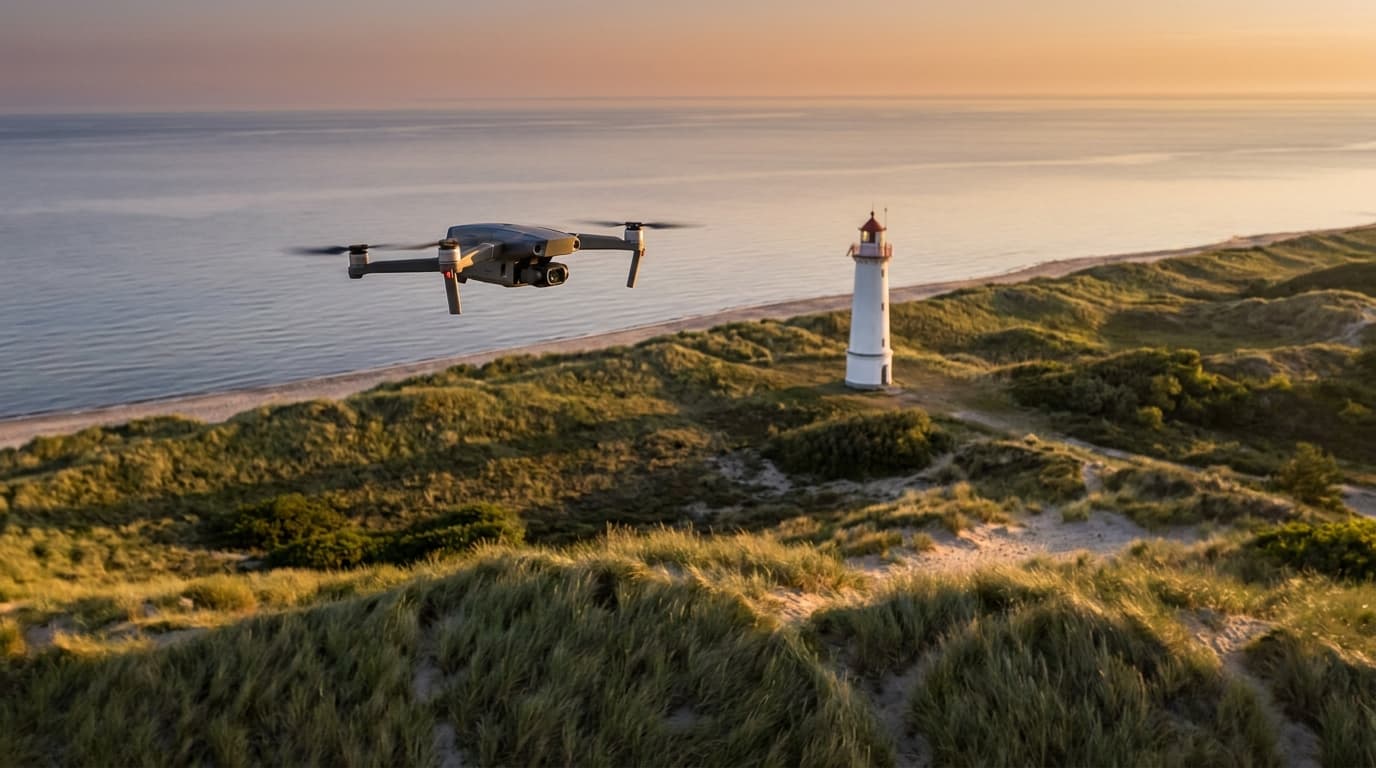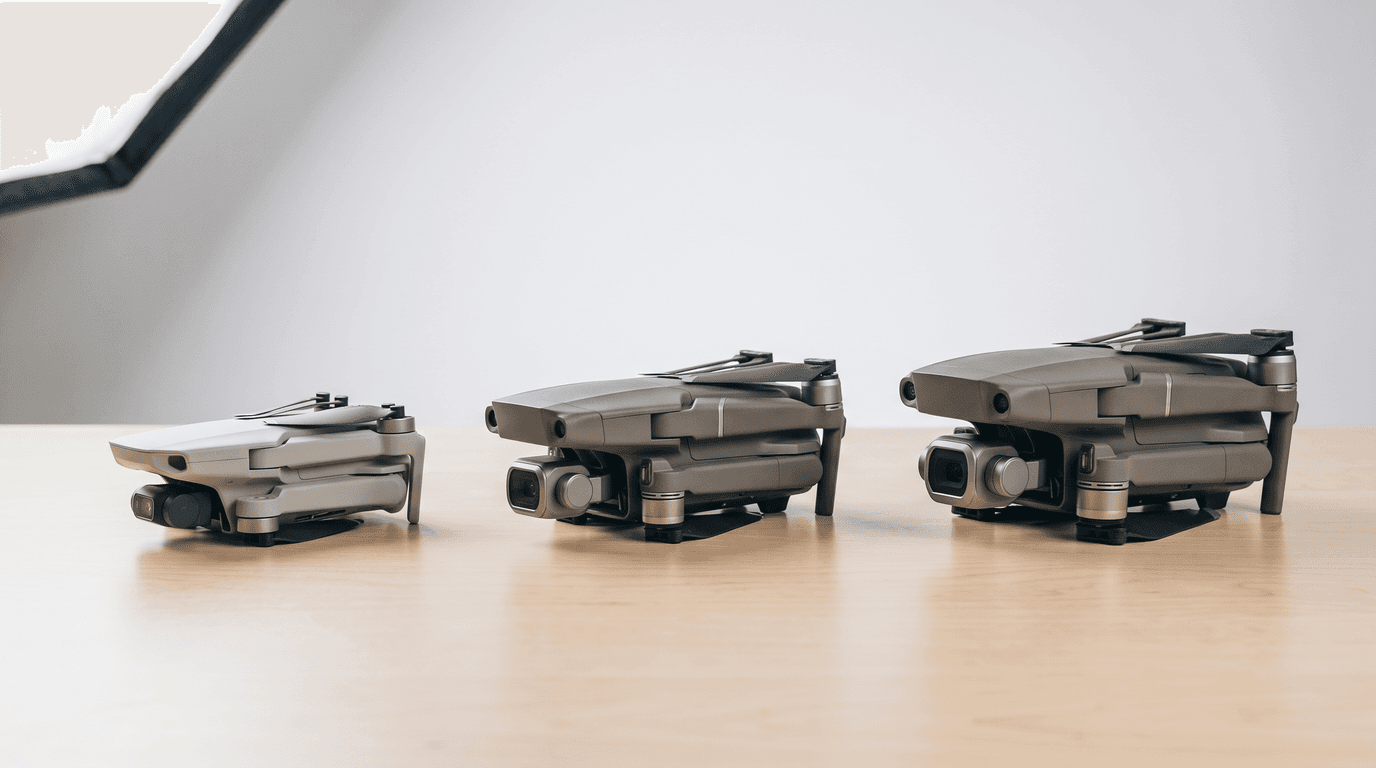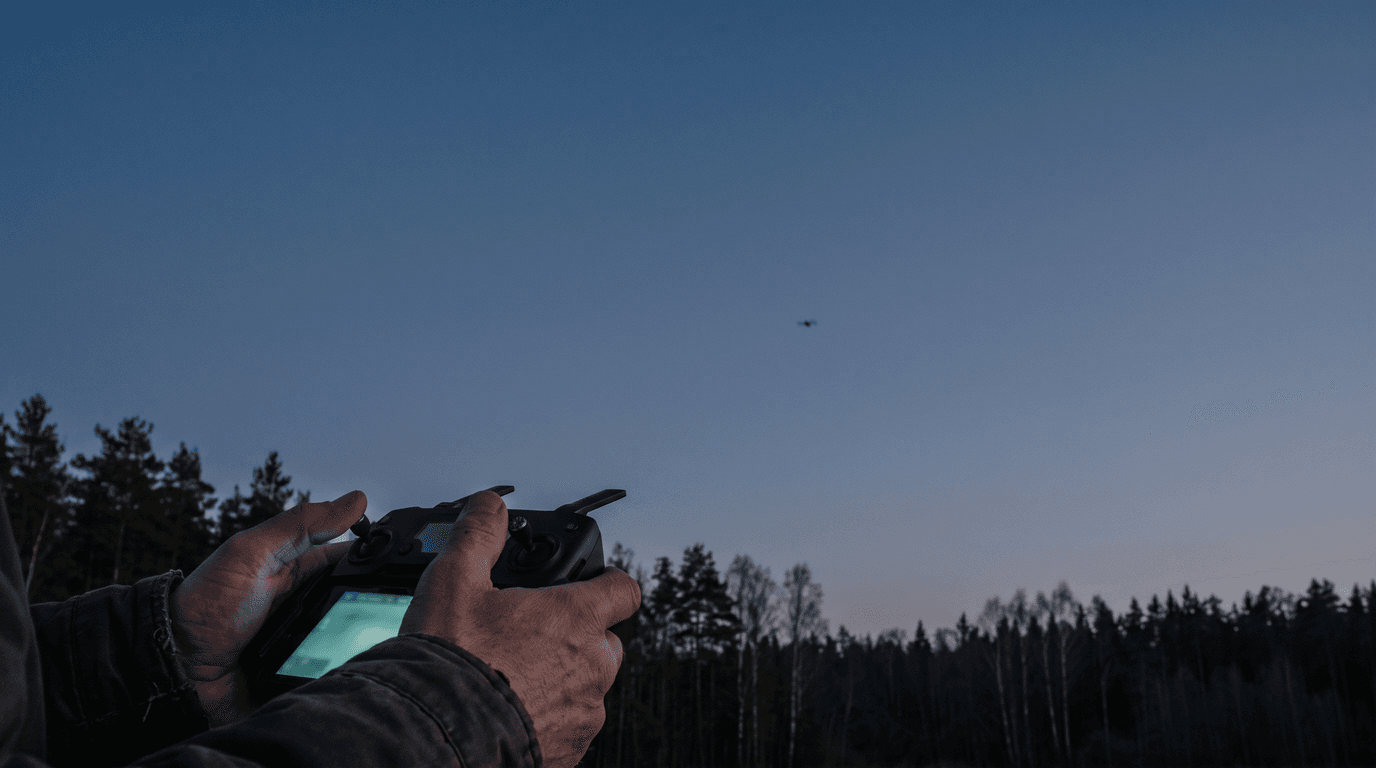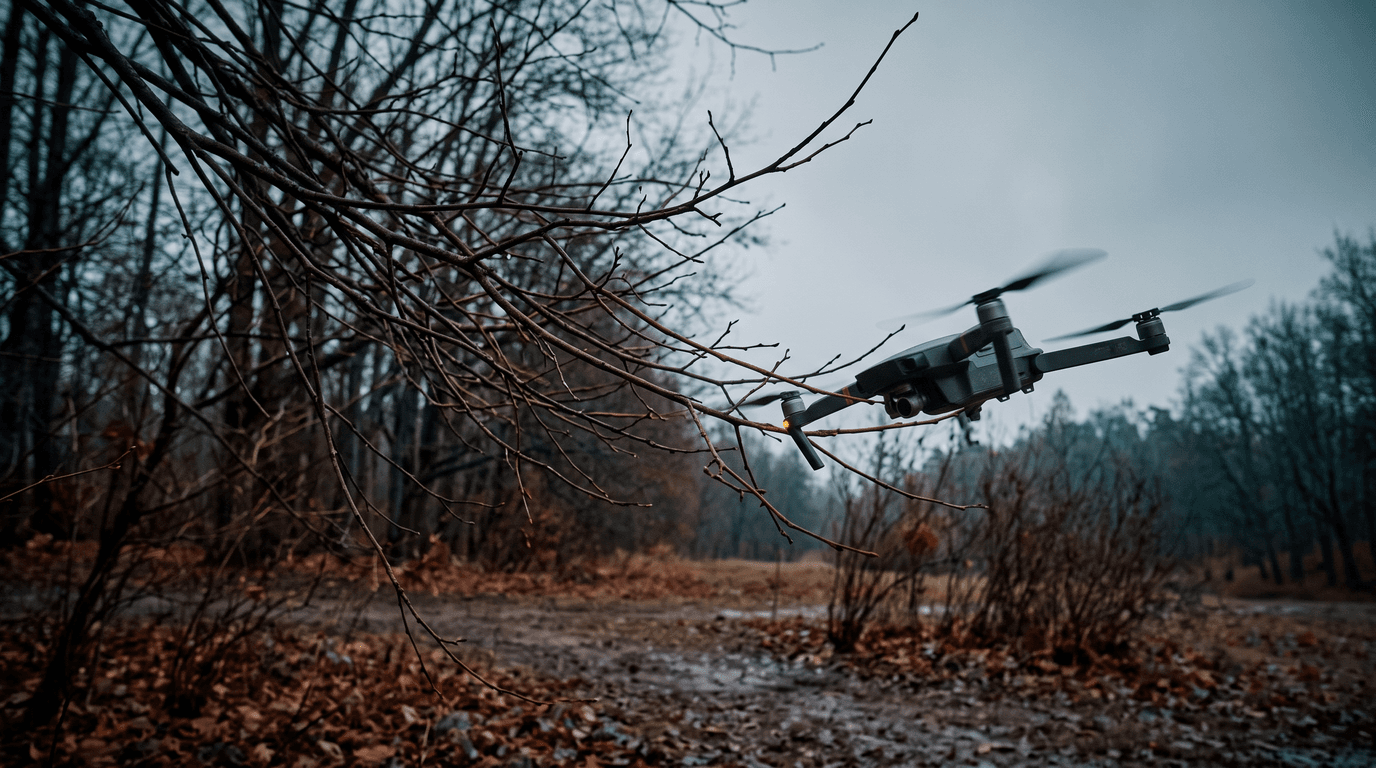
Most first drones are not lost to hardware failure. They are lost to a short list of beginner drone pilot mistakes — the same ones, flight after flight, pilot after pilot. The good news: every one of them is predictable, which means every one of them is avoidable. Here are the nine that actually destroy drones or earn fines, split into flying mistakes and legal ones, each with the reason it happens and the fix.
The flying mistakes that end in a crash
1. Return-to-home set below the obstacles
Return-to-home sounds like a safety net, and it is — until the drone climbs to its preset RTH altitude and flies a straight line home through a tree, a mast or a rooftop. The failsafe does exactly what it was told; the pilot just never told it about the terrain.
Why it happens: the factory default feels like a considered choice, so nobody touches it.
The fix: before take-off at every new site, set the RTH altitude above the tallest obstacle between you and anywhere the drone might be — with margin. Make it a line in your pre-flight checklist, not a thing you remember once.
2. Nose-in disorientation
The drone turns to face you, and suddenly left is right. The pilot sees it sliding toward a tree, pushes the stick away from the tree — and steers straight into it. Orientation reversal under stress is one of the most common causes of low-altitude beginner crashes.
Why it happens: the brain maps stick inputs to its own body, not to the drone's frame, and it takes deliberate practice to rewire that.
The fix: train it on purpose, at altitude, over open ground: hover nose-in, fly slow rectangles and figure-eights, and don't trust the skill until it survives a moment of surprise. There is a sensible order to building these skills — see how to learn to fly a drone.
3. Trusting obstacle sensors where they do not work
Obstacle avoidance on typical consumer drones is a fair-weather assistant, not armour. Vision sensors need light and texture: they struggle at dusk and in the dark, they may not see thin branches or wires, and on many models entire directions — often sideways, sometimes upward — are simply not covered.
Why it happens: marketing says "obstacle avoidance", the pilot hears "cannot crash".
The fix: fly as if the sensors do not exist, and treat every save they make as a warning, not a routine. In low light or near thin obstacles, assume you are the only sensor on board.
4. Flying the battery past the safe reserve
The footage is good, the battery says 15 percent, one more pass. Then the drone starts a forced descent — wherever it happens to be, water and forest included. Cold weather makes it worse: lithium batteries deliver less in the cold, and the gauge can drop abruptly.
Why it happens: the return leg costs energy too, and a percentage figure feels more precise than it is.
The fix: decide the turn-back threshold before take-off, not in the air, and size it to the distance home plus headwind plus temperature. When the drone asks to come home, let it.
5. Taking off in wind the drone cannot handle
A small drone that hovers fine at ground level can be unflyable thirty metres up, where wind is usually stronger. If the wind speed approaches the drone's maximum flight speed, it may not be able to come back at all — it flies away at full tilt while effectively standing still, or going backwards.
Why it happens: wind at head height feels like the wind aloft. It is not.
The fix: check the forecast, including gusts, against the manufacturer's wind rating, and fly the upwind leg first, so the wind helps you home rather than blocking the way back.
6. Losing GPS and meeting ATTI mode unprepared
Indoors, under bridges, close to large buildings, most GPS drones sooner or later lose positioning. What follows surprises beginners: the drone stops holding position and drops into an attitude-only mode (often called ATTI), keeping height and level — and drifting with the wind or its own momentum. A pilot who has only ever flown with GPS holding their hand suddenly has to fly for real, in a confined space.
Why it happens: position hold is so good that many pilots never learn what the drone does without it.
The fix: expect GPS loss anywhere satellites are blocked, keep extra distance from structures, and know your failsafe behaviour in advance — the lost-link and emergency landing lesson covers exactly this.
The legal mistakes that end in a fine
7. Skipping operator registration
In Latvia, UAS operator registration is mandatory if the drone weighs 250 g or more — or, regardless of weight, if it carries a camera capable of capturing personal data (toys excepted). Registration at e.caa.gov.lv costs 5 EUR, is valid for one year, and the operator number you receive must be marked on the drone itself.
Why it happens: "it's just a small camera drone" — but the camera is precisely what triggers the requirement below 250 g.
The fix: register once as an operator before the first outdoor flight, label the drone with the number, and put the annual renewal in your calendar.
8. Flying in a geographical zone without checking
Latvia's airspace is layered with UAS geographical zones: informative, restrictive and prohibited. The CAA is explicit that manufacturer geo-awareness in drone apps can be incomplete or inaccurate — the only official, legally binding source is the airspace.lv/drones map. And since 2025, a flight inside a UAS geographical zone requires an application in BGKIS before take-off.
Why it happens: the app showed green, so the pilot assumed the sky was clear.
The fix: check the official map before every flight in a new location — here is where to check zones and a quick can-I-fly-here tool — and file the BGKIS application when the location falls in a zone.
9. Flying over people because the drone is "small"
The Open category is strict here. A drone under 250 g or marked C0 may overfly individual uninvolved people, but never assemblies of people. A C1 drone should not overfly uninvolved people at all. And an unclassed drone of 250 g or more is limited to subcategory A3 — at least 150 m from residential, commercial, industrial and recreational areas.
Why it happens: weight feels like a licence: "249 g, so anything goes".
The fix: learn your drone's class mark and the matching subcategory limits before flying near anyone. Crowds are off limits for everything in the Open category.
What actually protects your first drone
Not reflexes — habits. A pre-flight checklist that includes RTH altitude and wind. A battery threshold decided on the ground. A zone check on the official map. And enough deliberate stick time that nose-in flight and an ATTI drift are drills you have done, not emergencies you meet for the first time.
Next step: the course turns these rules into a structured A1/A3 preparation path, and the practice trainer drills the exam questions behind each of them.