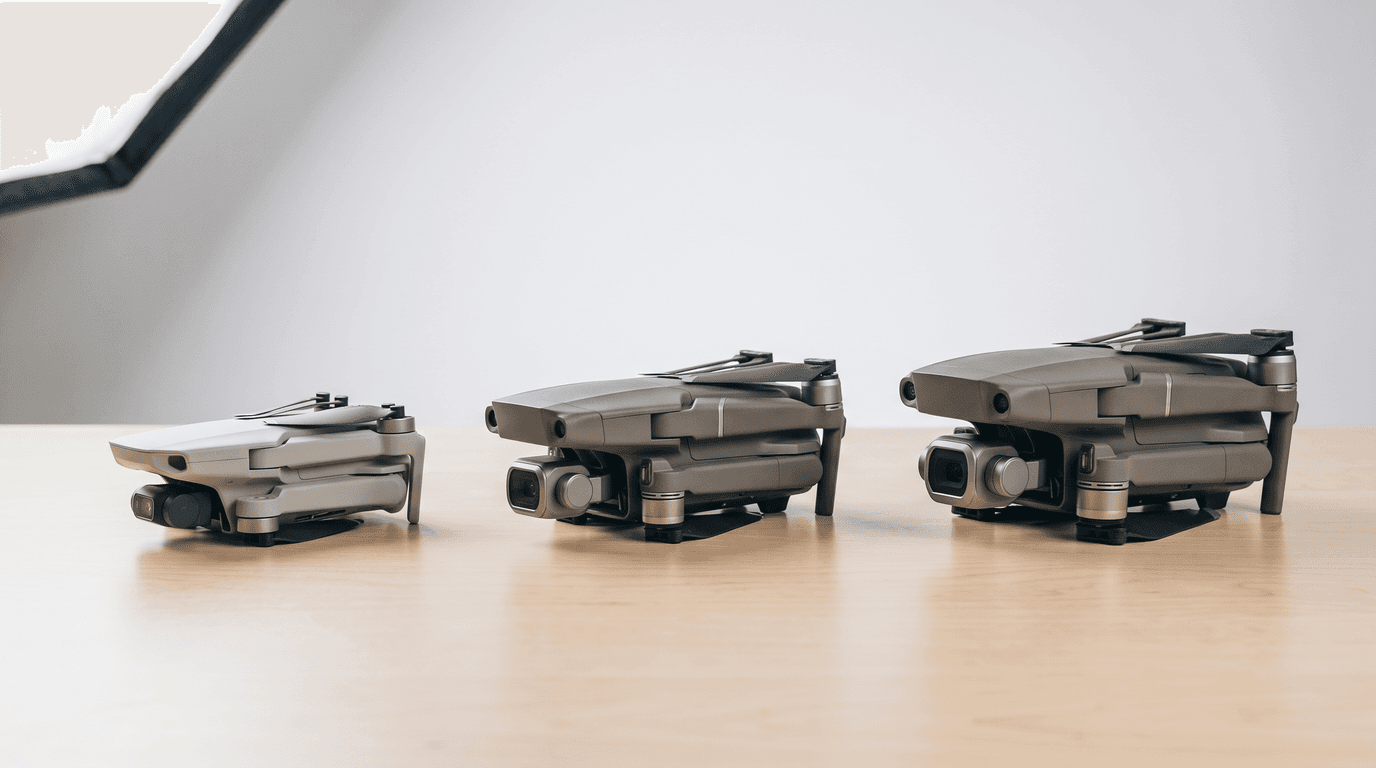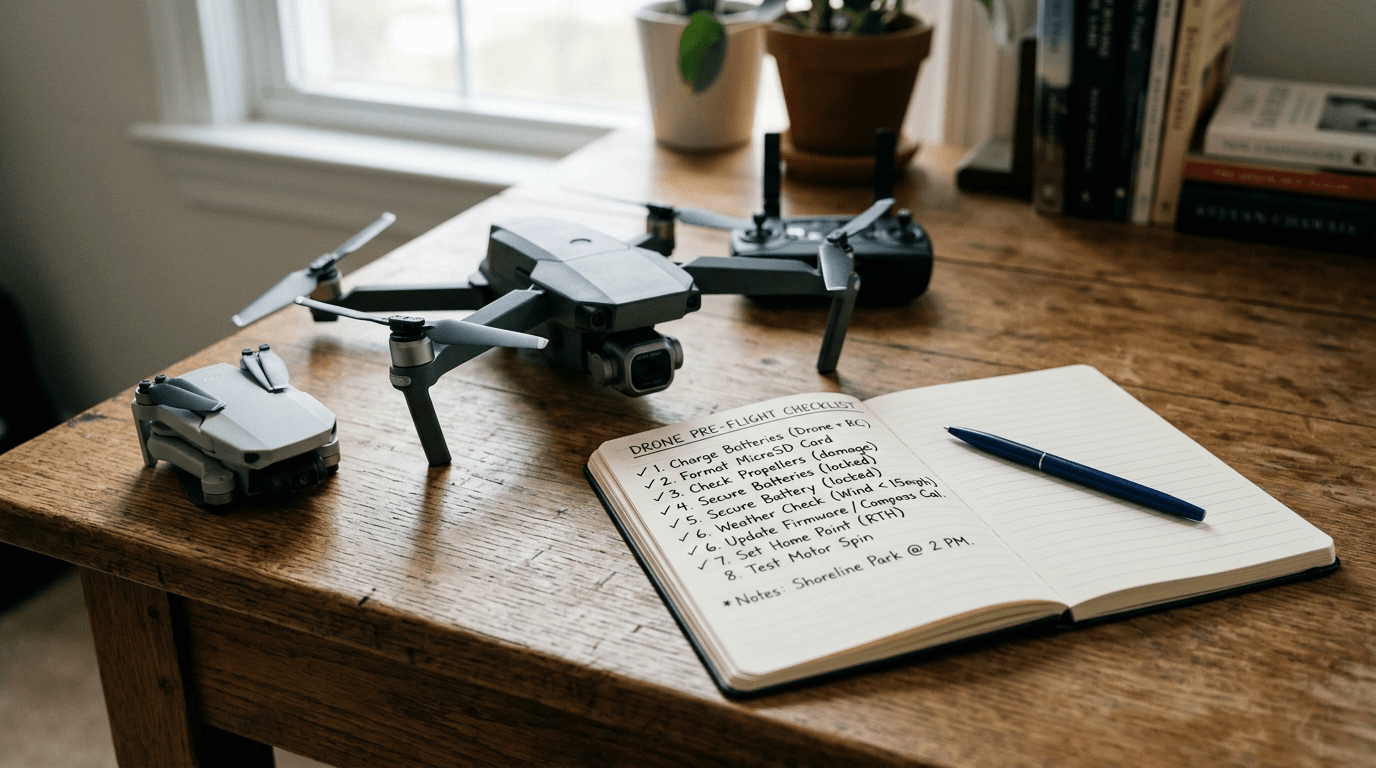
"Do I need a licence for my drone?" is almost the wrong question. Latvia does not issue a single "drone licence." Three separate things hide behind that word, and they do not come as a bundle. Answer three questions and you will know exactly what applies to you.
There is no single "drone licence"
What people call a licence is usually one of three things: operator registration, a remote-pilot qualification (A1/A3, and sometimes A2), or — for the smallest drones — nothing at all. Mixing them up is why the same question gets ten different forum answers.
Question 1 — Do you have to register?
You must register as an operator if the drone:
- weighs 250 g or more, or
- carries a camera or another sensor that can record people, or
- can transfer more than
80 Jin a collision, or - is flown in the Specific category
The exception is a genuine toy under the toy-safety directive. The trap most people miss: a drone under 250 g with a camera still needs registration — the camera, not the weight, triggers it. Registration costs 5 EUR a year and is done once, whatever number of drones you own.
Question 2 — Do you need the A1/A3 qualification?
The A1/A3 theory exam is required only if the drone has a C1–C4 class mark or weighs 250 g or more. A sub-250 g drone with no class mark does not need A1/A3 — even with a camera, which only triggers registration. The course and exam are free.
Question 3 — Which subcategory, and is A2 in play?
A1/A3 covers two subcategories — A1 (close to people, light drones) and A3 (well away from people). Flying a C2 drone near people or built-up areas is A2, a separate qualification with its own exam. If that is your plan, read A1/A3 or A2: which certificate you need.
Three common cases
- No-camera drone under 250 g: nothing — no registration, no exam.
- Camera "mini" under 250 g, no class mark: register as an operator; no A1/A3 exam.
- 250 g or more, or a C1–C4 class mark: register and pass A1/A3.
Check your exact model. The class mark is applied by the manufacturer, and a CE mark is not the same as a C0–C4 mark.
Your next step
If you'd rather not reason it out by hand, the category checker turns these three questions into one answer for your exact drone. Landed on "yes, A1/A3"? Follow the step-by-step path to becoming a pilot, see where it sits in the full buy-to-first-flight guide, and prepare with the online course.