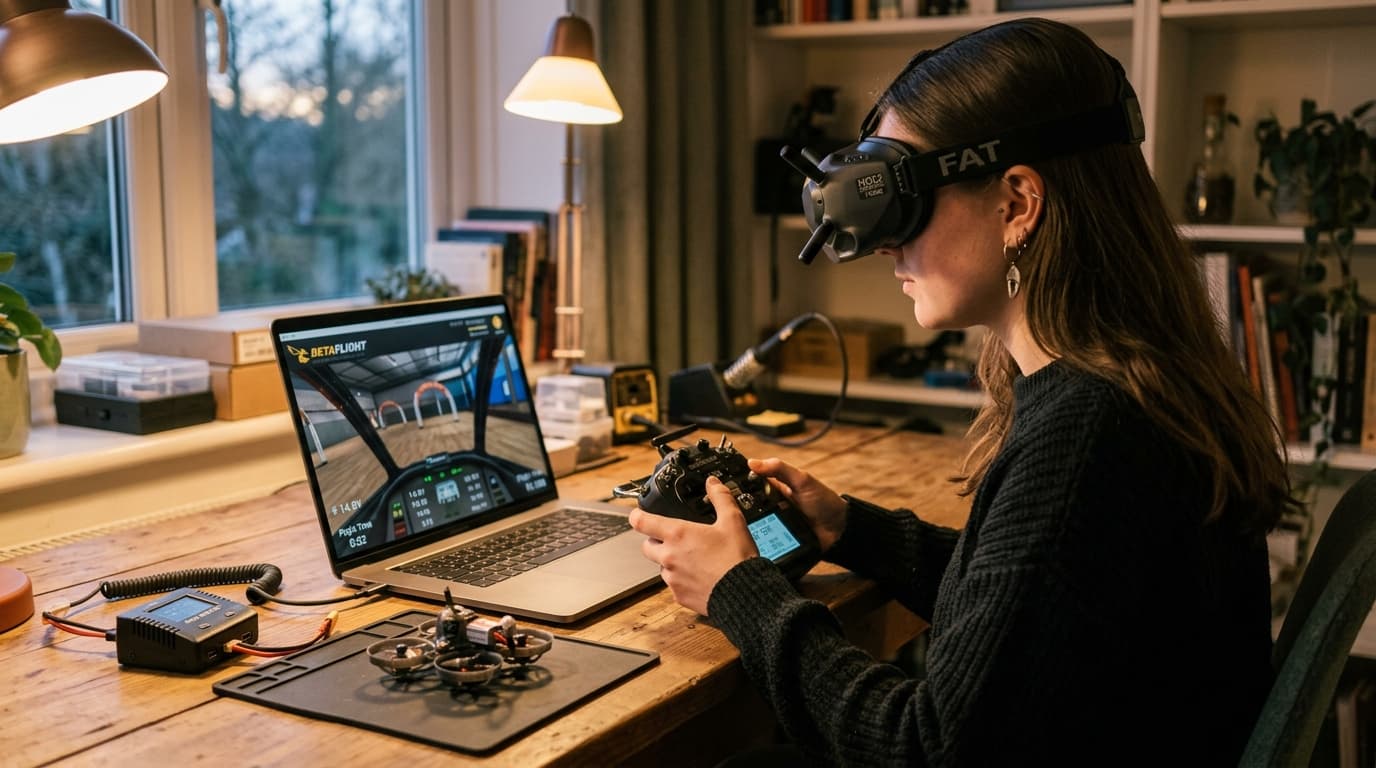
Every FPV pilot who is any good started the same way: badly, in a simulator, crashing a virtual quad a few hundred times before touching a real one. That is not a beginner's shortcut — it is how the discipline works. FPV quads fly in acro mode, with nothing self-levelling, and the gap between "I understand the controls" and "I can fly this" is wide enough that closing it on a real, breakable aircraft is slow and expensive.
The learning curve is real, but it is also well-worn: simulator, then a cheap tiny quad, then line-of-sight practice with someone watching, then bigger builds. What is less obvious to newcomers is that the legal layer starts at the same point as the flying skill — from the first flight outdoors, not from some later "serious pilot" milestone. Registration, category rules, and the observer requirement apply the moment the propellers spin outside your living room.
Why FPV starts in a simulator
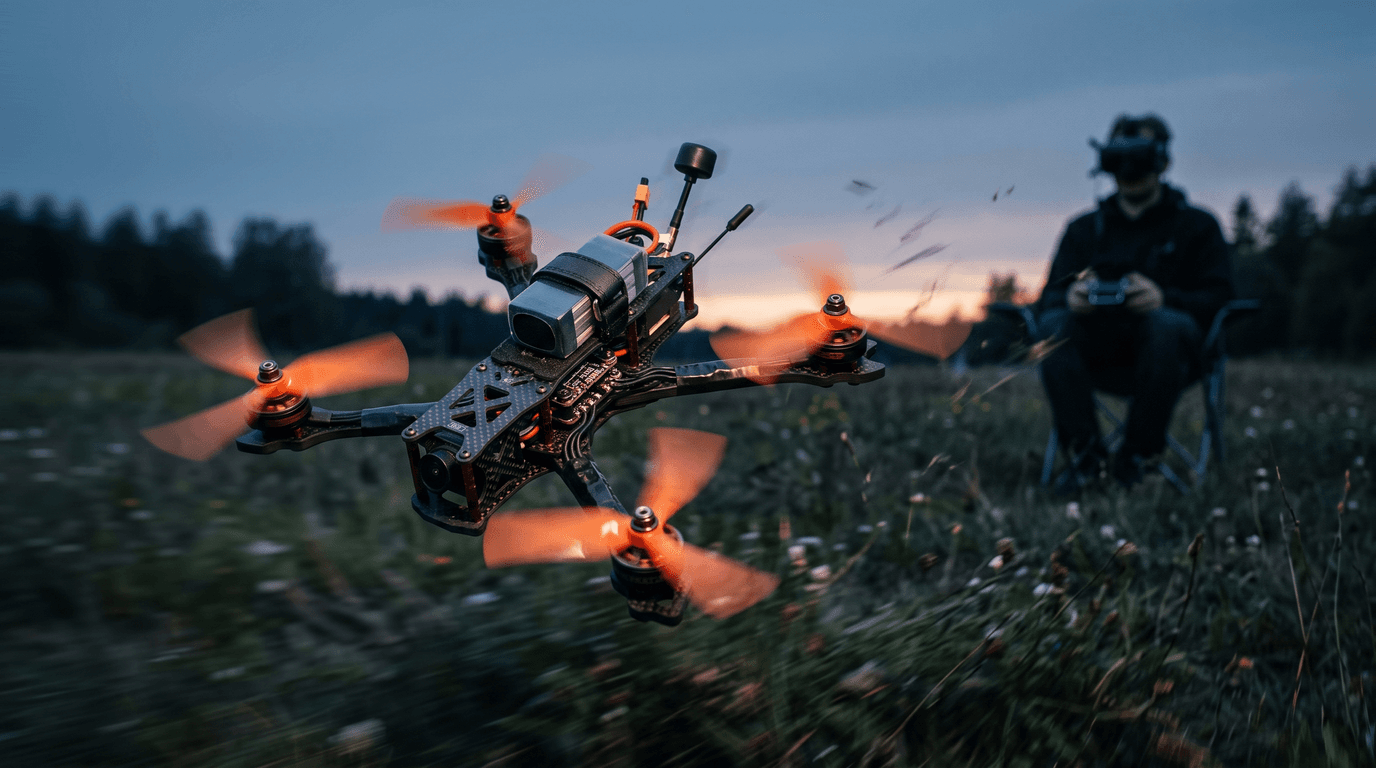
A GPS camera drone forgives you. Let go of the sticks and it holds position. An FPV quad in acro mode does not: the sticks command rotation rates, and releasing them just means the drone keeps doing whatever it was already doing. There is no self-level to fall back on. That single fact is why the FPV community treats simulator time as mandatory rather than optional.
A simulator removes the two things that make early mistakes costly on a real aircraft — money and airspace. A crashed virtual quad respawns instantly; a crashed real one means a broken frame, a bent motor shaft, or worse, someone else's window. It also removes the pressure of flying somewhere you legally shouldn't be while you are still building basic stick coordination. None of the simulator hours count toward anything official — there is no certificate for sim time — but skipping this stage is the single most common reason beginners write off FPV as "too hard" after a handful of real crashes.
Most simulators let you start in an angle or self-level mode close to what a camera drone does, then step down into acro once basic orientation and throttle management feel natural. That progression — angle first, acro once it clicks — mirrors almost exactly what happens later with real hardware.
The skill ladder
FPV skill builds in stages, and jumping ahead rarely ends well.
- Simulator, angle to acro. Hours here are cheap and unlimited. The goal is not looking good — it's building the reflex of correcting a tumble before you consciously think about it. Expect this stage to take longer than newcomers assume; pilots who fly well after a week are the exception, not the rule.
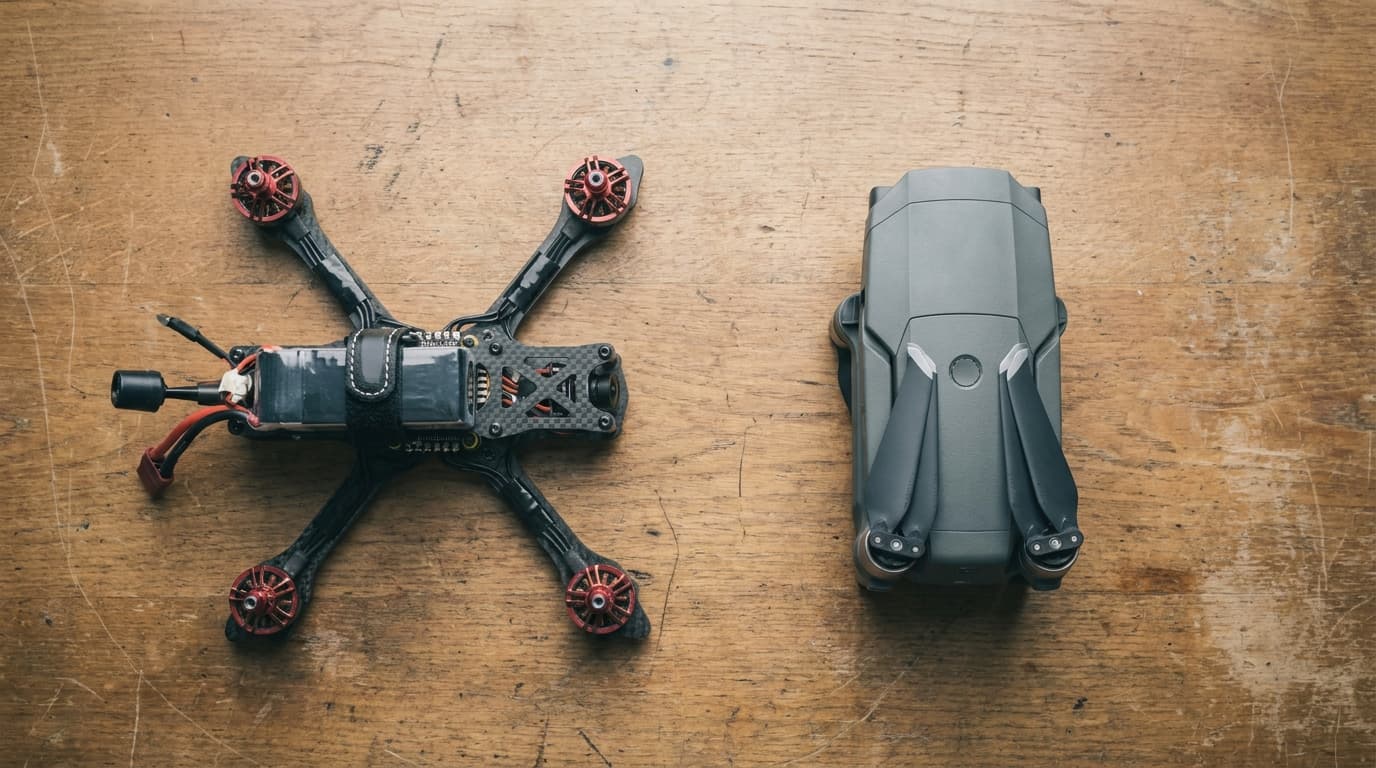
- A cheap, small first quad. Once acro feels controllable in the simulator, the first real aircraft should be small, light, and disposable — something that survives (or is cheap to replace after) constant low-speed crashes in a garden or a gym. This is not the aircraft you learn on for months; it is the one that absorbs the crashes a full-size quad wouldn't.
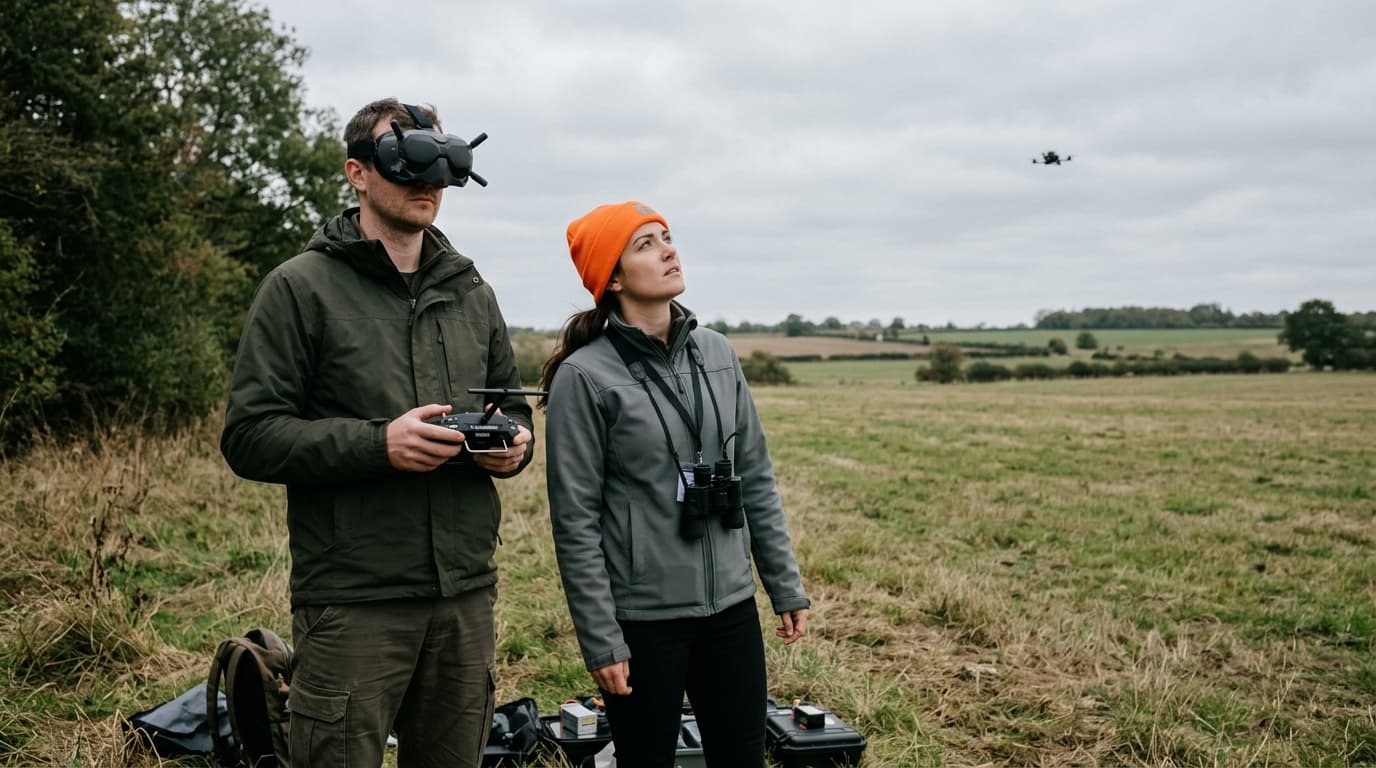
- Line-of-sight practice with someone watching. Before flying anything larger, LOS sessions with a spotter next to you build the habit that will matter for every flight afterward: someone keeping unaided eyes on the aircraft while you fly through goggles. This is also where the legal observer requirement and the skill-building habit line up — more on that below.
- Bigger builds. Only once basic acro control, orientation recovery, and throttle discipline are solid does it make sense to move to a full-size freestyle or racing quad. Bigger means faster, heavier, and considerably less forgiving of the mistakes still common at this point.
Skipping a rung — going from simulator straight to a fast 5-inch quad, or flying solo before line-of-sight habits are automatic — is the most common way FPV turns expensive or dangerous fast.
The legal layer before you fly outdoors
None of this progression happens in a legal vacuum. FPV has no exemption in EU drone regulation: an FPV quad is an ordinary unmanned aircraft, and the same rules that apply to any drone apply here — see what FPV actually is for the full picture of how the hobby and the regulation fit together.
Two things matter from the very first outdoor flight, not from some later point once you're "properly into it":
The observer. Goggles block your own view of the surroundings, and the open category requires continuous visual line of sight with the aircraft. The regulation's answer is narrow: FPV is legal only with an unmanned aircraft observer standing beside the pilot, keeping the drone in unaided sight. That LOS-practice stage in the skill ladder above is not just good training — it is the legal minimum for flying goggles-on outside. The full mechanics of who can observe and how are in the VLOS and observer rule.
Category, registration, and the exam. Which subcategory a build falls into — A1, A2, or A3 — depends on weight and class marking, and it decides how close to people and buildings you're allowed to fly; the differences are laid out in the Open category explained. Most FPV quads carry a camera by definition, which triggers UAS operator registration regardless of weight, and any drone at or above 250 g (or carrying a class mark) requires the pilot to pass the A1/A3 exam before flying. None of this waits until you're flying a full-size freestyle quad — a tiny whoop with a camera already meets the registration threshold.
Gear progression
The gear should follow the skill, not the other way round. A simulator runs on a radio transmitter connected to a computer — no aircraft needed at all. The first real quad is deliberately small and cheap, chosen to survive beginner crashes rather than to perform well. Only once acro control and LOS habits are solid does it make sense to invest in a larger freestyle or racing build, at which point the legal category and registration requirements above apply in full.
Buying the expensive build first is a common and avoidable mistake: it raises the cost of every early crash, and a heavier quad is both harder to learn on and more restrictive under the open category's distance rules.
What matters now
The ladder is simulator, small cheap quad, supervised line-of-sight flying, then bigger builds — and the legal requirements (observer, registration, category, exam) start at the same point the physical flying does, not later. Treat both tracks as one process rather than skill first, rules later.
The A1/A3 exam covers exactly the material an FPV pilot needs regardless of discipline — airspace, distances, zones, and the observer rule itself. Get it done before the first outdoor flight rather than after: the dronelingo course covers the full syllabus with practice questions, so the exam is one less thing standing between you and flying legally.