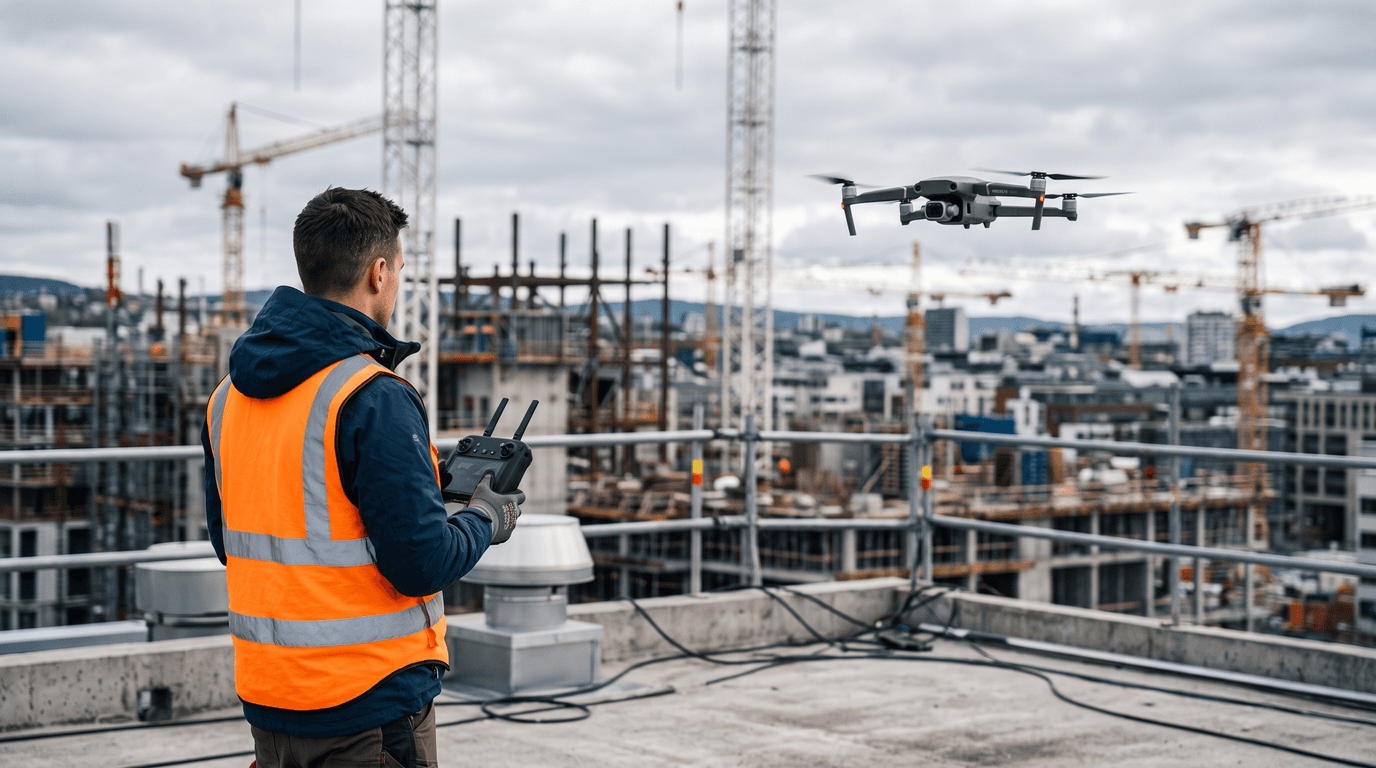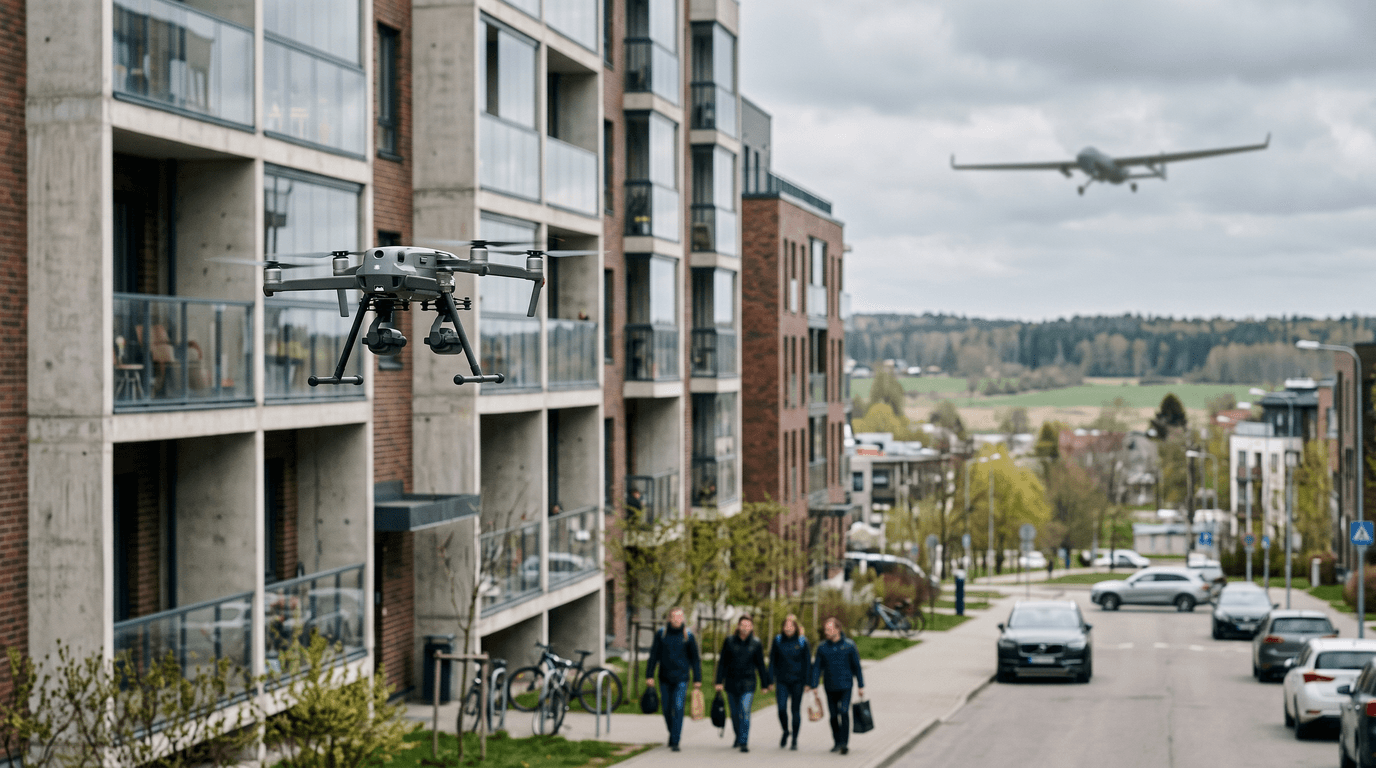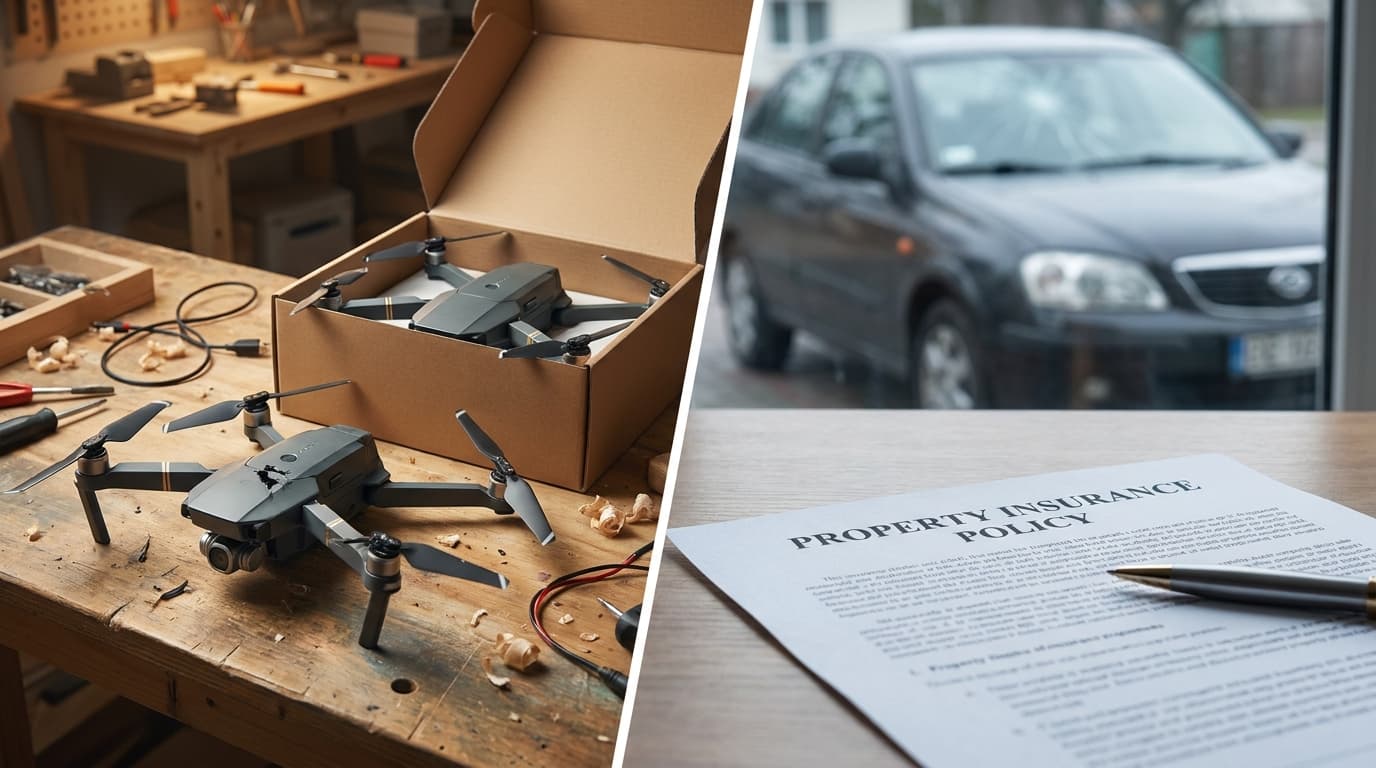
How do you start a drone business in Latvia without wasting a year and a few thousand euros? Mostly by getting the order of operations right. New operators tend to start with the drone; the ones that survive start with the paperwork and the demand check, because that is where drone businesses actually fail. The legal floor is cheap and well defined — the hard part is everything the law does not decide for you.
The legal floor: three items before the first paid flight
Nothing else in this article matters if you cannot fly the job legally. Three things form the floor, and all of them are verifiable on official CAA Latvia pages.
Pilot qualification: A1/A3, plus A2 for work near people
There is no separate "commercial licence" in the Open category. The qualification you need is set by your drone's class mark and how close to people or built-up areas you fly — the rules do not ask whether the flight is paid.
The A1/A3 certificate is the baseline. The CAA course and exam are free: 40 questions in 40 minutes, 75% to pass, valid for 5 years across the EU. For anything at least 150 m away from residential, commercial, industrial or recreational areas, that is the whole requirement.
The catch is that most paid work — real estate, facade inspection, small events — happens inside towns, closer than 150 m to built-up areas. With a C2 drone, that scenario requires the A2 certificate: a separate in-person exam (30 questions, 30 minutes, 75%, 15 EUR for the first attempt) taken after A1/A3 and practical self-training. If commercial work is the plan, budget for A2 from day one rather than discovering the gap at the first urban job. The full decision logic is in A1/A3 or A2: which certificate do you need.
Operator registration and marking
Registration as a UAS operator at e.caa.gov.lv is mandatory when the drone weighs 250 g or more — or carries a camera, which covers essentially every drone you would use for paid work. It costs 5 EUR, is valid for one year, and one registration covers all your aircraft. The resulting LVA operator number must be marked on every drone you fly. A legal entity registers as the operator itself, with employees registering as remote pilots. The step-by-step process is covered in drone registration in Latvia.
Insurance is not optional
Latvian rules (the aviation law together with Cabinet Regulation No. 447) require third-party liability insurance for most Open-category operations: the minimum limit is 50 000 EUR for C1 and C2 drones and for A3 operations with a UAS up to 20 kg. Only drones under 250 g or C0 escape the requirement.
Two things matter commercially. First, the mandatory policy covers damage to third parties only — a crashed drone is your loss unless you buy hull coverage voluntarily. Second, serious clients — property managers, construction firms, municipalities — increasingly ask to see the policy before signing. Insurance is not just compliance; it is a sales document.
Formalising the activity: register before you invoice
Paid drone work is economic activity, and in Latvia economic activity must be registered before you issue the first invoice — either as registered self-employment or as a company. Which form fits, and how the taxes work, is not something to take from blogs, including this one: the official channels are the State Revenue Service (VID) and the Register of Enterprises (Uzņēmumu reģistrs), and the rules there change on their own schedule.
The point at this stage is simply not to skip the step. Flying paid jobs informally stacks tax exposure on top of the aviation-side consequences — and since 2026, drone penalties in Latvia can be calculated against business turnover, which changes the maths considerably for a company. That regime is covered in Latvia's 2026 turnover-based drone fines.
Pick a niche by demand, not by showreel
Generic "aerial photo and video" is the most crowded, lowest-priced corner of the market, because it is the niche every new pilot defaults to. The businesses that last pick a segment where buyers already spend money:
- Real estate — short jobs, steady volume, and agents who buy repeatedly once they trust you. The workflow is examined in drones for real estate.
- Inspection — roofs, facades, chimneys, towers. Less glamorous than film work, but the buyer is saving on scaffolding and rope access, so the value case is concrete.
- Mapping and surveying — orthophotos, volume measurement, progress documentation. The barrier is software and data skills more than flying skill, which keeps competition thinner.
- Events — visible and tempting, but legally the hardest: assemblies of people are off-limits in the Open category, full stop, so much of what clients imagine is not deliverable.
- Agriculture — genuine demand, but heavier equipment, and spraying or heavy-lift work quickly leaves the Open category for the Specific one.
Whichever direction attracts you, validate demand before buying anything: talk to the actual buyers — agents, building managers, farm operators — and try to price three real jobs. If you cannot find three people who would plausibly pay this month, you have found a hobby, not a niche. The pilot-side career path is mapped in how to become a commercial drone pilot.
Price against real costs, not against hobbyists
This article will not invent day rates — they vary too much by niche and region to be quoted honestly. What can be said is what your price has to carry:
- Equipment amortisation. Drones age fast, batteries wear out, and a working kit means a backup aircraft, spare batteries and filters — all of it replaced on a cycle.
- Insurance premiums, renewed annually, scaled to what and where you fly.
- Travel and standby time. The flight is minutes; the drive, site survey and waiting for a weather window are hours.
- Processing time. Editing, mapping computation or inspection reporting routinely takes longer than the flight itself.
- Weather re-shoots. In Latvia, some percentage of jobs will be flown twice. The price has to absorb that.
The competitor quoting half your price is usually a hobbyist with no insurance, no registration and no invoice. You will not beat them on price — compete on reliability and paperwork instead, because that is what commercial clients are actually buying.
Where drone businesses fail
The failure patterns repeat often enough to list:
- Gear before demand. A premium drone bought before the first confirmed client is a depreciating object, not a business plan.
- Ignoring geographical zones on urban jobs. Check the airspace restrictions for the exact site before quoting, not after signing — some city jobs are simply not flyable, and finding out late costs you the client.
- No contracts, no insurance. One dented car roof without a liability policy can erase a year of margin.
- Selling flights the Open category cannot deliver — over crowds, beyond visual line of sight — and then either cancelling or flying illegally.
- Skipping the formal registration of the activity, which converts a growing side income into an accumulating liability.
The takeaway
Starting a drone business in Latvia is a sequencing problem: A1/A3 first, A2 if your work goes near people, operator registration and insurance, a registered economic activity — and only then serious money into equipment, once a niche has shown real demand. Every step of the legal floor is cheap compared to any single mistake on this list.
Next step: the qualification is the one part you can finish this month. Prepare for the A1/A3 exam — and the A2 level above it — with the dronelingo course.