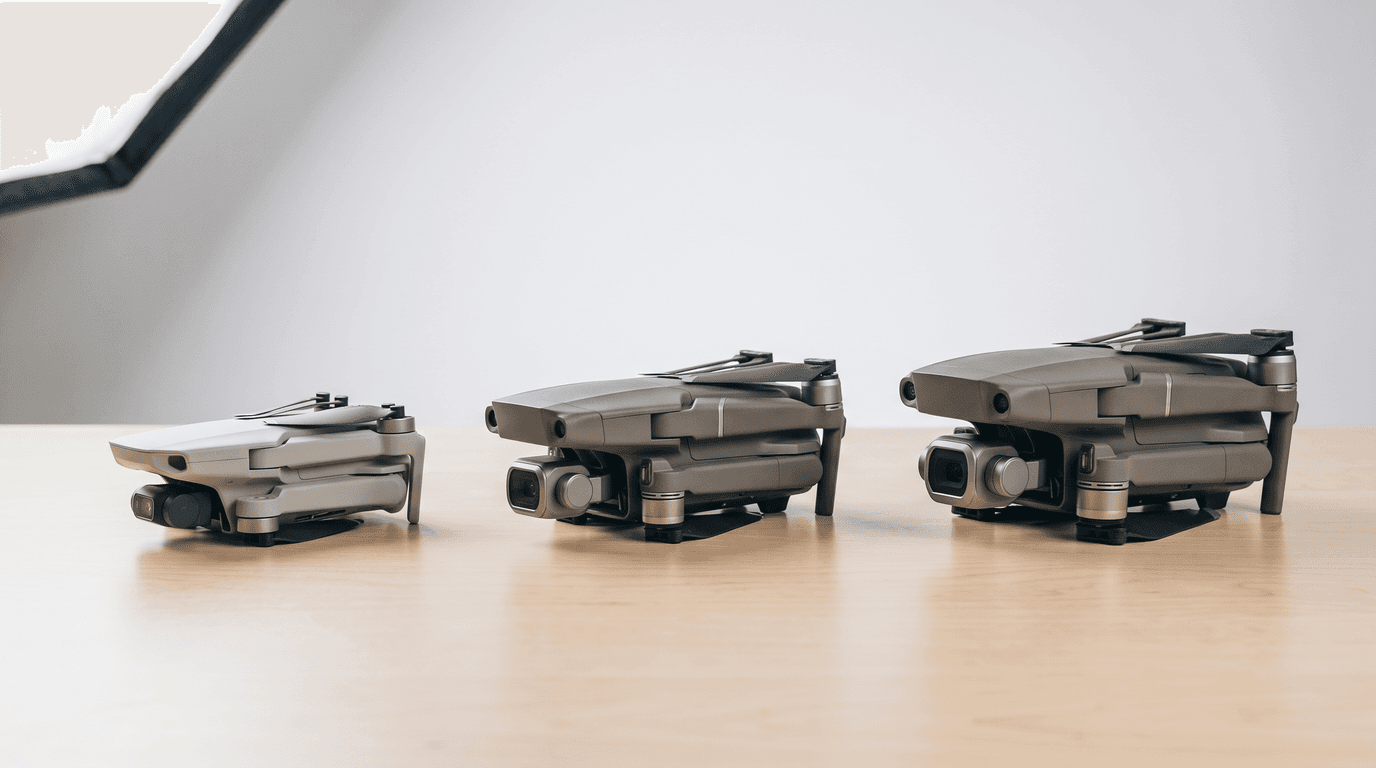
Most people shopping for a first drone start with camera quality and flight time. From a rules point of view, the better starting point is class and mass.
That is what decides:
- where you can realistically fly it
- whether you need a qualification
- how restrictive the flying gets
Why class matters more than marketing
In the EU system, the aircraft class is not just a label. It shapes which Open-category path is open to you.
A rough first look:
| Aircraft type | What it usually means for a beginner |
|---|---|
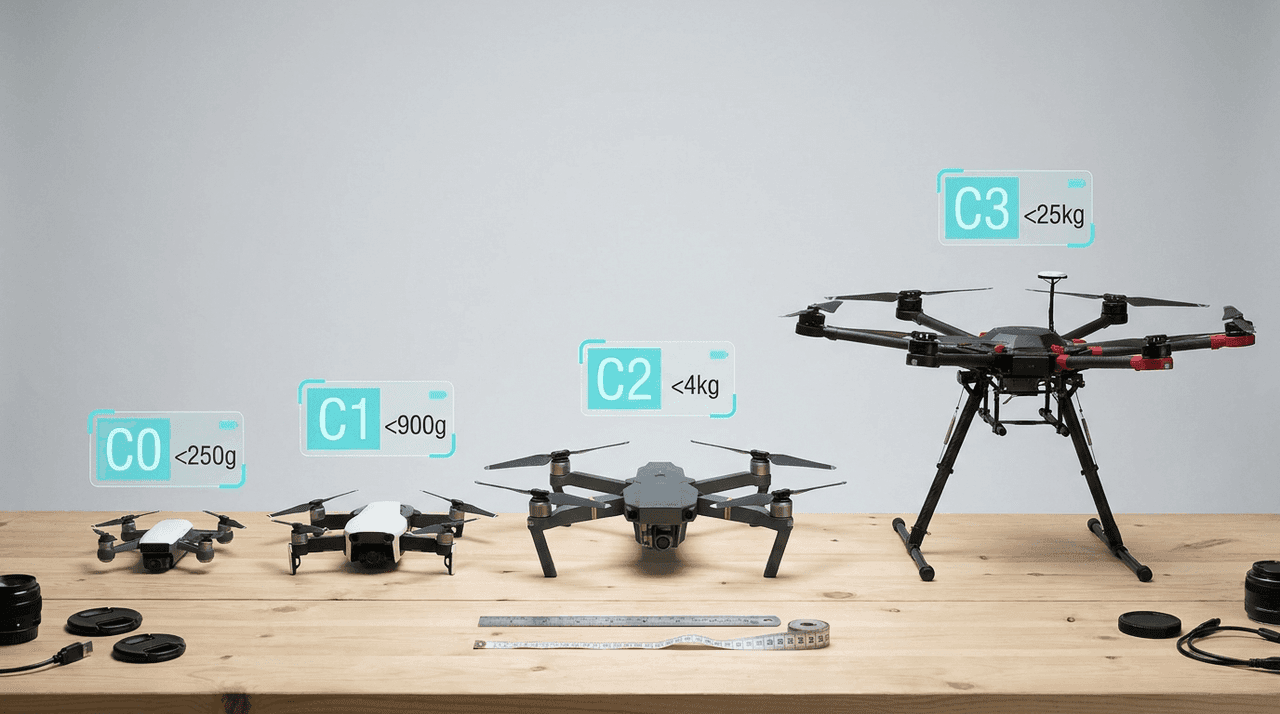
<250 g / C0 | the simplest entry point, but still not “rule-free” |
C1 | still flexible, but with clearer limits around bystanders |
C2 | flying closer to people only via the extra A2 path |
C3 / C4 | usually a more restrictive Open-category case |
Under 250 g is simpler, not lawless
The most common mistake is thinking a very light drone means “no real rules”.
It doesn't.
A lighter aircraft can cut down the qualification you need, but you still have to check:
- operator registration
- geographical zones
- privacy and data-protection issues
- the actual Open-category limits for that flight
So a first drone under 250 g is often the easiest place to start, but it is not a legal shortcut around the rules.
C1 is the next step up
Once you move into the C1 range, the aircraft can usually do more, but the rules get stricter too.
So as a first-time buyer, don't assume “bigger is safer”. In rules terms, a heavier aircraft often means:
- less freedom in how you fly
- more care around bystanders
- a higher chance your planned use no longer fits the simplest path
C2 changes the qualification question
If the aircraft is C2, buying it is no longer just about the hardware. It raises the qualification question directly, because flying closer to people is tied to the A2 path.
So before you buy a C2 aircraft as a first drone, ask yourself:
- do I actually need that kind of flying right now?
If not, a lighter class is often the cleaner first step.
Older drones need extra care
Older drones without a C-class mark can still be perfectly usable, but their rules need a closer read than newer class-marked aircraft.
Before you buy a used drone, check:
- the aircraft mass
- whether it has a class mark
- which Open-category use you have in mind
That matters more than how clean the shell looks or what the seller says.
A better buying question
Instead of asking “Which drone is best?”, ask:
- Where do I really want to fly?
- How close to people do I need to be?
- Do I want the simplest qualification path, or am I ready for a stricter one?
- Will an older drone without a C-class mark create more limits than I want?
For many beginners, that points to the lightest aircraft that still covers the real job.
Need the legal background behind those choices? Read our A1/A2/A3 comparison.
Weighing up a specific model? The drone weight check maps its mass to a subcategory, and the category chooser turns the questions above into the path that applies to you.