"It's under 250 g, so no rules apply" is the most persistent myth in hobby flying — and it fails on first contact with the regulation. The rules for drones under 250 g in the EU Open category are lighter than for anything heavier, but they are not absent. The 250 g line removes exactly one obligation for most pilots: the theory exam. Almost everything else — registration with a camera, the height ceiling, line of sight, geographical zones — applies to a 249 g drone the same way it applies to a 4 kg one.
Here is the precise split, as the rules stand in Latvia.
What under 250 g actually exempts you from
Three things, no more:
- The pilot exam. Training and a theory test in the Open category are mandatory from a take-off mass of 250 g. A drone under 250 g with no C1–C4 class mark can be flown in the A1 subcategory without sitting the A1/A3 exam or holding a certificate.
- The strict overflight ban on individuals. In A1, a sub-250 g or C0 drone may overfly individual uninvolved people. Heavier A1 drones (C1) must reasonably avoid doing even that.
- Mandatory insurance, in the A1 case. For A1 flights with a drone under 250 g or C0, Latvia sets no minimum third-party liability limit. From C1 upwards, the minimum is 50 000 EUR.
That is the entire dividend. Everything below stays.
Operator registration: the camera decides, not the weight
The most common surprise. Registration is not tied to the exam and does not switch off at 250 g. A UAS operator must register if the drone meets any of these: mass of 250 g or more, ability to transfer more than 80 J of kinetic energy in a collision, or a sensor able to capture personal data — a photo or video camera. The only carve-out is a toy under the Toy Safety Directive 2009/48/EC.
Practically every consumer sub-250 g drone carries a camera, so registration is mandatory for practically every one of them. The mechanics:
- Register once as a UAS operator at
e.caa.gov.lv— 5 EUR, valid one year, covering all your drones. - You receive an operator number (
LVA+ 12 characters). - Mark every drone with that number, readable without tools. If the airframe is too small, the battery compartment is an accepted spot.
One registration is recognised across the EU, and registering in two member states at once is not allowed. The full walkthrough is in drone registration in Latvia step by step; the model-specific case is covered in do I need a licence for a DJI Mini.
The operating rules that ignore the scales
The Open-category baseline applies to every drone in the category, 249 g included:
- 120 m maximum height above ground or water. Geographical zones can set a lower ceiling, never a higher one.
- VLOS at all times. FPV flying is allowed only with an observer standing next to the pilot, communicating without technical relays.
- Never over assemblies of people. The A1 allowance covers individual uninvolved persons, not crowds — the test is whether people are packed too densely to step away from the drone.
- Minimum pilot age 16, with narrow exceptions that include toys and self-built drones under 250 g, or flying under the supervision of a qualified remote pilot.
None of these have a weight threshold. A sub-250 g drone at 150 m altitude is a violation, full stop.
Geographical zones apply — and so does BGKIS
Airspace restrictions do not read the spec sheet either. Latvia's UAS geographical zones — prohibition zones, authorisation zones, notification zones — bind every drone, and the only official, legally binding source is the airspace.lv/drones map. Manufacturer geofencing in the flight app is explicitly flagged by the CAA as incomplete or imprecise; it is a convenience, not a clearance.
Since 1 January 2025, flying inside a UAS geographical zone additionally requires the operator to file the flight in BGKIS, Latvia's unmanned-aircraft information system, before the flight or series of flights. Where zones overlap, all of their conditions apply at once. Run a location through can I fly here before you plan anything near a city, an airport or a border area.
Worth stating plainly: a zone approval never relaxes the baseline — 120 m and VLOS stand even inside an approved request.
The camera is also a privacy obligation
The same sensor that triggers registration exists in the regulation because it captures personal data. That is the legal logic to keep in mind around people and private property: the light weight changes nothing about what your camera records. Overflight of individuals being technically permitted in A1 does not make filming them consequence-free.
Which sub-250 g drones this covers
The A1 door is open to three groups: C0-marked drones; unmarked drones under 250 g placed on the market before 1 January 2024 (the legacy fleet); and self-built drones under 250 g with a top speed up to 19 m/s. The class mark is applied by the manufacturer — never by you — and a CE mark is not a C mark.
If you are still choosing hardware, the trade-offs between C0 and the heavier classes are mapped in choosing your first drone by weight class, and which category resolves your specific drone-and-scenario combination in a minute.
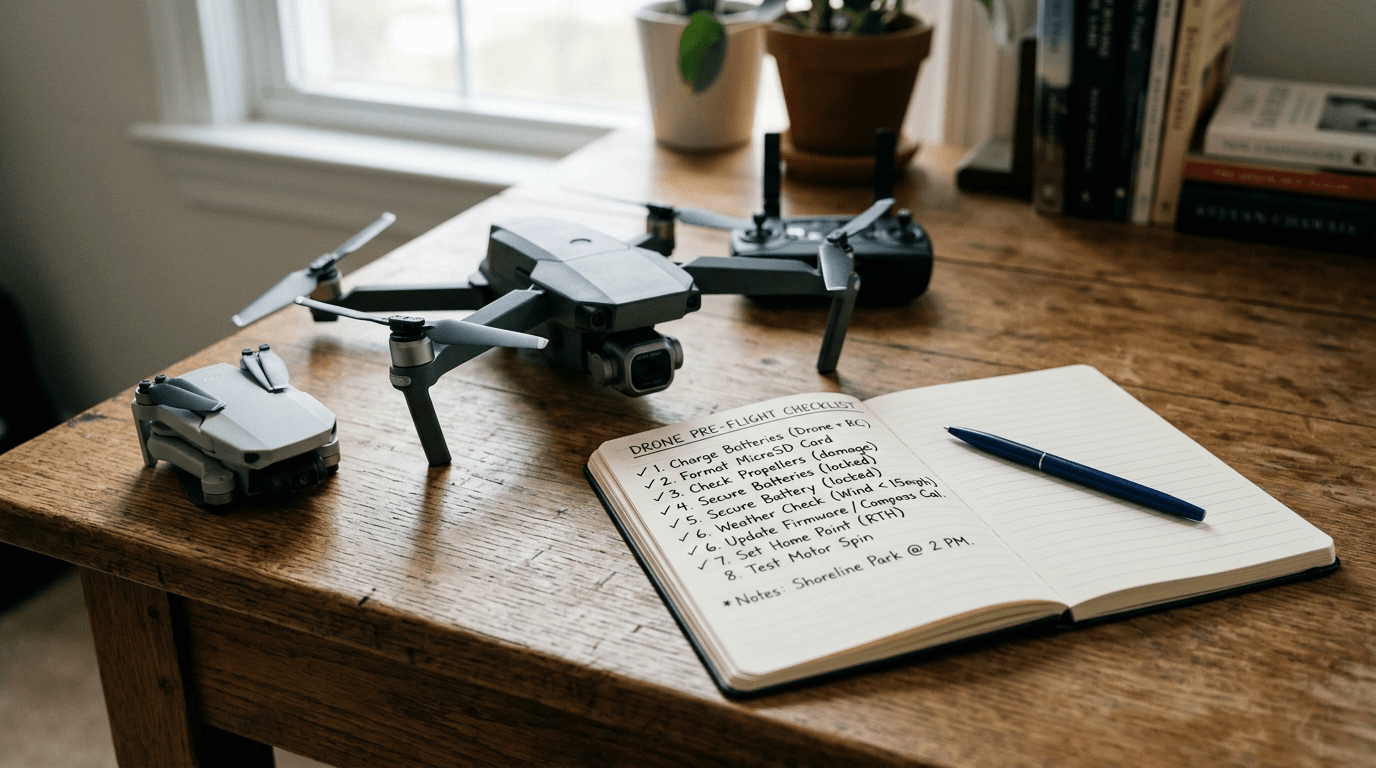
The 30-second compliance check
For a camera-equipped sub-250 g drone in Latvia:
- Operator registered at
e.caa.gov.lv, 5 EUR paid, registration not expired. - Operator number marked on the drone.
- Location checked on
airspace.lv/drones; if a geographical zone — request filed in BGKIS. - Flight plan fits A1: under 120 m, VLOS, no assemblies of people.
Four lines. Skipping the exam was never the same as skipping the homework.
What matters now
The 250 g threshold buys you out of the exam, not out of the system. Registration, marking, the 120 m ceiling, VLOS and zone checks are the actual rulebook for light drones — and they are also most of the content of the free A1/A3 exam. Since you have to know it anyway, it is rational to learn it properly once and take the certificate: it costs nothing and is valid five years across the EU. The dronelingo course gets you exam-ready in Latvian, English, Russian or Ukrainian.