A1/A3 is where most drone pilots in Latvia stop. It covers flying small drones over yourself and flying bigger ones far from people. The moment you want to fly a heavier camera drone close to people who are not part of your flight, A1/A3 is no longer enough — you need the A2 certificate of competency. This guide covers when A2 actually applies, what it lets you do, and the three steps the Latvian CAA wants you to complete to get it.
What A2 actually unlocks
A2 is the Open-category subcategory for flying near uninvolved people with a mid-weight drone. EASA's own Open-category table ties it to one drone class: a C2 aircraft, meaning under 4 kg with the C2 class mark.
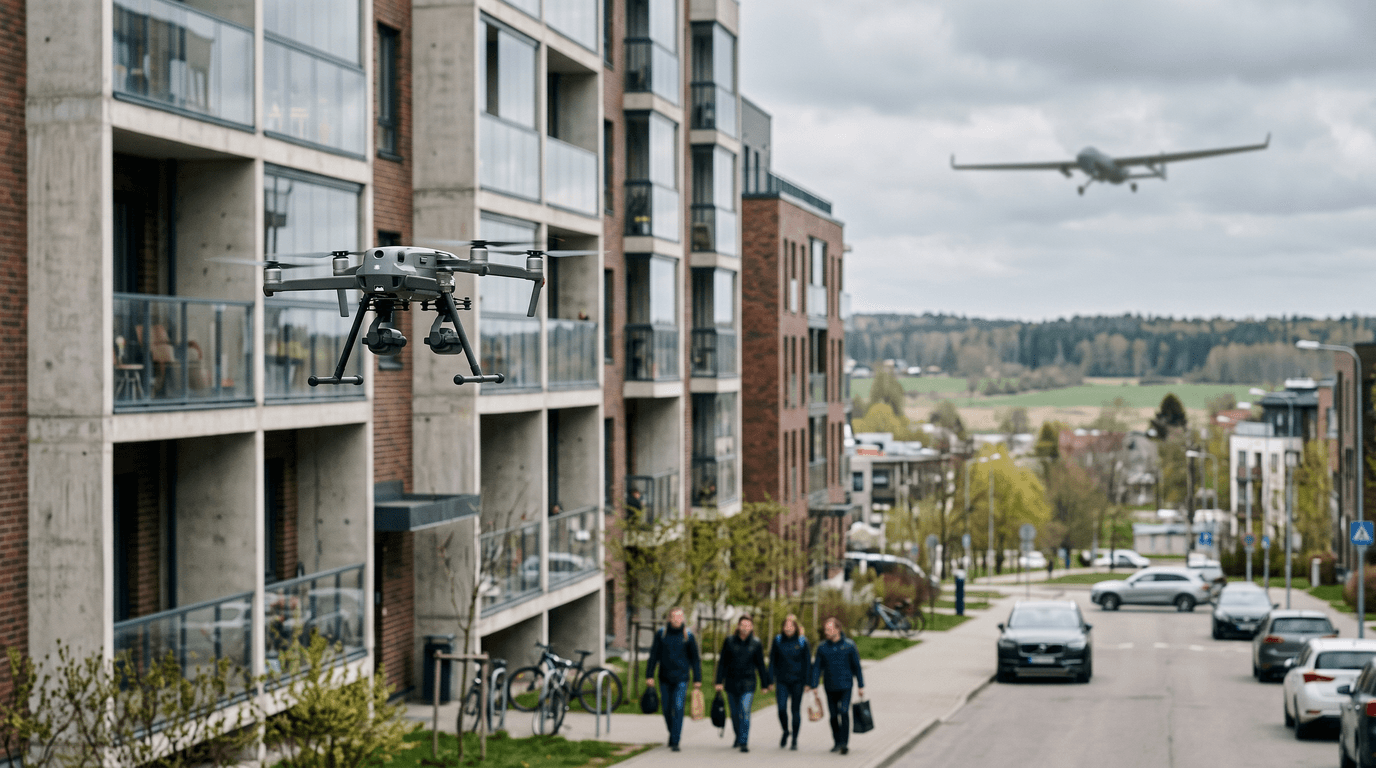
The privilege is distance. In A2 you may fly a C2 drone down to a 30 m horizontal distance from uninvolved people — and as close as 5 m if the drone has an active low-speed mode and you switch it on. You still may not fly over uninvolved people, and the 120 m height limit still applies.
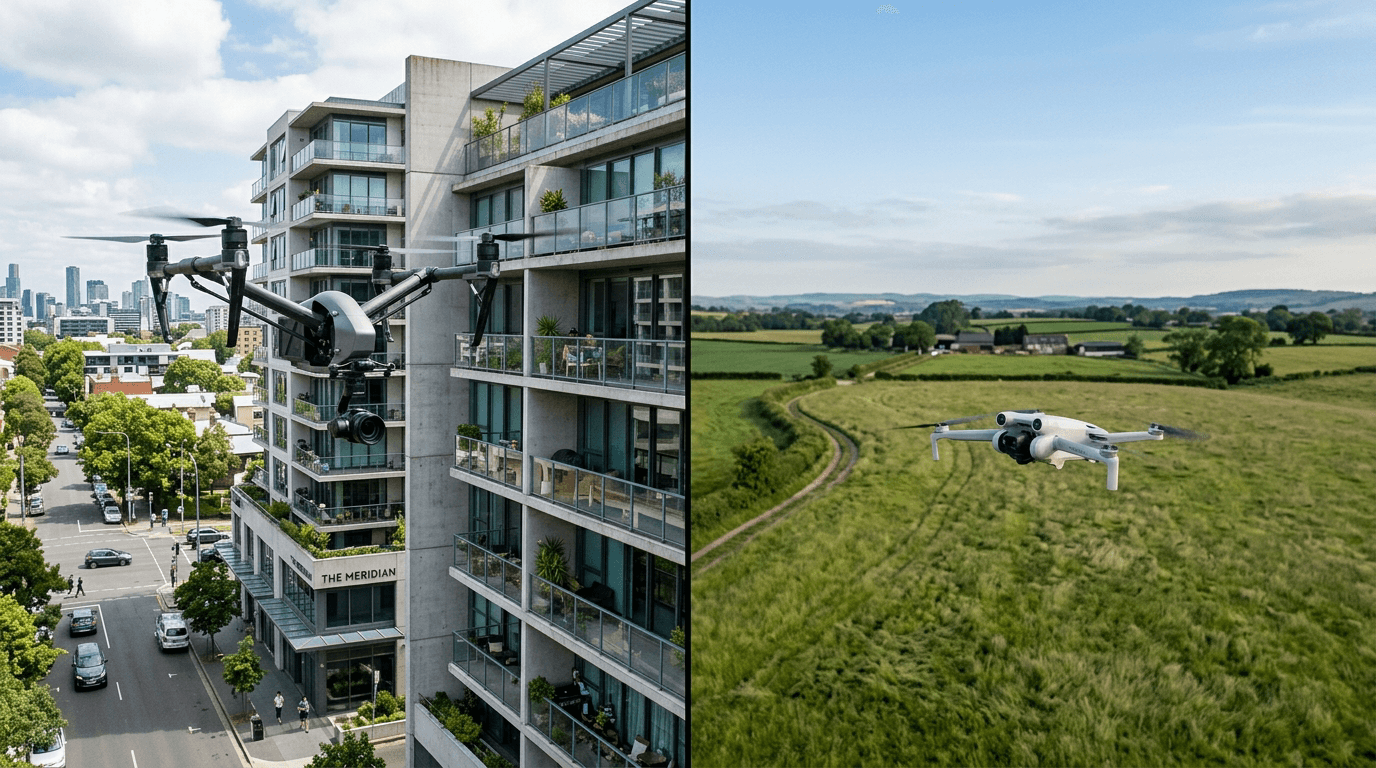
Compare that to A3, the subcategory A1/A3 holders use for heavier drones: there you must stay at least 150 m from residential, commercial, industrial, and recreational areas. The Latvian CAA frames A2 from exactly that angle — if you fly a C2 drone closer than 150 m to those areas, you are operating in A2, and you need the A2 certificate to do it legally.
So the practical question is simple. If your flying plans keep you well away from people and built-up areas, A1/A3 already covers you. If you need to work near a building, a worksite, or the edge of a town with a sub-4 kg drone, A2 is the qualification that makes it legal.
The C2 catch: no class mark, no A2
A2 is built around the C2 class label, and this trips people up.
Since 1 January 2024, flying in A2 with a drone that carries a CE mark but no proper C-class mark is not allowed. The CAA states this directly. A CE mark is not a C-class mark — CE covers general product conformity, while the C-class label (C0 to C6) is the drone-specific identification applied by the manufacturer under Regulation (EU) 2019/945. You cannot add it yourself.
The consequence: if your current drone has no C2 label, the A2 certificate alone will not let you fly it close to people in A2. You need both — a C2-marked aircraft and the A2 certificate. Check the drone's body and its EU Declaration of Conformity before you assume A2 is the right path for the hardware you own.
Step 1 — Pass A1/A3 first
A2 builds on A1/A3; it does not replace it. Before you can register for the A2 exam, the CAA requires three things in place:
- a Latvian remote-pilot number (
LVA-RP-############) in the e-services portal - a valid A1/A3 proof of completion from the online training
- a completed practical self-training declaration (Step 2 below)
If you passed A1/A3 in another EU country, you do not redo it — you upload that proof in the portal under "Qualification" → "Register an existing or foreign-acquired qualification". Our A1/A3 licence guide walks through that first certificate if you do not have it yet.
Step 2 — Do the practical self-training (and declare it)
This is the step pilots overlook, because there is no instructor and no exam to fail. A2 practical training is self-study: you train yourself, then sign a declaration that you have completed it. The CAA does not watch you fly.
It is not a free-for-all, though. The training must happen in a safe environment — at least 150 m from residential, commercial, industrial, or recreational areas, the same standard as A3 — and with a drone whose type, controls, and mass are similar to what you intend to fly in A2. You practise both manual control and the automatic flight functions.
The CAA lists the skills you must be able to demonstrate before the exam. In plain terms they cover five areas:
- Flight planning — payload compatibility, site suitability, geographical-zone restrictions and permissions, obstacles, and weather.
- Flight preparation — system condition, latest manufacturer firmware, sensor calibration, battery checks, height-limit setup.
- Normal flight — stable hovering or circuits, coordinated turns, holding altitude and track, return-to-home, landing, and keeping clear of obstacles.
- Abnormal situations — lost or faulty GNSS, an uninvolved person entering the area, leaving the operating zone, a crewed aircraft approaching, and loss of the C2 command link.
- Briefing and reporting — pre- and post-flight briefing, and filing an occurrence report when one is needed.
Treat this as real preparation, not a box to tick. The practical skills map directly onto the questions you will face in the exam.
Step 3 — Sit the A2 theory exam
The A2 certificate comes from an in-person theory exam at the CAA or a recognised organisation. The format the CAA publishes:
- 30 minutes
- 30 multiple-choice questions
- at least 75% correct to pass
You can prepare on your own — the regulation does not require a course, and the CAA does not approve A2 training programmes. Manufacturer manuals, good study material, and structured practice are enough for most people.
What the A2 exam covers
The A2 exam is narrower and more technical than A1/A3. It does not retread the whole Open-category syllabus; it focuses on the extra knowledge you need to fly safely near people. The CAA groups the questions into three themes:
- Meteorology — how wind (including urban turbulence), temperature, visibility, and air density affect the drone, and how to get a forecast.
- UAS flight performance — typical operating limits for rotary-, fixed-wing, and hybrid drones; mass, balance, and centre of gravity once you add a payload; securing the payload; and battery behaviour (types, capacity, charge and discharge, storage, hazards).
- Ground-risk mitigation — the low-speed mode, estimating distance to people, and the 1:1 rule (keep at least as much horizontal distance from a person as your height above ground).
If you have ever flown in gusty conditions near buildings or watched your range drop in the cold, most of this will feel familiar. The exam is checking that you can reason about those effects rather than just recognise them.
Fees, validity, and renewal
The CAA's published fees for sitting the A2 exam at the agency:
- 15 EUR for the first attempt
- 10 EUR for a retake
Recognised organisations may set their own prices. Once you pass, the certificate appears in the CAA e-services portal, is valid for 5 years, and is recognised across the European Union — the same as A1/A3.
Renewal has a window worth noting. Before the certificate expires you can renew with an online refresher course, but only in a set period: no earlier than 90 days and no later than 5 days before the expiry date. Miss that window and the certificate lapses — then you have to re-sit the in-person exam. Issuing the renewed certificate costs 5 EUR.
Is A2 worth it for you?
A2 is not a general upgrade; it is a specific permission to fly a C2 drone near people. It is worth the effort if two things are true: you own (or will buy) a C2-marked drone under 4 kg, and your flying genuinely needs to happen closer than 150 m to people or built-up areas. Real estate, inspection, events, and urban photography are the typical cases.
If neither is true, A1/A3 is enough, and adding A2 buys you nothing today. The certificate is valid for five years, so there is also no rush to get it before you have the hardware and the use case to match.
Ready to prepare? The product's A2 meteorology mock exam targets the heaviest of the three A2 themes, and the practice sets cover the wider Open-category knowledge underneath it. New to the whole path? Start with the A1/A3 exam guide and the A1/A2/A3 subcategory breakdown.