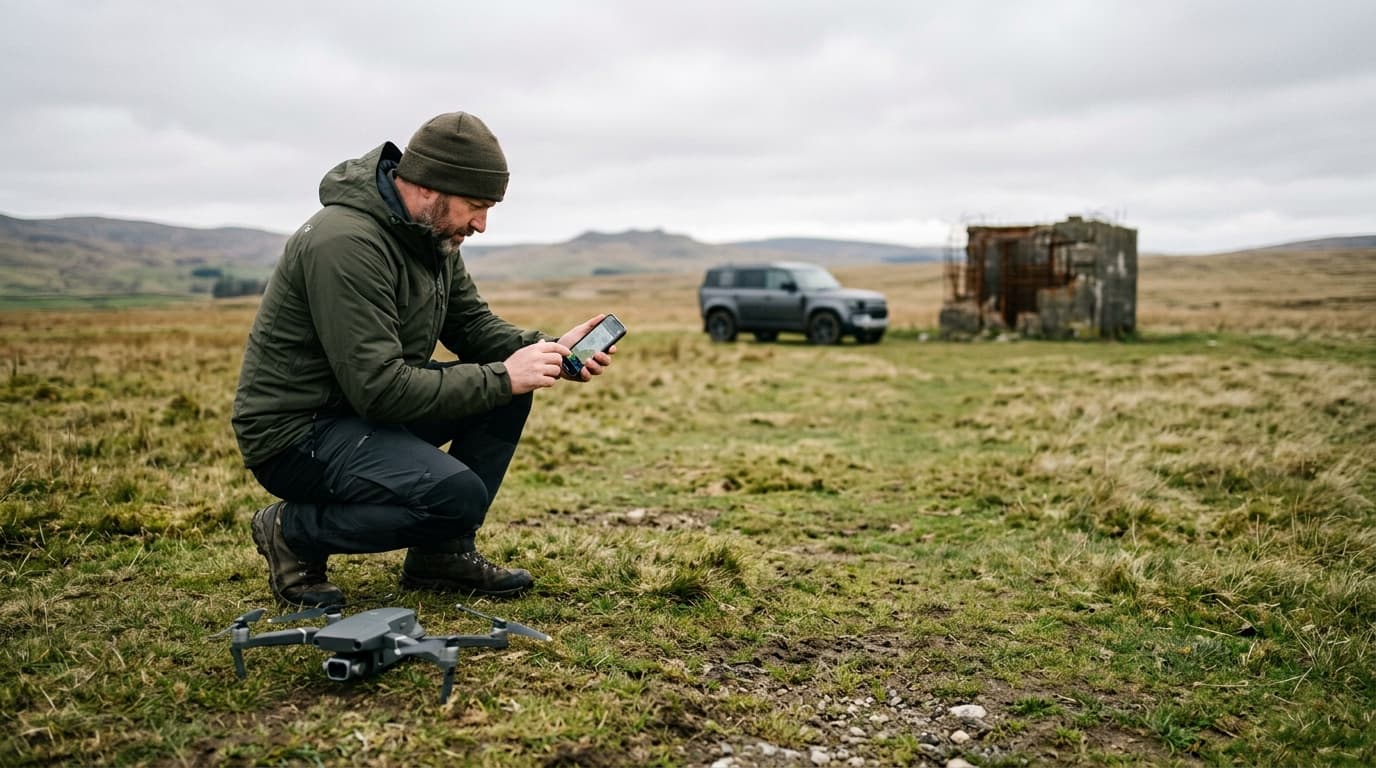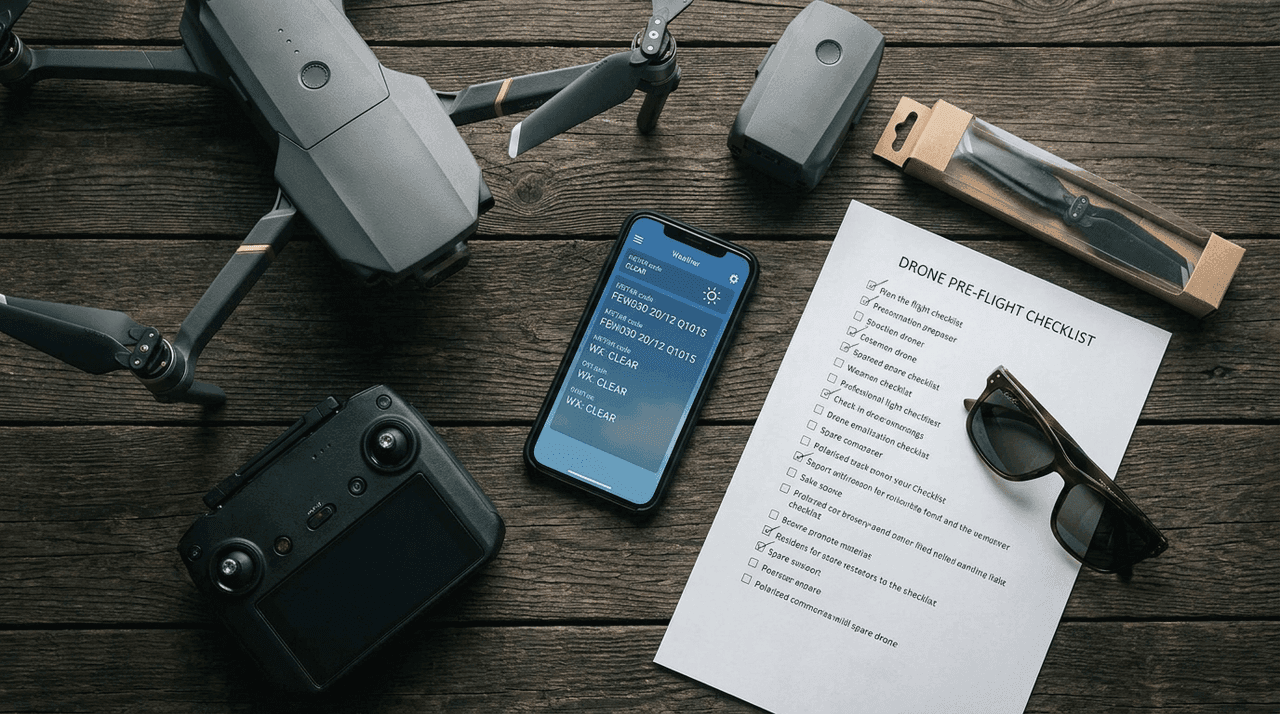
A pre-flight checklist matters for one reason: it makes you check the things that are easy to skip when you're in a hurry.
This version stays deliberately simple. It sticks to the checks that stay relevant across ordinary Open-category flights in Latvia.
1. Weather
Confirm the conditions suit both the aircraft and VLOS:
- wind within the aircraft's practical limit
- no rain or snow that would make the flight unsafe
- visibility good enough to keep the drone in sight with your own eyes
2. Airspace and geographical zones
Check the official Latvian source:
airspace.lv/drones
Then confirm whether the location is:
- open with no extra restrictions
- subject to notification
- subject to authorisation
- prohibited
If the zone needs action through BGKIS or another approval step, do that before take-off.
3. Category fit
Before you fly, confirm the planned operation still fits the Open-category case you intended:
- the right subcategory
- the right aircraft class or mass
- the right distance from bystanders
That quick mental check prevents a lot of avoidable mistakes.
4. Take-off and landing area
Check that both the launch point and the landing point work:
- stable surface
- enough space
- no obvious clash with bystanders
- a realistic way to end the flight early if conditions change
5. Aircraft condition
Inspect the drone itself:
- airframe
- propellers
- how the battery is seated
- payload attachment, if any
If anything looks loose, damaged, swollen, or held together by luck, the safe call is not to launch.
6. Controller, link, and positioning
Confirm the basic control chain is healthy:
- controller battery
- aircraft battery
- the expected signal environment
- positioning status, where it matters for the flight
This isn't about chasing a perfect screen. It's about confirming the aircraft is ready for the kind of flight you're about to do.
7. Operator number and identification
If the aircraft and operation need it, check that:
- the aircraft is marked with the operator number
- the required identification settings are entered correctly
This is easiest to check before the motors start, not after.
8. Documents and qualification
Where it applies, confirm the paperwork is in order:
- operator registration
- pilot qualification
- insurance documents, if the operation needs them
This matters especially if you're switching between aircraft or between different kinds of operation.
9. Local environment
Look up from the screen and read the real scene:
- people walking into the area
- animals
- vehicles
- obstacles
- overhead wires, masts, cranes, or trees
The map is not the whole picture.
10. Abort plan
Before take-off, decide what you'll do if:
- the signal goes shaky
- a bystander walks into the area
- another aircraft shows up
- the flight no longer matches your plan
If your abort plan is vague, the pre-flight check isn't finished.
11. Keep the flight simple
Keep the flight itself simple:
- what's the goal?
- what's the route?
- what's the stop condition?
Short, clear flights are easier to fly safely than improvised ones.
12. Final no-go decision
Right before launch, ask one last question:
- if something changes in the first minute, am I already too committed?
If the honest answer is yes, the setup is probably too tight.
Need the legal side behind this checklist? Read our Open-category overview.
Checking a specific spot before take-off? The can I fly here map turns the zone step above into a quick location lookup.
Packing the bag for this flight? Our drone kit checklist turns this pre-flight into what to physically bring.