Ask "what jobs use drones" and most people picture a wedding videographer. The honest answer is broader and less glamorous: drones have become a standard tool inside surveying, construction, agriculture, inspection and public-safety work, alongside the media use everyone already knows about. What varies between these fields is not whether a drone helps, but which certificate and category the work actually requires — and that is the part job listings rarely spell out.
The map of roles
Surveying and mapping. Photogrammetry and LiDAR drones replace or supplement ground survey crews on construction sites, quarries and land-use projects. The output is a point cloud or orthomosaic, not a photo — so the job leans on data-processing software as much as flying. Most of this work fits the Open category; large-area or beyond-visual-line-of-sight (BVLOS) mapping moves it into Specific category territory.
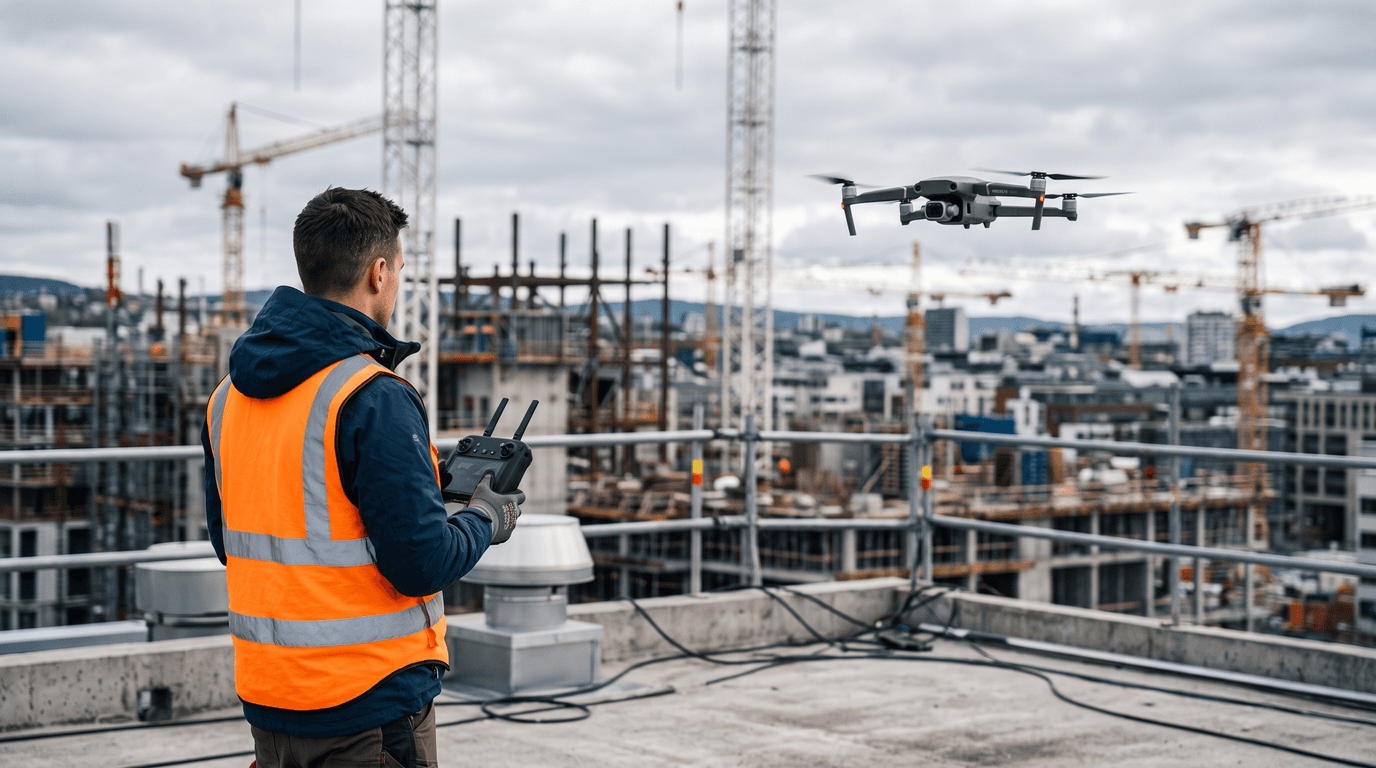
Construction and infrastructure. Progress documentation, stockpile volume measurement, and structural condition surveys of bridges, towers and roofs. This is close-to-object flying near people and built-up areas — squarely A2 territory with a C2-class drone in most cases.
Agriculture. Multispectral imaging for crop-health mapping and, in some operations, spraying. Field-scouting flights over open land are often lower-risk than urban inspection work, but spraying drones are heavy and payload-carrying — which routinely pushes the operation into Specific category and its own risk assessment.
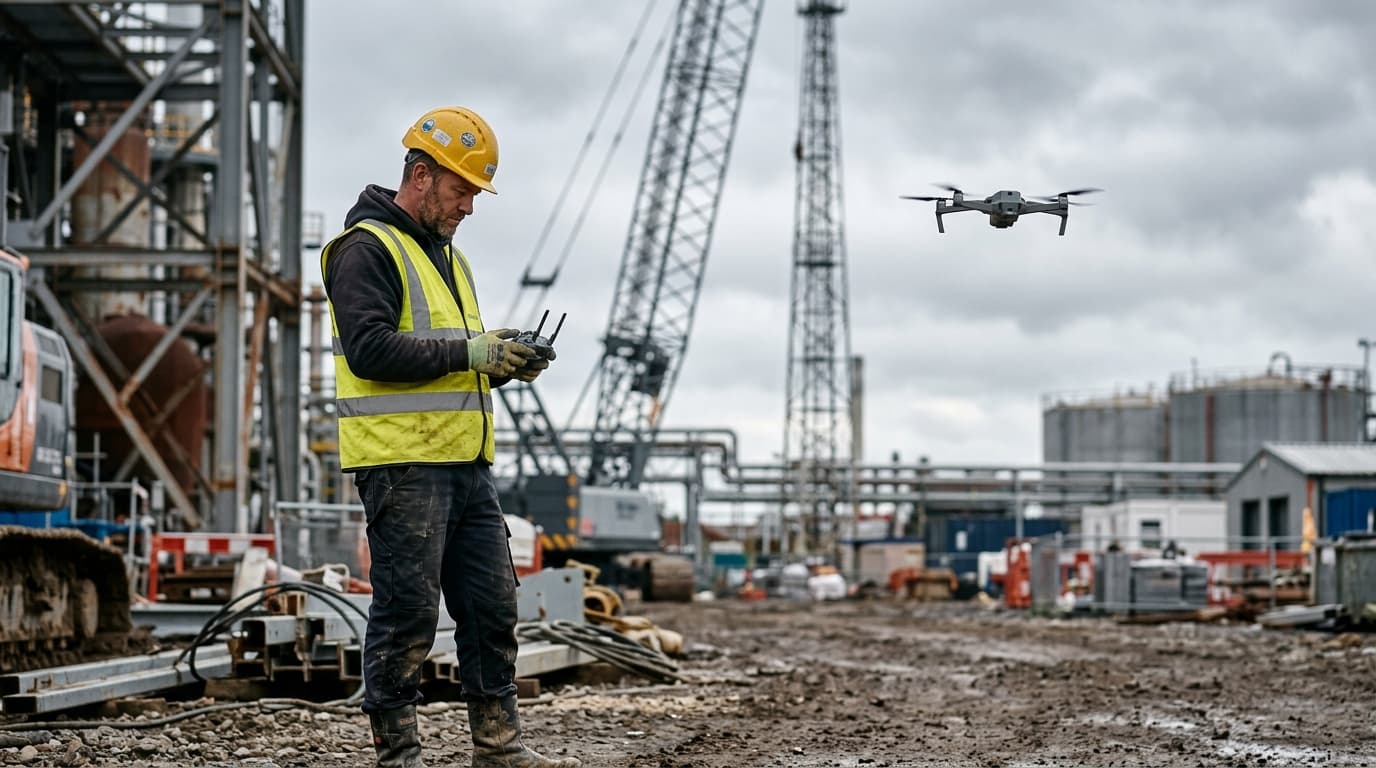
Inspection. Utility lines, wind turbines, solar arrays, pipelines, cell towers. The pitch is the same across all of it: a drone reaches hazards a technician would otherwise climb to, at a fraction of the downtime. Inspection work near people or infrastructure needs A2; BVLOS or beyond-120 m corridor work along a pipeline or power line needs Specific category, typically under a standard scenario.
Media, real estate and events. Real estate, tourism and event photography remain the most visible drone jobs, and often the easiest entry point — much of it stays inside A1/A3 limits if the operator avoids flying over uninvolved people.
Public safety. Fire services, search-and-rescue teams and some police units use drones for scene overview, thermal search and situational awareness. These programs typically run under national exemptions and operator-specific authorisations rather than a generic commercial path — worth knowing about, but not where a freelance pilot starts.
Logistics. Package delivery gets the most press but remains the least fielded category on this list — the actual flying happens under Specific-category permits and pilot programs, not as a routine commercial-pilot job you can walk into today. Treat delivery as an emerging niche to watch, not a current hiring pipeline.
What these roles have in common
Underneath the variety, three things repeat everywhere on this list. First, certification: every paid flight in the EU sits under the same Open-Specific-Certified framework, and the entry point is A1/A3 regardless of industry. Second, judgement the exam does not test — reading wind, obstacles and a job site well enough that a client trusts you with a second booking. Third, the deliverable is rarely the flight itself; it is the data, image or report that comes out of it. A surveyor sells a point cloud, not flight time.
How to position yourself
Pick a vertical before you pick equipment. "Drone pilot" is not a job description a client searches for — "roof inspection for property managers" or "crop-health mapping for a specific region" is. Build the qualification that vertical actually needs (A2 covers most close-range work; Specific category is a later step, not a starting one), then build a small portfolio inside that niche rather than a general reel. If the business side — pricing, contracts, insurance — is still unclear, that groundwork is covered separately in how to start a drone business.
What matters now
Most paid drone work in Europe still runs on the same two certificates: A1/A3 as the floor, A2 for anything close to people or buildings. Surveying, construction, inspection and agriculture are the fielded, hiring-today fields; public safety runs on its own authorisation track; delivery is real but still mostly a pilot-program story, not a job posting. Get the category right for the work you actually want, then build the niche skills on top of it.
Ready to start? Prepare for the certificate every path on this list depends on with the A1/A3 course.