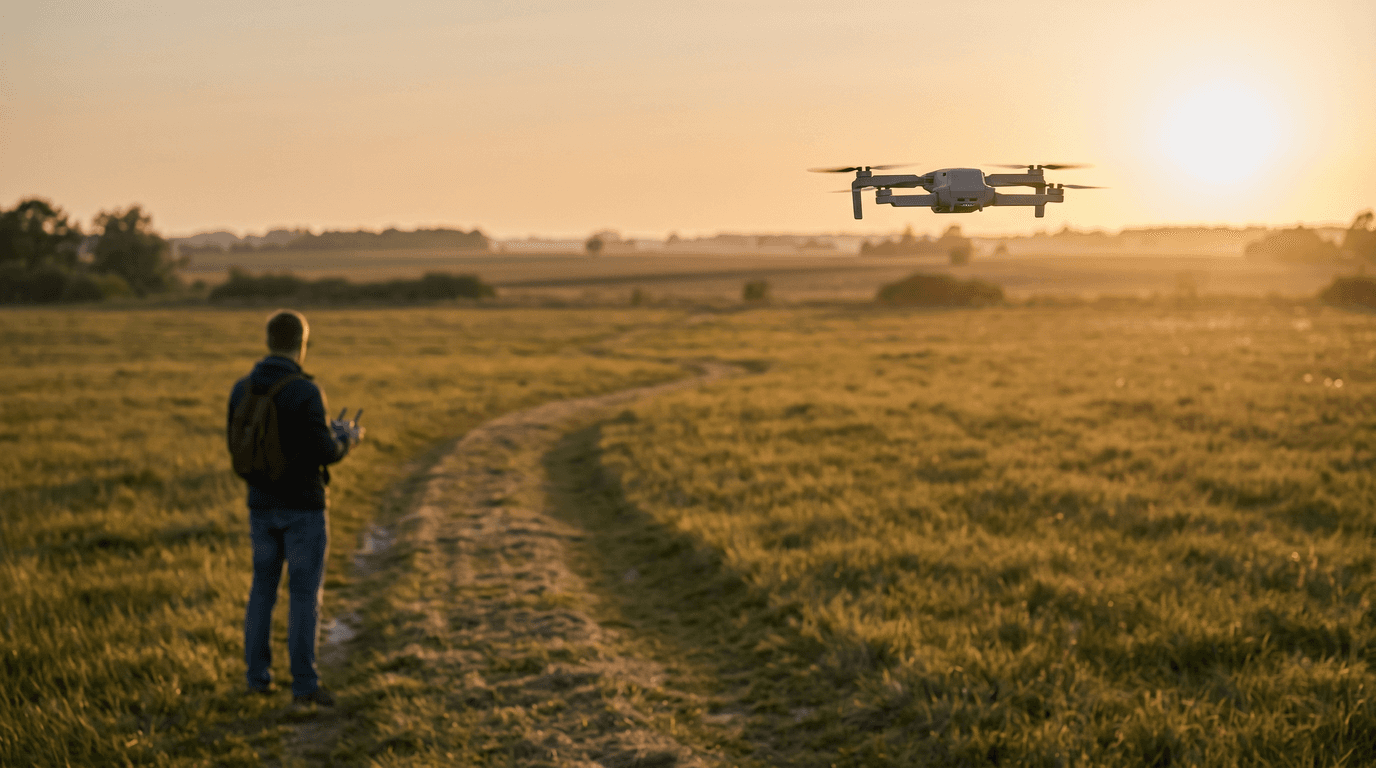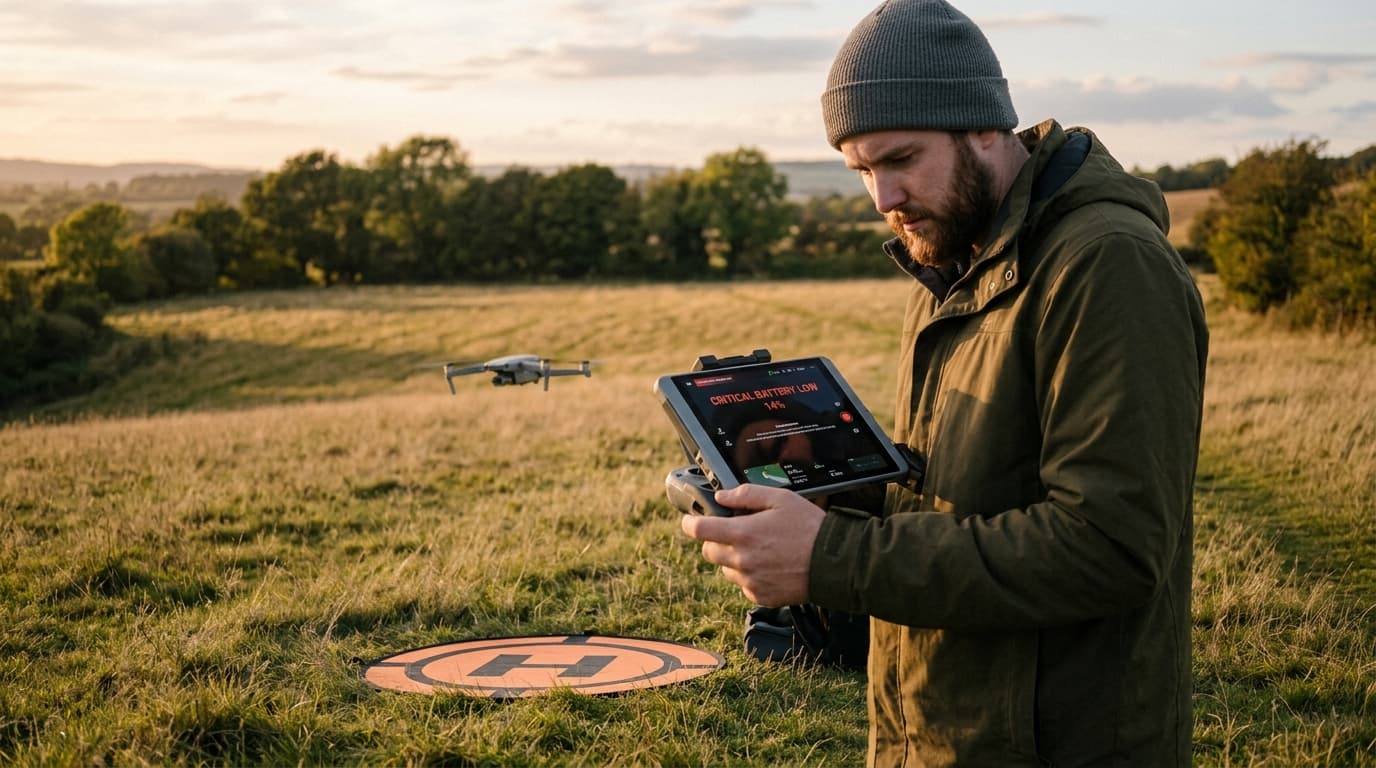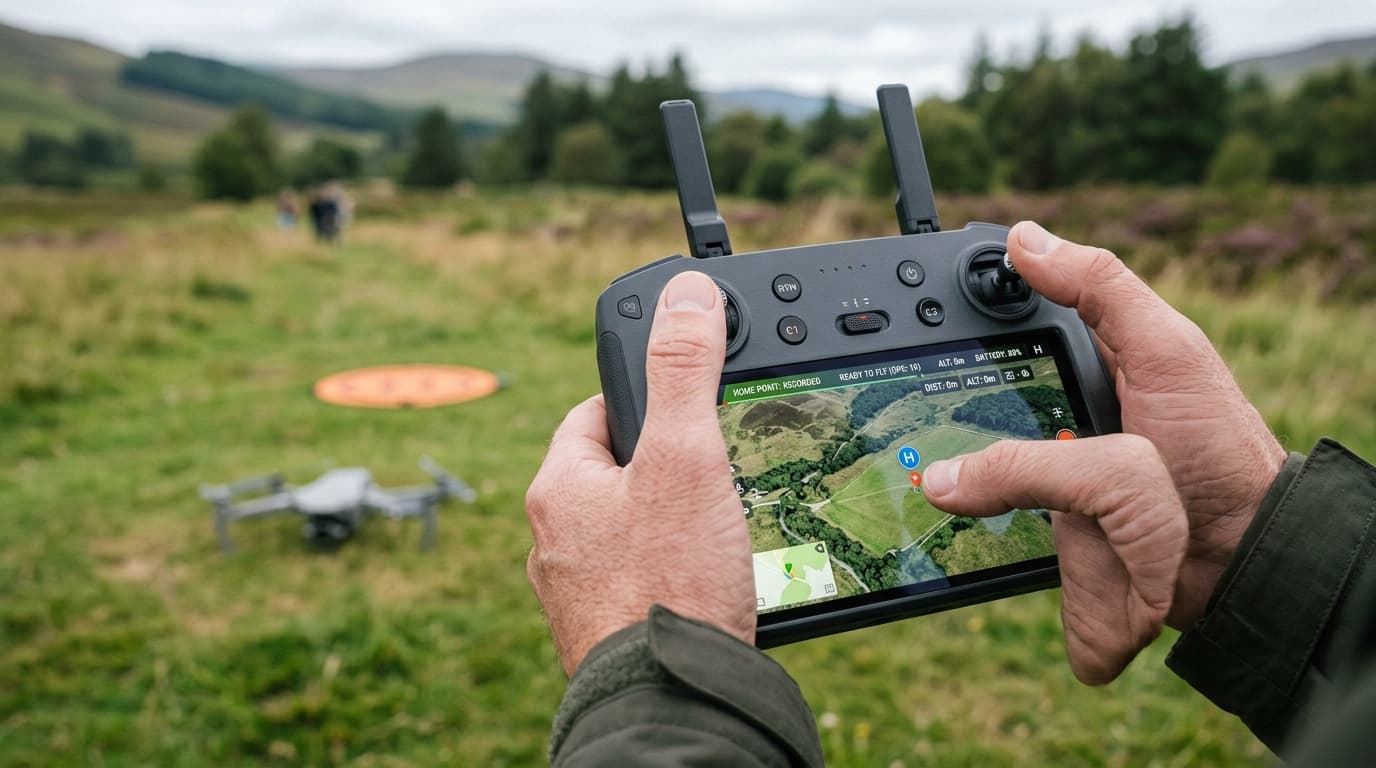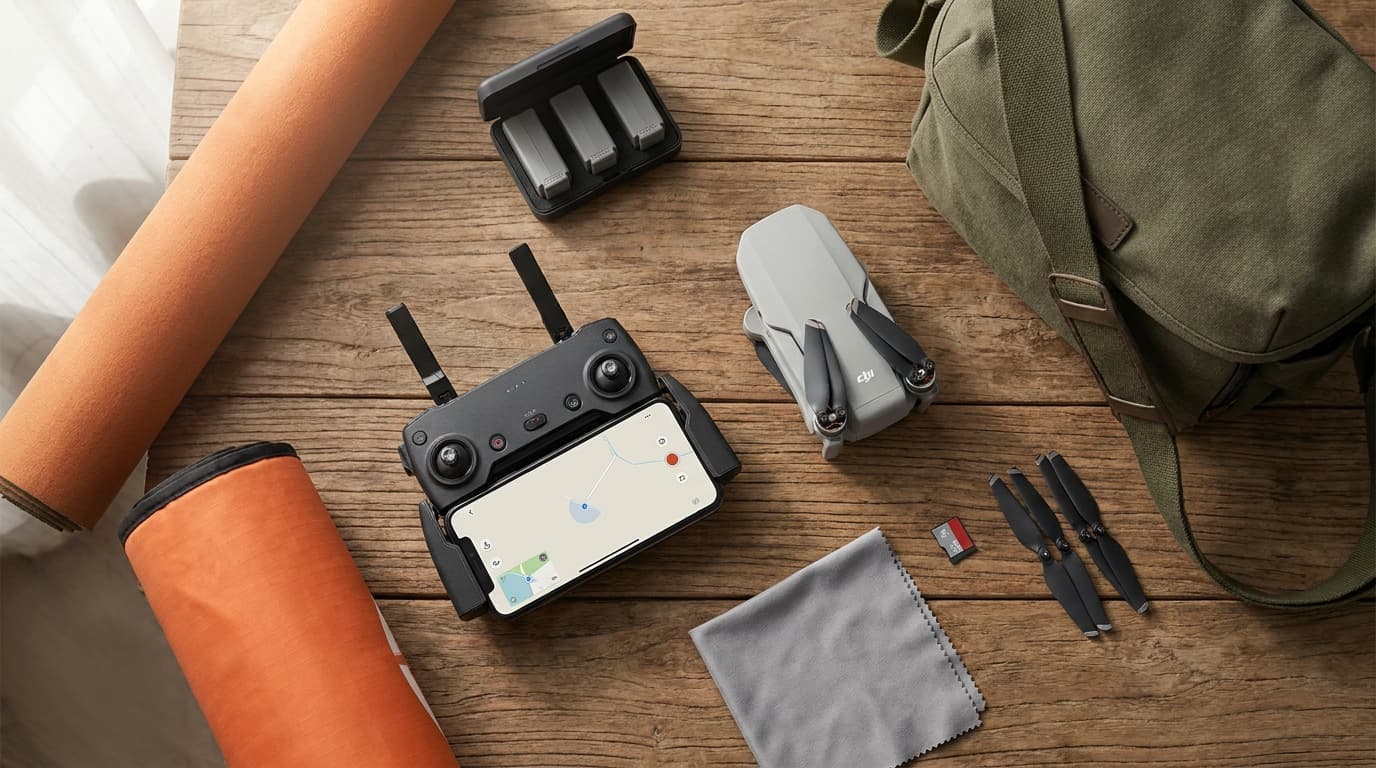
The flight bag is where most aborted sessions are actually lost — not in the air, but at the car, when you realise the thing you need is on the kitchen table at home. A flat spare battery, a forgotten controller cable, an SD card still in the laptop: none of it is dramatic, all of it ends the flight. Packing for a drone flight is a checklist like any other, and it is worth building once and reusing every time.
The core kit — nothing flies without it
Start with the items that make a flight physically possible:
- the drone, propellers on and undamaged
- the controller, and — where the model needs it — a phone or tablet plus the exact cable that connects them (the wrong adapter is a common trap)
- charged batteries — the aircraft pack, the controller, and the phone or tablet
- a memory card with space on it, seated in the drone, not left in a card reader
Check each of these the night before, not in the car park. A charged battery at home is worth more than a fast charger you forgot to pack.
Power and spares decide how long you stay in the field
One battery is one short flight. What extends a session, and what rescues a ruined one:
- spare aircraft batteries, charged and stored safely — loose LiPo packs in a bag are a fire risk, so use a fireproof pouch or the manufacturer's case
- spare propellers and the small tool to change them; a nicked prop is a five-minute fix at the field or a scrubbed flight at home
- a power bank for the phone or tablet — the mapping app and the video feed drain it fast
- the charger, if the session is long enough to top up between flights
In cold weather the maths changes: batteries lose usable capacity, so pack more of them and keep them warm until launch. The full story is in drone batteries in the cold.
The paperwork you must be able to show
This is the part beginners forget, because it is invisible until someone asks. In Latvia, a person flying in their own name is both the UAS operator and the remote pilot, and both registrations are mandatory. Two practical consequences for the bag:
- the drone must carry your operator number (
LVA…), readable without tools — on the airframe, or in the battery compartment if it does not fit. Confirm the marking is still there and legible before you drive out. - keep your operator registration and your remote-pilot / A1–A3 competency proof accessible — on the phone is fine — along with insurance documents if your operation needs them.
None of this is heavy; all of it turns a routine field check into a problem when it is missing. The legal background behind these numbers sits in choosing your first drone.
Site kit that saves the footage and the aircraft
The extras that separate a clean session from a frustrating one:
- a landing pad — on a dry field it keeps dust and grit out of the motors and gimbal, and it marks a clear take-off point
- a lens cloth and, if you shoot video, ND filters for even exposure in bright light
- prop guards if you are still early on the skill ladder or flying near obstacles
- the gimbal cover or transport lock, so the camera survives the drive both ways
- a notebook or phone note for the geo-zone result and any authorisation reference
Weather and comfort are flight-safety items
Cold hands fly worse, and a pilot squinting into the sun loses the aircraft. Pack for the conditions you actually briefed:
- layers and thin gloves you can still work the sticks in
- sun protection — a cap and a way to shade the screen; a black dot against a bright sky is hard to track
- water, on any session longer than a quick hop
If you have not read the weather yet, that is the first gate, not the last — the pre-flight weather briefing comes before the bag is even packed.
A phone that can actually check the airspace
Your phone is a flight instrument, not just a screen. Before leaving:
- confirm you can reach the official Latvian source — airspace.lv/drones — and that the airspace check is done for the exact spot
- keep the can-I-fly-here map bookmarked for a fast on-site lookup
- carry enough battery and signal to re-check if you move to a new location
What matters now
A drone bag is a physical version of the pre-flight checklist: pack it once, in order, and the same forgotten items stop ending your flights. The pilots who improvise their kit are the same ones who make the classic beginner mistakes — flat spares, no landing spot, papers left at home. If you are packing this bag while still working toward the exam, the course covers the operational rules in exam order and the practice trainer drills them until the pass mark is routine.