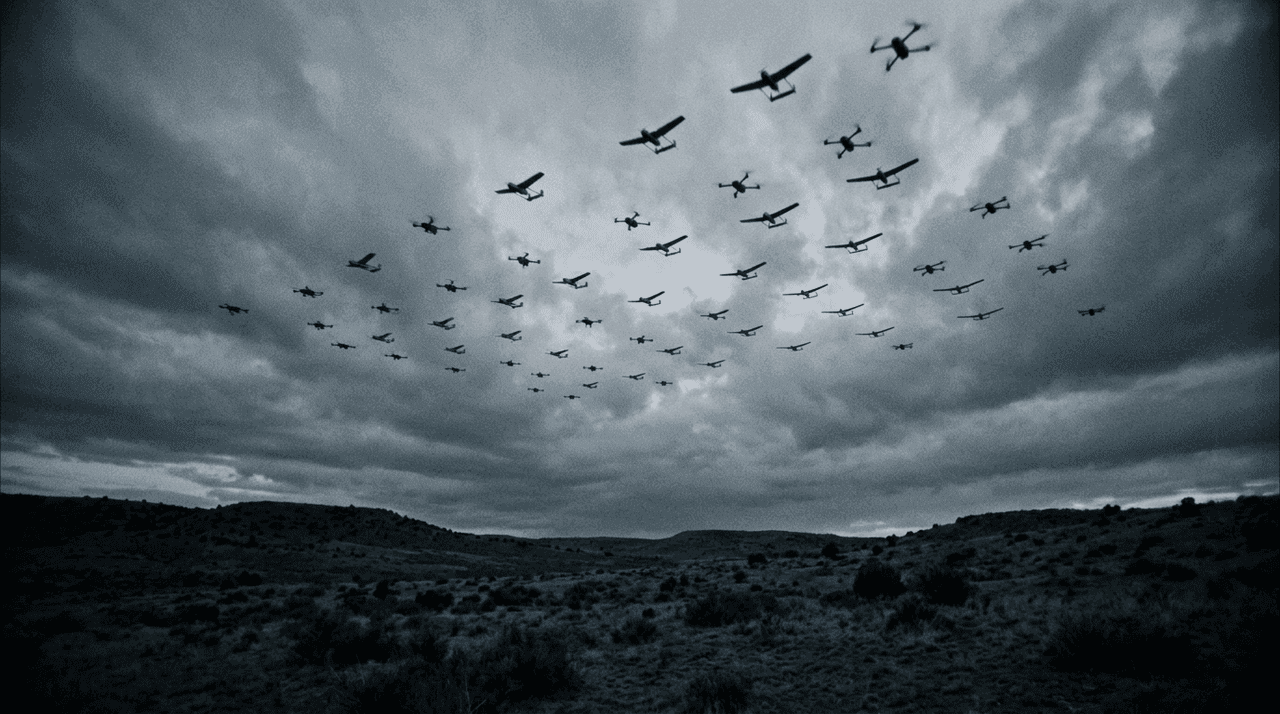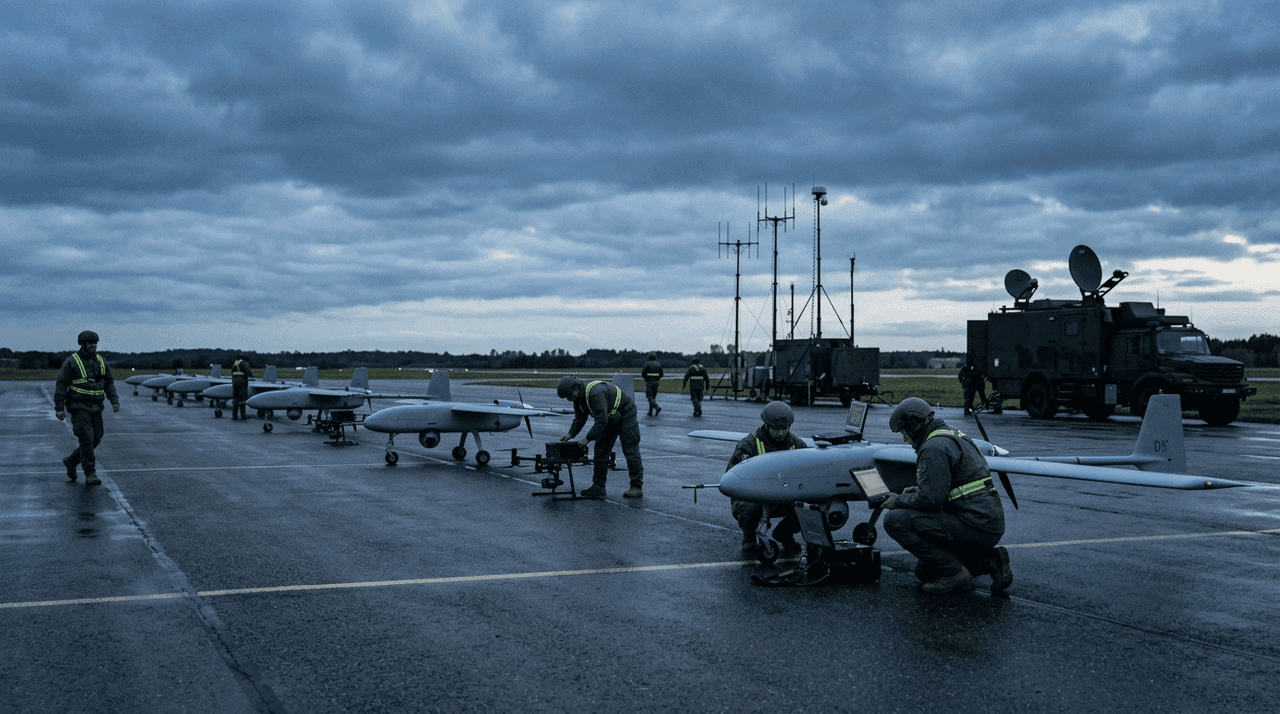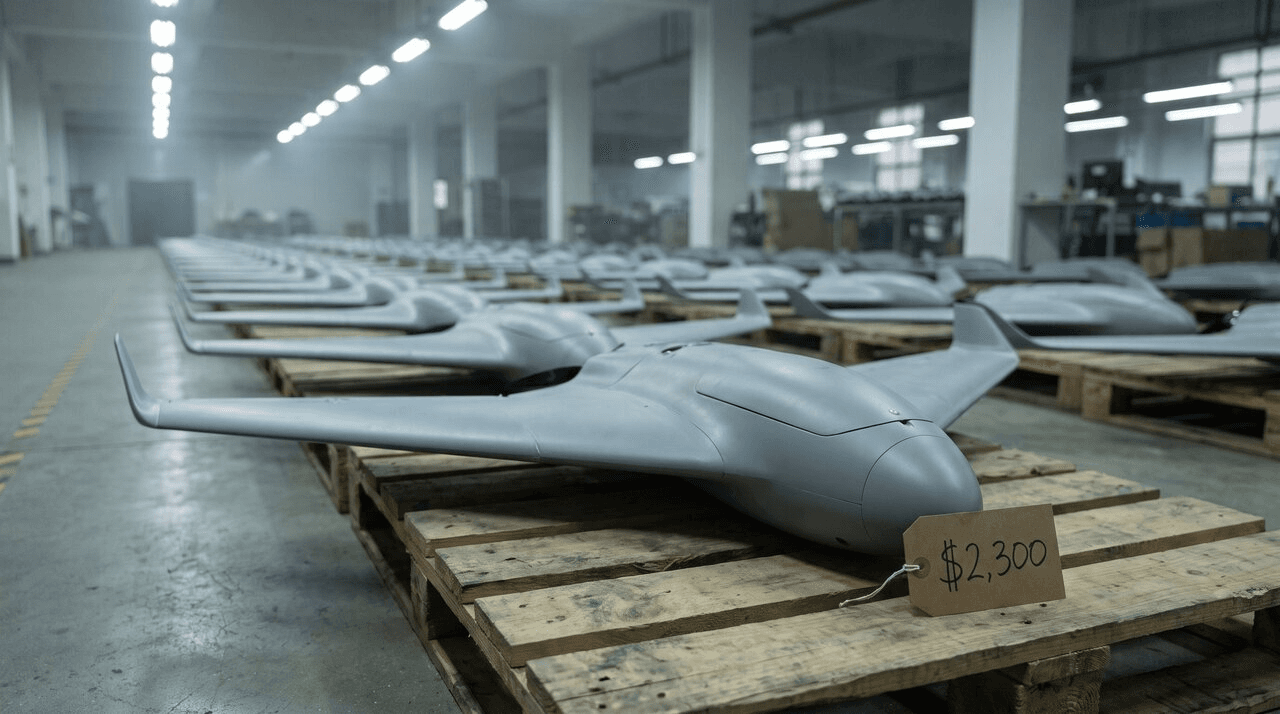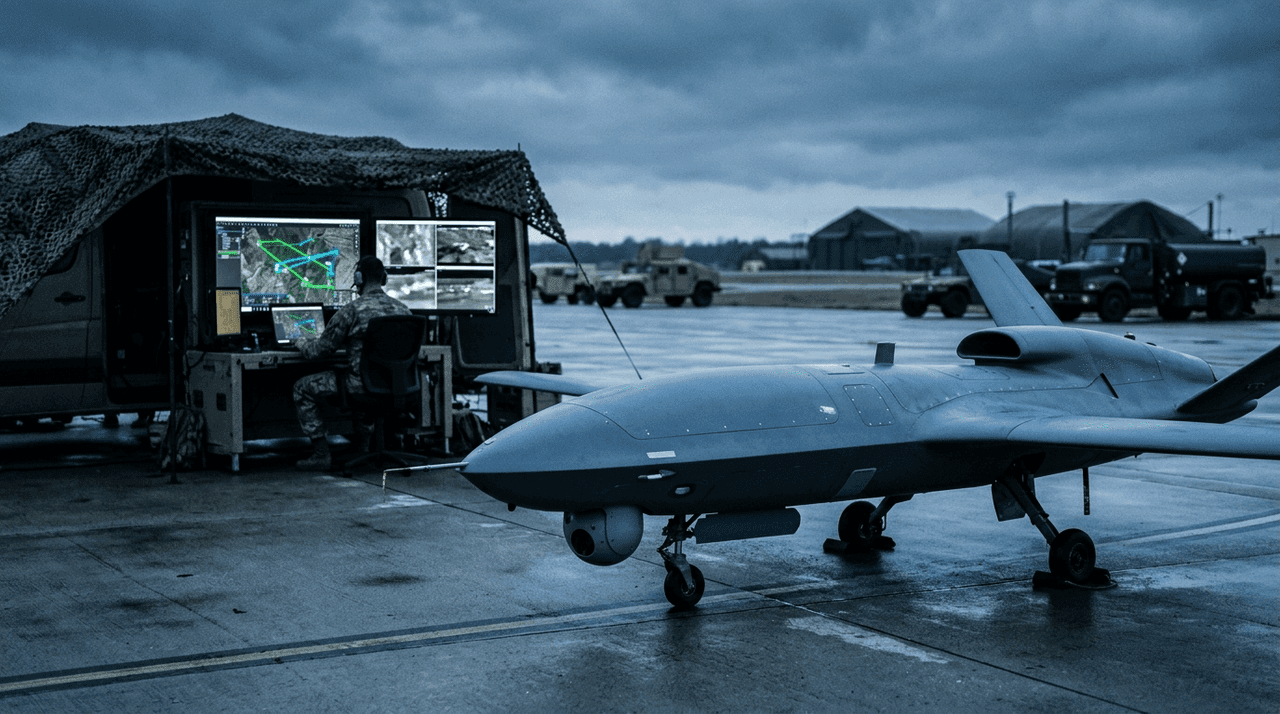
Autonomous combat UAVs are getting attention not because armies suddenly want machines to replace fighter pilots, but because more and more of them see autonomy as the only practical way to add airpower in bulk, spread out the risk, and stretch a small number of expensive crewed aircraft across a much bigger combat job.
That is what makes 2026 worth noticing. The rise of autonomous combat UAVs is no longer just a story about the future. It has turned into a story about procurement, architecture, and doctrine. The U.S. Air Force is testing open mission autonomy through its Collaborative Combat Aircraft ecosystem. General Atomics now has an aircraft with an official YFQ-42A designation inside that CCA effort. The U.S. Navy is publicly showing AI-enabled autonomy with a human keeping tactical watch over future collaborative aircraft. The common thread across all of this is not "pilotless fighters tomorrow." It is controlled autonomy inside a team that a human still leads.
Autonomous combat UAVs are mostly a question of force design
The easiest way to misread this topic is to boil it down to one aircraft. A better view is to see autonomous combat UAVs as a force-design answer to several problems happening at once:
- crewed fighters are expensive and there are never enough of them
- high-end air combat needs more sensing and more weapons than one aircraft can comfortably carry
- losing a crewed aircraft and losing an uncrewed one mean very different things, both militarily and politically
- autonomy can ease the load of managing many aircraft in one package
- open architectures let mission systems evolve faster than the old, slow aircraft cycles allow
This is why Collaborative Combat Aircraft matters so much as a term. It describes the real direction far better than the old fantasy of a fully independent robot fighter. These aircraft are built to work with crewed aircraft, not to fight alone as autonomous duelists.
CCA is the clearest sign that combat autonomy is going mainstream
The Air Force's 2026 update on validating open architecture and growing the CCA ecosystem is one of the strongest official signs that autonomous combat UAVs are becoming part of real planning.
The service talks about government-owned reference architectures, mission autonomy standards, and a wider pool of vendors, all meant to speed up integration and innovation. That matters because combat autonomy is not only about the airframe. It is about whether the autonomy software, mission systems, sensors, and payload logic can keep evolving without locking the force into one narrow path.
That push toward open architecture points to something deeper. The rise of autonomous combat UAVs is as much about software that can move between platforms and slot into a mission as it is about the shape of the airframe.
The YFQ-42A designation matters because it turns a concept into a real program
General Atomics' 2026 announcement that the U.S. Air Force gave its CCA aircraft the YFQ-42A designation is a big symbolic step. It marks the move from vague capability talk to a concrete program and testing identity.
That does not mean autonomous combat UAVs are suddenly mature in every operational sense. It does mean the idea no longer lives only on the white-paper level. The platform now sits inside a visible Air Force program structure tied to next-generation force design.
The practical takeaway is that combat autonomy is now becoming a normal part of formal military categories. That matters for industry, training, doctrine, and budget debates.
Autonomous combat UAVs are coming because crewed airpower is too scarce to do everything alone
The strongest driver behind autonomous combat UAVs is not novelty. It is the pressure on capacity.
Modern air forces face a hard balance:
- crewed fighters are extremely capable but there are too few of them
- generating sorties is expensive
- training pilots takes years
- staying alive in contested airspace gets harder every year
- the amount of sensing, relaying, jamming, and strike support needed around one crewed package keeps growing
Autonomous uncrewed aircraft answer that pressure by widening the package without forcing a one-for-one increase in the crewed fleet. That is why the CCA model matters so much. It is not just about swapping one aircraft for another. It is about how much combat power a small number of crewed aircraft can direct.
Human-machine teaming is the core, not a phase to pass through
A common mistake is to talk about human-machine teaming as if it were just a short stop on the road to full autonomy. The current direction suggests the opposite.
The Navy's January 2026 demonstration of AI-enabled autonomy for future collaborative combat aircraft is telling because it centers on tactical situations where a human watches, adjusts, and guides the autonomous system as conditions change. The message is not "the human is about to vanish." The message is "the human's role is being rebuilt."
That rebuild matters because high-end air combat creates exactly the kind of workload where autonomy can help:
- route management
- formation behavior
- support with sensor tasking
- timing and positioning
- cutting the mental cost of controlling more aircraft
So the military value of an autonomous combat UAV does not rest only on what the aircraft can do by itself. It rests on whether a human can understand it, trust it, and redirect it under pressure.
The first important job may be escort, not solo strike
Public debate often pictures autonomous combat UAVs as robot attackers operating on their own. The nearer-term value is probably less dramatic and more useful.
An autonomous combat UAV can earn its keep as:
- an escort that extends how far the package can see
- an extra weapons carrier
- a stand-in jammer or electronic-warfare companion
- a decoy and deception layer
- a forward scout in a higher-risk zone
These roles work because they back up the crewed force without demanding full faith in a machine acting on its own. This is how militaries usually take on disruptive capability: first as a partner with clear limits, then as a more trusted and more autonomous node.
Autonomous combat UAVs change how cost and risk are spread
High-end airpower has always faced an ugly bit of arithmetic: advanced crewed aircraft are extremely capable, but they are also expensive to buy, expensive to keep flying, and politically costly to lose.
Autonomous combat UAVs change that math in several ways.
First, they can carry the risk forward. A force can push sensing, weapons, deception, or forward presence onto uncrewed aircraft in situations where exposing a crewed fighter would cost too much.
Second, they can pack the package tighter. A small number of crewed aircraft can potentially direct or watch over a larger number of uncrewed teammates.
Third, they change the cost picture. The goal is not necessarily to make the whole force cheap. The goal is to stop leaning on the most expensive aircraft in inventory to produce every last bit of combat effect.
This is why the rise of combat UAV autonomy is not just a technology story. It is a story about how risk gets shared out.
Air combat autonomy also changes the math of how packages are built
Traditional fighter packages are limited by how many pilots are available, how ready the aircraft are, how much they depend on tankers, and the sheer cost of pushing high-end crewed aircraft into every part of the mission.
Collaborative autonomous UAVs can change that math by letting planners hand out roles differently:
- crewed aircraft can stay farther back from the highest-risk edge
- uncrewed teammates can carry extra sensors or weapons
- commanders can make the package denser without matching it pilot-for-pilot
- some missions can absorb more losses
None of this makes air warfare simple or cheap. But it does open a different way to build up mass. That is one reason autonomous combat UAVs matter strategically even before they are fully mature.
Open autonomy architectures may matter more than any single airframe
One of the deeper shifts in 2026 is that militaries are trying not to tie combat autonomy to one closed, proprietary software stack.
The Air Force's public language about open mission systems and open autonomy standards matters because it points to a bigger goal: keep the ecosystem flexible enough that new vendors, behaviors, mission apps, and payload integrations can come in faster.
That is strategically important for three reasons:
- autonomy software will evolve too quickly for closed, long-cycle models
- different missions will need different autonomous behaviors
- coalition and multi-vendor settings reward systems that integrate rather than isolate
If this works, the key competitive question for autonomous combat UAVs may shift from "who builds the best-looking aircraft?" to "who builds the most adaptable autonomy ecosystem?"
Open architecture matters because autonomy will not sit still for long
Combat autonomy is not a feature you can freeze once and leave alone for a decade. Threats, tactics, sensors, and countermeasures all move too fast.
That means militaries need systems that can absorb:
- new autonomous behaviors
- updated mission logic
- changing threat libraries
- reworked human-control interfaces
- different sensor and payload combinations
In this sense, open architecture is not a software preference. It is a survival requirement for the program itself. A closed autonomy ecosystem may do well at first and still fail in the long run if it cannot adapt at wartime speed.
Combat autonomy is not only an airframe issue, it is a control issue
A useful combat UAV is not defined only by whether it can fly on its own. It is defined by whether commanders can actually use it in a coherent way.
That means real combat autonomy has to solve:
- task assignment
- retasking in mid-mission
- data sharing
- safe deconfliction with crewed aircraft
- confidence and fallback behavior
- being able to explain itself under tactical stress
This is why military autonomy programs care more and more about interfaces and control logic. A platform that can technically do many autonomous things but cannot be understood or redirected at combat speed will struggle to scale.
Trust is becoming the gating factor
Plenty of technologies can be demonstrated long before anyone can trust them. Autonomous combat UAVs are entering exactly that phase.
Trust here does not mean blind confidence. It means commanders and operators need solid answers to practical questions:
- what will the aircraft do when the situation changes?
- how does it behave if the link degrades?
- when does the human step in?
- how visible is the aircraft's decision logic to the operator?
- how are unsafe or unintended behaviors kept in check?
Without those answers, autonomous combat UAVs may stay technically interesting but brittle in operation. That is why 2026 programs are paying so much attention to validation, reference architectures, supervised autonomy, and mission behaviors with clear limits.
What autonomous combat UAVs may actually do first
People often jump straight to autonomous dogfighting. That is too narrow.
The more likely early combat roles include:
- forward sensing and scouting
- stand-in jamming or EW support
- extra weapons carriage
- decoy and deception roles
- escort or screening around crewed packages
- controlled strike support in contested airspace
These roles matter because they play to the strengths of autonomy without demanding instant faith in a machine making every lethal call on its own. They also fit how militaries usually adopt disruptive capability: first within clear limits, then expanding as trust and infrastructure improve.
The rise of autonomous combat UAVs will also reshape training
Once collaborative autonomous aircraft reach operational units in real numbers, both pilot training and mission-command training have to change.
Crews will need to learn:
- how to command several autonomous teammates
- how to read autonomous behavior under pressure
- how to retask aircraft quickly
- how to work with software-defined mission packages
- how to keep crewed and uncrewed aircraft apart on tight timelines
This may turn out to be as important as the aircraft themselves. A force that buys autonomous combat UAVs without building the right training will own hardware without owning the skill to use it.
The rise of combat autonomy also creates a sustainment problem
People sometimes talk about autonomous combat UAVs as if autonomy makes the force structure simpler. In one sense it does. In another sense it makes sustainment harder.
A credible force will have to manage:
- software updates and verification
- mission-data packages
- autonomy testing cycles
- secure communications and datalinks
- sensor integration and recalibration
- mixed fleets with different autonomous behaviors
So the future combat UAV fleet is not only a pilot or operator problem. It is a test, software, security, and field-support problem.
Procurement logic is changing along with the aircraft
Autonomous combat UAV programs are also forcing a change in how procurement works. Traditional fighter buys assumed long timelines, slow upgrade cycles, and very high walls between design phases.
That model fits poorly with autonomy-heavy systems, where software, interfaces, mission logic, and payload integration may need to iterate faster. This is one reason the public Air Force focus on growing the ecosystem matters. The force is not only buying aircraft. It is trying to buy the ability to adapt.
That shift will likely reward:
- vendors that integrate well with open standards
- faster software iteration
- modular payload and mission-system design
- clearer testing and verification pipelines
In other words, the rise of autonomous combat UAVs is not only changing air combat. It is changing what people expect from buying combat aircraft.
Why 2026 matters even though the final form is still unsettled
Some will argue the autonomous combat UAV story is still immature. In one sense that is true. The final doctrine, force structure, and technical maturity are not settled.
But 2026 still matters because several things are already visible:
- a formal designation and recognition of the category
- efforts to validate open architecture
- public demonstrations of AI-enabled collaborative control
- tighter ties between autonomy and next-generation airpower planning
Those are not random signals. Together they show autonomy moving from research talk into real force design.
What matters most over the next few years
The decisive question is not whether autonomous combat UAVs will exist. They already exist as real programs. The more important questions are:
- how quickly they can be folded into real units
- how trustworthy supervised autonomy becomes under stress
- how open the architecture stays to competition and iteration
- how well they fit with pilot training and command workflows
- how far militaries can push autonomous teamwork before policy, trust, or technical friction slows them down
Those questions will decide whether autonomous combat UAVs become a niche add-on or a lasting redesign of combat aviation.
Coalition use will be one of the hardest tests
Autonomous combat UAVs may look convincing in a single-service demonstration, but coalition use is a tougher standard.
A coalition setting raises extra questions:
- how mission data gets shared
- how different autonomy stacks work together
- how command authority is divided
- how trust holds up across national rules and technical baselines
This matters because the most strategically important air campaigns are often coalition campaigns. A system that does well alone but integrates poorly with allies may stay tactically interesting and strategically limited.
Testing discipline will decide whether the category matures credibly
Autonomous combat UAVs will not become lasting military capability through demonstrations alone. They will need a disciplined cycle of validation, red-teaming, software revision, and operational testing.
That cycle has to answer questions like:
- how autonomy behaves when the link is lost
- how it responds to deception or degraded sensing
- how operators read its failure modes
- how fast updates can be fielded without creating new risk
In practical terms, the rise of autonomous combat UAVs is also the rise of a much heavier testing and assurance burden.
Exportability and coalition rules may shape the market as much as engineering
A final factor in the rise of autonomous combat UAVs is that the most influential programs may depend not only on technical performance, but on how exportable, governable, and coalition-friendly they become.
If one autonomy stack can be trusted, updated, and fielded across allied users more easily than another, that advantage may matter as much as raw airframe performance. In that sense, the rise of combat autonomy will be shaped by policy architecture, not only by software architecture.
What will separate serious programs from impressive demos
The difference between a real autonomous combat UAV program and an impressive demonstration will come down to whether the system can survive contact with doctrine, testing, coalition integration, and the reality of sustainment. That is the line where combat autonomy stops being interesting and starts becoming durable.
FAQ
What are autonomous combat UAVs?
They are uncrewed combat aircraft built to fly military missions with varying levels of onboard autonomy, often working with crewed aircraft and under human supervision.
Are autonomous combat UAVs replacing fighter pilots?
Not in the near term. The stronger trend is teamwork with crewed aircraft rather than full replacement.
What is Collaborative Combat Aircraft?
CCA is a U.S. Air Force approach to fielding uncrewed aircraft that can work alongside crewed platforms as part of a larger combat system.
Why does open architecture matter for combat UAVs?
Because autonomy software, mission systems, and payload integration need to evolve faster than traditional aircraft development cycles allow.
What is the biggest challenge for autonomous combat UAVs?
Trustworthy human control over increasingly capable autonomous behavior in real combat conditions.
Conclusion
The rise of autonomous combat UAVs in 2026 is not mainly a story about taking humans out of air combat. It is a story about rebuilding airpower around teamwork, autonomy, shared risk, and software that can adapt. CCA, the YFQ-42A, the Navy autonomy demonstrations, and the open-mission-system work all point the same way. The future combat UAV is not just another drone. It is part of a broader effort to rebuild combat aviation around human-machine teams that can scale.