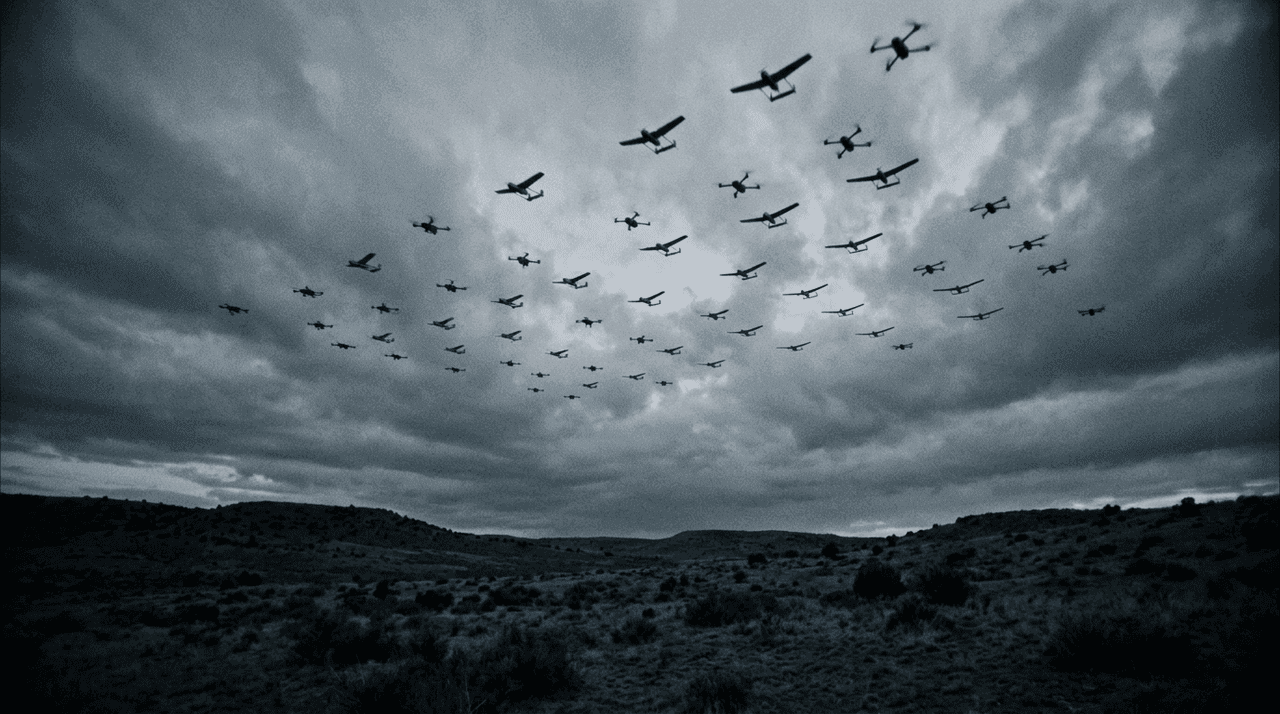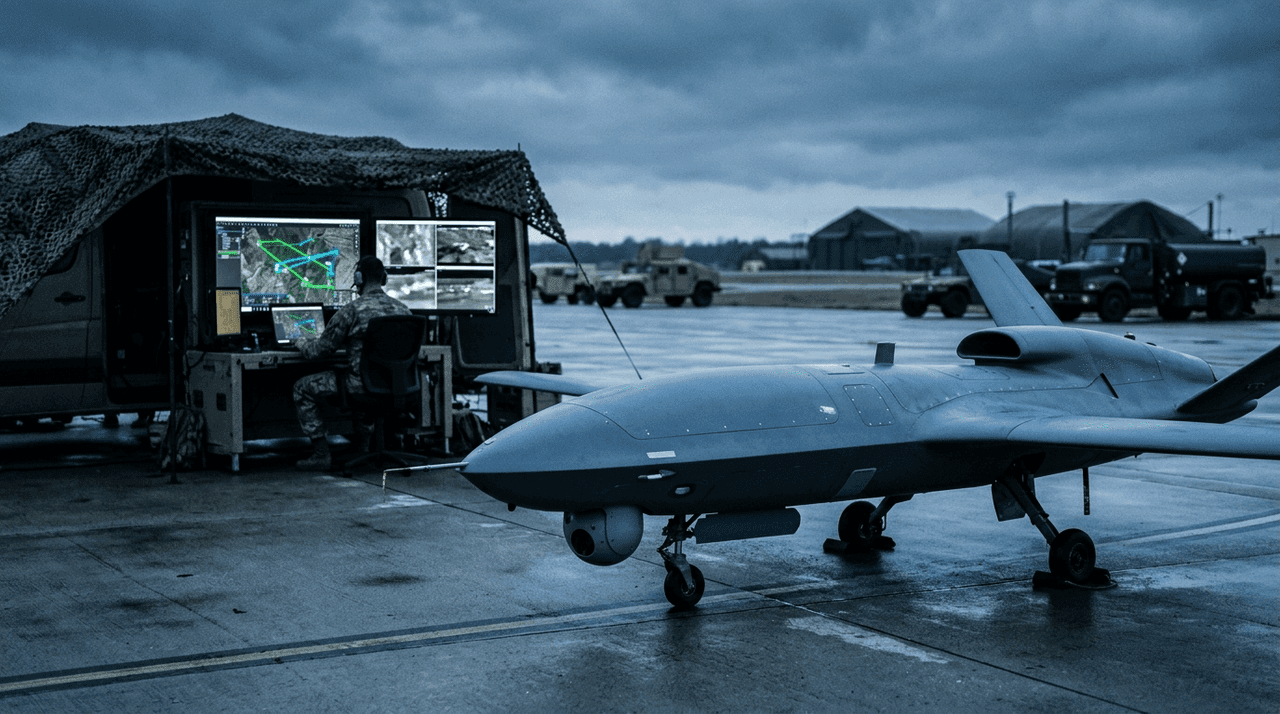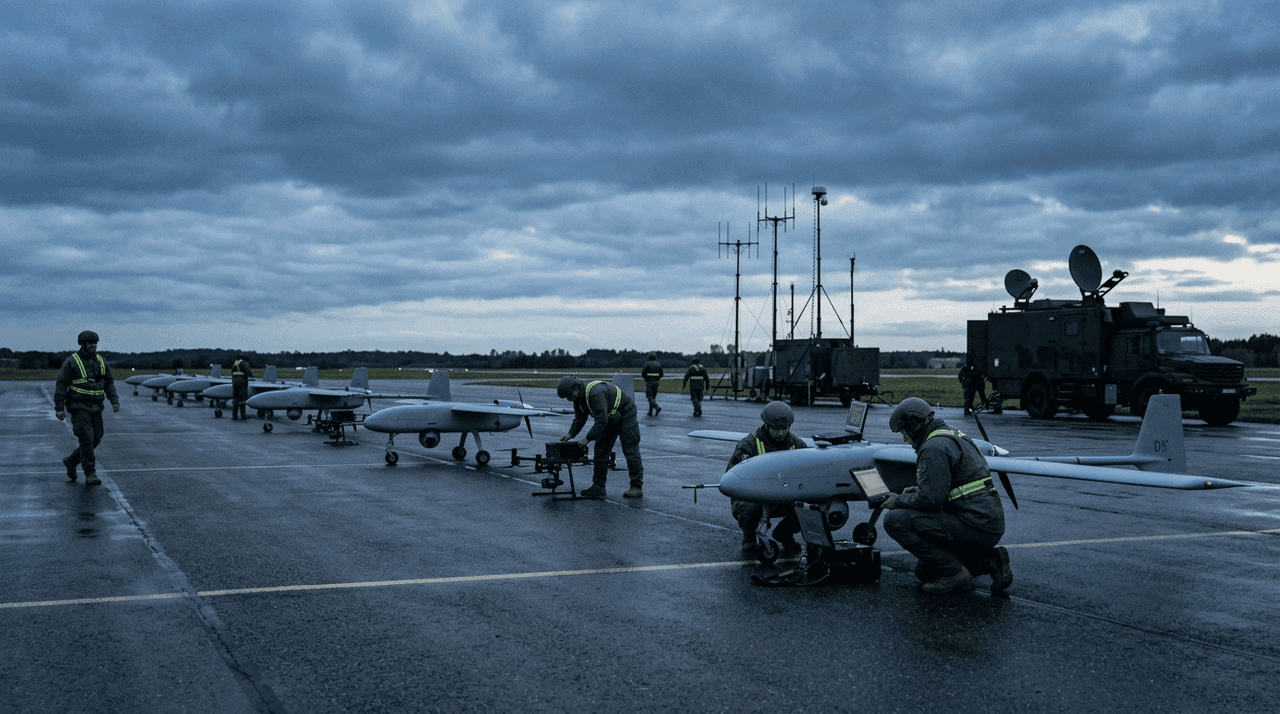
The biggest military drone trend in 2026 isn't one platform, one payload, or one dramatic combat video. It's the way scale, doctrine, procurement speed, and attritable autonomy are all coming together at once. Drones are no longer treated as accessories that support fires and reconnaissance. They're becoming a basic combat layer that armies now have to build into doctrine, buying, training, air defense, and industrial planning.
Official military and alliance material from 2026 all points the same way. The U.S. Army is rewriting doctrine around "drone dominance," speeding up launched effects, and setting up a UAS marketplace to buy mission-specific systems faster. DIU's Replicator effort keeps pushing all-domain attritable autonomous systems at operational scale. NATO is expanding multinational work on deep precision strike drones and still insisting that autonomy has to scale responsibly across allied systems. Taken together, these signals show the defining question is no longer whether drones matter. It's how fast forces can build doctrine and industrial capacity around them.
Trend 1: attritable mass is replacing the old obsession with exquisite platforms
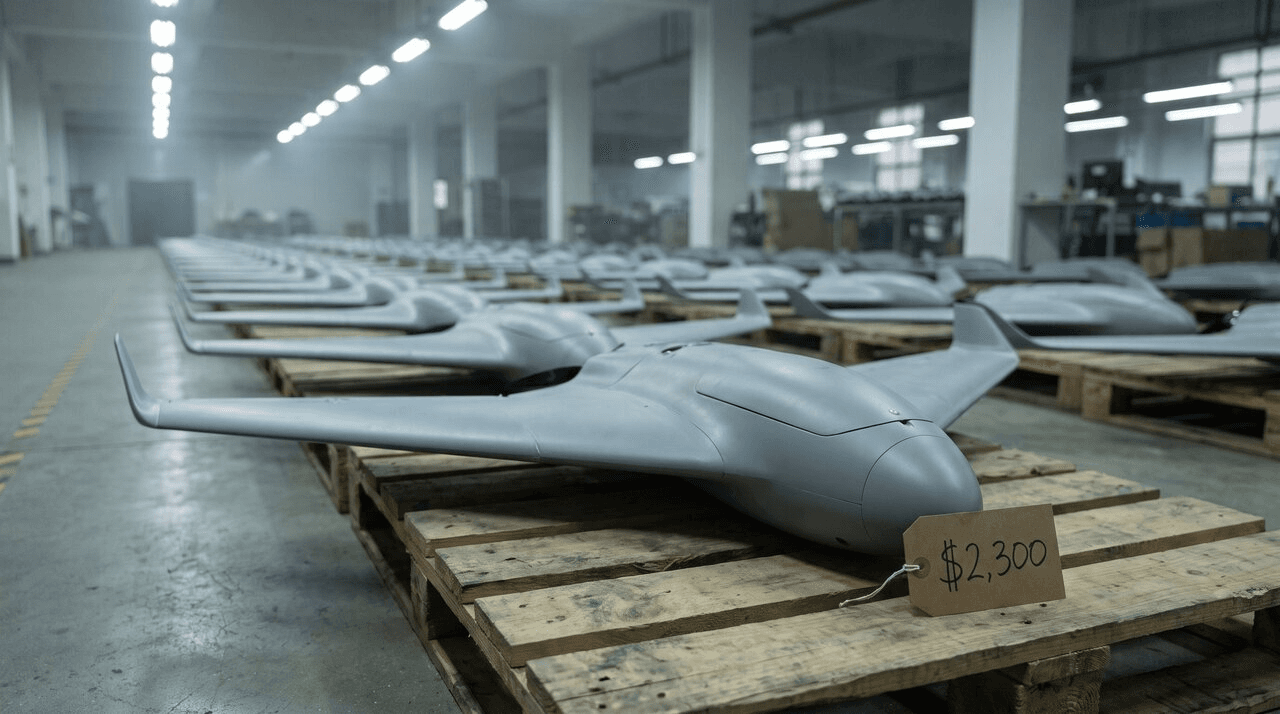
For years, military drones centered on relatively expensive aircraft built for specialized missions. That logic isn't going away, but 2026 is clearly about something else too: affordable mass.
Replicator is still the clearest official statement of that shift. DIU describes the effort as delivering all-domain attritable autonomous systems at scale, with the point being speed, volume, and less risk to people. That wording matters because it changes how militaries think about value.
The core questions now become:
- how many systems can be fielded quickly?
- how many can be lost without the mission collapsing?
- how fast can software and payloads be updated?
- how resilient is the supply chain behind the fleet?
This is a big change in how forces are built. Attritable drones aren't valuable because anyone is careless about losing them. They're valuable because they let forces create density, persistence, and tactical options without spending a tiny inventory of exquisite aircraft on every important job.
Trend 2: doctrine is finally being rewritten around drones, not just patched at the edges
One of the most important official developments in 2026 isn't a drone launch. It's doctrine catching up.
The Army's March 30, 2026 article on "drone dominance" says outright that the service is overhauling operational doctrine force-wide to fold in lessons from the heavy use of UAS. That's a serious institutional signal. It means drones are no longer treated as a narrow capability bolted on the side. They're changing field manuals, training publications, and concept work across the force.
This matters because the gap between drone experimentation and real doctrine has always been wide. In 2026, that gap is closing.
The doctrine rewrite affects:
- who is expected to use drones
- how units coordinate sensing and strike
- how counter-UAS fits into everyday operations
- how units protect movement from a constant threat overhead
- how logistics, signature management, and concealment are taught
The point is simple: militaries are moving from "using drones" to "organizing around the reality of drones."
Trend 3: procurement speed is becoming a combat variable
Slow buying is now a battlefield weakness.
The Army's April 2026 announcement of an online UAS marketplace matters because it admits exactly that. The service frames the marketplace as a way to overhaul drone buying, speed up mission-specific procurement, and deliver systems at "the speed of relevance." That phrase captures a real military problem. Drone technology, payload integration, autonomy features, and countermeasures now change far faster than traditional buying cycles.
This is one reason 2026 looks different from earlier eras of military drones. Planners aren't only comparing aircraft performance anymore. They're comparing how fast they can buy.
That trend has several consequences:
- more openness to commercial and COTS-derived systems
- more experimentation with shorter buying loops
- stronger demand for modularity and easy upgrades
- less patience for programs that take too long to deliver battlefield value
The institutional lesson is uncomfortable but clear. In modern drone warfare, the buying system is part of combat adaptation.
Trend 4: launched effects are moving from concept language toward fielded capability
"Launched effects" has been one of the most important doctrinal phrases in U.S. military drone work because it describes systems that sit between classic drones, loitering munitions, and networked remote effectors.
The Army's March 2026 article on speeding up long-range launched effects shows this category moving further into real force planning. The service named three industry partners to provide an initial long-range launched effects capability and tied the effort directly to its broader "Drone Dominance" agenda.
This matters because launched effects solve several military problems at once:
- deeper reach from maneuver formations
- distributed sensing and strike options
- lower-cost effectors than larger missile classes in some cases
- more flexibility in how effects are delivered and reassigned
In practical terms, 2026 is the year launched effects stop sounding like a future concept and start looking like a central category in the Army's drone architecture.
Trend 5: counter-drone work is now inseparable from drone expansion
Every serious military drone trend now has a defensive mirror.
As forces field more FPV systems, more loitering effects, more attritable aircraft, and more autonomous workflows, they also put more strain on their own defenses. That's why military drone growth in 2026 can't be separated from counter-UAS growth.
The trend isn't simply "more anti-drone systems." It's tighter integration between:
- sensing layers
- electronic warfare
- battle management
- kinetic defeat options
- doctrine for operating under a constant drone threat
This is one reason NATO's 2026 innovation work in Latvia and its wider autonomy planning matter. The alliance is now focused on testing, evaluation, and validation under realistic conditions, not just on concept papers. Military drone expansion and counter-drone adaptation are now one loop.
Trend 6: multinational programs are focusing more on deep precision strike drones
NATO's February 2026 announcement about new multinational capability cooperation initiatives matters because it shows where allied demand is going.
One of the new High Visibility Projects focuses specifically on innovative drone-based deep precision strike capabilities involving several Allies. That matters for two reasons.
First, it shows drones are no longer limited to short-range tactical roles in allied planning. Second, it shows cooperation is being built around cost-effective, scalable unmanned strike rather than a narrow boutique program.
That points to a wider 2026 trend: planners increasingly treat drones not just as ISR or local strike tools, but as part of larger precision-strike and operational-reach architectures.
Trend 7: industrial scale is becoming as important as platform performance
One of the defining truths of 2026 is that the factory is part of the weapon system.
This follows naturally from attritable mass, faster buying, and the doctrine rewrite. If forces want large numbers of expendable or semi-expendable systems, industrial scale becomes mission-critical. Production capacity, battery supply, electronics sourcing, payload integration, and software update cycles all become military variables.
Replicator points straight at this by stressing diverse suppliers and the scaling of commercially viable autonomy. The Army's marketplace effort points to the same issue from the buyer's side. Modern militaries don't only need better drones. They need faster, more adaptable production.
That means the 2026 military drone race is increasingly about:
- production depth
- vendor diversity
- simple field service
- how fast software ships
- how quickly designs can be iterated
Trend 8: drones are becoming a baseline combat layer across more echelons
Another major 2026 trend is organizational spread. Drone capability is moving lower and reaching wider.
The Army's force-wide doctrine shift shows this clearly. Drones aren't reserved only for specialized units anymore. They're becoming part of how more formations sense, strike, and survive.
That spread matters because it changes expectations at every level:
- small units expect local sensing and strike options
- higher echelons expect richer drone feeds and effects integration
- air defense units expect constant pressure from small UAS
- logisticians have to support higher drone consumption
- trainers have to handle a much wider base of operators
In other words, drones are becoming a normal part of military work rather than an exceptional asset.
Trend 9: autonomy is becoming operational, but still under human control
Autonomy is still a major trend, but the important change in 2026 is that it's becoming genuinely useful in operations rather than just impressive in a brochure.
NATO's autonomy framework stays relevant here because it stresses explainability, responsibility, reliability, and interoperability. Those aren't side concerns. They're part of what makes autonomy usable in coalition operations and under real command pressure.
The likely direction is clear:
- more autonomy for navigation and task execution
- stronger human-on-the-loop control
- more machine support for prioritization and route logic
- more pressure to make autonomous behavior understandable
The real threshold isn't "can the drone do something autonomous?" It's "can the force trust and manage autonomous behavior at scale?"
Trend 10: training pipelines are becoming as important as buying aircraft
One of the quieter but more decisive 2026 trends is the growth of formal training around drones. For years, many militaries treated drone expertise as a niche skill kept inside specialized units, contractors, or small innovation cells. That approach no longer scales.
Once drones become a baseline combat layer, the training load spreads across the whole force:
- operators need basic piloting and mission discipline
- leaders need to understand how drone feeds change maneuver decisions
- artillery and fires units need to work more closely with unmanned spotting and launched effects
- air defense units need routine practice against small-UAS behavior
- maintainers need faster repair, battery, and payload routines
The Army's public language on force-wide adaptation points to exactly this kind of spread. Buying more aircraft isn't enough. Forces need enough trained people to use, protect, repair, and adapt them under pressure.
That's also why drone competitions, experimentation units, and cross-unit training events matter more than they used to. They're no longer just innovation theater. They're a way to shorten the learning cycle across the whole force.
Trend 11: drone logistics is becoming a frontline planning problem
It's tempting to talk about military drones mainly through software, autonomy, and strike footage. But the 2026 battlefield is teaching a much more practical lesson: drone warfare is heavy on logistics.
Heavy drone use creates demand for:
- batteries and charging cycles
- motors, props, airframes, and repair kits
- antennas, radios, and payload parts
- forward maintenance skills
- data links and spectrum discipline
- inventory systems that can handle fast losses
This trend is easy to underrate. A force can understand drone doctrine perfectly and still fail if its supply chain can't sustain the number of sorties. That's one reason industrial scale and field maintenance keep coming up alongside autonomy in official talk. Drone capability is increasingly about what you can keep running, not just what you can demonstrate once.
In practice, 2026 planners are being forced to treat drone stocks more like high-turnover combat consumables in some categories and like managed sensor fleets in others. That double identity makes planning harder, but it also explains why logistics is now part of the trend story.
Trend 12: interoperability is becoming a hard requirement, not a nice-to-have
As more drones, launched effects, and autonomous systems enter service, the integration problem gets worse. A force that fields many different systems without a clean way to move data, assign missions, or share situational awareness creates friction instead of advantage.
NATO's autonomy work matters here because coalition use exposes this fast. A future force may have:
- one vendor for ISR drones
- another for launched effects
- another for counter-UAS sensors
- another for autonomy or battle-management software
If those systems can't trade useful information or fit into one command workflow, their combined value drops sharply.
That's why 2026 isn't only about buying more drones. It's also about buying systems that can live inside wider architectures. Interoperability now affects tactical speed, coalition usability, and buying efficiency all at once.
Trend 13: the line between ISR drones and strike drones is getting blurrier
Older planning often split drones into clearer categories: some watched, some struck, some relayed, some mapped. That distinction still exists, but it's getting blurrier as modular payloads, software, and launched-effects concepts mature.
What matters in 2026 isn't just whether a platform belongs in the ISR box or the strike box. It's how fast it can switch roles inside the broader kill chain.
That can mean:
- ISR drones cueing strike systems faster
- platforms carrying modular payloads for different jobs
- launched effects adding both sensing and terminal attack
- drones acting as relay, decoy, and targeting nodes in the same operation
This trend matters because it changes buying logic. Militaries increasingly value mission flexibility and network role over pure platform purity. A system that fits several steps may be worth more than a narrowly optimized aircraft with excellent but isolated performance.
Trend 14: signature management is moving from specialist concern to routine discipline
A constant drone threat changes how forces hide, move, and emit. This isn't a side issue. It's becoming a basic training and doctrine problem.
If more formations assume:
- watching from above by small drones
- faster cueing of fires from unmanned spotting
- wider use of FPV and attritable strike systems
- denser counter-UAS sensing and EW activity
then signature management can't stay a specialist subject handled by a few technical cells. It becomes routine fieldcraft.
That includes:
- vehicle discipline
- emission control
- camouflage and decoy use
- timing of moves
- hiding logistics
- being less visually predictable near assembly areas and support nodes
This trend is easy to overlook because it makes fewer headlines than new aircraft. But its operational weight may be larger. Drone warfare isn't only expanding the offensive toolkit. It's rewriting what survival looks like on the ground.
Trend 15: military buyers are shifting from "program thinking" to portfolio thinking
Another important 2026 trend is that defense organizations are less willing to bet the future of unmanned capability on one long-cycle program.
That's a structural change in mindset. Instead of assuming one master platform will cover sensing, strike, relay, and autonomy for years, many militaries are moving toward portfolios:
- smaller buying tranches
- several vendors taking part
- mission-specific aircraft classes
- faster refresh cycles
- parallel experiments with different payload and software stacks
This approach is messier than the old model, but it fits the pace of drone adaptation far better. A portfolio can absorb failure, swap out weak systems faster, and keep competitive pressure on the supplier base.
It also fits what the Army's marketplace logic implies. If units can reach a more flexible buying environment, the force doesn't have to pretend that one aircraft class will stay best across every situation for years at a time.
Trend 16: software is becoming the real center of gravity
The visible part of drone warfare is still the airframe, but the hidden center of gravity is increasingly software.
Software now drives:
- mission planning
- route repeatability
- autonomy behavior
- targeting handoff
- swarm coordination
- battle management
- sustainment analytics
- update speed when the enemy adapts
This matters because the military advantage of a drone is no longer set only by wingspan, endurance, or brochure payload numbers. A force with average aircraft and a strong software cycle may beat a force with better-looking aircraft but slower iteration.
That's one reason 2026 planning keeps landing on architecture rather than hardware alone. The question is less "what is the best drone?" and more "what software environment makes this fleet improve under pressure?"
Trend 17: the drone fight is expanding across domains
Another reason 2026 feels different is that unmanned thinking is no longer neatly confined to aircraft.
Once militaries normalize:
- aerial attritable systems
- launched effects
- counter-UAS architectures
- autonomous coordination
the same planning habits start shaping ground and maritime uncrewed systems too. The point isn't that every domain becomes identical. It's that militaries start learning one broader lesson: distributed unmanned mass can be coordinated across several domains if command logic, software, and logistics are mature enough.
That cross-domain effect matters for planners because it changes how they think about:
- keeping reconnaissance persistent
- decoy and deception packages
- relay architecture
- layered strike composition
- distributed survivability
In that sense, 2026 military drone trends are also shaping the wider future of uncrewed warfare.
What procurement leaders, commanders, and industry should actually watch
For defense planners, the most useful way to read 2026 isn't as a list of gadgets but as a list of pressure points.
Commanders should watch:
- whether drone use is speeding up unit decisions
- whether counter-UAS is built into normal maneuver rather than treated as a separate specialty
- whether training keeps pace with the growing fleet
Procurement leaders should watch:
- how fast new vendors can be evaluated and fielded
- whether modular architectures cut vendor lock-in
- whether sustainment is keeping pace with buying
Industry should watch:
- whether customers now value scale and serviceability more than exquisite performance alone
- whether autonomy is explainable and supportable enough for real adoption
- whether systems fit coalition and multi-vendor environments
These are the criteria that separate programs with staying power from programs that peak during a short buying cycle and then fade.
What dominates 2026 is not one aircraft, but one operating model
Put all these trends together and a pattern shows up.
The dominant military drone model in 2026 is defined by:
- attritable mass
- faster buying
- doctrine integration
- launched effects
- counter-UAS coupling
- industrial scaling
- wider organizational spread
- operational autonomy under human control
This is why 2026 feels different from earlier moments in drone warfare. The change is no longer stuck in technology demos or one battlefield niche. It's institutional.
FAQ
What is the biggest military drone trend in 2026?
The shift toward scaled attritable unmanned systems built into doctrine, buying, and force structure rather than treated as isolated specialty platforms.
Why does procurement speed matter so much for military drones?
Because drone technology and countermeasures change too fast for slow buying systems to stay tactically relevant.
What are launched effects?
They are unmanned effectors or remote systems launched to extend sensing, strike, or other mission effects beyond the immediate platform or formation.
Are militaries focusing more on offense or defense in drones?
Both. Drone expansion and counter-drone work are now tightly linked.
Why is 2026 different from earlier drone years?
Because drones are no longer just a capability area. They're driving doctrine rewrites, buying reform, industrial scaling, and new multinational cooperation.
Conclusion
The military drone trends that dominate 2026 are less about a single winning platform than about a change in how militaries operate. Armies are rewriting doctrine, speeding up buying, scaling attritable systems, pushing launched effects, and tightening the link between drone offense and counter-drone defense. NATO cooperation and DIU's Replicator push reinforce the same message from different directions. The central trend is clear: drones are no longer peripheral. They're becoming a foundational layer of modern force design.