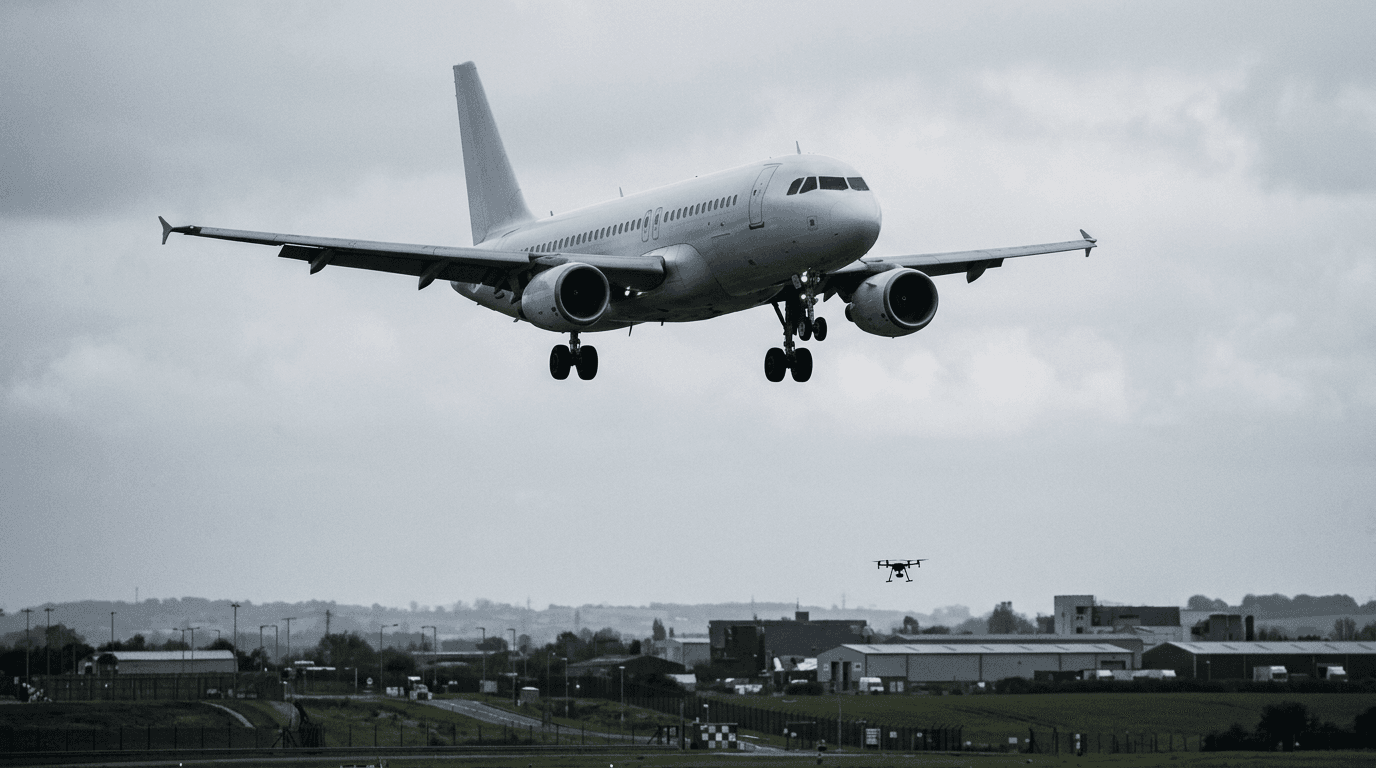
By mid-June 2026, US authorities had seized around fifty drones near World Cup venues, and recorded far more incursions than that. The Department of Homeland Security put the numbers higher still: 55 drones neutralised and 39 seized since 11 June, across 145 intrusions into restricted airspace over eight venues. It is one of the largest peacetime counter-drone operations on record, and it is a rare chance to see — in public, at scale — what defending airspace against small drones actually involves. It is also a direct lesson for every civilian pilot, because most of those 145 flights were almost certainly not attacks.
This is an editorial read of how the operation works, and what it teaches anyone who flies.
The legal perimeter comes first
Before any sensor, there is a rule. On match days, drone flight is banned within three nautical miles — about 5.6 km — of the stadiums, up to 3,000 feet (around 914 m). Fan zones get a tighter ring: one nautical mile (about 1.85 km) and 1,000 feet (around 305 m). These are temporary flight restrictions, switched on around the events, and the FAA backs them with real penalties: fines up to $100,000, criminal prosecution and confiscation of the aircraft.
That perimeter is the foundation. The hardware exists to enforce a line that the law draws first — which is exactly how restricted airspace works everywhere, including over Latvia.
The detect–identify–mitigate stack
What the federal teams have deployed is a layered system, and it is worth seeing the layers because they are the same ones that protect airports and critical sites. We described the doctrine in counter-drone systems for European airports; the World Cup is that doctrine running live.
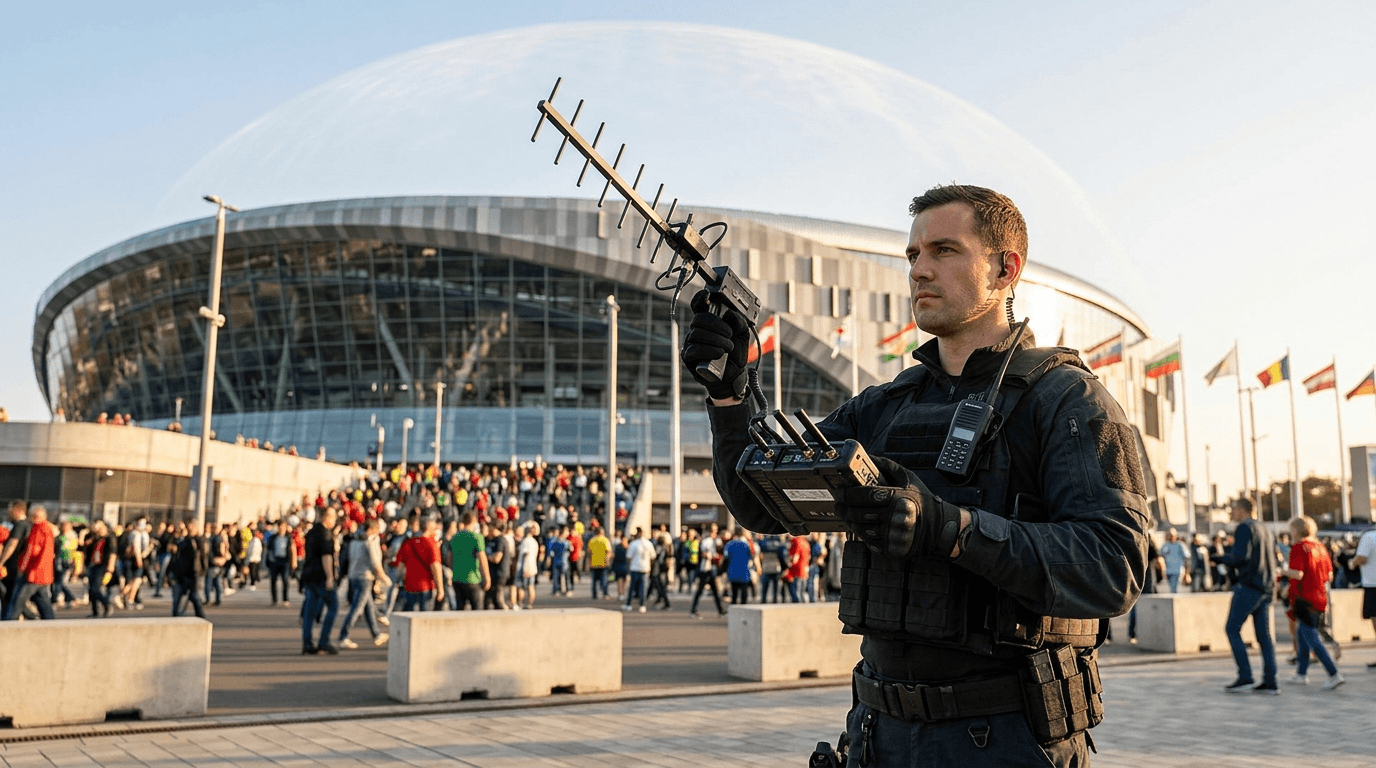
- Detect. Radio-frequency sensors pick up a drone the moment it enters the zone. Radar, acoustic sensors tuned to the noise of motors and propellers, and thermal and optical cameras fill in what RF alone misses.
- Identify. This is the underrated layer. By reading a drone's own communication protocols, the system can determine the make and model, pull the registered operator's details, and locate the launch point. The drone's link is also its fingerprint.
- Mitigate. Beyond monitoring, some systems can interact with the drone on its own control protocols, take command of it and effectively hijack the flight. DHS also contracted a net-capture interceptor — a drone that physically nets other drones out of the air. This is the same electronic-warfare and counter-drone toolkit maturing under real conditions.
Customs and Border Protection, the Federal Protective Service and the Coast Guard run these layers, with dedicated counter-drone units at eight of the eleven venues.
What the numbers actually say
The distribution is telling. Atlanta saw the most trouble — 36 violations near the venue, 20 stopped, 11 confiscated. Violations were logged across Atlanta, Dallas, Houston, Kansas City, Seattle, Boston, San Francisco and Philadelphia. Whether any of the seized drones carried explosives was, at the time of reporting, unknown — and the threat is not hypothetical: the FBI director said the bureau had foiled a planned attack near the White House using explosive-laden drones.
But step back from the headline. One hundred and forty-five incursions over a few weeks, almost none of them confirmed as hostile, is not mainly a portrait of terrorism. It is a portrait of ordinary drone pilots flying into a temporary restriction they did not know was there. That is the part every certified pilot should sit with.
The lesson for civilian pilots
A temporary flight restriction is the easiest rule to break by accident. It is not on the map you checked last month, because it did not exist last month. It appears for an event — a match, a state visit, a wildfire, an air show — and disappears afterward. A pilot who checks zones once and assumes they are stable is exactly the pilot who ends up as one of those 145 numbers.
Three habits keep you out of that statistic.
- Check airspace every flight, not once. Restrictions are dynamic. The question "is it clear today, here?" has to be re-asked before each flight, not answered once and remembered. Latvia's geographical-zone system exists for this; we cover the restricted areas in no-fly zones in Latvia.
- Treat events as automatic no-go until proven otherwise. Stadiums, large gatherings and official events attract temporary restrictions. Assume there is one and verify, rather than assume there isn't.
- Know that identification is routine now. The same protocol-reading that named operators at the World Cup is the direction civilian airspace is heading with remote identification. Flying anonymously is not the safe assumption it once was.
What matters now
The World Cup operation is a preview of normal, not an exception. Major events will increasingly sit inside dense, switched-on counter-drone bubbles, and the detection-and-identification stack only gets cheaper and more common from here. For an attacker that raises the cost of getting through. For an ordinary pilot it raises the cost of a careless mistake — a mistake that is now logged, attributed and fined.
The defence against being on the wrong side of it is unglamorous and entirely within your control: check the airspace, respect temporary restrictions, and stay far away from events. That discipline is the core of the certification guide, and the airspace and zone questions are exactly what the practice sets drill.
FAQ
How many drones were seized at the World Cup? US authorities reported around 50 seized near venues, with the Department of Homeland Security citing 55 drones neutralised and 39 seized since 11 June, across 145 incursions into restricted airspace over eight venues. Atlanta saw the most, with 36 violations.
What are the no-fly rules around the venues? On match days, drones are banned within three nautical miles (about 5.6 km) of stadiums up to 3,000 feet, and within one nautical mile (about 1.85 km) of fan zones up to 1,000 feet. The FAA backs this with fines up to $100,000, criminal prosecution and confiscation.
How do the counter-drone systems work? In layers: radio-frequency, radar, acoustic and thermal/optical sensors detect drones; reading the drone's communication protocols identifies the model, operator and launch point; and mitigation ranges from taking over the drone's control link to physically capturing it with a net-firing interceptor.
What is the takeaway for a civilian pilot? Most incursions were ordinary pilots flying into a temporary restriction, not attackers. Temporary flight restrictions appear for events and disappear afterward, so check airspace before every flight, treat events as no-go until verified, and assume your drone can be identified.