Drones in oil and gas matter because they change inspection frequency, access risk, and decision speed all at once. The industry has always had hard assets to inspect and expensive downtime to avoid. What changed in 2025–2026 is that drones are no longer treated as occasional flying cameras. They are increasingly treated as working tools inside inspection, maintenance, and incident response.
That distinction matters. A single drone flight over a pipeline or refinery is not a transformation program. A real oil and gas drone program ties aerial data to maintenance priorities, remote operations, safety rules, and asset-specific workflows. It also uses different drone classes for different jobs. A pipeline patrol is not the same as a flare stack inspection. A confined-space tank inspection is not the same as a post-storm site assessment. The strongest programs accept that difference instead of forcing one aircraft to solve every problem.
Vendor and operator materials now show that split clearly. DJI's pipeline-inspection guidance focuses on route planning, live mission recording, and repeatable corridor workflows. Skydio frames oil and gas around remote operations, navigation in dense industrial sites, and inspection of working assets without pausing production. Flyability stays centered on confined-space work and cutting hazardous entries. Chevron's public case studies show energy operators using drones both for aerial pipeline patrol and for safer robotic tank inspection.
Oil and gas uses drones because the cost of access is high
The sector's inspection problem has never been a shortage of assets. It has been the cost and risk of checking them again and again.
Oil and gas operators manage:
- long pipeline corridors
- flare stacks
- tanks and vessels
- refineries and process units
- offshore or remote field infrastructure
- power and communications support assets
- damage scenarios after incidents or bad weather
Traditional inspection often means climbing, rope access, scaffolding, shutdown windows, helicopter patrol, confined-entry preparation, or long trips to site. Drones do not remove all of that, but they can change when and how often it is needed.
That is why the real value of drones in oil and gas industry is not vague efficiency talk. It is the ability to inspect more often, with less exposure and better triage, before sending people into an expensive or hazardous access scenario.
Pipeline patrol is one of the most mature drone use cases
Pipeline inspection is a natural drone job, because the route is long, repetitive, and operationally important.
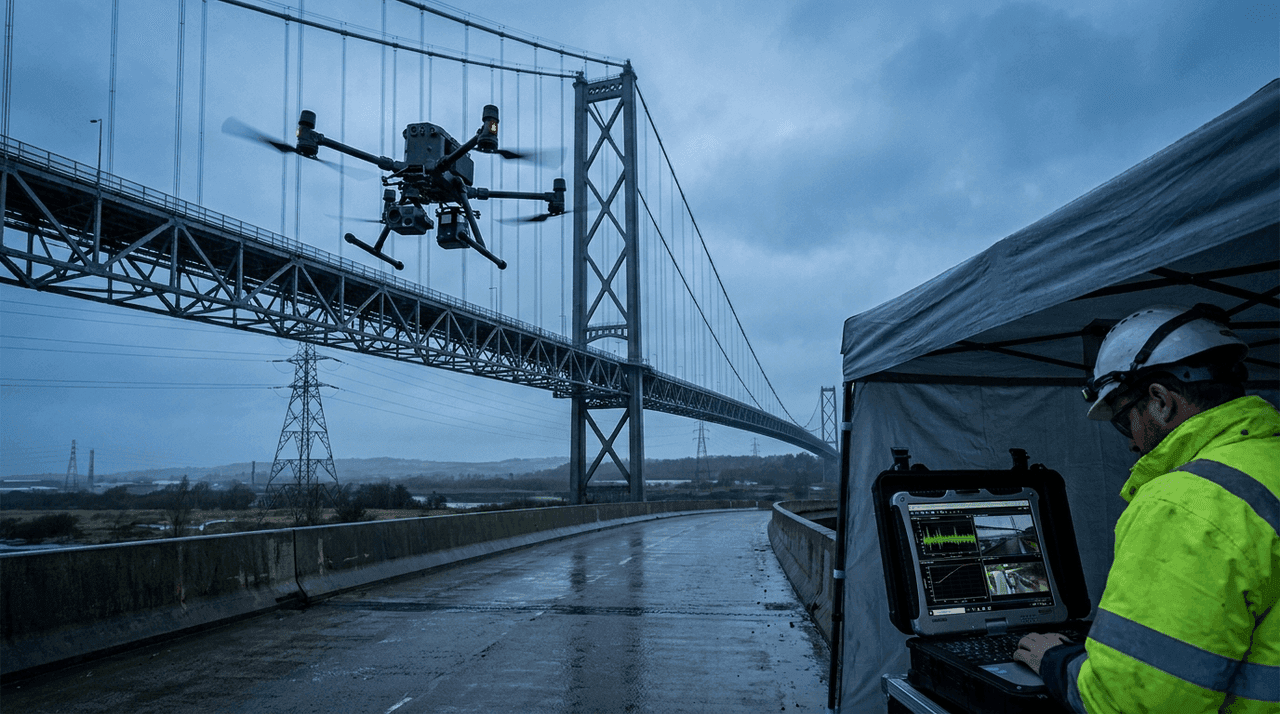
DJI's pipeline-inspection material centers on route planning in FlightHub 2, mission import, and repeatable flight routes. That matters because pipeline work benefits from consistency. Operators want to compare vegetation encroachment, right-of-way changes, visible damage, access conditions, or environmental anomalies over time.
Chevron's 2024 pipeline-aerial-patrol story shows the operator side of the same trend. The company describes drones taking on aerial patrol over oil and gas pipelines as part of an effort to improve safety, reliability, and environmental performance. The point is not that a drone can fly over a pipe. The point is that patrol work becomes more repeatable, more frequent, and potentially less dependent on slower or costlier aviation.
Pipeline drone programs are especially useful for:
- right-of-way monitoring
- vegetation and intrusion checks
- spotting visible leaks or disturbances
- weather and access assessments
- verification after storms or ground movement
They are less useful when the operator expects one drone flight to replace every form of ground verification. In practice, the stronger model is drone-first triage followed by targeted field response.
Flare stacks, towers, and elevated assets reward stand-off inspection
Oil and gas facilities include many assets that are hard, awkward, or risky to reach up close. Flare stacks, elevated process structures, and pipe racks are classic examples.
This is where industrial drone inspection becomes compelling even without full autonomy. A drone with a steady camera and enough stand-off reach can often gather useful visual and thermal detail without forcing immediate rope access or scaffolding.
Skydio's oil-and-gas positioning makes this point well by focusing on working assets, dense steel environments, flare booms, and inspections that do not pause production. That is the real advantage. The drone is not valuable because it flies near dramatic infrastructure. It is valuable because it can gather decision-grade imagery while the facility keeps running.
For elevated-asset inspection, operators usually care about:
- image stability and zoom reach
- route repeatability
- working in cluttered metal environments
- thermal and visual context where it helps
- minimal disruption to active operations
This is one reason autonomy and obstacle awareness are gaining ground in energy inspection. Industrial sites are not open fields. They are geometrically complex, RF-noisy, and operationally sensitive.
Remote monitoring is becoming a real operating model
Oil and gas suits remote drone operations well, because many sites are spread out, repetitive, and costly to visit often.
Skydio's public oil-and-gas material is explicit about this direction. It emphasizes deploying drones as infrastructure, run on-site or remotely, inspecting more often, responding to incidents with real-time awareness, and navigating dense, GPS-challenged environments. That is more than a product pitch. It matches how large operators think about remote facilities: less travel, faster awareness, and more frequent checks.
Remote or dock-enabled models are especially useful for:
- recurring perimeter checks
- routine visual review of fixed assets
- weather-event assessment
- security and situational awareness
- verifying conditions before sending field crews
The key advantage is not that the drone flies on its own in a vacuum. It is that the site can be checked on demand or on schedule without waiting for a full field mobilization.
Confined-space inspection is one of the highest-value applications
A great deal of oil and gas infrastructure is hard to inspect not because it is far away, but because it is inside.
Tanks, vessels, enclosed process spaces, and other confined environments create exactly the kind of access problem where drones can change the economics of inspection. The issue is not convenience. It is the safety and preparation burden of confined entry.
Flyability's public material stays focused on this point. The company positions its systems around confined-space inspection that is safer, faster, and cheaper, explicitly mentioning environments used to store or process explosive goods and highlighting gas-presence warning. Chevron's 2024 tank-inspection story reinforces the operator side, describing robotic tank-inspection technology deployed across U.S. facilities to improve worker safety.
This category matters because the avoided cost is often much larger than the flight cost. A confined-space drone creates value through:
- fewer entries by personnel
- less setup for risky access
- faster condition assessment
- a lighter shutdown burden in some inspection windows
- better evidence before a person enters or repair work begins
This is why tank inspection drone and confined-space systems sit in a different economic category from general exterior inspection drones.
Thermal matters, but only in the right tasks
Thermal drones are relevant in oil and gas, but their value is mission-specific, not universal.
Thermal imaging can help with:
- hotspot review around electrical or mechanical systems
- insulation and process anomalies
- some pipeline and facility condition checks
- flare and heat-pattern context
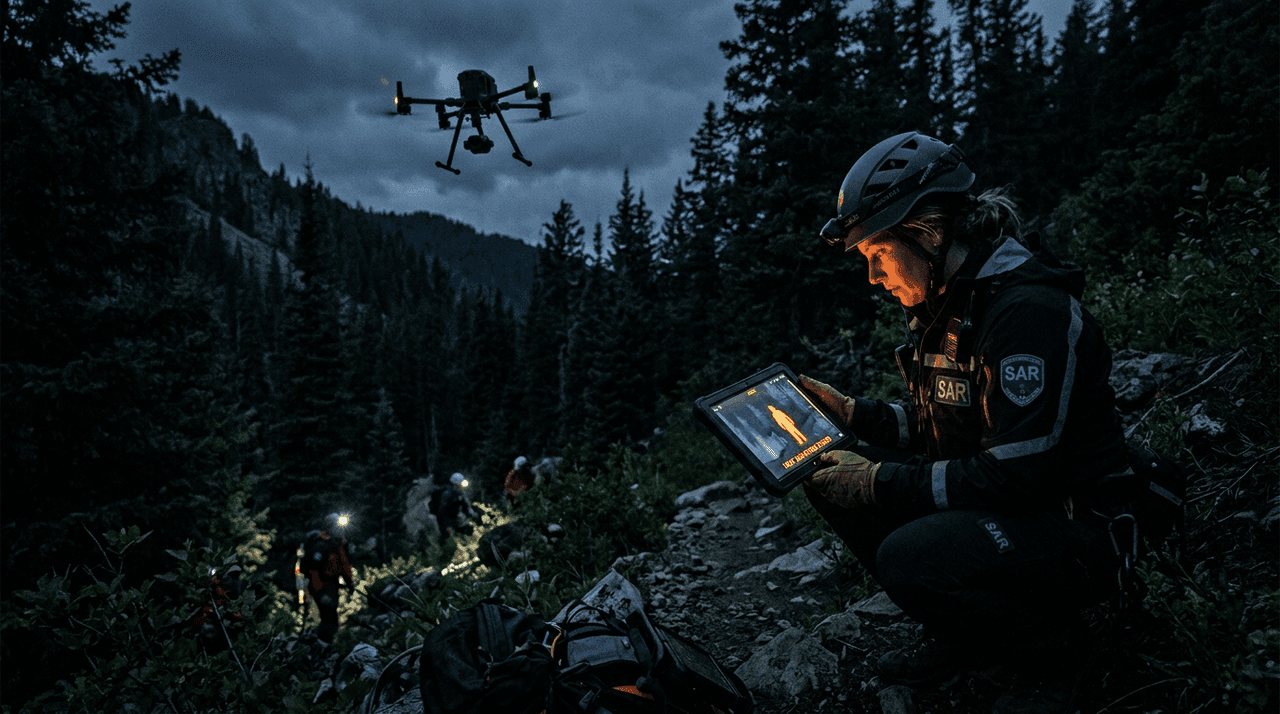
- incident response and safety awareness
But many oil and gas inspection decisions still depend more on optical detail, zoom, route repeatability, and geometric clarity than on thermal imagery alone. A facility may need thermal awareness in one case and high-detail stand-off visual inspection in another.
That is why strong programs do not start with "buy a thermal drone." They start with "which assets create which evidence requirements?"
The strongest ROI usually comes from downtime avoidance and better triage
Oil and gas drone programs are often justified with generic labor savings. That is too shallow.
The stronger business case usually comes from:
- avoiding unnecessary shutdowns
- shortening inspection planning cycles
- reducing worker exposure before access decisions
- narrowing where human inspectors actually need to go
- inspecting critical assets more often
- gaining post-incident awareness faster than traditional response allows
This is especially true where a delayed decision is expensive. A drone does not need to replace every traditional inspection method to create value. It only needs to cut uncertainty fast enough that operations and maintenance teams make better calls.
The future is not one drone, but a mixed inspection stack
The most mature oil and gas programs are not built around a single aircraft. They are built around a stack of capabilities.
A realistic stack might include:
- a corridor or patrol workflow for pipelines
- a stand-off exterior inspection drone for elevated assets
- a remote or dock-enabled drone for recurring site awareness
- a confined-space drone for tanks and vessels
- a thermal-capable platform for selected diagnostics and response tasks
This beats trying to crown one universal aircraft as the answer for the whole sector. Oil and gas infrastructure varies too much in layout, hazard, and inspection cadence.
Common mistakes in oil and gas drone adoption
Treating drones as media tools instead of inspection tools
If the output is not tied to maintenance and asset decisions, the drone program stays cosmetic.
Using one platform for every job
Pipelines, flare stacks, dense refineries, and tank interiors are not the same mission.
Underestimating site complexity
Industrial metal environments, GPS challenges, access rules, and safety procedures all shape what "good drone operations" means.
Focusing only on flight cost
The real economics often sit in avoided downtime, lower exposure, and faster triage.
Offshore and coastal energy operations create a different drone problem set
When people talk about oil and gas drones, they often default to onshore pipelines and refinery assets. Offshore and coastal operations complicate the picture.
These environments can impose:
- tighter weather windows
- higher corrosion exposure for hardware
- harder launch and recovery conditions
- tougher logistics for batteries and maintenance
- a stronger need for fast visual awareness after weather events
So offshore, the value of drones is not only about inspection detail. It is also about whether the system can cut the number of unnecessary crew movements and speed up the first assessment after a disruption.
Emergency response and environmental awareness are becoming stronger use cases
Oil and gas operators do not use drones only for planned inspection. The stronger programs also use them for fast situational awareness after incidents.
That can include:
- checking facility status after storms
- reviewing access roads and perimeter conditions
- assessing visible damage before dispatching people
- documenting scene conditions for follow-on response
This matters because the value of drones in the sector is not limited to routine maintenance. It also shows up when they cut uncertainty in the first minutes and hours after an operational disruption.
Contractors and in-house teams are not solving the same problem
Another practical trend is the difference between companies building internal drone capability and companies that mainly rely on contractors.
An in-house model can be stronger when the operator wants:
- frequent recurring inspections
- tighter integration with maintenance teams
- faster response after local incidents
- more control over data retention and asset knowledge
A contractor-led model can still make sense for:
- specialized inspections
- lower inspection frequency
- standing up a program temporarily
- access to confined-space or advanced sensor expertise
In practice, many mature operators end up using both. The key point is that drone adoption in oil and gas is not only about which aircraft you choose. It is also about who owns the operation.
Strong oil-and-gas drone programs usually begin with asset prioritization
The best programs rarely start by asking which drone to buy first. They start by ranking which assets create the most risk, delay, or access burden.
That usually means prioritizing assets such as:
- remote corridor sections with expensive patrol requirements
- tanks or vessels with a high entry burden
- elevated structures that force rope access or shutdown planning
- sites where faster post-incident visibility changes the response decision
This approach matters because it ties the drone program to measurable business value instead of generic innovation talk.
The sector is moving from drone flights to drone operating systems
The strongest oil-and-gas programs are no longer defined by whether they own a drone team. They are defined by whether they can turn drone use into a repeatable operating system for patrol, inspection, response, and escalation. That is a more demanding standard, but it is also where the real long-term value sits.
FAQ
How are drones used in oil and gas industry?
For pipeline patrol, flare stack and elevated-asset inspection, tank and confined-space inspection, remote site monitoring, incident response, and condition documentation.
What is the biggest benefit of drones in oil and gas?
Usually safer and more frequent inspection, with less delay before decisions on critical assets.
Can drones replace human inspectors in oil and gas?
Not completely. The stronger model is usually drone-led triage followed by targeted human verification or repair work.
Why are confined-space drones important in oil and gas?
Because tanks, vessels, and enclosed assets create high access risk and preparation cost, so even partly reducing the entry burden can create large value.
Are thermal drones essential for oil and gas?
They are valuable in some tasks, but not every inspection in oil and gas is primarily a thermal problem.
Conclusion
Drones in oil and gas are moving from occasional aerial support to embedded operational infrastructure. Pipeline patrol, stand-off inspection, remote monitoring, and confined-space robotics all reflect the same strategic shift: inspect earlier, expose fewer people, and decide faster on critical assets. DJI's corridor workflows, Skydio's remote inspection model, Flyability's confined-space focus, and Chevron's public deployments all point the same way. The real future of oil and gas drone adoption is not one dramatic aircraft. It is a better inspection stack built around repeatable data, lower exposure, and less downtime.