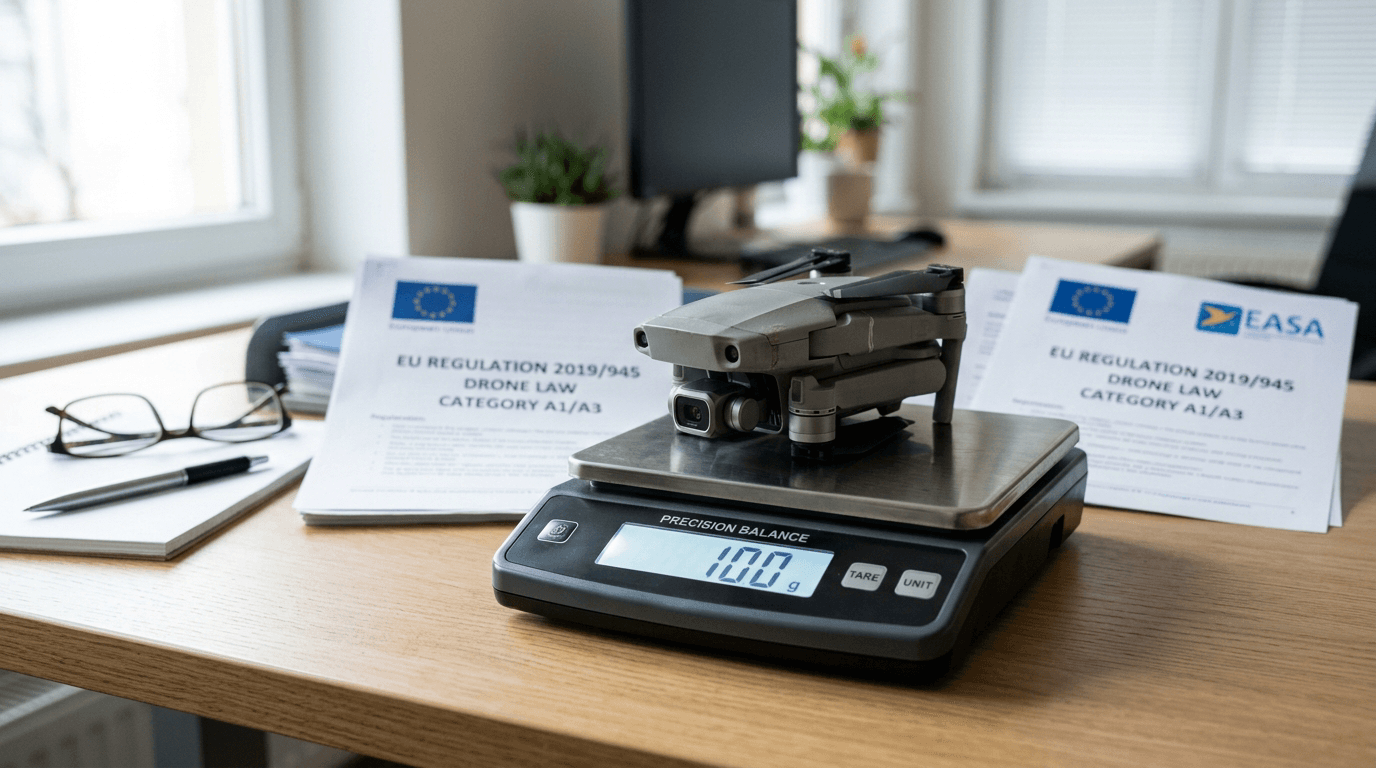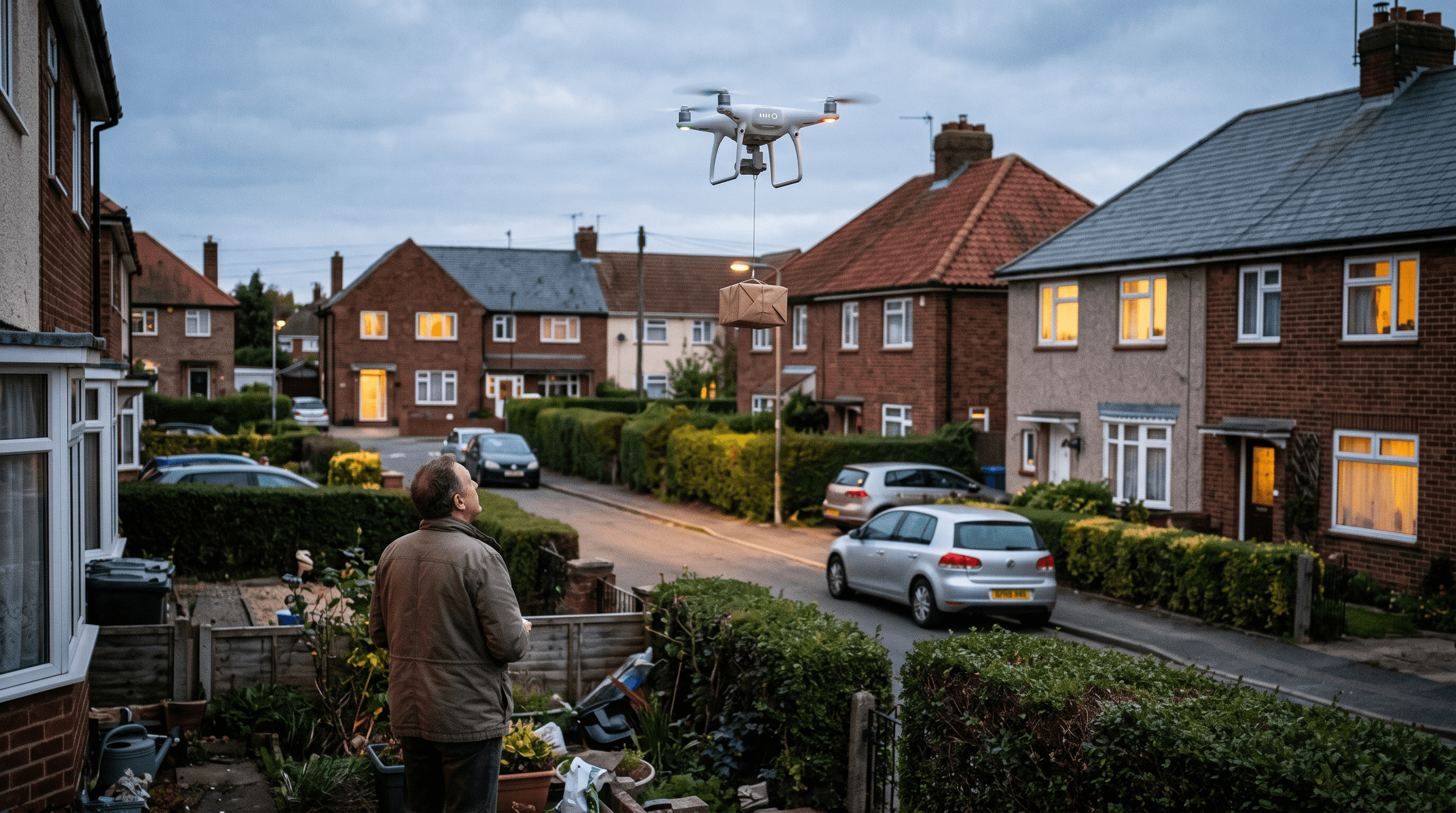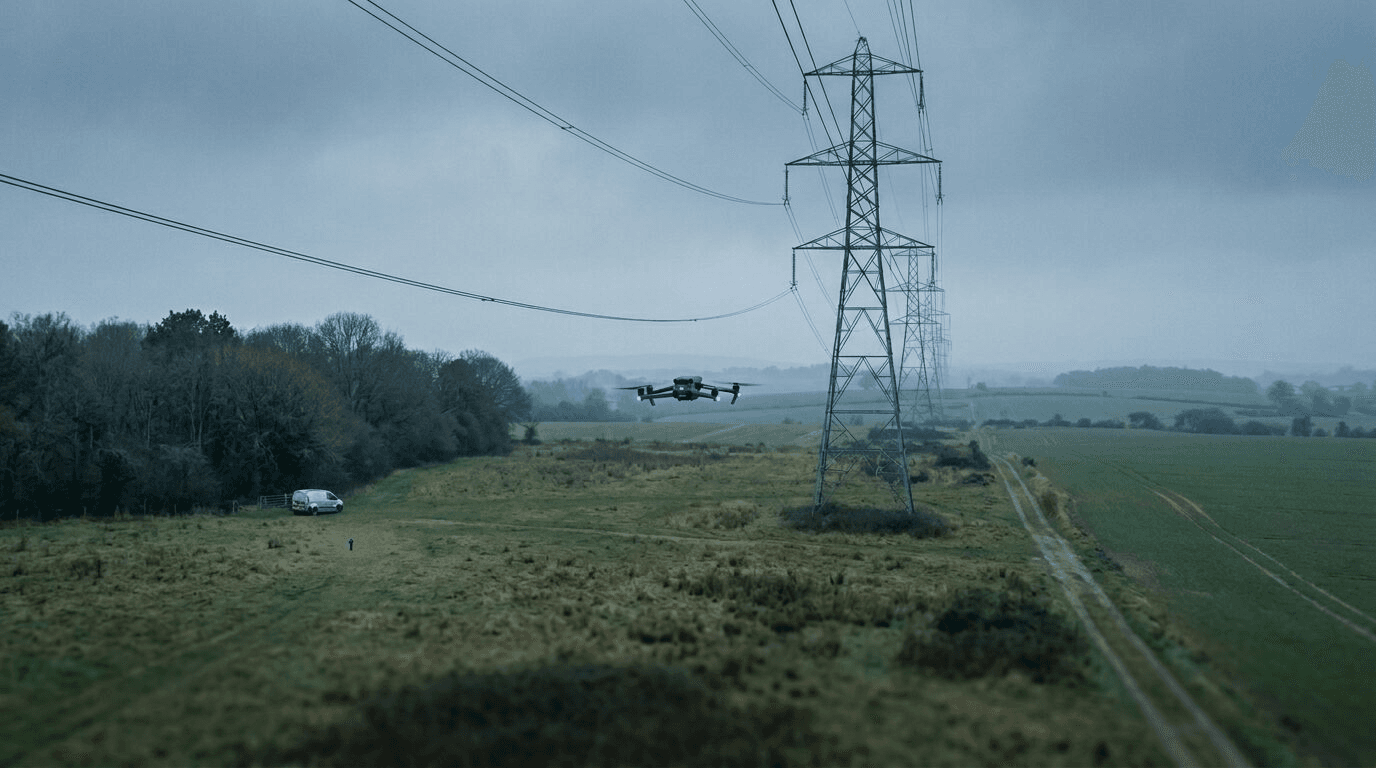
In the autumn of 2025, reported drone sightings repeatedly disrupted European airports. Across several countries, runways went quiet for hours after drones were reported nearby, and thousands of travellers were delayed or stranded. Who was flying them was often never confirmed, and attribution was widely debated. The operational lesson was blunter than the politics: a single small aircraft, intended or not, can stop one of the most protected sites in a country.
That is the problem civil counter-drone defence now has to solve. Not on a battlefield — at the airport, the stadium, the power plant. And the way Europe is solving it is more constrained, and more interesting, than "shoot it down."
Two different problems: seeing it, and stopping it
Counter-UAS work splits cleanly in two, and they are not equally easy.
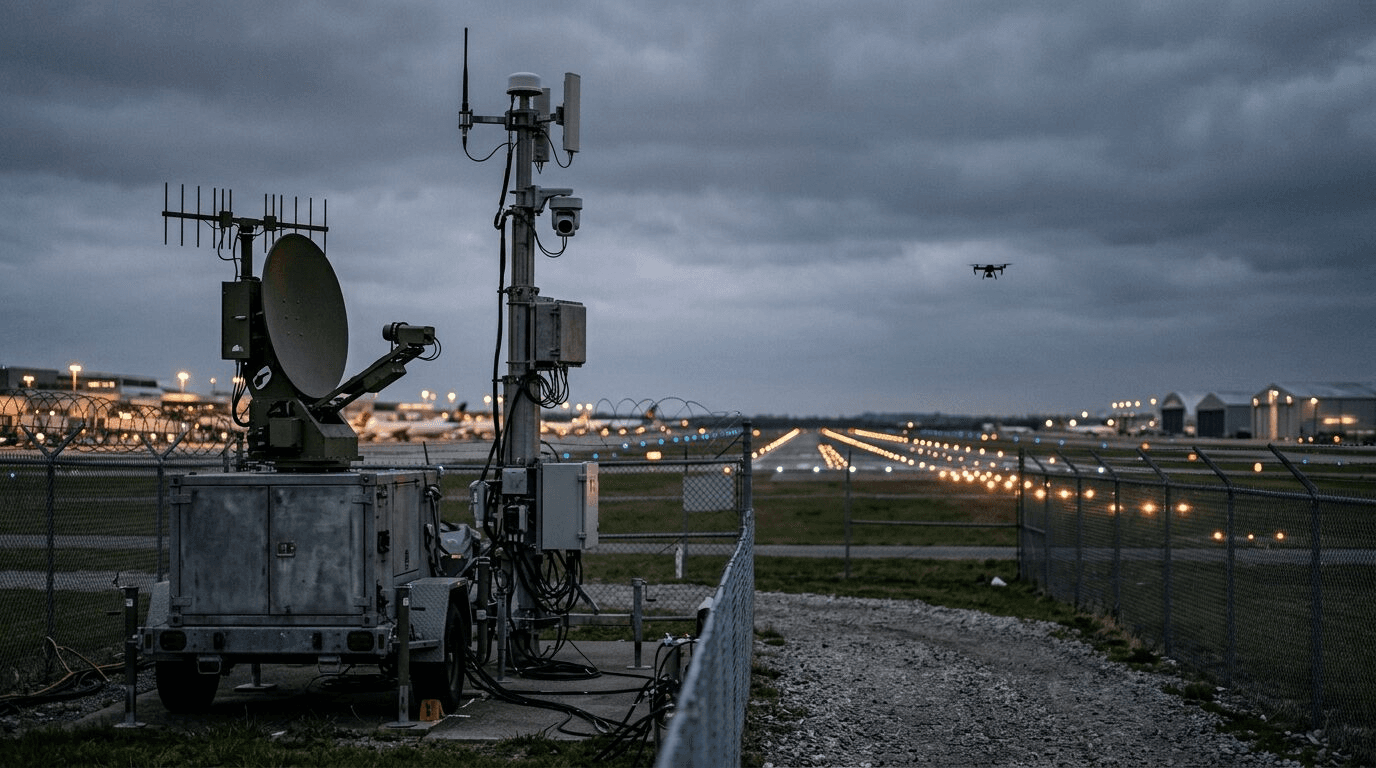
Detection is about knowing a drone is there. The tools layer up: radar tuned to small, slow targets; radio-frequency sensors that pick up the control link; electro-optical and infrared cameras; acoustic sensors that hear the rotors. Each has blind spots, so serious sites combine several.
Mitigation — actually stopping the drone — is the hard half. Options exist: jamming the control or navigation signal, spoofing its position, catching it in a net, or a kinetic interceptor. But every one of these has consequences in a crowded civil environment, and most are not something a private site may legally do.
Why a stadium cannot just buy a jammer
Here is the part that surprises people, and it is our reading of the legal picture rather than a line from any single statute.
In the EU, active mitigation is tightly restricted for civilian operators. Radio-frequency jammers are, as a rule, illegal to operate: jamming a drone also risks jamming aviation navigation, mobile networks, and GNSS over a wide area. Defeating a drone — bringing it down by force or signal — is generally reserved to designated state authorities: police, military, border guard.
So an airport, a stadium, or a factory operator can lawfully detect a drone and must call the responders who are allowed to act. It cannot simply install a jammer and knock the drone out of the sky. That legal constraint shapes the civil counter-drone market: it is largely a detection-and-coordination business, not a shoot-down business.
What the EU Action Plan actually proposes
On 11 February 2026, the European Commission presented its Action Plan on Drone and Counter-Drone Security — COM(2026) 81 final — building on its 2023 work on drone threats and the EU Drone Strategy 2.0. Read against the legal constraint above, its choices make sense.
- A call for Member States and industry to live-test and deploy cellular-based detection, including using 5G antennas as radars — turning existing telecom infrastructure into a wide-area drone-detection grid.
- A counter-drone deployment initiative to protect critical infrastructure and the EU external borders, including a €250 million call for land and maritime border surveillance.
- A voluntary stress-test plan for Member States to assess how resilient their critical infrastructure is to drone intrusions.
- Asking Member States to appoint National Drone Security Coordinators, because the gap exposed in 2025 was as much about who responds as about what hardware exists.
The throughline is detection and coordination. The Plan leans on seeing drones early and sorting out who acts — not on distributing countermeasures, which the law keeps in state hands.
What this means for an ordinary pilot — our reading
If you fly recreationally or in the Open category, the takeaway is direct. The airspace around airports and critical infrastructure is exactly where this detection is being built out. A drone that drifts into a no-fly zone there is no longer a quiet mistake — it is more likely to be detected and escalated, and in Latvia it can trigger real administrative penalties for breaching a geographical zone.
None of the counter-drone investment changes your obligations. It changes the odds of being noticed when you ignore them. The geographical zones on airspace.lv/drones exist for the same reason the Action Plan does: the area around sensitive sites is where a stray drone does the most damage and now gets the most attention.
What to watch
- Cellular and 5G-based detection moving from pilot tests to real deployment around airports and critical sites.
- Who is authorised to mitigate, and how fast — the 2025 episodes exposed the coordination gap more than any technology gap.
- The legal line on countermeasures staying firmly with state authorities, even as detection spreads to private operators.
The defence of civil airspace against drones is becoming a layered, well-funded system. For everyone else, the simplest contribution is the oldest rule: know where you are not allowed to fly, and stay out.
Geographical zones and how to check them are covered in the Geographical Zones lesson. Test what you know on the Airspace Limitations practice set.