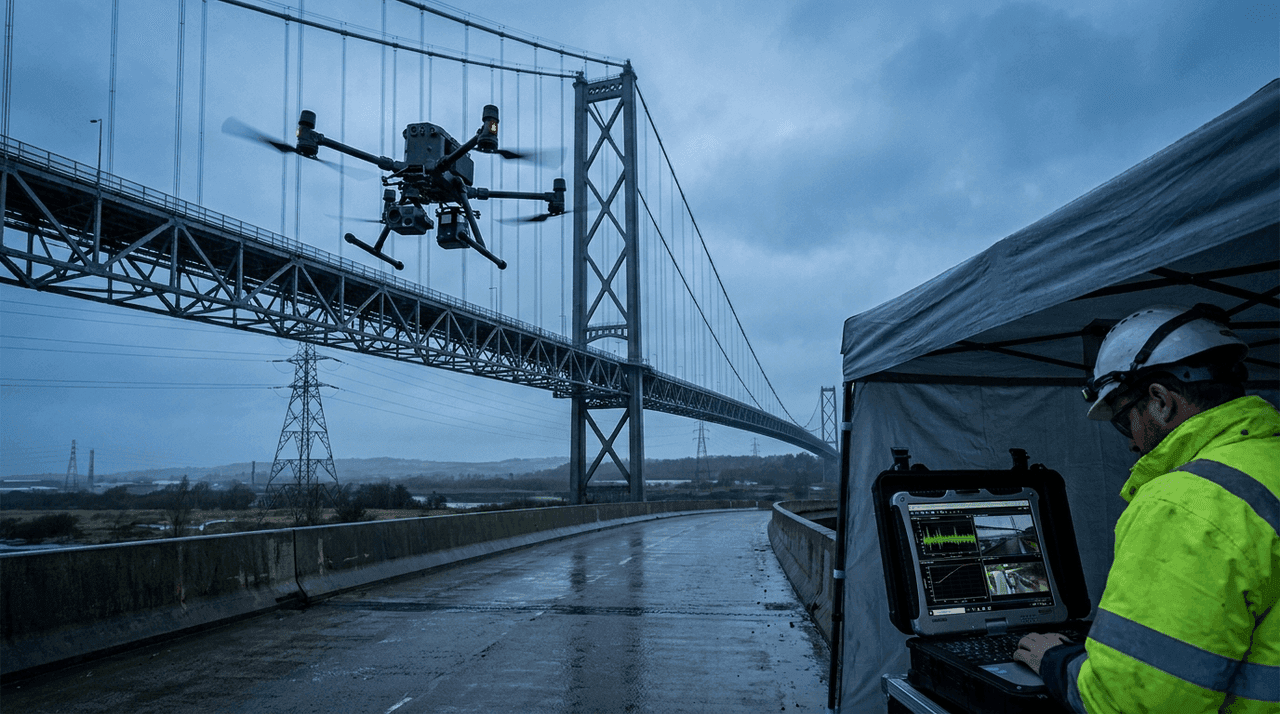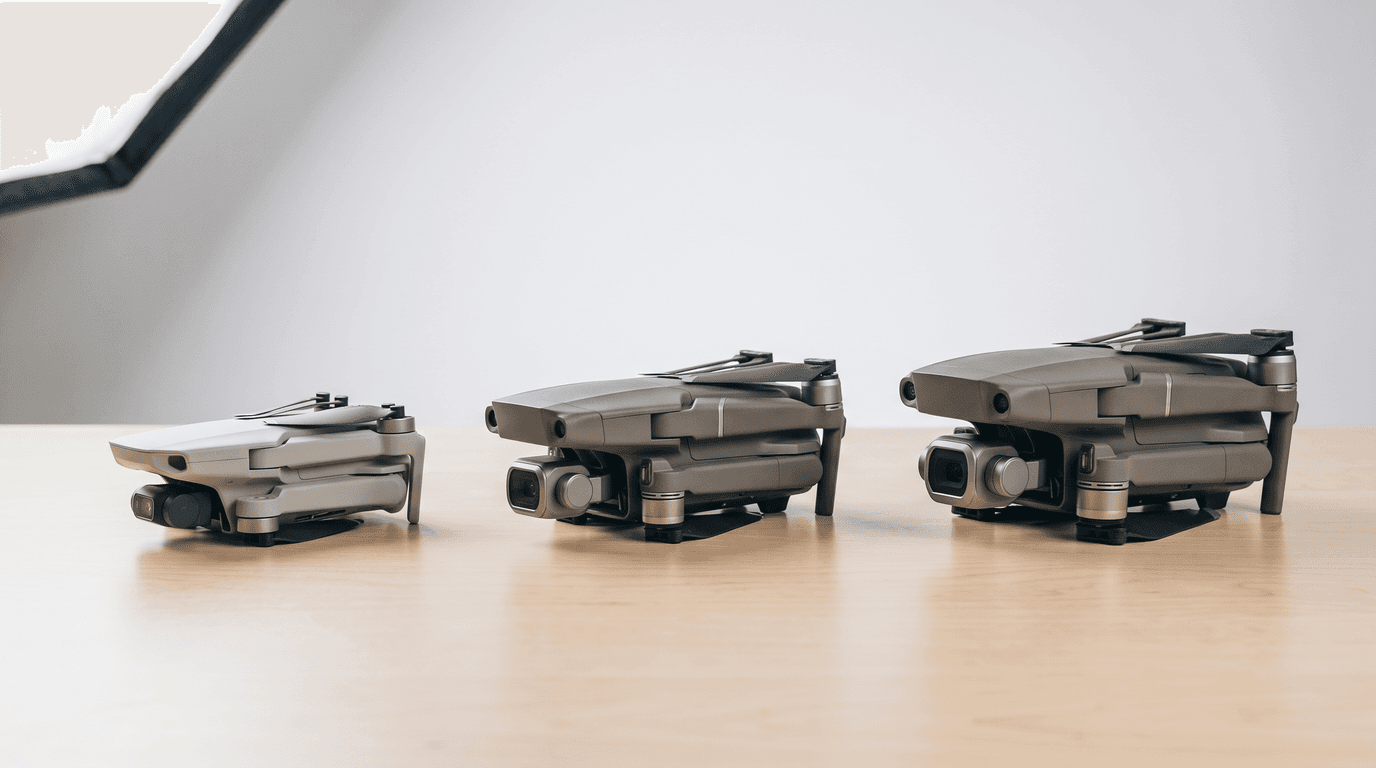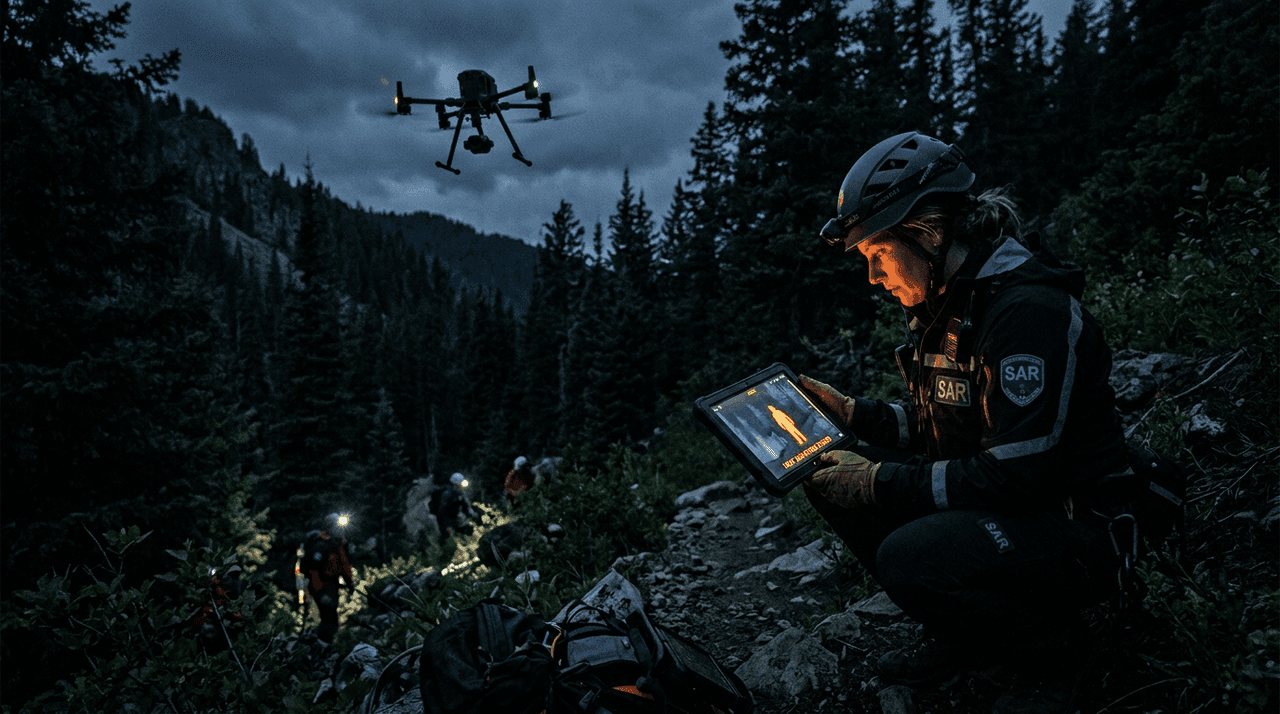
The best thermal drones for search and rescue are not always the biggest aircraft or the ones with the longest spec sheet. SAR teams win with the platform that gets airborne fast, holds a steady thermal picture over real terrain, and gives the crew enough zoom and awareness to confirm what they are seeing before they waste minutes chasing a false lead.
That is why the 2026 buying question is no longer "which drone has a thermal camera?" The real question is which thermal drone fits the mission: mountain search, missing-person calls near roads, flood response, a night shoreline sweep, wildfire edge work, or a rescue near infrastructure where obstacle avoidance matters as much as raw thermal range.
Official vendor specs now make the split fairly clear. DJI's Matrice 4T pushes the compact enterprise class forward with a 640 × 512 thermal sensor, up to 49 minutes of flight time, a laser rangefinder, and a multi-camera stack that makes it unusually flexible for public-safety work. DJI's Mavic 3T is still one of the strongest portable options because it is lighter, faster to deploy, and still carries a 640 × 512 thermal payload. Autel Alpha goes heavier and more all-weather, with IP55 protection, hot-swappable batteries, and a larger industrial airframe. FLIR SIRAS stays relevant because it is thermal-first, geofence-free, and built around what first responders actually do. Skydio's X10D sensor stack appeals to teams in cluttered terrain that care about 360-degree obstacle coverage, autonomy, and sensor fusion.
The best thermal SAR drones fit different mission classes
No single aircraft dominates every SAR workflow. A better way to compare platforms is by mission class.
| Platform | Best fit | Why it stands out | Trade-off |
|---|---|---|---|
| DJI Matrice 4T | General-purpose SAR teams | 49-minute max flight time, 640 × 512 thermal, laser rangefinder, strong zoom stack | Higher cost and larger kit than ultra-portable systems |
| DJI Mavic 3T | Fast-response teams, police, volunteer SAR | Portable, quick to launch, 45-minute max flight time, 56× hybrid zoom, 640 × 512 thermal | Less weather margin and less payload headroom than heavier aircraft |
| Autel Alpha | Harsh-weather, industrial, interference-heavy operations | IP55, hot-swappable batteries, 40-minute flight time, 12 m/s wind resistance, AI target functions | Larger transport footprint and heavier logistics burden |
| FLIR SIRAS | Thermal-first public safety teams | FLIR thermal pedigree, quick-connect payloads, 31-minute flight time, no restrictive geofencing | Shorter endurance than newer premium platforms |
| Skydio X10D | Obstacle-rich terrain, structure-heavy search, advanced agencies | 360-degree obstacle coverage, Boson+ thermal, under-40-second startup, strong navigation stack | Defense-oriented variant and premium positioning make procurement more complex |
The table already points to the central buying mistake: teams often overbuy thermal resolution and underbuy workflow. In SAR, the drone that launches in 90 seconds and gives you ten useful minutes over the right area often beats a technically stronger platform that takes too long to set up.
What actually matters in a SAR thermal drone
Thermal sensitivity is only part of the story
A good SAR thermal drone needs more than a 640 × 512 sensor badge. Teams should look at thermal sensitivity, the lens, usable contrast, the radiometric workflow, and whether the visible camera helps confirm what the thermal image suggests.
A person in woodland, a casualty on wet ground, or a subject half-hidden by rocks does not show up as a glowing outline on demand. Moisture, wind, surface temperature, sun, foliage, and altitude all change what the crew sees. A lower NETD figure can help with subtle contrast, but field results still depend on a disciplined search pattern and a crew that can read thermal signatures correctly.
This is one reason FLIR SIRAS still deserves attention despite newer rivals. Its value is not just the Boson thermal payload. It is that FLIR built the platform explicitly around public safety, radiometric imaging, and a workflow many thermal operators already know.
Zoom matters because rescue crews have to confirm, not just detect
A SAR thermal drone needs enough visible and thermal zoom to tell a person from a warm rock, an animal, or a vehicle that has been holding heat.
DJI's compact public-safety platforms are strong here. The Mavic 3T pairs a thermal payload with a tele camera that offers up to 56× hybrid zoom. The Matrice 4T goes further with a wider multi-camera stack and long tele reach, plus a laser rangefinder for distance. That combination matters in real missions, because detection is only the first step. Confirmation is what saves search time and prevents unsafe crew movement.
Deployment speed is a real operational variable
SAR teams do not always launch from a calm, flat field. They launch from roadsides, forest tracks, boat ramps, command posts, and improvised staging areas at dusk or in bad weather.
That favors aircraft with simple packing, fast boot-up, and low setup friction. The Mavic 3T stays attractive precisely because it is easy to carry in a vehicle and fast to get into the air. Skydio's X10D specs also stand out here, with startup under 40 seconds, which is highly relevant when time is tight.
Wind handling and weather sealing matter more than the brochures suggest
Many failed drone buys happen because teams judge the thermal camera as if the aircraft were just a sensor tripod. In SAR, the airframe matters as much as the payload.
A drone searching a shoreline, open field, quarry, or ridge has to hold its picture in wind and turbulence. DJI rates both the Matrice 4T and Mavic 3T for 12 m/s wind resistance. Autel Alpha also states 12 m/s, but pairs it with an IP55 airframe and hot-swappable batteries, which changes how crews can use it in ugly conditions. FLIR SIRAS is IP54-rated and easier to justify when an agency wants a practical, responder-first platform rather than the biggest possible aircraft.
Obstacle avoidance is mission safety, not convenience
Searches often happen near tree lines, utility corridors, collapsed structures, steep ravines, or urban edges. A thermal payload does not cut the collision risk. Sometimes it raises it, because crews fly lower or work with poor visibility.
This is where Skydio's platform family stays interesting. The X10D specs call out true 360-degree obstacle avoidance, which is not a minor convenience. In dense terrain or structure-heavy areas, that kind of sensing can meaningfully cut pilot workload and lower the chance the aircraft is lost while the crew is trying to keep eyes on a possible subject.
DJI Matrice 4T is the strongest all-round compact SAR platform in 2026
The Matrice 4T is arguably the most complete compact thermal SAR platform on the current enterprise market.
Its official specs combine several features that matter in search work:
- 49-minute maximum flight time in no-wind conditions
- 640 × 512 thermal resolution with uncooled VOx thermal imaging
- thermal sensitivity listed at ≤50 mK
- 12 m/s wind resistance
- several visible cameras, including tele
- laser rangefinding out to 1800 m under stated conditions
That package makes the Matrice 4T less of a single-purpose thermal drone and more of a full public-safety reconnaissance tool. A crew can search thermally, confirm visually, estimate distance, and document the scene without swapping aircraft.
For many agencies, that all-round utility matters more than a small sensor difference. Budgets rarely cover a separate aircraft for every mission. The better buy is often the drone that can handle first response, missing-person search, overwatch, and night reconnaissance reasonably well from one kit.
The main caution is practical: the Matrice 4T is still a larger enterprise system than a foldable ultra-portable platform. It is compact next to older public-safety aircraft, not compact like a backpack-class response drone.
DJI Mavic 3T is still the best portable thermal drone for many first responders
The Mavic 3T still matters because SAR does not always reward the biggest platform. It rewards the one that arrives first and starts narrowing the search area while ground teams are still organizing.
Its official specs still make it a serious tool:
- 45-minute maximum flight time
- 640 × 512 thermal video at 30 fps
- ≤50 mK thermal sensitivity
- up to 56× hybrid zoom on the tele camera
- 12 m/s wind resistance
- sub-1 kg class portability compared with larger enterprise aircraft
For volunteer SAR groups, police units, and mixed-role emergency agencies, this is a very hard combination to ignore. The Mavic 3T can live in a vehicle, deploy fast, and still give enough thermal and visual confirmation for a large share of missing-person calls.
Its limit is not a lack of capability. Its limit is margin. In harder weather, longer searches, and tougher industrial environments, a crew may want a heavier platform with more presence in the air and a broader operating envelope.
Autel Alpha is built for teams that prize resilience over portability
Autel Alpha takes a different route. It is not trying to be the smallest serious SAR drone. It is trying to be a rugged industrial platform that keeps working in hostile conditions.
The official product information emphasizes:
- IP55 protection
- hot-swappable batteries
- up to 40 minutes of flight time
- 12 m/s wind resistance
- operation from -20°C to 50°C
- AI-assisted target identification and lock across zoom, wide, and infrared views
For some agencies, that fits better than a smaller portable platform. Utility rescue, flood operations, maritime-adjacent response, and infrastructure-heavy SAR often punish lightly built airframes.
The trade-off is predictable. Alpha asks for a bigger vehicle kit, more staging discipline, and a procurement mindset closer to industrial operations than to lightweight rapid deployment.
FLIR SIRAS stays relevant because thermal workflow still matters
SIRAS is easy to underrate if the comparison starts and ends with endurance. That would be the wrong lens.
What keeps SIRAS relevant in 2026 is that it was designed around public safety and thermal use from the start. FLIR describes an IP54-rated platform with front collision avoidance, hot-swappable batteries, about 31 minutes of flight time, interchangeable payloads, and no restrictive geofencing. The Vue TV128 payload combines a 16 MP visible camera with a radiometric 640 × 512 Boson thermal sensor and 128× visible zoom.
That matters for agencies that care about three things:
- thermal interpretation workflow
- predictable public-safety deployment
- less friction over where and when the aircraft can fly
SIRAS is not the endurance winner here. It is the platform that still makes sense when the thermal camera is the center of the mission rather than a feature bolted onto a broader enterprise drone.
Skydio X10D shows how autonomy and obstacle awareness are entering SAR procurement
Skydio X10D is not a conventional "best value thermal SAR drone" candidate. It is more interesting than that.
Its technical specs show where the market is heading:
- startup under 40 seconds
- up to 40 minutes of flight time
- IP55 protection
- true 360-degree obstacle avoidance
- 640 × 512 FLIR Boson+ thermal camera
- thermal sensitivity below 30 mK
- integrated wide, narrow, and tele visible cameras
- NVIDIA Jetson Orin and Qualcomm compute stack
The significance is not just the thermal payload. It is the mix of thermal sensing, autonomy, navigation smarts, and structure-aware flight. In cluttered terrain, urban canyons, or infrastructure-heavy searches, that architecture can cut pilot workload and keep the aircraft productive where simpler platforms force more caution.
For SAR teams, the lesson is not "buy the most autonomous drone you can." The lesson is that autonomy is becoming part of the thermal-drone value, especially where missing-person searches happen in places that are hard to fly by hand.
The economics of thermal SAR drones are mostly about saved search hours
Procurement teams often focus too narrowly on aircraft price. In SAR, the stronger economic question is how much search time, crew time, and exposure risk the platform removes.
A better thermal drone creates value through:
- faster area reduction
- fewer false positives
- fewer night ground sorties in dangerous terrain
- less helicopter demand in some phases of a search
- faster confirmation around buildings, shorelines, vehicles, and tree lines
This does not mean drones replace manned aviation or ground teams. It means they cut the cost of uncertainty, which is usually the most expensive part of a search.
A compact platform like the Mavic 3T may give the best return for agencies with frequent short calls. A Matrice 4T or Alpha-class system may justify itself when searches are more complex, the environment is harsher, or the platform also covers inspection, mapping, overwatch, and disaster response.
The most common buying mistakes
Buying for maximum range instead of likely mission geometry
Many SAR missions are won close to roads, footpaths, shorelines, and known last-seen points. A giant aircraft is not automatically a better search tool when most tasks are medium-radius and time-sensitive.
Treating thermal detection as automatic identification
Thermal imaging shows heat contrast, not identity. Good crews still need confirmation discipline and visible-camera context.
Skipping training in thermal interpretation
The thermal camera is only as useful as the operator's ability to read background heating, reflected heat, animal signatures, and terrain effects.
Underrating weather and logistics
A drone that looks great in a quiet demo may be the wrong tool if it is hard to stage, hard to charge in the field, or too fragile for regular night and winter work.
A practical buying framework for SAR agencies
The easiest way to make a bad drone buy is to ask for the "best SAR thermal drone" in the abstract. Procurement gets much cleaner when teams start from their own deployment reality.
Small police, ranger, and volunteer teams should usually start by asking how fast a drone can launch from a vehicle and how often the same platform can also cover routine public-safety work outside major searches. That logic tends to favor the Mavic 3T class.
County-level or regional agencies that run more varied missions should ask a broader question: can the same aircraft cover thermal search, visual confirmation, overwatch, scene documentation, and limited measurement without carrying several kits? That is where the Matrice 4T class becomes persuasive.
Teams working around utilities, flood zones, rough weather, or infrastructure-heavy incidents should weigh weather sealing, battery workflow, and airframe toughness more heavily. That is where Autel Alpha or a similarly rugged platform can make more sense than a lighter rapid-response drone.
Agencies with a strong thermal culture or a public-safety workflow already built around FLIR tooling should not ignore operational familiarity. SIRAS may not top every raw-endurance comparison, but less friction in deployment, interpretation, and training can still make it the better operational choice.
Finally, teams that regularly search in forests, near structures, or in terrain where collision risk is a constant workload driver should weigh obstacle avoidance and navigation smarts far more seriously than older public-safety buying guides suggested. This is where Skydio's design logic becomes relevant even for buyers who do not need a defense-oriented procurement path.
Training and crew workflow still decide outcomes
Even the best thermal drones for search and rescue do not create good outcomes on their own. Thermal search is still a crew skill.
Agencies that get more value from drones usually standardize a few basics:
- who flies and who reads the image
- how thermal detections are confirmed visually
- when crews drop for a closer look and when they hold altitude
- how likely finds are marked and handed to ground teams
- what conditions trigger a change in the search pattern
This matters because thermal drones reduce search uncertainty, but they do not remove ambiguity. A strong platform shortens the path from "possible heat source" to "credible lead." A strong crew turns that lead into a safe, timely recovery.
So mature SAR programs treat drone sorties as part of a repeatable search system, not isolated gadget flights. Callout procedures, map handoff, evidence capture, and post-mission review often decide whether the aircraft merely records footage or actually shortens the route to a recovery.
FAQ
What is the best thermal drone for search and rescue in 2026?
For general-purpose compact SAR work, the DJI Matrice 4T looks like the strongest all-round option on current official specs. For fast portable deployment, the DJI Mavic 3T is still one of the best-balanced choices.
Are thermal drones enough to find a missing person at night?
No. Thermal drones improve detection and area reduction, but weather, terrain, vegetation, and operator skill still heavily affect the results.
Is a 640 × 512 thermal camera enough for SAR?
In many missions, yes, it is a practical baseline. But performance depends as much on altitude, lens, contrast, zoom, and crew discipline as on raw resolution.
Why would a team choose FLIR SIRAS over DJI or Autel?
Because SIRAS is built around a public-safety thermal workflow, interchangeable payloads, hot-swappable batteries, and a geofence-free model that some agencies value highly.
Does obstacle avoidance matter on a thermal SAR drone?
Yes. In wooded, urban, or infrastructure-heavy areas, obstacle sensing directly affects mission safety and pilot workload.
Conclusion
The best thermal drones for search and rescue in 2026 are not separated by one magic spec. They are separated by mission fit. The Matrice 4T is the strongest compact all-rounder. The Mavic 3T is still the smartest portable response option. Autel Alpha favors resilience and industrial toughness. FLIR SIRAS still makes sense for thermal-first public-safety workflows. Skydio's X10D shows where obstacle-aware, compute-heavy SAR drones are heading next.
For most agencies, the right buy is the one that gets crews into the air fast, gives them a steady thermal picture, and helps them confirm a find before time and risk start working against them.