FPV drones changed modern warfare because they squeezed three things at once: the cost of a precision attack, the time between spotting a target and hitting it, and the number of units that can deliver an effect without waiting for artillery or manned aircraft. That is the real shift. Not the quadcopter itself, but the new economics of the kill chain.
By 2025 and 2026, that shift was hard to wave off as a temporary Ukraine-only thing. Analysts at RUSI and CSIS, NATO innovation calls around fiber-optic FPV, and current U.S. Army writing on counter-UAS all point the same way: cheap FPV drones, loitering munition workflows, tactical ISR drones, and electronic warfare are now tightly linked. No serious force planner can treat FPV drones as a side show.
FPV drones turned precision strike into a consumable
The core military advantage of FPV drones is not that they are magic. It is that they are expendable, steerable, and cheap enough to use at a tempo that would make no sense with traditional guided munitions.
That matters for three reasons.
- A unit can take losses and keep flying.
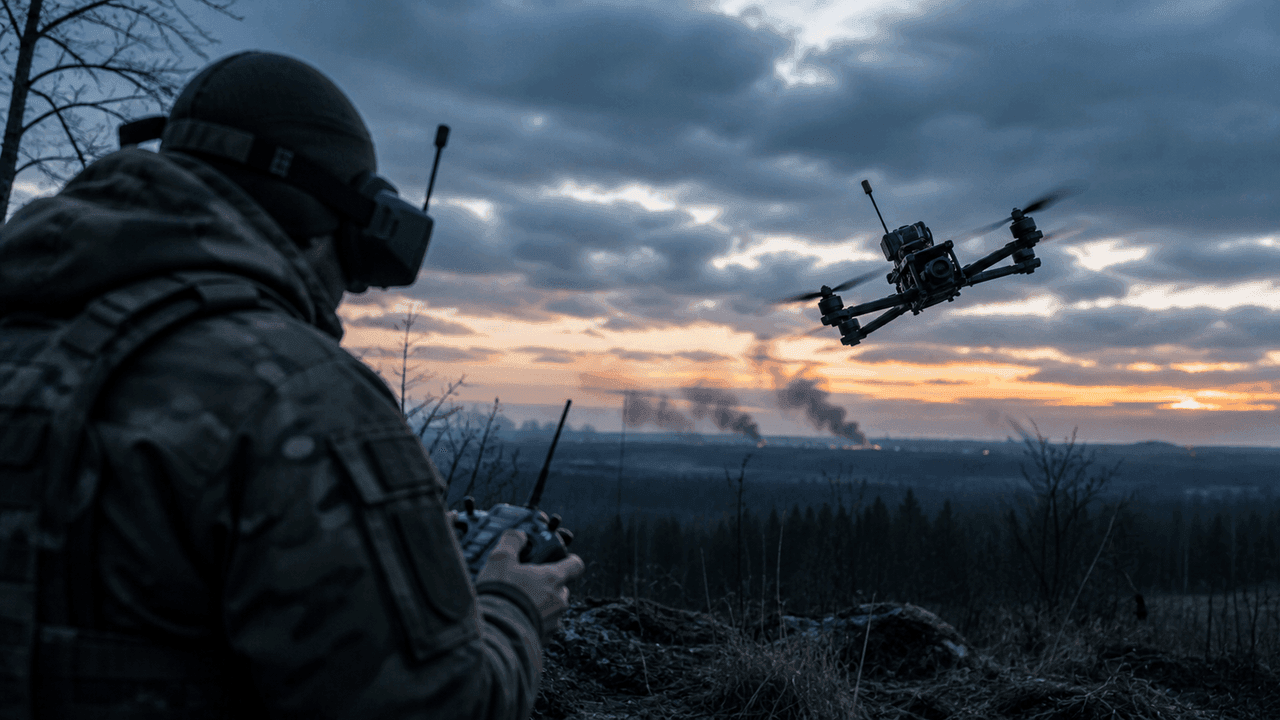
- A pilot can fine-tune the final approach by eye instead of relying only on coordinates.
- A force can push strike capacity down to much smaller units.
Older buying logic assumed precision was scarce. FPV drones broke that assumption. A platoon-level or company-level fight can now include repeated cheap attack attempts against vehicles, shelters, antennas, logistics nodes, or single positions. That does not replace artillery. RUSI's point is exactly the opposite: small drones are most effective when they make heavier systems work better, not when commanders imagine they can stand in for the whole fires picture.
The practical result is a new kind of battlefield consumption. Batteries, video links, motors, airframes, payload integration, and pilot training all become part of daily combat throughput. In other words, FPV warfare looks less like a boutique capability and more like industrialized attrition.
The frontline kill chain is now shorter and denser
The older sequence was familiar: identify a target, pass coordinates, wait for approval, wait for a firing asset, then assess the damage. FPV systems shortened that loop.
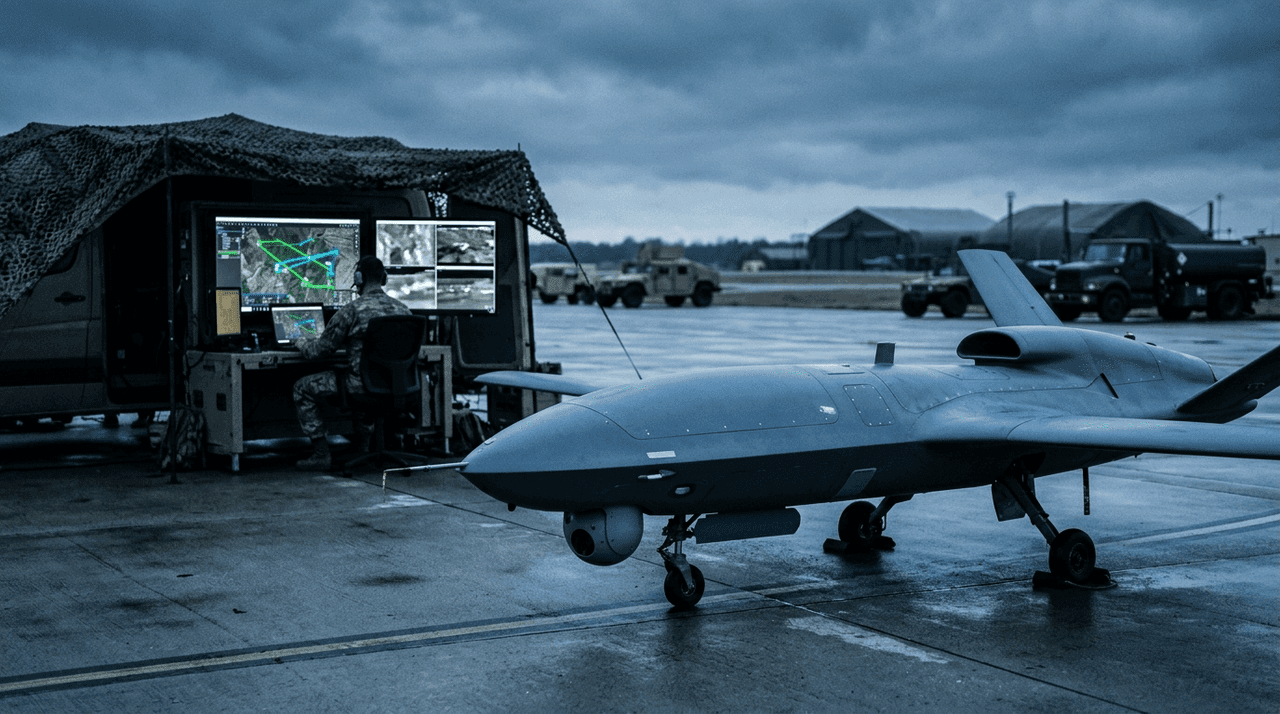
In the current model, small ISR drones, observers, and digital battle-management tools feed targets to FPV teams or one-way attack drones much faster. Sometimes the same crew handles search, confirmation, and final strike. Sometimes the FPV drone itself becomes the last-mile precision layer for a wider hunter-killer chain.
That is why the vocabulary around modern drone warfare now overlaps so much:
- ISR drones for steady spotting
- FPV drones for the final visual attack
- loitering munition systems for longer-range one-way strike
- electronic warfare for disruption and denial
- anti-drone systems for defense against all of the above
CSIS described Operation Spider's Web as a turning point in asymmetric warfare because cheap, home-built systems achieved a strategic effect through deception, precision, and coordination. Even where FPV drones are not the only weapon in that kind of operation, the broader lesson is the same: cheap unmanned systems can now create strategic friction once they are wired into a credible targeting and logistics system.
FPV is a training system, not just a platform
A common mistake is to talk about FPV drones as if the value sits only in the aircraft. In reality, the platform is only one layer. The real combat capability sits in a stack:
- trained pilots
- standardized payload integration
- repair and replacement workflow
- target selection discipline
- frequency management
- battle damage assessment
- adaptation under EW pressure
That last point matters most. FPV warfare evolves fast because operators get instant feedback. A failed strike is not a theory problem. It is a recorded loss with visible causes: a weak video link, poor antenna discipline, an overloaded pilot, a late target handoff, the wrong payload, or an EW environment that shifted during the sortie.
For militaries, that means FPV capability cannot be bought only as hardware. It has to be built as a training-and-learning system. The units that improve fastest are often the ones that close the feedback loop fastest.
Electronic warfare changed FPV design, and FPV changed EW in return
The modern battlefield does not allow clean radio conditions for long. Once both sides saw how much damage RF-linked drones could do, the next move was obvious: jam them, spoof them, track them, and force a redesign.
This is why FPV drones and electronic warfare now co-evolve almost constantly.
Operators adapted through:
- frequency agility
- directional antennas
- different video-link architectures
- more disciplined route planning
- tighter hunter-killer timing
- mixed fleets with different roles and signatures
Defenders adapted through:
- RF sensing
- layered jamming
- optical and thermal detection
- kinetic interceptors
- hardened positions
- denial of launch areas and logistics nodes
The battlefield effect is important. FPV drones are not unstoppable. But they are cheap enough, plentiful enough, and adaptable enough that forcing a single defensive solution rarely works for long. This is why counter-FPV is becoming a systems problem rather than a gadget problem.
Fiber-optic FPV changed the jamming equation
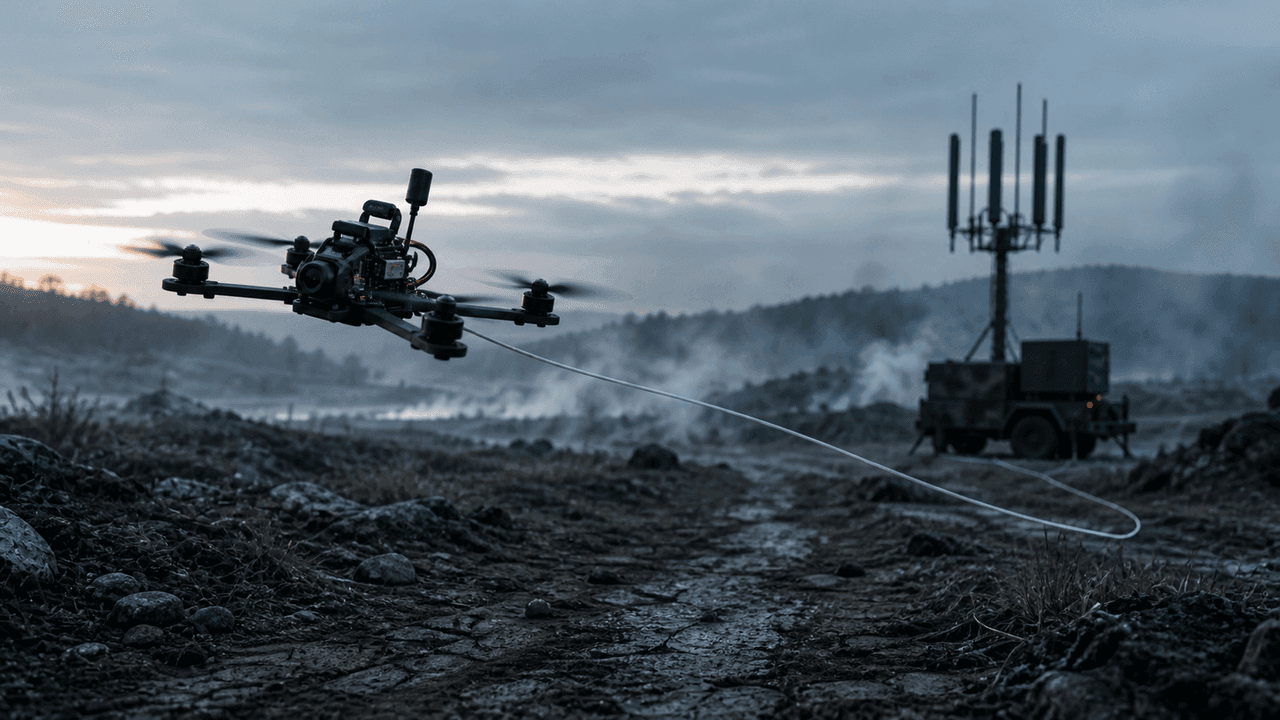
One of the most important developments of 2025 was the wider operational attention given to fiber-optic-controlled FPV drones. NATO's 2025 innovation challenge and the U.S. Army's current discussion both frame the same problem clearly: if command and video travel through a fiber-optic tether instead of a normal RF link, classic EW jamming becomes much less useful against that control path.
That does not mean fiber-optic drones are invulnerable. It means one of the defender's most comfortable assumptions stops working.
The implications are serious:
- RF disruption loses part of its value against the control link
- optical, acoustic, thermal, and short-range kinetic layers matter more
- low-signature, close-in threats become harder to dismiss
- forces have to think in terms of detect-track-neutralize, not just jam-and-move
NATO's challenge statement is revealing here. It does not pretend there is a silver bullet. It asks for detection, prioritization, tracking, and neutralization architectures. That is the right frame. Fiber-optic FPV is not just a new drone type. It is a stress test for the whole counter-UAS stack.
FPV drones reshaped battlefield economics
The economic effect of FPV drones is bigger than their unit price. Their real value comes from how they re-price the battlefield.
A cheap one-way or pilot-guided system can force a defender to spend more on:
- concealment
- mobility
- dispersal
- electronic warfare
- local air defense
- camouflage discipline
- logistics hardening
This is the same logic that made cheap ISR drones so disruptive earlier in the war. Once a force can be found and then attacked quickly with a relatively cheap system, the cost of doing nothing rises sharply.
The economics cut both ways. An attacker that leans too hard on FPV drones without solving production quality, supply chains, batteries, crew rotation, and mission planning will burn through inventory with no strategic return. This is why RUSI warns against fantasy thinking. Drones create leverage, but only when they are built into a wider force design.
What FPV drones changed in modern doctrine
The doctrinal shift is already visible.
1. Frontline units now expect their own strike options
Units increasingly plan around having direct access to small UAV effectors instead of waiting for every fire mission to be served by higher echelons.
2. Concealment discipline matters more than before
If small ISR drones and FPV teams can work together at scale, time spent exposed becomes more dangerous. A visible vehicle, a cluster of crew, or an ammunition point can become a target faster than older doctrine assumed.
3. Counter-UAS is now a routine requirement
Anti-drone systems are no longer niche assets for key sites only. In any high-threat theater, they are becoming a basic survival layer.
4. Attritable mass has real operational value
Being able to lose aircraft and keep flying matters. This is one reason FPV drones, loitering munition systems, and cheap autonomous UAV programs now sit in the same strategic conversation.
The limits of FPV warfare matter as much as the hype
FPV drones did not make tanks irrelevant, artillery obsolete, or airpower unnecessary. They added a new layer of lethality and responsiveness, but they still have clear limits.
- range is finite
- payload is constrained
- weather still matters
- pilot skill is uneven
- logistics can become the bottleneck
- defenses adapt
- urban clutter and a contested spectrum complicate their use
The most serious analytical error is to confuse being everywhere with being enough on its own. FPV drones matter because they are now built into a larger combat system that includes ISR drones, loitering munition families, EW, and anti-drone systems. Pulled out of that system, they are much less decisive.
What 2026 militaries are really learning
The key lesson for 2026 is not "buy more quadcopters." It is more demanding than that.
Militaries are learning that modern drone warfare depends on five connected disciplines:
- mass production and repair
- operator training
- resilient communications and autonomy layers
- integrated ISR-to-strike workflows
- layered counter-UAS defenses
That is why the most interesting procurement stories are no longer about one aircraft. They are about software-defined kill chains, distributed sensors, EW resilience, and cheap autonomous mass.
FPV drones were the gateway technology that forced many of these lessons into the open.
FPV warfare is now a production and supply-chain problem
Once FPV drones proved that cheap guided attack could create a serious tactical effect, the next bottleneck stopped being imagination and became industrial discipline. A military that wants FPV at meaningful scale has to solve much more than airframe assembly.
It has to solve:
- motor and ESC consistency
- camera and video-link quality
- battery procurement and safe charging cycles
- payload integration standards
- field repair kits and spare parts
- test ranges and pilot throughput
- firmware, frequencies, and update control
This is one reason the phrase future drone technology can mislead if it overplays AI and ignores manufacturing. The uncomfortable reality of FPV warfare is that a force can grasp the concept perfectly and still fail in the field if it cannot keep enough working aircraft, batteries, and trained crews in rotation.
The production lesson reaches far beyond one war. NATO and other militaries increasingly care about attritable mass not only because it is cheap in theory, but because cheap systems only generate combat value when they can be made, repaired, and replaced in a disciplined flow. A prototype that performs well on one range day is not yet a military capability. A drone ecosystem that can absorb losses, retrain crews, update payloads, and sustain sortie volume is.
The most effective FPV units do not work alone
One of the easiest ways to misunderstand FPV warfare is to picture a lone pilot flying a cheap drone into a target and stopping the story there. In practice, the stronger units work as small distributed systems.
A workable FPV strike team often depends on:
- ISR drones to find or confirm targets
- relay or communications support in dense terrain
- observers to judge target value and timing
- digital tools or voice discipline for handoff
- repair and re-arm crews behind the line
This is why the gap between an improvised FPV culture and a scalable drone force is so large. The hardware can look similar from far away, but the output is very different. One team launches isolated attacks. The other runs a repeatable strike process.
That distinction is central to military adaptation in 2026. Serious forces are not only asking how many FPV drones they can buy. They are asking how to connect FPV drones to ISR, artillery, ground maneuver, and counter-UAS in one coherent loop. The answer shapes force design far more than any single aircraft's spec sheet.
FPV drones changed defensive design at the small-unit level
The most visible tactical effect of FPV drones is on the attacker. The more lasting institutional effect may be on the defender.
Small-unit defense now has to assume that being exposed can turn into a direct, cheap precision attack with very little delay. That changes routine behavior:
- vehicles disperse sooner
- antennas go up more carefully
- resupply timing becomes more sensitive
- static positions get riskier over time
- decoys and concealment gain more practical value
In that sense, FPV drones change battlefield design even when they do not destroy a target. They change how long a position can stay visible, how far vehicles can move safely without overhead protection, and how much local counter-UAS depth a force needs just to keep its freedom of movement.
This is one reason modern anti-drone systems increasingly include passive measures, observation discipline, rapid movement doctrine, and local hardening rather than only active interceptors. The threat is too cheap and too frequent to answer only with expensive effectors.
Where FPV still struggles
For all their influence, FPV drones remain awkward tools in several mission profiles.
They are less attractive when the mission needs:
- very long endurance
- a heavy payload
- deep-range strike beyond the practical FPV profile
- wide-area ISR persistence
- reliable all-weather performance
- minimal dependence on pilot skill
This matters because the future of unmanned warfare is not "everything becomes FPV." It is a layered stack. FPV drones own one part of the problem extremely well: cheap, flexible, visual final attack near the tactical edge. They do not solve everything that loitering munition families, ISR drones, or larger autonomous UAV platforms are meant to solve.
What NATO and other militaries are likely to copy, and what they should not
The most sensible lesson from FPV warfare is not to copy every battlefield improvisation literally. It is to work out what scaled and why.
What is likely to be copied:
- lower-echelon access to their own drone strike options
- more formal FPV pilot pipelines
- tighter ISR-to-strike integration
- broader investment in counter-UAS at unit level
- more tolerance for expendable unmanned mass
What should not be copied blindly:
- overreliance on one drone class
- the belief that cheap attack can replace the depth of artillery
- procurement that chases social-media footage instead of operational fit
- assuming today's battlefield setup will look identical in every theater
The wider lesson is disciplined adaptation. FPV drones changed modern warfare not because one quadcopter suddenly became decisive, but because cheap guided attack found a stable place inside a much bigger system of ISR, EW, logistics, training, and countermeasures.
Why FPV drones matter beyond Ukraine
The temptation in Western defense circles is to treat FPV warfare as highly specific to one front, one logistics culture, or one phase of one war. That is too narrow.
The deeper lesson travels. Any military operating where precision munitions are expensive, tactical ISR is widely available, and the electromagnetic environment is contested will feel pressure toward cheaper guided attack layers. The exact airframes may differ. The software stack may differ. The supply chain may differ. But the logic holds.
This is also why the most serious discussion around FPV drones increasingly overlaps with broader questions about industrial resilience, battlefield software, and attritable autonomous systems. Once commanders get used to a world where small units can create local precision effects quickly, they do not easily go back to older assumptions. That expectation changes doctrine, procurement, and training.
The next phase is not just better pilots, but smarter integration
The next FPV competition will not be won only by who flies faster through a gap. It will be won by who connects FPV drones better to everything around them.
That includes:
- faster target handoff from ISR drones
- better prioritization of target value
- more disciplined use of payload types
- tighter coordination with artillery and ground maneuver
- stronger ties to anti-drone systems and air defense awareness
In other words, the future of FPV warfare is less about the myth of the lone ace operator and more about system integration under pressure. That is the real military lesson carrying into 2026.
Expect the FPV lesson to spread into procurement doctrine
Even armies that never face the exact same battlefield conditions are likely to absorb one core lesson from FPV warfare: small guided unmanned systems now deserve a formal place in force structure, training plans, and munitions thinking.
That will show up in doctrine as a question of balance. How much organic drone strike should sit at company level? How much should stay centralized? How should training, airspace discipline, and anti-drone protection evolve together? These are no longer niche questions. They are procurement and doctrine questions for every military trying to prepare for 2026 conditions rather than 2016 assumptions.
FAQ
Are FPV drones replacing artillery?
No. The stronger view in current military analysis is that FPV drones are most effective when they complement artillery, ISR, and conventional fires rather than replace them outright.
Why are fiber-optic FPV drones getting so much attention?
Because their control architecture weakens the value of traditional RF jamming against the command link, which forces defenders to rely more on layered detection and physical neutralization.
Are FPV drones the same as loitering munitions?
Not exactly. The categories overlap in practice, but FPV drones usually emphasize direct piloting and final visual control, while loitering munition systems are often built as more formal one-way strike products with different range and mission profiles.
What matters more in FPV warfare: the drone or the pilot?
Neither alone. The real capability comes from the full system: aircraft, pilot, payload, logistics, target handoff, and adaptation under EW pressure.
What is the main military effect of FPV drones in 2026?
They lowered the cost and delay of frontline precision strike while forcing every serious army to invest more in counter-UAS, dispersal, and tactical concealment.
Conclusion
FPV drones changed modern warfare because they made precision attack more distributed, more expendable, and more tightly linked to real-time ISR. Their long-term significance is not that they replace everything else. It is that they changed what "normal" frontline lethality now looks like.