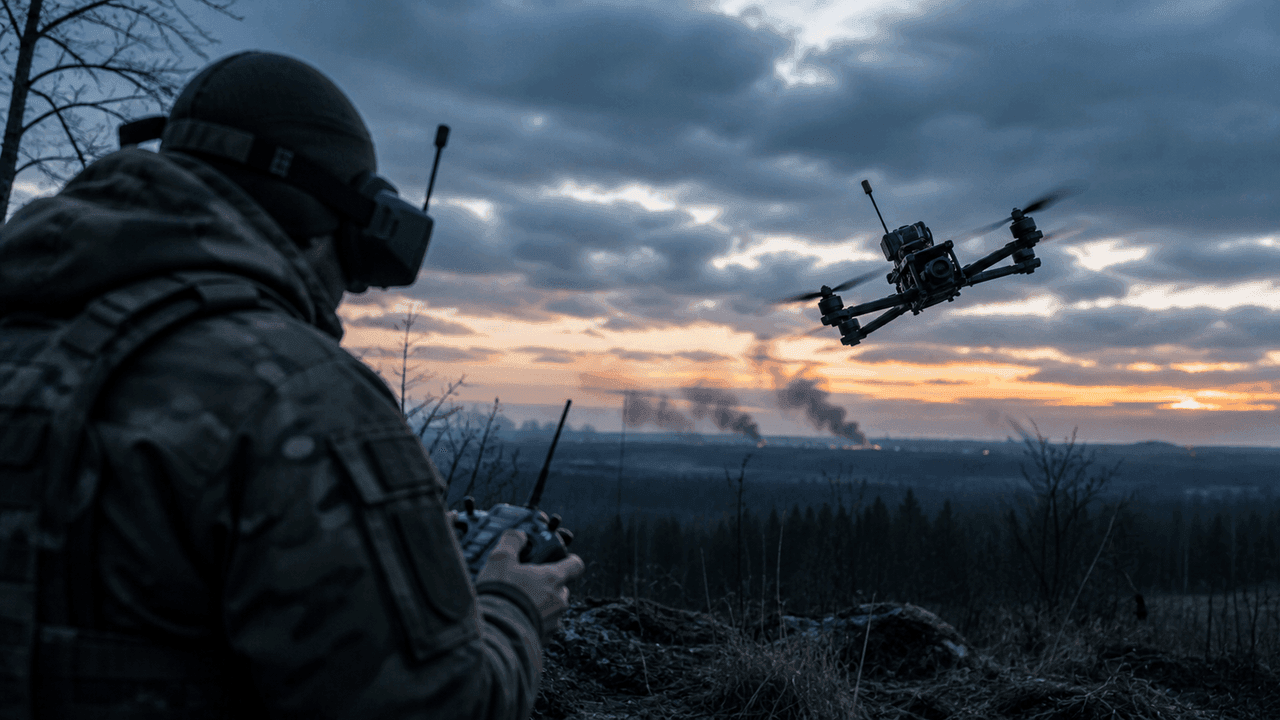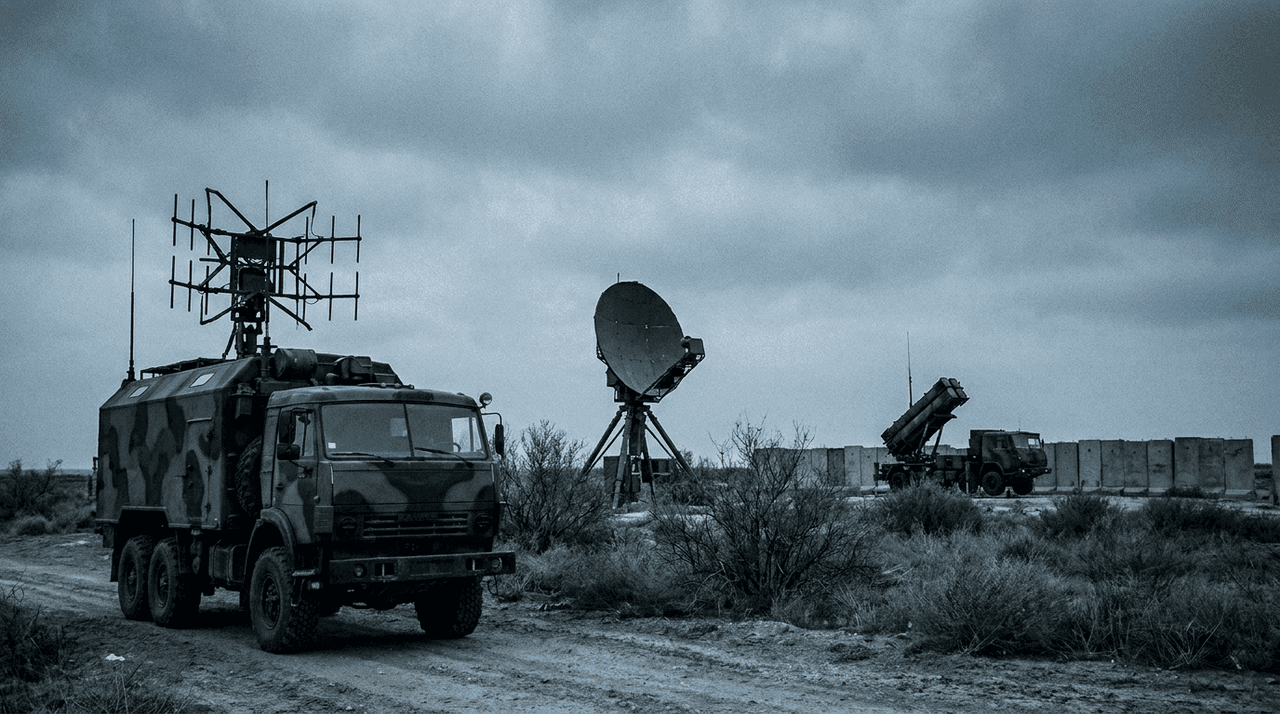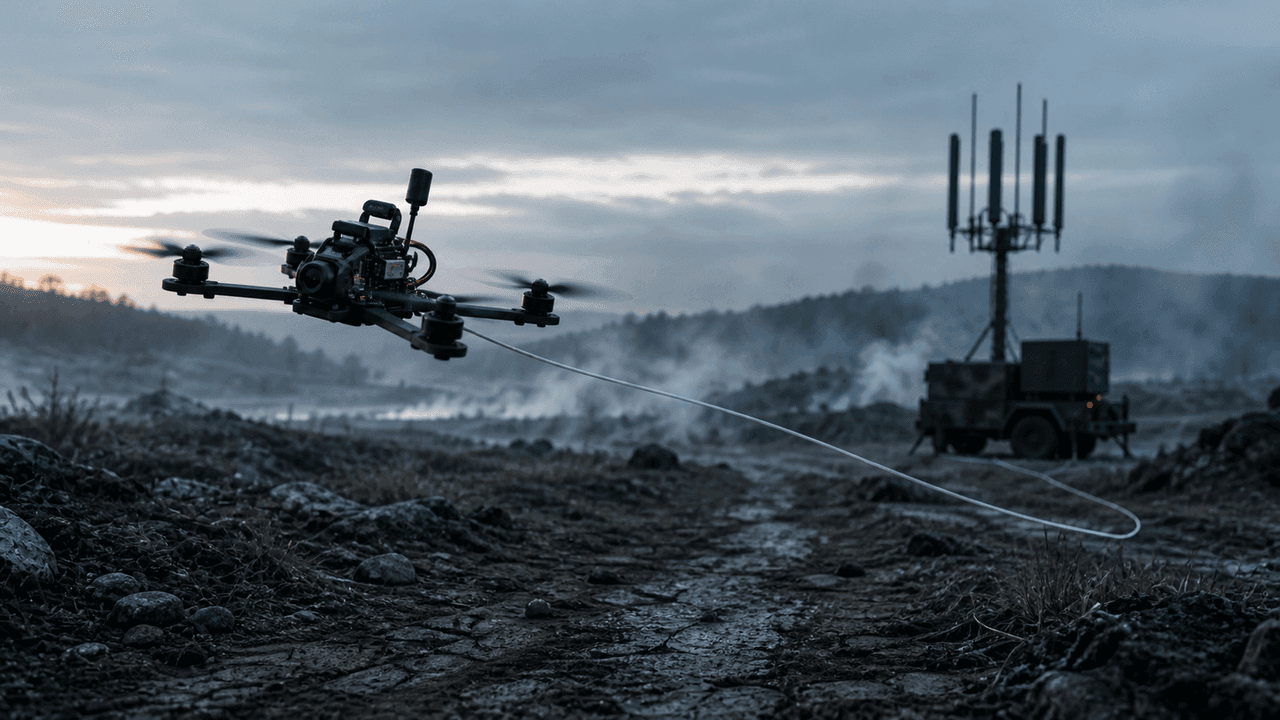
Fiber optic drones matter because they break one of the most comfortable assumptions in electronic warfare: that you can shut down a cheap unmanned aircraft just by hitting its radio link. Once the commands and video travel down a physical fiber optic cable, ordinary RF jamming is no longer the answer.
That is why fiber optic FPV drones became such a big topic in 2025 and 2026, across NATO, the U.S. Army, and battlefield analysis. The claim that these aircraft "cannot be jammed" needs some care, but the core point is real. You cannot shut them down the usual way, by suppressing the wireless control path, because that path is no longer the weak link.
The shift is bigger than one new type of drone. Fiber optic drones force a rethink of counter-UAS thinking, detection priorities, and the cost of close-range defense.
What a fiber optic drone actually changes
A normal FPV or small tactical UAV usually leans on some mix of:
- RF control
- RF video
- GNSS support
- onboard stabilization and routing logic
An electronic warfare team can attack that chain in several places, and the control and video link are often the first target. Fiber optic drones change that picture. The operator's commands and the video feed run through a cable spool, physically connected between the drone and the operator or the launch point.
This changes the logic on the battlefield right away.
- Radio jamming matters much less against the control path.
- The link can stay stable even where the RF environment is crowded.
- The operator can keep clear control where an ordinary FPV would already be degrading.
That does not mean the aircraft is safe from everything. It still has limits on aerodynamics, on its approach line, on visibility, on managing the spool, and it can still be physically intercepted. But one easy defensive shortcut is gone.
Why "cannot be jammed" is both true and false
The phrase works in a headline, but it is too loose for serious analysis.
It is true in one important way
If the main command-and-video path runs over fiber optic cable, then traditional RF jamming against that control link is far less effective. This is the operational point drawing so much attention.
It is false in a wider way
The aircraft can still be beaten in other ways:
- destroy it physically
- spot it optically, acoustically, or by heat
- intercept it close to the place you are defending
- hit the launch chain or the operator's position
- force a flight path the drone cannot manage
- exploit the limits of the tethered design itself
So the accurate version is not "fiber optic drones cannot be stopped." The accurate version is: fiber optic drones are much harder to jam through their control path with classic RF.
That distinction matters, because sloppy wording leads to bad procurement and bad tactics.
Why militaries care so much in 2026
The worry is simple. Counter-UAS teams got used to fighting small drones through the spectrum. Once a threat moves part of its survival into a physical cable, the defender loses one of the fastest, easiest responses.
That is why NATO's 2025 innovation challenge on fiber-optic-controlled FPV threats is so telling. The challenge does not treat this as a narrow technical quirk. It frames the problem around:
- detection
- prioritization
- tracking
- defeat architecture
The U.S. Army's current treatment goes the same way. Fiber optic drones are presented not as a curiosity but as a serious counter-UAS challenge. That wording matters. It tells you the problem has moved from anecdote into force-protection planning.
Fiber optic FPV changes the economics of defense
The biggest effect may be economic rather than purely technical.
Against an ordinary RF-linked FPV threat, a defender can often lean hard on jamming, on detecting RF emissions, or on broad spectrum disruption. Against a fiber optic FPV threat, the defender has to put more into other layers:
- optical and thermal sensing
- very short-range interceptors
- physical barriers and netting at some fixed sites
- tighter local watch over likely approach corridors
- faster sorting of small, low-signature targets
That matters because those layers can take more people, cost more, or be harder to scale.
In other words, fiber optic drones do not just change the duel in the air. They re-price the defender's whole setup.
The new weak spots of fiber optic drones
It would be a mistake to read the trend as a one-way win. Fiber optic drones solve one problem and create others.
Range and spool limits
A cable sets hard practical limits. Range, spool size, drag, and route complexity all become design choices. The mission cannot ignore the physical reality of the tether.
Flight-path limits
A fiber optic cable behaves differently in cluttered ground. Terrain, buildings, vegetation, and tricky maneuvering can all affect how reliable the mission is.
Payload and performance trade-offs
The more weight and bulk the spool system takes, the more it eats into range, payload, endurance, or maneuver margin.
Launch and operator geometry
A physical tether changes how you think about launch positions, operator safety, concealment, and recovery.
So while fiber optic drones cut one kind of vulnerability, they do not make a perfect system. They just move the contest into a different space.
Why fiber optics matter most in close-range strikes
The design fits best with low-altitude, short-to-medium-range, visually guided strikes, exactly the kind of work that made FPV drones so important in the first place.
This is one reason fiber-optic control gets so much attention around:
- FPV strike drones
- one-way attack drones in local tactical roles
- low-signature, close-range threats
The closer the mission sits to the front edge, the more a jam-resistant control path is worth.
Countering fiber optic drones takes a different mindset
The defender's mistake would be to treat fiber optic drones as just another RF target with a bit more resilience. They are not. The control problem has moved.
A stronger counter-UAS posture against this threat usually means combining several layers:
1. Better visual and thermal detection
If RF emissions tell you less, then electro-optical and thermal awareness matter more.
2. Faster local sorting
Short-range small-drone threats leave little time to think. The kill chain has to be faster.
3. Kinetic or physical defeat
If jamming loses some of its value, then physically defeating the aircraft matters more.
4. Hardening likely target geometry
Some sites will need to think harder about likely approach paths, dead ground, and local cover.
5. Pressure on launch and support
The operator, the launch point, and the wider logistics chain are still part of the system, and they can still be hit.
This is why anti-drone systems in 2026 increasingly means a layered setup rather than one sensor and one jammer.
Fiber optic drones also expose the limits of EW-first thinking
For years it was tempting to talk about electronic warfare as if it were the default answer to every small-drone threat. Fiber optic drones expose the limits of that idea.
EW still matters. It is still useful for:
- other RF-linked drones in the same area
- GNSS disruption
- detecting and shaping wider unmanned activity
- supporting the rest of the defense
But fiber optic control shows that owning the spectrum is not enough on its own. Defenders need to win even when the enemy does not fully depend on the spectrum for the critical control path.
That is a major doctrinal lesson.
What this means for the future of drone warfare
Fiber optic drones are not the final form of drone design. They are one branch of fast adaptation under battlefield pressure.
Their significance is in what they prove:
- cheap drone design can evolve fast under EW pressure
- survival can shift from software and RF behavior to physical design
- counter-UAS teams cannot rely on one logic forever
- cheap unmanned systems keep finding ways to push the cost onto defenders
This is why fiber optic FPV is best read as part of a bigger story about adaptation in drone warfare. Every time one side locks in a defensive edge, the other side looks for a cheap way around it.
The likely 2026 pattern: mixed fleets, not one universal drone
The most realistic outcome is not that every unmanned aircraft goes fiber-optic. The likelier pattern is mixed fleets.
A force may want different drones for different problems:
- RF-linked FPV where speed and simplicity matter most
- fiber-optic FPV where EW pressure is heavy
- autonomous UAV layers where pilot burden or lost comms is the main constraint
- ISR drones for steady target development
That mixed-fleet logic is important. Fiber optics solve a specific problem. They do not replace the whole unmanned ecosystem.
How the spool-fed design changes mission planning
A physical tether does more than harden the control path. It changes how missions get planned.
With an ordinary FPV system, route planning leans heavily on radio geometry, likely jamming exposure, and a clear line to the target. With a fiber-optic drone, the planning has to account for the cable too.
So crews have to think about:
- how the spool will pay out across the ground
- whether the flight path risks snagging, wrapping, or cutting the line
- whether the target rewards a straighter or lower approach
- whether the launch point gives enough cover without losing control of the cable
This is one reason fiber optics are most compelling in certain tactical profiles rather than as a universal design. They are strongest where the jamming is harsh enough to justify the physical trade-offs.
Fiber optic drones are a warning against narrow counter-drone buying
One of the easiest mistakes in counter-UAS buying is to plan around the last threat instead of the next round of adaptation. Fiber optic drones are a clear example.
If a defense is built mainly around RF sensing and jamming, it may do well against a broad class of small drones and still struggle badly once the threat moves part of its control out of the spectrum.
That does not make RF tools useless. It means buying has to move toward layered setups that can survive a threat mutating.
A more resilient buying logic asks:
- what happens if the RF signs are weak or absent?
- can the system still detect, sort, and track a low-flying target?
- how do you defeat it once jamming is less useful?
- how many people does it take to keep coverage up?
- what happens when several drone types show up at once?
This is why fiber optic drones are strategically important even if their total numbers stay lower than ordinary FPV fleets. They expose the weak spots in narrow defenses.
Urban and fixed-site defense gets harder under fiber-optic pressure
The threat is especially uncomfortable around fixed positions and built-up areas.
In cities or semi-urban infrastructure, defenders already struggle with:
- cluttered backgrounds
- short reaction windows
- blocked lines of sight
- a high demand for telling targets apart
- limits on what effectors you can fire without collateral risk
A fiber optic FPV threat adds another layer of difficulty by cutting the defender's confidence that RF disruption will buy enough time. That pushes more value toward local sensors, passive protection, and short-range hard-kill or capture.
The fixed-site point is practical. Critical nodes like logistics areas, antenna fields, command posts, depots, and base access corridors need stronger close-in drone defense than a purely RF-centric model would suggest.
Why fiber optics do not make every other drone obsolete
The design is powerful, but it is not best for everything.
Ordinary RF-linked drones still hold advantages in many cases:
- simpler logistics
- easier scaling in some missions
- fewer physical routing limits
- more flexibility on some terrain
- less complexity for some operators
Likewise, autonomous UAV systems with stronger onboard navigation may solve entirely different problems, especially where pilot burden or route adaptation matters more than keeping a physical control link.
The realistic future is not a winner-take-all switch. It is a varied unmanned toolkit, where different links, control styles, and levels of autonomy get picked for different threat environments.
The strategic lesson is the speed of adaptation
The deepest lesson of fiber optic drones is not "buy cable-controlled drones." It is that the cycle of battlefield innovation is getting shorter.
One side builds an EW advantage. The other side answers with a physical link. Defenders start redesigning their detection and defeat layers. The next adaptation follows. This rhythm is becoming normal.
That is why the most serious militaries in 2026 are putting more value on:
- rapid experiments
- modular counter-UAS design
- mixed sensor setups
- quick feedback from the field
- cheaper ways to adapt
Fiber optic drones matter because they are a concrete example of how fast small-drone warfare now mutates under pressure. Any army that treats today's solution as final is already behind.
Defenders need a response model, not a slogan
The phrase "jam-proof drone" can easily push planners into the wrong reaction: panic or denial. Neither is useful.
What defenders actually need is a response model.
A useful model asks four questions in order:
- How early can the system detect a likely fiber-optic threat?
- How fast can it judge whether the target is relevant and dangerous?
- Which defeat options still work at that range and geometry?
- How does the site recover if the first engagement fails?
This is a far more practical frame than arguing endlessly about whether "cannot be jammed" is technically exact. The real question is whether a defense still works when jamming loses its value.
The 2026 lesson is not panic, but layered realism
Fiber optic drones are important, but they should not trigger magical thinking in either direction. They do not prove that small drones have become unstoppable, and they do not prove that existing defenses are useless. They prove something narrower and more important: cheap drone threats are adapting faster than single-layer defenses.
That is the lesson worth carrying forward. Defenders need layered realism, not one-tool confidence. Attackers need to remember that every new survival trick brings new trade-offs. And buyers need to stop assuming the next drone threat will look exactly like the last one.
Fiber optics are a tactical adaptation, not a universal end state
This is worth keeping in view. Fiber optic drones matter because they answer a specific battlefield pressure: heavy reliance on RF denial. That makes them very relevant, but also very context-dependent.
The right conclusion is not that every future drone should use a spool. The right conclusion is that modern small-drone design is becoming opportunistic and adaptive. Wherever a cheap physical redesign can cancel a familiar defensive edge, someone will try it. That is the deeper military lesson inside the fiber-optic trend.
Training and drills matter as much as hardware
A counter-UAS team cannot solve this threat by buying a sensor package and assuming the job is done. Fiber-optic threats compress the time you have and cut the value of the familiar RF response, which means drills matter more.
Defenders need to practice:
- fast visual cueing from local observers
- sorting targets under clutter and uncertainty
- handoff between sensors and short-range effectors
- recovery when the first intercept fails
- protecting likely approach corridors and exposed operator points
This is the practical side of the fiber-optic lesson. Buying still matters, but reaction speed and team discipline matter just as much.
Fiber-optic drones also create a production and deployment constraint
The strength of fiber-optic control creates a new weakness in building and fielding: the system gets physically harder to make, move, and deploy well.
A military that wants fiber-optic drones at scale has to solve more than the reel itself. It has to solve:
- spool quality and line integrity
- launch discipline to avoid snags and self-tangling
- route planning around obstacles and vegetation
- field handling in mud, debris, and damaged infrastructure
- crew training so the tether becomes an advantage, not a liability
This matters because fiber-optic drones are not simply "better FPV." They are a different operational trade-off. A force that treats them as a drop-in replacement for ordinary RF-linked systems may find that physical handling, not jamming, becomes the new bottleneck.
The key question is where fiber-optic drones fit in the wider fleet
The smarter military question is not whether fiber-optic drones are better in the abstract. It is where they fit in a mixed fleet that also includes:
- RF-linked FPV drones
- loitering munitions
- ISR drones
- autonomous route-following aircraft
- counter-UAS defenses
In some missions, fiber-optic control may be the best answer because it keeps control alive under heavy jamming. In others, the physical tether adds too much range, routing, or handling friction. This is why serious planners are likely to treat fiber-optic drones as a mission-specific layer inside a wider unmanned setup rather than as a universal future for all tactical drones.
FAQ
Are fiber optic drones completely jam-proof?
They are much harder to defeat through classic RF jamming of the control path, but that does not make them invulnerable overall.
Why are they such a problem for counter-UAS teams?
Because they cut the value of one of the defender's most familiar and scalable responses: attacking the wireless control link.
Are fiber optic drones only relevant in war?
This is mainly a military and security issue, because the value is strongest in contested environments where RF denial is expected.
What becomes more important once jamming is less effective?
Visual and thermal detection, fast local sorting, and short-range physical defeat all become more important.
Will fiber optic drones replace normal FPV drones?
Probably not across every role. A mixed fleet is the more realistic outcome, with fiber optics used where the EW environment justifies the trade-offs.
Conclusion
Fiber optic drones matter because they shift the duel between small unmanned aircraft and electronic warfare teams. They do not make drones unstoppable, but they do take away one of the defender's easiest assumptions: that breaking the RF link is enough. In 2026, that is no longer a safe foundation for counter-UAS planning.