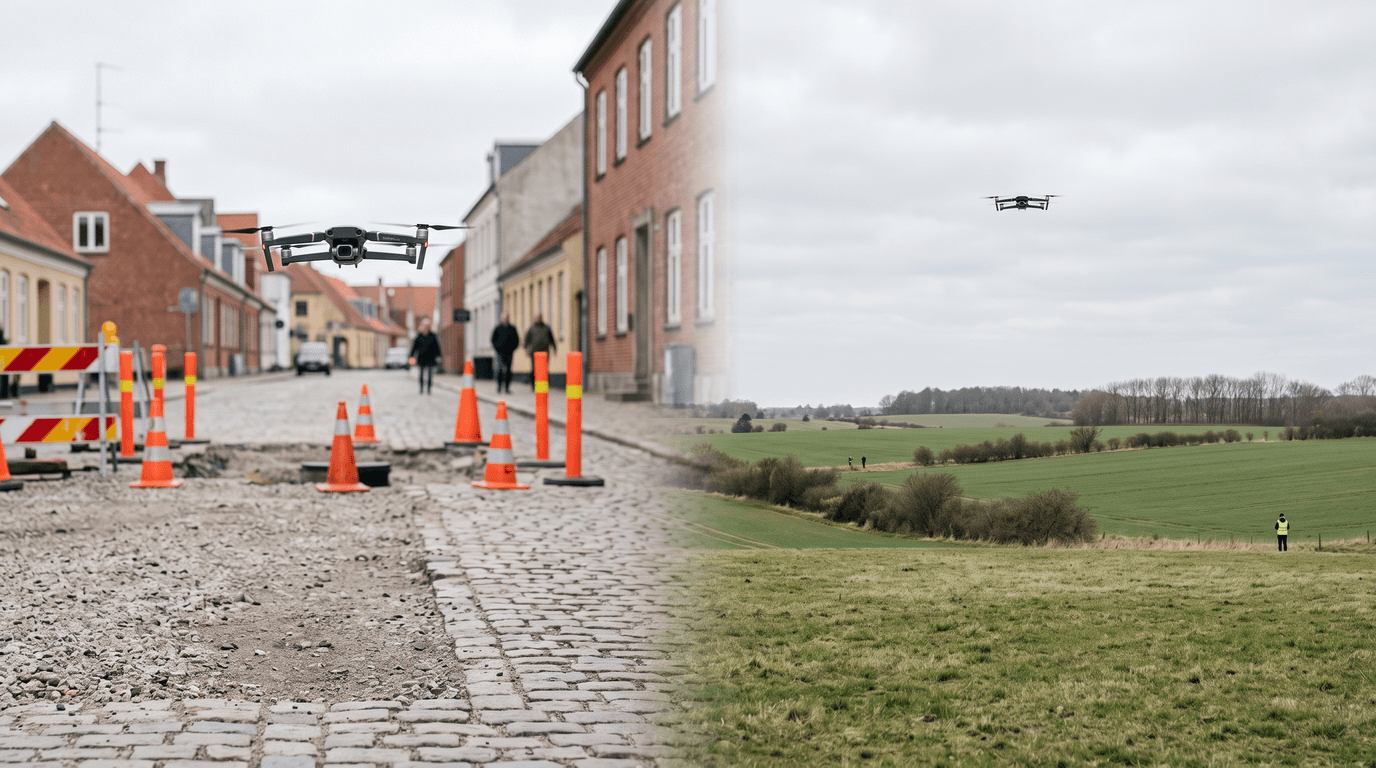
Most of the drones you see today fly within sight of their pilot. That single limit — keep the aircraft in view — is what holds back parcel delivery, long-distance inspection, and most of the commercial work people picture when they imagine an automated sky. Lift it, and the economics change.
In EU rules, lifting it has a name, a category, and a precise set of conditions. The question worth asking is not whether drones can fly beyond sight — they can — but what it actually takes to do it legally here, and why that single capability is the hinge the whole industry turns on.
What BVLOS is, and why the Open category bans it
BVLOS means beyond visual line of sight: the remote pilot can no longer keep the drone in unaided view. The Open category — where almost every hobby and entry-level commercial flight happens — is built around the opposite assumption. You keep the aircraft in sight and below 120 m.
The moment you fly beyond visual line of sight, the operation leaves the Open category and enters the Specific category. (Flying above 120 m or with a drone over 25 kg does the same.) BVLOS is not a mode you switch on. It is a different regulatory world, with its own training, documentation, and authorisation.
The Specific category: four routes to a BVLOS yes
There is no single "BVLOS licence." Authorisation comes through one of four routes, scaled to the risk of the operation.
- STS-02 — the standard scenario for BVLOS with airspace observers over a controlled ground area in a sparsely populated environment. It requires a C6-class drone. The operator writes an operations manual, the pilot passes the required STS competencies, and the operator files a declaration. No case-by-case approval is needed once the declaration is accepted as complete. (STS-01 is its visual-line-of-sight counterpart and uses C5.)
- PDRA — predefined risk assessments. PDRA-S02 mirrors STS-02 but covers legacy drones without a C5/C6 mark, and needs an operational authorisation. PDRA-G01 to G03 cover BVLOS in sparsely populated areas and inspection routes.
- SORA — the full Specific Operations Risk Assessment, a ten-step methodology. You evaluate ground risk and air risk, combine them into a SAIL (Specific Assurance Integrity Level, I to VI), and demonstrate the operational safety objectives at a robustness that rises with the SAIL. The national authority then issues an operational authorisation.
- LUC — a Light UAS Operator Certificate. A mature organisation with a working safety management system may receive privileges to authorise some or all of its own operations. A LUC is valid across the EU and remains valid as long as the organisation stays compliant.
In Latvia, the authority on the other end of all of this is CAA Latvia, through e.caa.gov.lv.
Why BVLOS changes the market
Visual line of sight is an economic ceiling. One pilot, one aircraft, limited useful range. Most commercial value sits beyond that line.
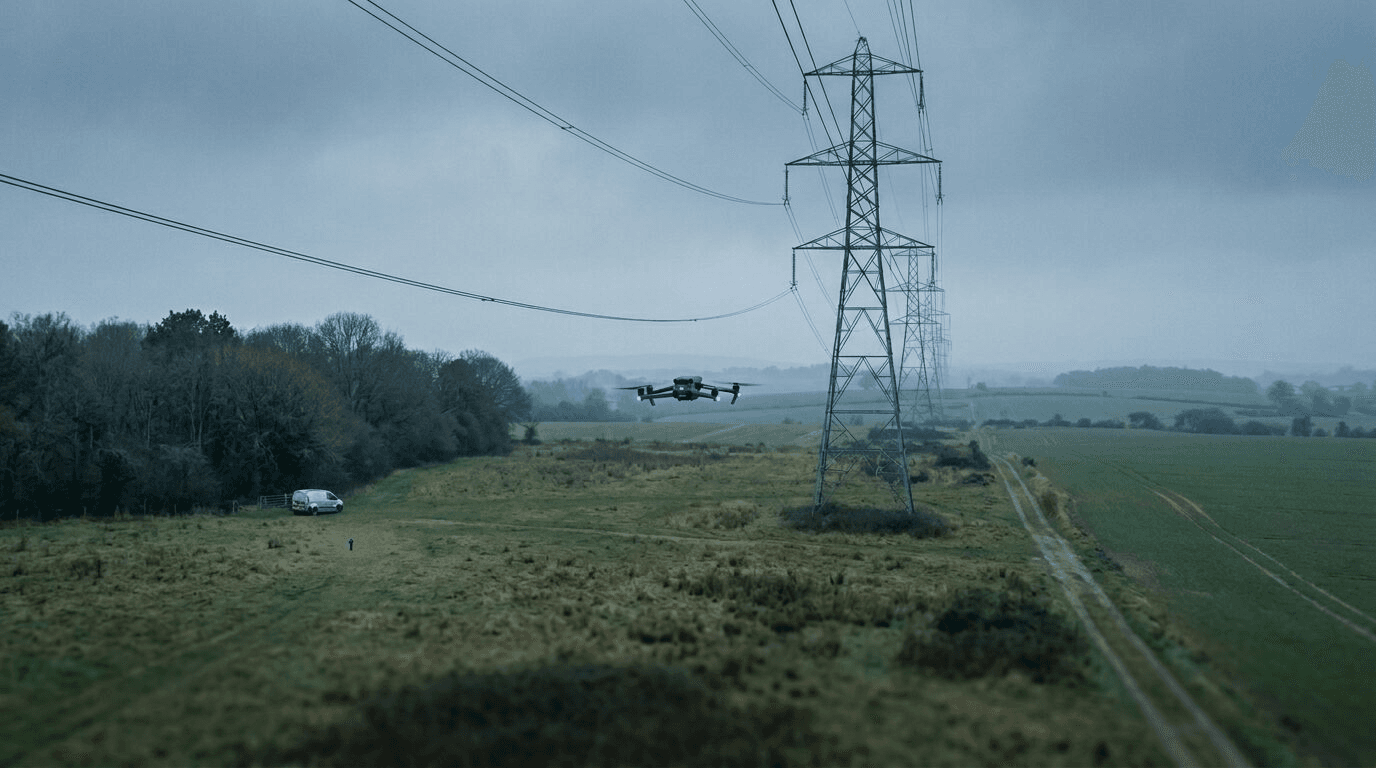
BVLOS is the gateway to the work that gets quoted in every drone-industry forecast: parcel and medical delivery; linear inspection of power lines, pipelines, rail and roads, where an aircraft flies a corridor for kilometres; precision agriculture across large fields; and faster emergency response. The common thread is labour. One remote pilot supervising an aircraft over distance — instead of physically walking the line behind it — is what turns a demonstration into a service.
The real bottleneck is knowing what else is in the air
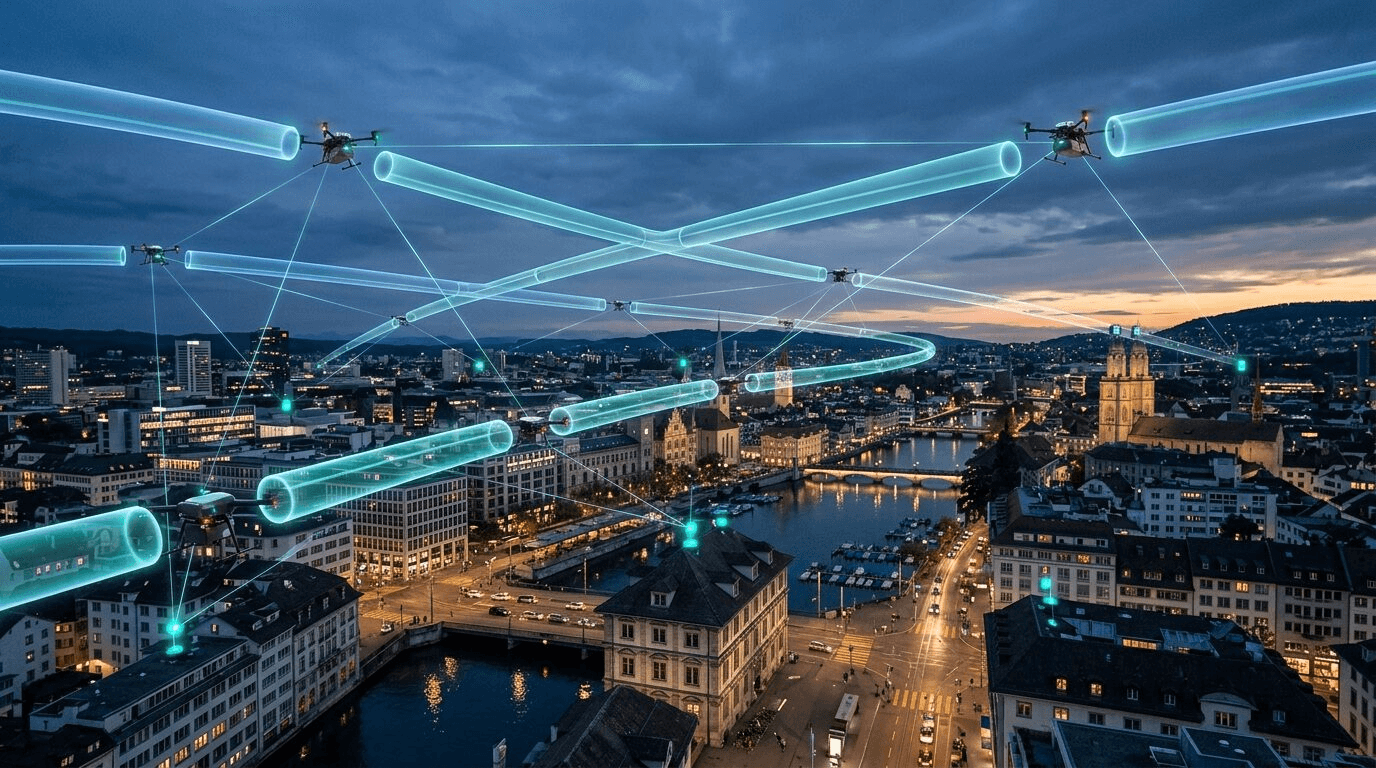
The hard part of BVLOS is not the airframe. Modern drones already fly programmed routes reliably. The hard part is detect-and-avoid and airspace integration: when the pilot cannot see the sky around the drone, something else has to supply the traffic picture.
That is what U-space (Regulation (EU) 2021/664) is built to do. Network identification, a traffic information service, and flight authorisation let many drones share low-altitude airspace without each one needing a human watching the horizon. Routine, networked BVLOS at scale depends on U-space being deployed — not just on better aircraft.
What this means for a Latvian pilot — our reading
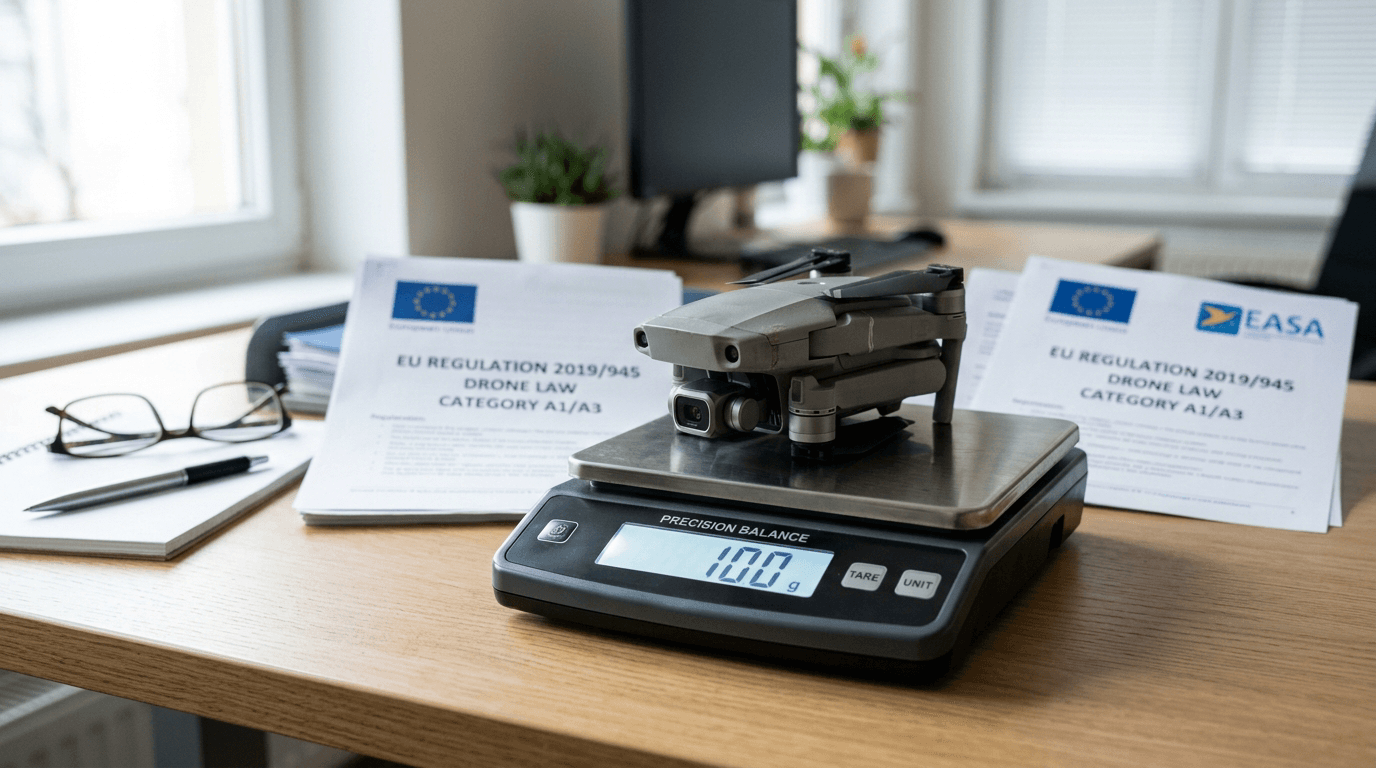
If you fly Open-category A1/A3, BVLOS is simply off the table. Keep the drone in sight; that rule is not waivable in the Open category.
If you want to operate BVLOS — for inspection, mapping, or delivery — you are committing to the Specific category: an operations manual, the right class of aircraft or a completed risk assessment, and an authorisation or declaration through CAA Latvia. That is a real step up in cost and discipline, and it is meant to be.
Our reading: STS-02 standardised one slice of BVLOS, but most ambitious operations are still authorised case by case. The jump to routine automated flight waits on U-space. The technology is ready. The airspace integration is the work that remains.
What to watch
- The spread of designated U-space airspace across the EU, which is the precondition for networked BVLOS.
- New and updated PDRAs that turn yesterday's bespoke SORA into tomorrow's checklist.
- Detect-and-avoid standards maturing, which is what finally lets one operator scale beyond a single aircraft in sight.
The categories of operation — Open, Specific, and Certified — are covered in the Categories of Operation lesson. Test what you know on the Aviation Regulation practice set.