By 2026, asking whether autonomous drones are "coming" is pointless. They are here. The better question is which kind of autonomy is actually in the field, what still needs a human operator, and which vendors are still selling fancy automation as if it were full autonomy.
That distinction matters, because the term AI drones now covers very different machines. A docked inspection drone that can take off, fly its route, and come back without a pilot on the sticks is not the same as an autonomous UAV that finds its way through a jammed environment. And neither one is a strike platform running its own logic under combat pressure. Lump them all together and you get bad procurement and weak analysis.
In 2025 and 2026, both the market and the defense world grew up. Shield AI kept pushing Hivemind as a software autonomy layer, not a single aircraft. Skydio kept building autonomy around X10, X10D, and Dock operations. Helsing moved from broad AI promises to the language of high-volume HX-2 production for Ukraine. The U.S. Air Force and the Marine Corps kept using autonomy testbeds and surrogate aircraft to prove out collaborative autonomy at larger scale. The result is a more serious picture: less fantasy, more architecture.
Autonomous drones now split into three layers
The cleanest way to read 2026 autonomy is to break it into three layers.
1. Navigation autonomy
This is the ability to move through space with less load on the pilot.
It covers:
- obstacle avoidance
- visual positioning
- route following
- indoor or GPS-denied navigation
- return-to-home or mission-return logic
This is the most mature layer. Enterprise and inspection drones lean on it every day.
2. Mission autonomy
This is the ability to run a planned workflow with light supervision.
It covers:
- scheduled launch from a dock
- perimeter patrols
- repeatable inspection routes
- alert-driven missions
- automatic capture of the same data points
This layer is already a commercial reality in industry and public safety. It is also why an autonomous UAV means one thing in enterprise buying and something else in defense buying.
3. Tactical or combat autonomy
This is the most argued-over and most misunderstood layer.
It covers:
- working under degraded comms
- perception in cluttered or hostile surroundings
- changing the route under threat
- teaming with other aircraft or operators
- machine support for hitting a target or lining up an intercept
This is where the label AI-powered drones gets both most interesting and most slippery. Plenty of companies can automate flight. Far fewer can show autonomy that holds up when conditions turn against it.
The real breakthrough is the software stack, not a clever airframe
The strongest autonomy programs in 2026 are defined less by a new airframe and more by how the software is layered.
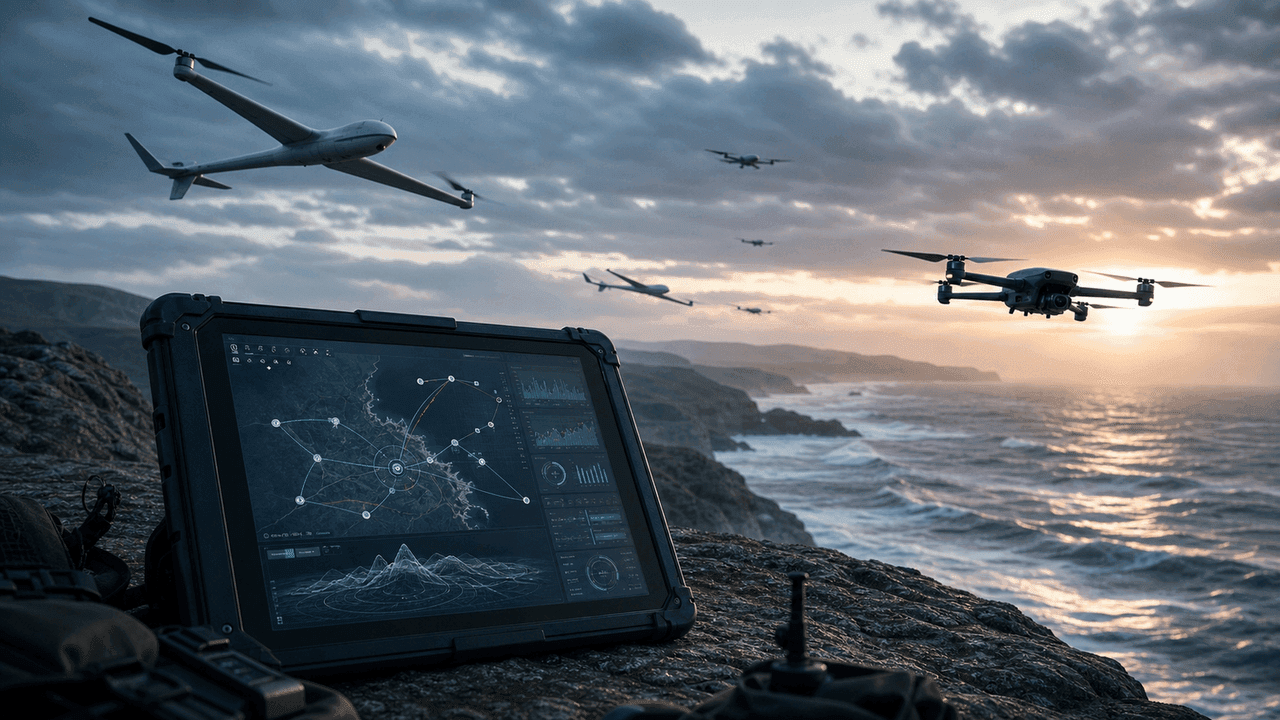
That is why Hivemind matters. Shield AI has been clear that it is building an autonomy stack that can move across classes of aircraft, not a one-off drone brain bolted to one vehicle. The logic is simple. If autonomy lives in a single configuration, it scales badly. If it can move across aircraft, mission types, and bad-comms environments, it becomes a capability you can reuse.
The same lesson shows up elsewhere. Skydio is not interesting because of one inspection drone. It is interesting because autonomy, sensing, docking, and remote operations come together as a working system. Helsing's HX-2 story is the same idea in a defense setting: the drone matters, but the production logic, the software, the human-control design, and the fit on the battlefield matter more.
The market is slowly settling on a hard truth. Autonomous flight is not one feature. It is a stack:
- sensing
- onboard compute
- navigation models
- behavior logic
- mission software
- comms fallback
- operator interface
- verification and safety controls
The companies that look credible in 2026 are usually the ones talking in exactly those terms.
What AI drones already do well in 2026
Several autonomy tasks are now much closer to routine than to wishful thinking.
Repeatable industrial inspection
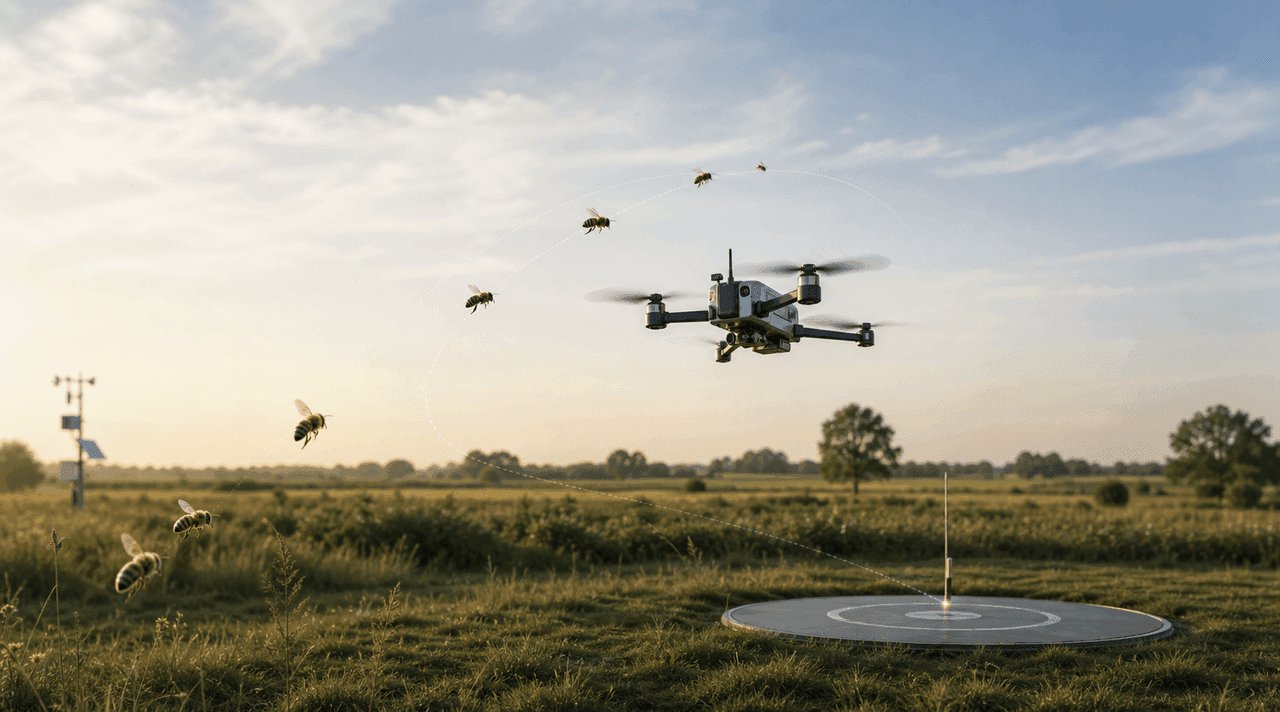
This is one of the least flashy but most solid commercial uses of autonomous drones. A docked drone can launch on schedule, fly the same corridor or asset line, compare what it sees against a baseline, and return without a pilot hand-flying every leg.
The payoff is not science fiction. It is less labor, more frequent inspections, safer access to remote sites, and faster detection of problems.
Navigation in cluttered places
Visual navigation, collision avoidance, and assisted route planning are far stronger now than they were even a few years ago. Drones used for inspection, public safety, and some defense roles can fly with much less pilot workload than older manual systems.
Limited work under denied or degraded comms
This is where defense autonomy is moving fastest. The aim is not to remove people. The aim is to depend less on clean comms, perfect GPS, and constant teleoperation.
At its best, a modern autonomous UAV can now:
- keep flying a mission for a while after comms drop
- route around obstacles or hazards on its own
- hold the mission together without constant stick input
- work alongside a human who stays in the decision loop
That is a big shift from earlier drones, many of which were effectively crippled the moment the link got shaky.
What the industry still oversells
The market is getting better, but the overselling has not gone away.
"Autonomous" still often means "heavily automated"
Many drones sold as autonomous are really strong automation products. That is not a knock. Automation creates real value. But automation is not the same as robust autonomy when conditions keep changing.
Combat autonomy is still capped by trust and policy
Even where the software is improving fast, militaries still have to answer hard questions:
- which decisions stay with a human?
- what happens when comms are lost?
- how is the behavior tested and checked?
- how do commanders trust autonomy when the situation is unclear?
The more kinetic the mission, the more those questions matter.
AI perception does not erase sensor limits
A better model does not magically fix bad optics, poor weather, low contrast, thermal clutter, or a blocked view. Even the best autonomy stacks live inside the physical limits of the sensors and the compute budget.
Why autonomy matters so much in military drone programs
In a calm environment, teleoperation is fine. In a contested one, it becomes a weak point.
That is why military drone programs are pushing autonomy so hard. The goal is not just convenience. The goal is resilience.
A useful military autonomy stack can cut the dependence on:
- a steady high-quality datalink
- uncontested GPS
- unbroken operator attention
- fixed assumptions about the route
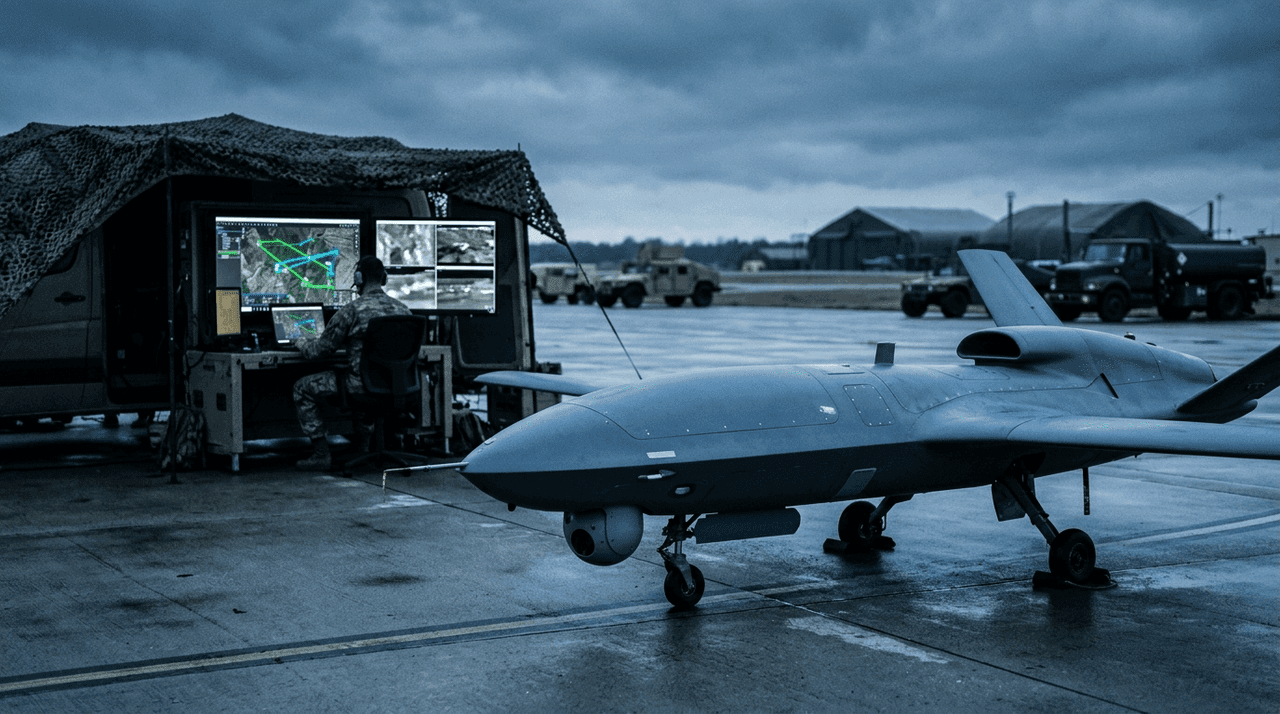
That is why programs like Hivemind, autonomy testing on the X-62A VISTA, and Marine Corps work with CCA-like surrogates matter. They are not proving that human pilots vanish tomorrow. They are proving that human-machine teaming gets more practical as the machine carries more of the navigation, safety, and mission workload onboard.
AI drones are also reshaping inspection and security economics
Outside defense, the strongest case for autonomous drones is still about money.
A good autonomous inspection system can change the economics of monitoring infrastructure in four ways:
- fewer manual flight hours
- more frequent inspections
- quicker reach to remote or dangerous sites
- more structured, comparable data over time
That is why the most mature commercial autonomy stories are usually in:
- utilities
- rail
- solar and energy assets
- oil and gas facilities
- site security and perimeter monitoring
- public-safety overwatch
A drone that launches from a dock, flies a repeat mission, captures the same angle, and returns with little pilot effort is not just a better aircraft. It is a different way of operating.
The most credible 2026 systems are hybrid, not fully independent
This is a crucial point. The best AI-powered drones in 2026 are not "fully independent robots" out of science fiction. They are hybrid systems where autonomy carries more of the load, but the human still sets the mission goals, the policy limits, the escalation rules, and the exceptions.
That holds in both civilian and military settings.
In practice, the strongest model today looks like this:
- the machine handles the low-level flying and part of the route adaptation
- the machine helps structure perception and task execution
- the human watches over intent, exceptions, and sensitive calls
That is a far more realistic picture than the lazy headline about "AI fighting wars without pilots."
What to watch in the next 12 months
The most important 2026 signals are not flashy videos. They are operational signs.
1. More autonomy when comms are denied
Expect more emphasis on systems that can keep the mission going even when the link is weak or briefly gone.
2. Faster blending of docked autonomy and analytics
The inspection market is moving toward autonomous flight plus structured analytics, not autonomous flight on its own.
3. More portable autonomy
The strategic winners are likely to be the ones who can move an autonomy stack across aircraft and mission types.
4. More focus on verification and trust
As autonomy takes on more, governments and enterprise buyers will ask tougher questions about testing, failure modes, and limits.
5. More military demand for attritable autonomy
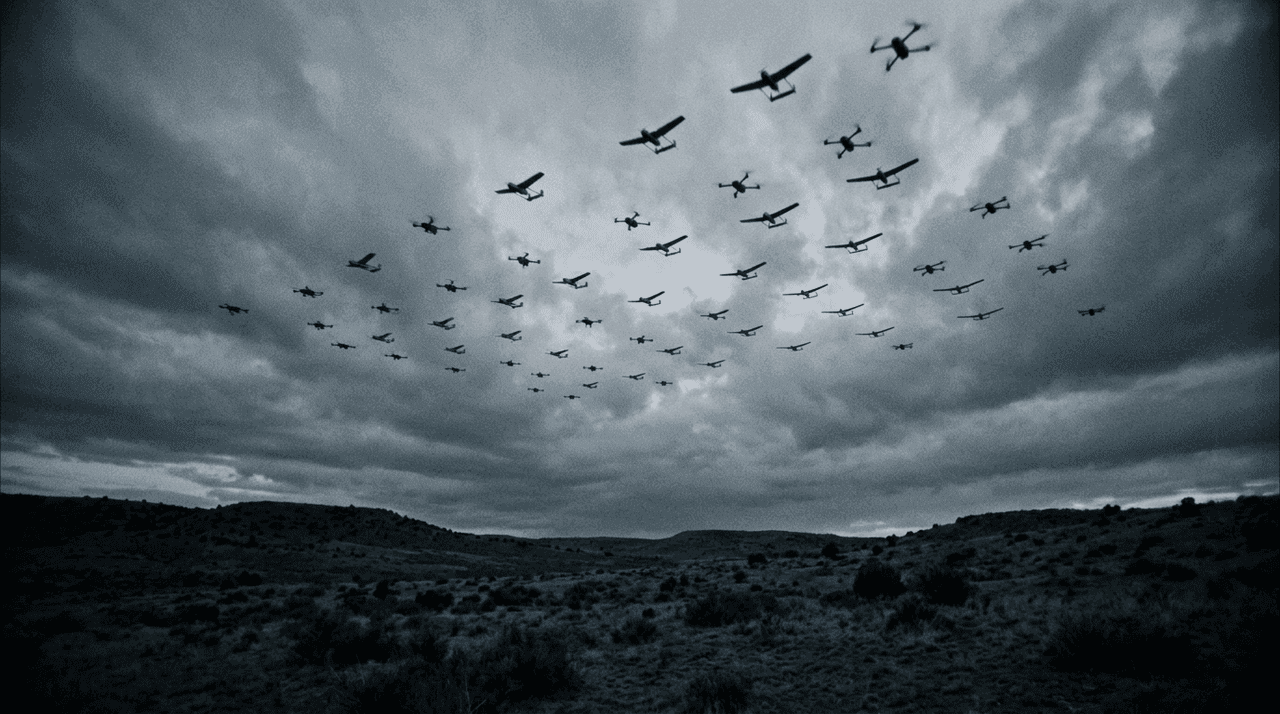
Cheap aircraft with believable autonomy are getting more attractive because they pair survivability through numbers with less operator workload.
Procurement in 2026 is shifting from buying aircraft to buying autonomy stacks
A striking change in 2026 is how professional buyers talk. The more mature ones no longer ask only, "Which drone do we buy?" They ask harder questions about the autonomy stack itself.
Typical procurement questions now sound like this:
- How much of the mission survives degraded comms?
- Which parts run onboard and which depend on the cloud?
- Can the autonomy layer move across several aircraft?
- How are updates checked and rolled out?
- What happens when the sensors disagree?
- How much operator oversight is really needed in practice?
This matters because many autonomous drone programs now compete less on a novel airframe and more on credible software. A vendor with a strong autonomy stack, clear safety limits, and a believable support model can be far more valuable than one with a flashy aircraft and vague AI claims.
The best buyers in 2026 increasingly treat autonomy as infrastructure. They want to know whether the stack can support fleets, docks, repeatable missions, secure data flows, and future payload changes. In defense, they also want to know whether it keeps working once the environment turns contested.
Verification, safety, and trust are becoming the real bottleneck
Autonomy is now strong enough that the main blocker is often no longer "can it fly?" It is "can we trust it?"
That trust problem has several layers.
Technical trust
Does the system behave consistently across weather, lighting, terrain, and connectivity changes? Can it recover from bad inputs without doing something unsafe or unpredictable?
Operational trust
Do crews understand what the system is doing well enough to supervise it? Can they step in quickly? Are the failure modes clear under pressure?
Institutional trust
Will regulators, commanders, insurers, or infrastructure operators accept the system in real work? Can the vendor show its testing, its limits, and its discipline around updates?
This is where the strongest AI drone companies are pulling ahead. The winning story is no longer raw AI ambition. It is verified autonomy with clearly managed edges.
Industrial and military autonomy are converging in one way and diverging in another
There is a useful tension in the 2026 market.
On one side, both enterprise and defense systems increasingly lean on the same building blocks:
- onboard perception
- route planning
- obstacle avoidance
- remote-operations software
- resilient compute and data handling
On the other side, their mission logic splits sharply.
Industrial drone inspection wants repeatability, uptime, predictable data capture, and defensible safety procedures. Military autonomy wants resilience under disruption, adaptation under threat, and performance when comms go bad.
This converge-and-diverge pattern matters because it shapes who scales fastest. Commercial platforms may get verification, fleet management, and repeatability right sooner. Defense programs may crack contested-environment resilience sooner. Over time, some of those lessons will cross over.
Why the human role is changing instead of disappearing
The most serious autonomy programs in 2026 are not removing the human. They are changing the human's job.
The operator moves away from constant stick input and toward:
- approving missions
- handling exceptions
- reading the payload
- making escalation calls
- coordinating the fleet
- overseeing autonomy limits
That is a more demanding job, not a smaller one. It needs better interfaces, stronger training, and a much clearer mental model of what the machine is actually doing.
This is one reason human-machine teaming has become a more useful idea than "pilotless drone." The real question is not whether the machine can do everything alone. It is whether the human and the machine together can deliver more reliable results than either one alone.
Where the 2026 autonomy market may crack next
There are several likely fault lines to watch.
Open integration versus closed ecosystems
Some vendors will try to lock customers into a full closed stack. Others will push portability and modular integration. Buyers will increasingly care which approach gives them more long-term control.
Cheap autonomous mass versus expensive autonomous platforms
Defense buyers in particular will have to decide where autonomy belongs: in expensive, highly capable aircraft, in attritable systems, or in both.
Data advantage versus flight advantage
In some sectors, the long-term winner will be the one with better analytics and workflow integration, not the one with the most dramatic flight autonomy.
Pressure on certification and governance
As autonomy gets closer to operational criticality, the pressure will grow for clearer governance, logging, auditability, and safety evidence.
The broad trend is clear. By 2026, autonomy is no longer impressive just because it works at all. It has to work in a way you can inspect, support, and trust.
The business case is more about throughput than novelty
For enterprise buyers, the strongest autonomy argument in 2026 is rarely "this drone is futuristic." The stronger argument is operational throughput.
Autonomy starts to pay off when it raises one or more of these:
- inspection frequency
- site coverage per operator
- data consistency over time
- incident-response speed
- asset uptime
- labor efficiency on repetitive missions
That is why dock-based systems, automated route libraries, and onboard analytics draw more serious attention than abstract AI claims. Buyers do not need a robot myth. They need more reliable output per hour, per site, and per technician.
The autonomy winners will probably be the ones who make failure manageable
Every autonomy provider loves to show what works when conditions are good. The harder question is what happens when they are not.
The long-term winners are likely to be the companies that make failure clear and manageable:
- obvious fallback modes
- visible confidence limits
- operator prompts that make sense under stress
- solid logs for after-mission review
- sane update discipline across a fleet
That is true in enterprise inspection, public safety, and defense. In 2026, operational trust comes less from the best demo and more from the best handling of imperfect reality.
The market is moving from "autonomous demo" to "autonomous operations"
That shift sounds small, but it is decisive. A system that can finish an autonomy demo is no longer enough. Buyers increasingly want proof that autonomy survives maintenance cycles, site-to-site variation, crew turnover, sensor drift, software updates, and bad weather.
That is the line between an interesting product and a durable program. In 2026, autonomy is becoming an operational discipline, not a conference story.
Regulation and governance will shape autonomy almost as much as the software
The next limit on autonomous drones is not purely technical. It is institutional. As autonomy gets more operationally important, questions of logging, accountability, testing discipline, and policy limits become much more visible.
Enterprise operators need to know how missions are recorded, how exceptions are escalated, and how a software change affects repeatability. Defense operators need the same answers in harsher form: what stays human-controlled, what the machine merely assists with, and how the system behaves when a mission drifts off the expected case.
This governance layer will not stop autonomy, but it will shape which programs scale credibly. In 2026, the systems most likely to last are not only the ones with stronger code. They are the ones with stronger operating rules around that code.
FAQ
Are AI drones fully autonomous in 2026?
Some are highly autonomous for navigation and routine missions. Very few credible systems remove human supervision entirely in sensitive or contested work.
What is the difference between automation and autonomy?
Automation follows preset logic in structured conditions. Autonomy means a greater ability to perceive, adapt, and keep the mission going as conditions change, with less direct control.
Why does autonomy matter so much for military drones?
Because contested comms, electronic warfare, and operator workload all make pure teleoperation fragile. Autonomy adds resilience.
Are enterprise autonomous drones and military autonomous UAVs the same market?
No. They share enabling technology, but the mission logic, safety constraints, and performance needs differ sharply.
What is the most mature use of autonomous drones today?
Repeatable inspection, dock-based remote operations, and structured public-safety or infrastructure workflows are the most mature commercial uses right now.
Conclusion
AI-powered autonomous drones in 2026 are real, but they are not all the same thing. The serious divide is between automation that cuts pilot workload, mission autonomy that changes how teams operate, and tactical autonomy that adds resilience under contested conditions. The systems that matter most are no longer the ones making the loudest claims. They are the ones proving where autonomy already works and where a human still has to stay in the loop.